Wrapping up 2024!🍾🥂🎇

It is already a good tradition at the end of the year to take a moment and wrap up the year, thus reminding myself of what was actually done, thus explaining to myself that maybe I am not as lazy as I think. However, in this post I would like to rather thank those colleagues who were with me in this. As such, let me very briefly summarize what happened (or rather with whom) and what to come in the first months of next year with the later to be spotlighted by me early next year accordingly.

This year I had the opportunity to share my experience, but more importantly, learn from others by participating in panels or plenary sessions, some of which stood out as generating some of the liveliest discussions during and after the events:

  • “Citizen urban data and smart metropolis monitoring” together with Jaewon Peter Chun (President of World Smart Cities Forum), Redouane El Haloui (President of APEBI Fédération des technologies d’information de télécommunication et de l’offshoring), Mahdi Barouni (The World Bank), Khouloud Abejja (Digital Transformation Director, Agence de Développement du Digital-ADD), Youssef El Maddarsi (CEO Naoris Consulting) that held as part of a Casablanca Smart City event (read a bit more here);
  • panel on Trust in AI together with Nicolas Cruz B., Korbinian Bösl, and Anamika Chatterjee as part of the Digital Life Norway conference oganized by Centre for Digital Life Norway (Norwegian University of Science and Technology (NTNU)), with my big thanks to Elisabeth Hyldbakk, Ingrid Shields, Kam Sripada, and many more colleagues for hospitality;
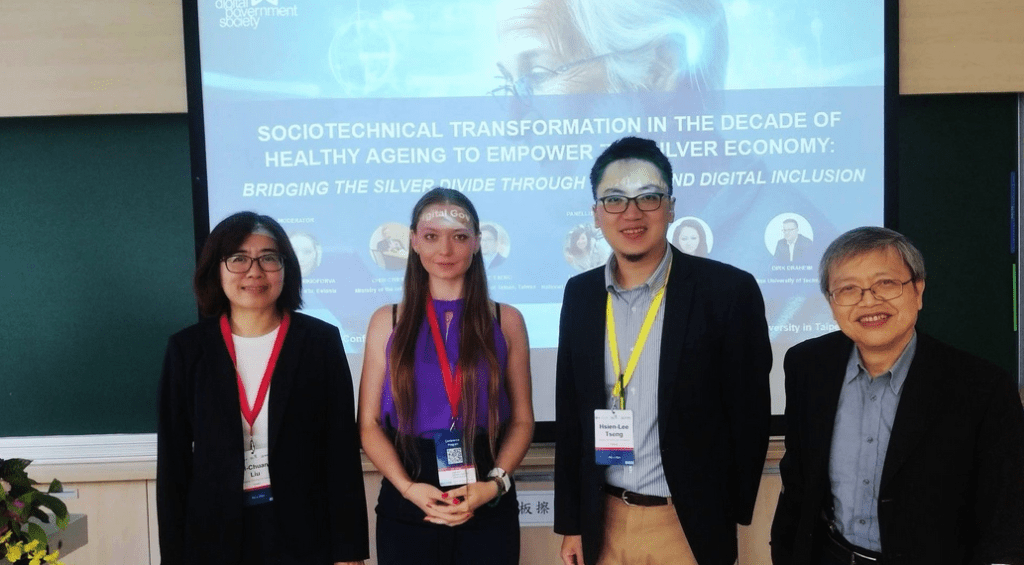
  • “Sociotechnical Transformation in the Decade of Healthy Ageing to empower the Silver Economy: Bridging the Silver Divide through Social and Digital Inclusion” with Hsien-Lee Tseng, Chin-Chien Jao, Azmat Butt, Dirk Draheim, Li-chuan Liu as part of 25th Annual International Conference on Digital Government Research (dg.o 2024) (read a bit more here)

To continue on discussions around research that I truly enjoyed, several conferences or tracks to which I served as one of organizers to be highlighted with credits to go to my colleagues, namely:

Selected papers from DGO2024 and EGOV2024 were invited to the “Towards sustainable public and open data ecosystems” Special Section with Information Polity, which we successfully a few weeks ago with the very last preparations before we can announce its final version – big thanks to both co-editors – Anthony, Pedro, and Anneke, as well as Albert Meijer, Kim Willems, William Webster, who supported us in the process, and the authors – Mohsan Ali, Georgios Papageorgiou, Abdul Aziz, Euripidis Loukis, Yannis Charalabidis, Charalampos Alexopoulos, and Francisco Javier López Pellicer, Alejandra Vargas, Rikke Magnussen, Birger Larsen, and Ingrid Mulder and Hsien-Lee Tseng. Stay tuned for the information about this Section!

Together with Jérôme Chenal, Stéphane C. K. Tekouabou and El Arbi Allaoui Abdellaoui we almost finalized our “Emerging Data- and Policy-driven Approaches for African Cities Challenges” Special Issue with Cambridge Press Data & Policy journal – again, stay tuned!

While the two above are those we are ready with, there is another very special issue we have together with Asif Gill, Ina Sebastian, Martin Lněnička and Anushri Gupta and tremendous assistance of Katina Michael – Special Issue “Trustworthy Data Ecosystems for Digital Societies” with IEEE Transactions on Technology and Society (read a bit more here) and we look forward your submission by 30 June 2025 very much!

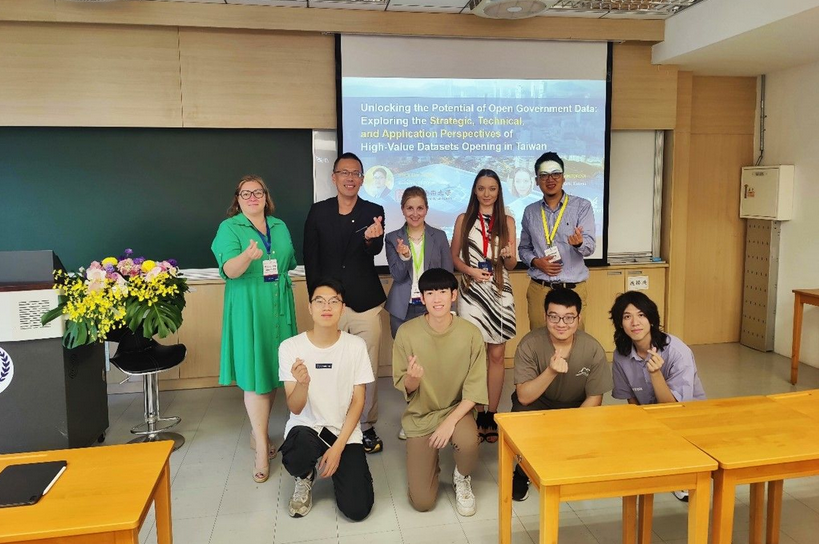
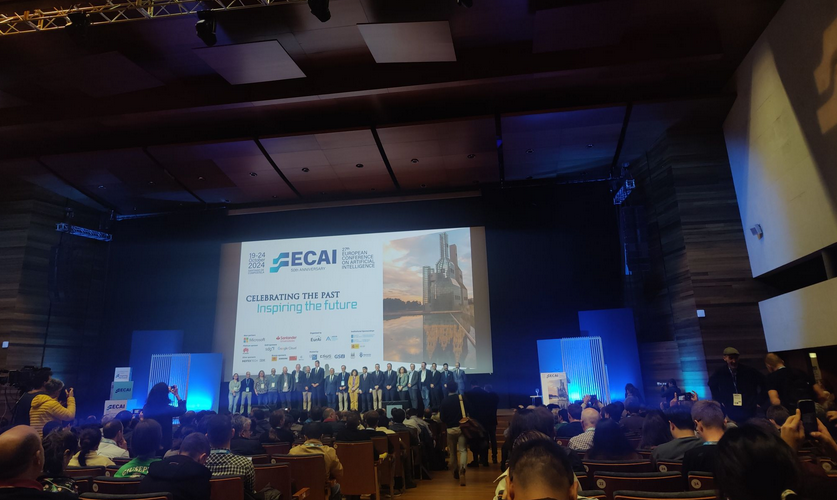
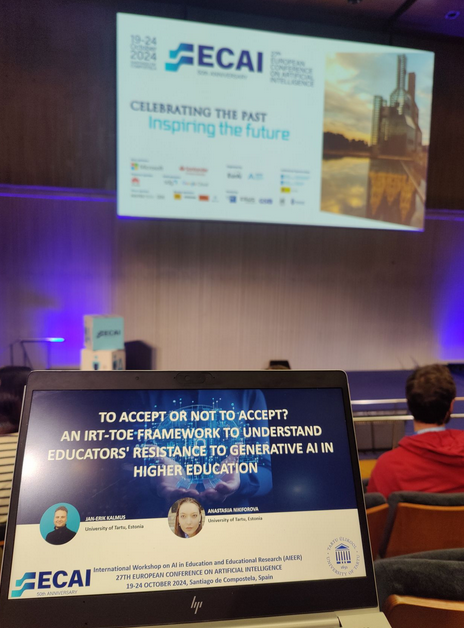
And of course, several conferences where I shared my own research, gathering feedback and inspiration for future research, with brightest moments coming from The 25th Annual International Conference on Digital Government Research (DGO2024) (read a bit more here), and big thanks to my personal host Hsien-Lee Tseng, EGOV2024 and my special hosts Cesar Casiano Flores & Caterina Santoro, 27th European Conference on Artificial Intelligence (ECAI 2024) (read a bit more here), International Conference on Information Systems (ICIS2024) (a bit more here), and several more, where I was fortunate this year to not only present my own research but also introduce my students to the community. Some of these conference papers have already expanded into journal papers, with some exciting news to share early next year!

I am also very grateful to my colleagues for their invitations to join the International Journal of Information Management (IJIM, Elsevier) and Government Information Quarterly (GIQ) Editorial Boards, Communication Committee at Digital Government Society (and one of its Chapter on which I will post later, similar to several other recent updates), and European Open Science Cloud (EOSC) FAIR Metrics and Digital Objects task force, which is rather continuation of the TF I participated in the past (“FAIR Metrics and Data Quality”).

On a slightly different note, similar to previous years, I continued delivering some courses and lectures to other universities, such as:

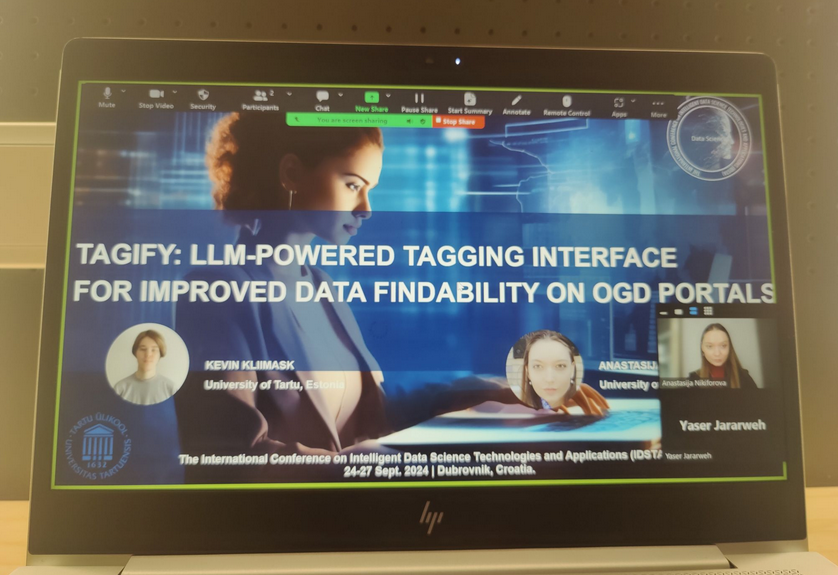
I am also grateful for several recognitions I have received this year (e.g., being named the best reviewer for a journal, or called to be the top 2% of scientists“ for the second year in a row (Stanford Elsevier Top Scientists List) and top 0.5% of all scholars worldwide (0.2% in Government specialty) by SholarGPS), but probably the proudest moment for every academic is the success of our students, and as such, I want to especially mention Kevin Kliimask, whose thesis recognized by the Ministry of Economic Affairs and Communications of Estonia at the annual Open Data Forum (Avaandmete foorum) as the best thesis of the year 🏆 🥇 🏅 (read a bit more here).

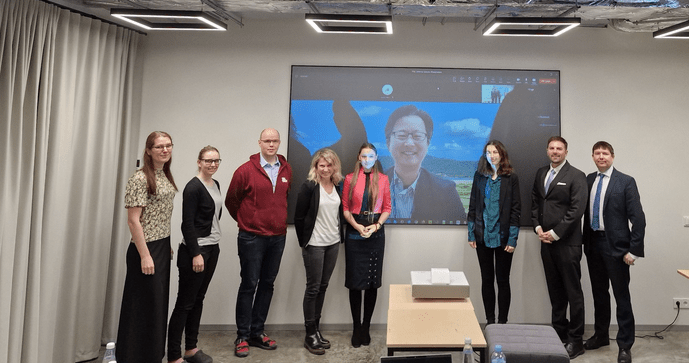
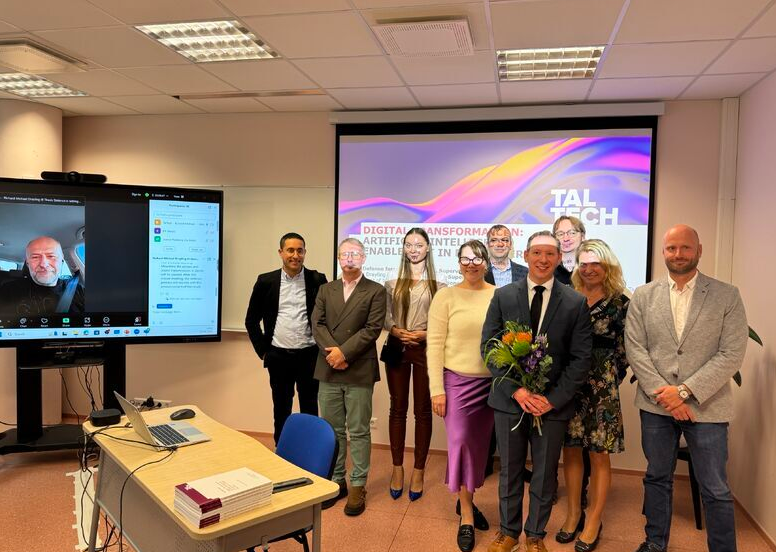
I also want to acknowledge achievements of others – this year I witnessed 3 PhD defenses and would like to congratulate Eric Jackson, Richard Dreiling and Lisa Miasayedava again, especially for such insightful discussions – I know I am quite a tough person to have in the committee (esp. as opponent – sorry Liza and Eric), but you all did a great job and I really enjoyed our discussions!
And I will skip the part about published conference and journal papers, as well as submitted project proposals and those currently in development.  Instead, some disclaimer about what is to come, with some posting at later point:

  • in the very first weeks of January, meet my very good colleagues– Anthony and Nicolas – at HICSS presenting our paper “Artificial Intelligence as a Catalyzer for Open Government Data Ecosystems: A Typological Theory Approach”, which has been already spotlighted several times, including by The Living Library, whose main goal is to identify the “signal in the noise”
  • keep an eye open for several conferences for which together with colleagues of mine we organize (mini-) tracks, with probably the most important for me at the moment:
  • AMCIS mini-track Sustainable Digital and Data Ecosystems – Navigating the Age of AI;
  • DGO2025 – “Sustainable Public and Open Data Ecosystems for Inclusive and Innovative Digital Government” track we continue with Anthony Simonofski, Anneke Zuiderwijk;
  • EGOV2025 – Emerging Issues and Innovations Track – we continue in the updated form welcoming Paula Rodriguez Muller who will be joining me and Francesco Murredu!
  • And for Data for Policy CIC, we will slightly change the role we played the last year, and together with Sarah Giest, Bram Klievnik Iryna Susha, Florin Coman Kund, Leid Zejnilovic Laura, we are very excited to invite you to the Data for Policy CIC 2025 Conference (Leiden University, The Hague, Netherlands 🇳🇱) for which we serve as Regional Conference Committee
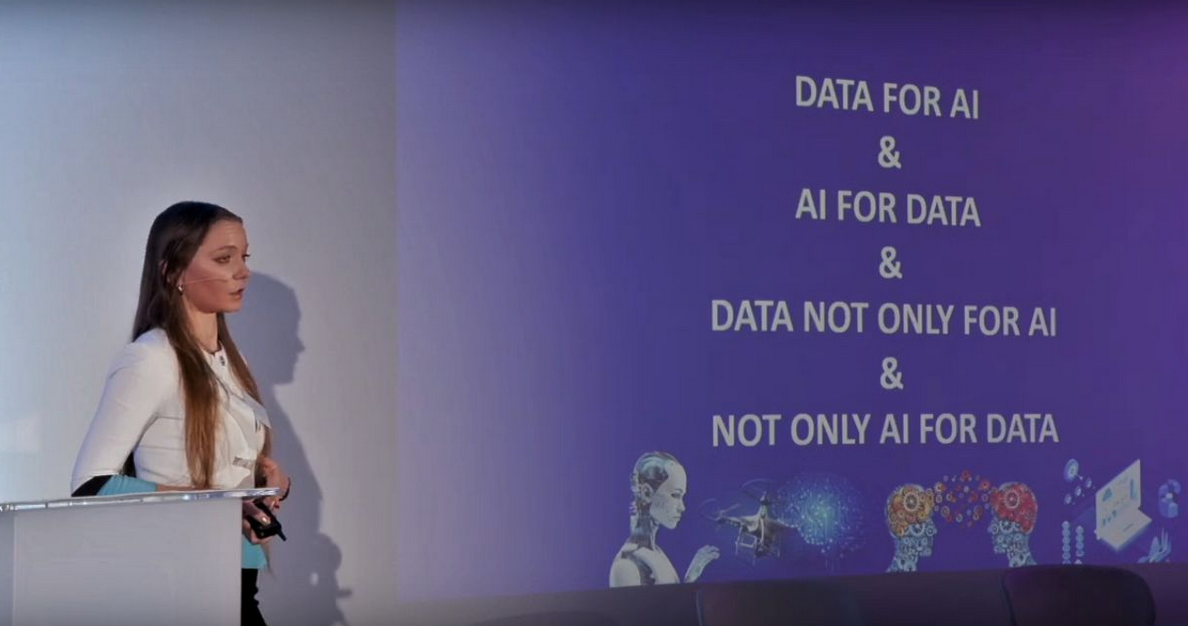
  • Finally, do meet me at European Open Data Days 2025 in March to discuss recent (and future) advances in the world of open data with me sharing insights on how Artificial Intelligence can serve as a catalyst for transforming public and open data ecosystems, exploring the various AI roles at data, portal and ecosystem levels driving innovation, enhancing governance, and boosting citizen engagement;
  • and meet me as a keynote for the International Conference on Innovative Approaches and Applications for Sustainable Development (I2ASD) in April with more details to come!

This is rather a very short list of the events and people I wanted to emphasize, and my apologizes if I missed someone (and I definitely missed). All in all, it was a busy and eventful year,  – really grateful for all the opportunities it brought to me and lessons (both positive and negative, rather willing to have positive ones only though) and people I met. I really hope that the next year will be even better. And in this regard, I wish us all a peaceful, joyful and productive year!

Thank 2024 and bye! Welcome 2025! Happy 2025!

DGO 2025 “Sustainable Public and Open Data Ecosystems for inclusive and innovative government” track

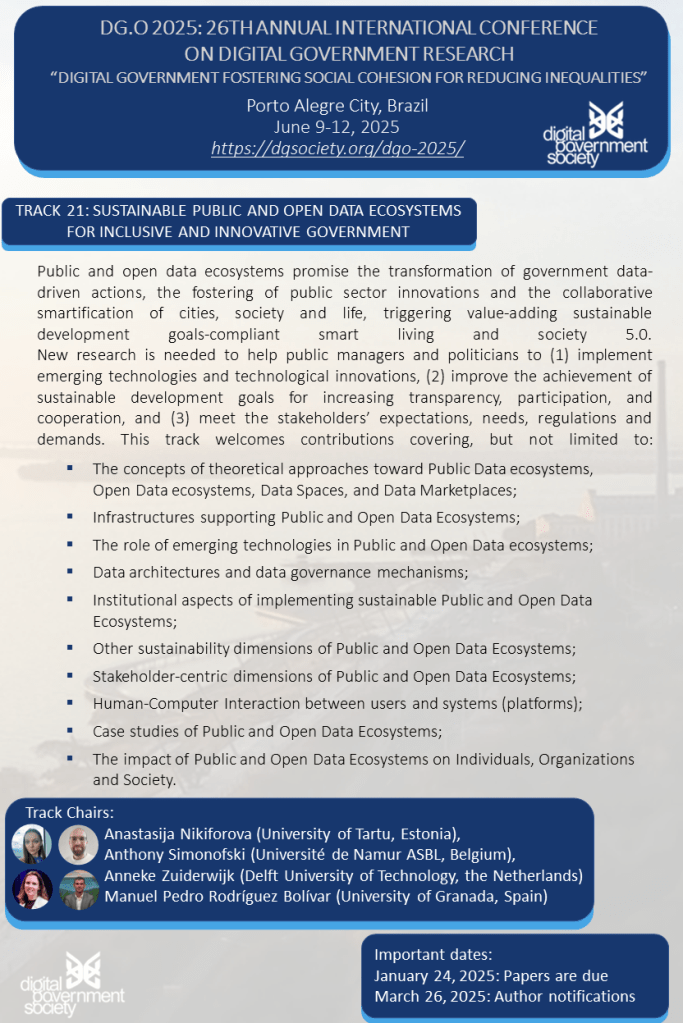
26th Annual International Conference on Digital Government Research (dg.o2025) is coming with continuation of the track we launched the last time – “Sustainable Public and Open Data Ecosystems for inclusive and innovative government” track (chairs: Anastasija Nikiforova (University of Tartu, Estonia), Anthony Simonofski (Université de Namur ASBL, Belgium), Anneke Zuiderwijk (Delft University of Technology, the Netherlands) & Manuel Pedro Rodríguez Bolívar (University of Granada, Spain)).

Briefly about the track… Today, the goal of an actor-centric public data ecosystem that would be sufficiently sustainable, resilient and fair, is defined as an approach capable of representing and keeping in balance the data interests of all actors[1], to bring expected value (both economic, social and environment) became central for public data ecosystems and other types of data infrastructures and data spaces[2] that are based on the concept of openness and data sharing among stakeholders. Public data and open (government) data ecosystems are seen as a political and socio-economic phenomenon that promise to benefit the economy, and increase transparency, efficiency, and quality of public services, including the transformation of government data-driven actions, stimulate public sector innovations in various areas of public life and promote civic engagement[3][4][5]. Having collaborative governance models in place is one of the prerequisites for a resilient and value-adding ecosystem, of which stakeholders are an inevitable element, making it necessary to ensure those ecosystems are stakeholder-oriented. These models are expected to support stakeholders/actors, who, however, may have different characteristics (incl. (open) data literacy and digital literacy), needs / demands and expectations (public sector, private sector, business, citizen) for public value creation and co-creation. Understanding, designing, and maintaining such an ecosystem is further complicated by the fact that both data, service and process quality must be ensured and kept maintained with a limited understanding of how the above are expected to be ensured even alone.

Recent research found that concepts affecting and shaping the ecosystem are: 1) stakeholders / actors and their roles, 2) phases of the data lifecycle, in which a stakeholder participates in the ecosystem, 3) technical and technological infrastructure, 4) generic services and platforms, 5) human capacities and skills of both providers and consumers, 6) smart city domains (thematic categories) as the targeted areas for data reuse, 7) externalities affecting goals, policy, and resources, 8) level of (de)centralization of data sources – development, restrictions, 9) perception of importance and support from public officials, and 10) user interface, user experience, and usability[6]. Moreover, these ecosystems same as its components are (co-)evolving over time[7] due to both internal and external factors. The latter – external factors – include technological developments. As such, the rapid development of emerging technologies such as big data, artificial intelligence (AI) is seen as a new trigger for public and open data development (AI for open data and open data for AI), machine learning (ML), federated learning (FL), internet of things (IoT), metaverse etc. provides new opportunities to improve these ecosystems in a disrupt way to be useful for collaborative governance models. Also, the link between Open Data Ecosystems and sustainable development goals (SDG) seems to be more relevant nowadays in their way to build more democratic cities based on government transparency, citizen participation, and citizen cooperation. Finally, higher expectations, needs and demands of businesses and citizens, derived from the implementation of B2G, C2G models, that influence and shape the design and development of these data environments, as well as expected to be affected, e.g., B2G in relation to which European Commission is taking regulatory action and is preparing the Data Act to set the rules and conditions, thereby changing the current voluntary model to a more mandatory data sharing. Current research suggests that these topics are of great importance to governments, as well as businesses and citizens, whose efforts should complement each other in order to enable effective data reuse and value co-creation

As such, as public and open data ecosystems promise the transformation of government data-driven actions, the fostering of public sector innovations and the collaborative smartification of cities, society and life, triggering value-adding sustainable development goals-compliant smart living and Society 5.0. New research is needed to help public managers and politicians for (1) implementing emerging technologies and technological innovations, (2) improving the achievement of sustainable development goals for increasing transparency, participation, and cooperation, and (3) meeting the stakeholders’ expectations, needs, regulations and demands.

As such, this track welcomes contributions covering, but not limited to:

  • The concepts of theoretical approaches toward Public Data ecosystems, Open Data ecosystems, Data Spaces, and Data Marketplaces;
  • Infrastructures supporting Public and Open Data Ecosystems;
  • The role of emerging technologies in Public and Open Data ecosystems (incl. but not limited to AI, Generative AI, LLM, NLP, cloud computing, green computing, Metaverse  etc.);
  • Data architectures and data governance mechanisms;
  • Institutional aspects of implementing sustainable Public and Open Data Ecosystems;
  • Other sustainability dimensions of Public and Open Data Ecosystems;
  • Stakeholder-centric dimensions of Public and Open Data Ecosystems;
  • Human-Computer Interaction between users and systems (platforms);
  • Case studies of Public and Open Data Ecosystems, incl. but not limited to Local Government Level Data Ecosystems, e.g., Smart Cities Data Ecosystems;
  • The impact of Public and Open Data Ecosystems on Individuals, Organizations and Society.

The track welcomes both contributions covering the current state-of-the-art of public data ecosystems (what components constitute them, what are the relationships between these components, what makes an ecosystem resilient and sustainable), incl. individual case studies reflecting best or bad practices, as well as those addressing how these ecosystems can be transformed into more sustainable ecosystems that will “fuel” or “smartify” society (Information Society aka Society 4.0 to Super Smart Society aka Society 5.0 transition), cities and various areas of life.

The track is very aligned with the conference theme of DGO 2025, namely: Digital government fostering social cohesion for reducing inequalities. As mentioned in the theme description, “It focuses on strong social bonds in civic society, with responsive democracy and impartial law enforcement aiming at collaboratively addressing latent social conflicts. It involves building shared values in communities facing common challenges in an attempt to reduce disparities by increasing citizens’ feeling of belonging to a community and their engagement.” Public and open data ecosystems can be considered as environments that contribute to the above. Open data is aimed at reducing inequalities, open platforms constitute environments where data providers and data users find each other and collaborate and co-create to develop services and products useful for society, i.e., addressing their needs and tackling challenges society faces. While digital technologies enable the development of public and open data ecosystems, the adoption of such ecosystems has been fragmented. For instance, Van Loenen et al. (2021)[8] found that open data ecosystems “often do not balance open data supply and demand, exclude specific user groups and domains, are linear, and lack skill-training” (p. 2), which reduces their value-generation and sustainability.

Is your research related to any of the above topics? Then do not wait – submit!

🗓️🗓️🗓️Important Dates:

January 24, 2025: Papers, workshops, tutorials, and panels are due
March 26, 2025: Author notifications (papers, workshops, tutorials, panels)


[1] Calzati, S., & van Loenen, B. (2023). A fourth way to the digital transformation: The data republic as a fair data ecosystem. Data & Policy, 5, e21.

[2] Lnenicka, M., Nikiforova, A., Luterek, M., Milic, P., Rudmark, D., Neumaier, S., … & Rodríguez Bolívar, M. P. (2023). Understanding the development of public data ecosystems: from a conceptual model to a six-generation model of the evolution of public data ecosystems. Available at SSRN 4831881.

[3] Nikiforova, A., Rizun, N., Ciesielska, M., Alexopoulos, C., Miletič, A.(2023). Towards High-Value Datasets determination for data-driven development: a systematic literature review. In: Lindgren,I., Csáki, C., Kalampokis, E., Janssen, M.,, Viale Pereira,G.,Virkar, S., Tambouris, E., Zuiderwijk, A.Electronic Government. EGOV 2023. Lecture Notes in Computer Science. Springer, Cham

[4] Kassen, M. (2020). Open data and its peers: understanding promising harbingers from Nordic Europe. Aslib Journal of Information Management, 72(5), 765-785.

[5] Santos-Hermosa, G., Quarati, A., Loría-Soriano, E., & Raffaghelli, J. E. (2023). Why Does Open Data Get Underused? A Focus on the Role of (Open) Data Literacy. In Data Cultures in Higher Education: Emergent Practices and the Challenge Ahead (pp. 145-177). Cham: Springer International Publishing.

[6] Lnenicka, M., Nikiforova, A., Luterek, M., Azeroual, O., Ukpabi, D., Valtenbergs, V., & Machova, R. (2022). Transparency of open data ecosystems in smart cities: Definition and assessment of the maturity of transparency in 22 smart cities. Sustainable Cities and Society, 82, 103906.

[7] Nikiforova, A., Lnenicka, M., Milić, P., Luterek, M., & Rodríguez Bolívar, M. P. (2024, August). From the evolution of public data ecosystems to the evolving horizons of the forward-looking intelligent public data ecosystem empowered by emerging technologies. In International Conference on Electronic Government (pp. 402-418). Cham: Springer Nature Switzerland.

[8] Loenen, B. van, Zuiderwijk, A., Vancauwenberghe, G., Lopez-Pellicer, F. J., Mulder, I., Alexopoulos, C., … & Flores, C. C. (2021). Towards value-creating and sustainable open data ecosystems: A comparative case study and a research agenda. JeDEM-eJournal of eDemocracy and Open Government, 13(2), 1-27.

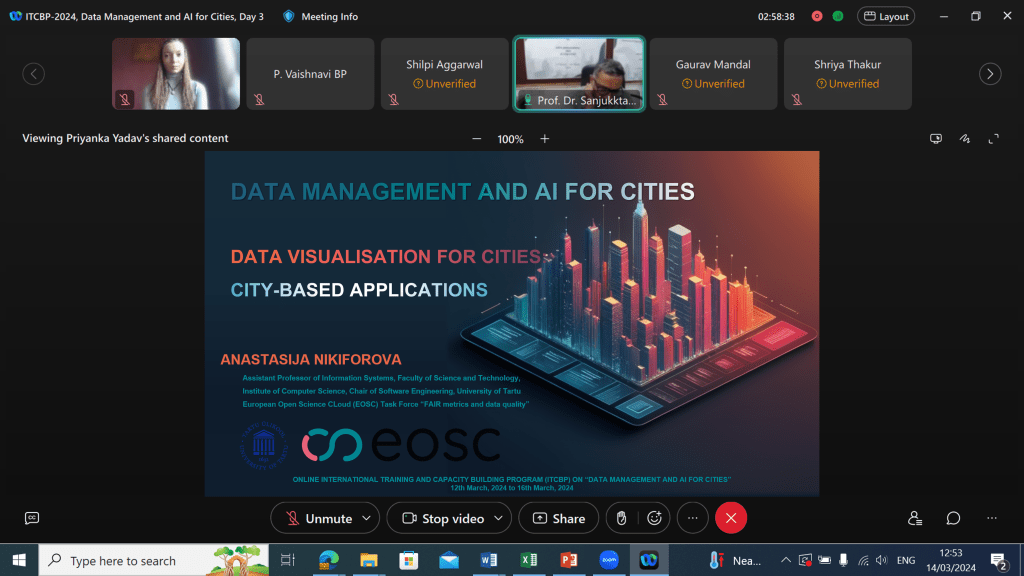
Online International Training and Capacity Building Program-2024 (ITCBP-2024) for the School of Planning and Architecture, New Delhi and my talk on “Data Management for AI Cities”

Yesterday, I had the honor of serving as an Expert speaker for an Online International Training and Capacity Building Program-2024 (ITCBP-2024) on “Data Management for AI Cities”, organised by the School of Planning and Architecture, New Delhi (SPA FIRST) that invited me to deliver a talk on “Data Visualisation for Cities: City Based Applications”.

During this talk, we touched on several important aspects surrounding data management and visualization in and for cities, including:

  • Data management that was then deduced to data quality management of both internal and external data, departing from understanding these data to managing their quality throughout the DQM lifecycle (stressing that data cleaning is not the same as DQM), touching on several approaches to this with greater emphasis on the AI-augmented data quality management – existing tools, underlying methods, and weaknesses that should be considered when using (semi-)automatic data quality rule recognition, depending on the method they use for this purpose;
  • Data governance was then discussed, stressing how it differs from DQM, and what it consists of and why it is crucial, incl. within the context of this talk;
  • Data visualization & storytellingrole, key principles, common mistakes, best practices. As part of this, we covered strategies for selecting data visualization type with tips on how to simplify this process, incl. by referring to chart selectors, but also stressing why “thinking outside the menu” is critical, esp. within city-level data visualization (where your audience is often citizens or policymakers). We looked at the most common and/or successful uses of non-traditional types of visualizations, incl. tools to be used for these purposes, breaking them into those that require coding and those that are rather low- or no-code; noise reduction – simplicity – strategic accents’ use, as well as drill-down (aka roll-down) & roll-up use to convey the message you want to deliver while overcoming highlighting everything and thereby losing your audience. In addition, a UX perspective was discussed, including but not limited some aspects that are often overlooked when thinking about the design and aesthetic color palette, namely the color-blindness of the audience that might “consume” these visualizations and again, tips on how to use it easier – did you you known that there are 300 million color blind people? And that 98% of those with color blindness have red-green color blindness?

So what was the key message or a “takeaway” of this talk? In a very few words:

  • Understand your data, audience and story you want to tell! Understand:
    • your data,
    • the story it tells,
    • your target audience’s preferences and needs,
    • the story you want to tell
    • data suitability
    • data quality
  • Attention-grabbing visuals & storytelling is a key!
    • reduce noise to avoid audience confusion and distraction
    • use drill-down and roll-up operations to keep visualization simple
    • add the context to provide all necessary information for clear understanding
    • add highlights to focus their attention – add accents strategically
  • Consider design – the optimal visualisation type, chart design, environment design, potential color-blindness of your audience
  • Keep track of the current advances, but also challenges and risks, of data visualization in urban settings, incl. but not limited to (1) privacy concerns, (2) data silos, (3) technological limitations.

All in all, it was quite a rich conversation and I am very grateful to the organizers for the invitation to be part of this event and to the audience for the very positive feedback!