IFIP EGOV-CeDEM-EPART 2023 – retrospective on how it was? From Metaverse to wine tasting

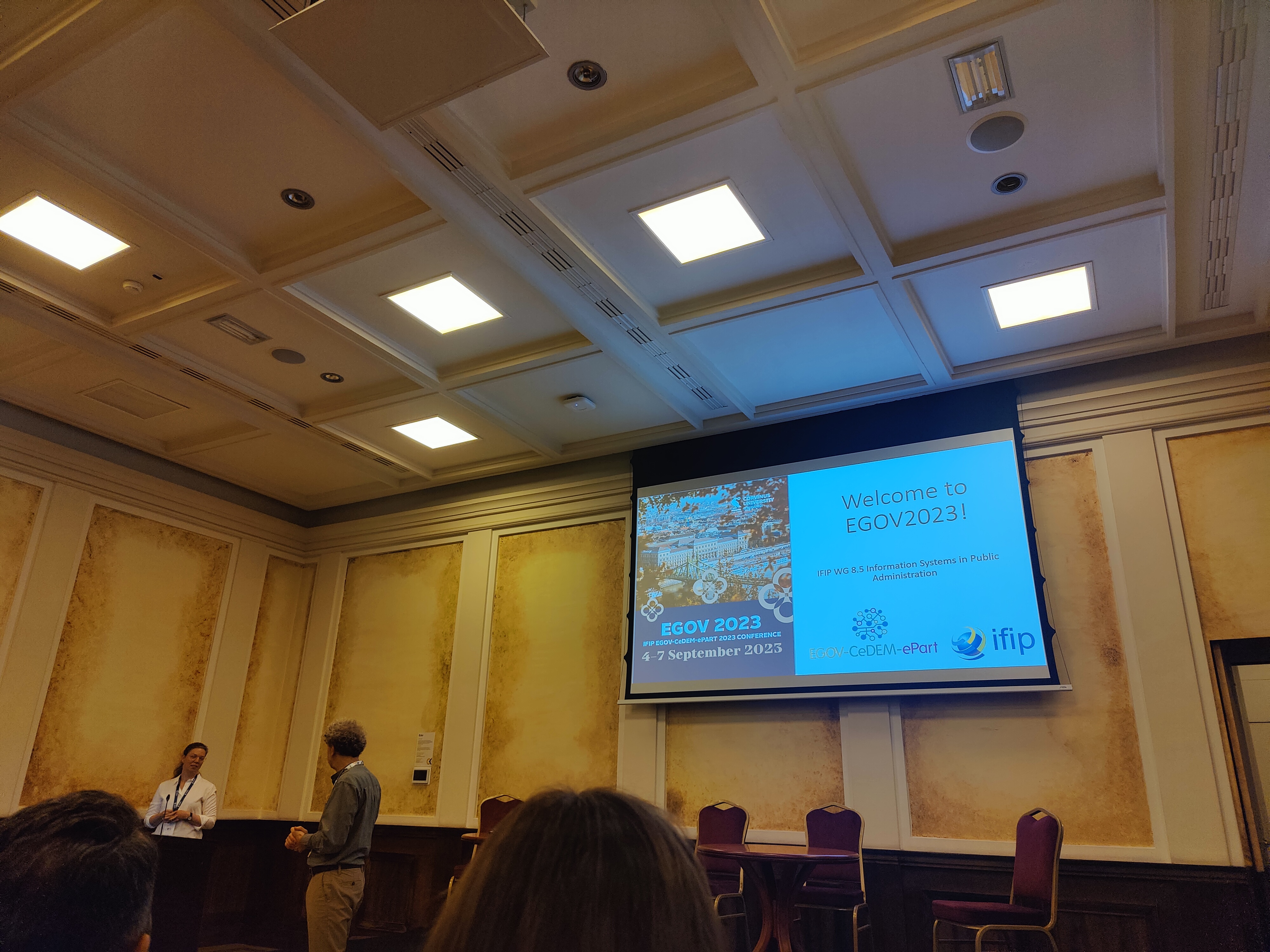
It finally took place! EGOV2023 – IFIP EGOV-CeDEM-EPART – one of the most recognized conference in e-Government, ICT and public administration and related topics (incl., Smart Cities, Sustainability, Innovation and many more) that lasted 3 days in charming city of Budapest (Hungary) is over, and I am here to reflect on it (just in a few words), since although these were just 3 days, they were very busy and full of insights, as well as activities, since every day I took another role, i.e., day#1 – presenter of the paper, day#2 – workshop organizer, day#3 – chair of two out of three sessions of “Emerging Issues and Innovations” track I co-chaired together with Marijn Janssen, Csaba Csaki and Francesco Mureddu. Not to forget, in this conference I am also a program committee of Open Data track.

Let me now provide a few insights on all these days, including my roles.

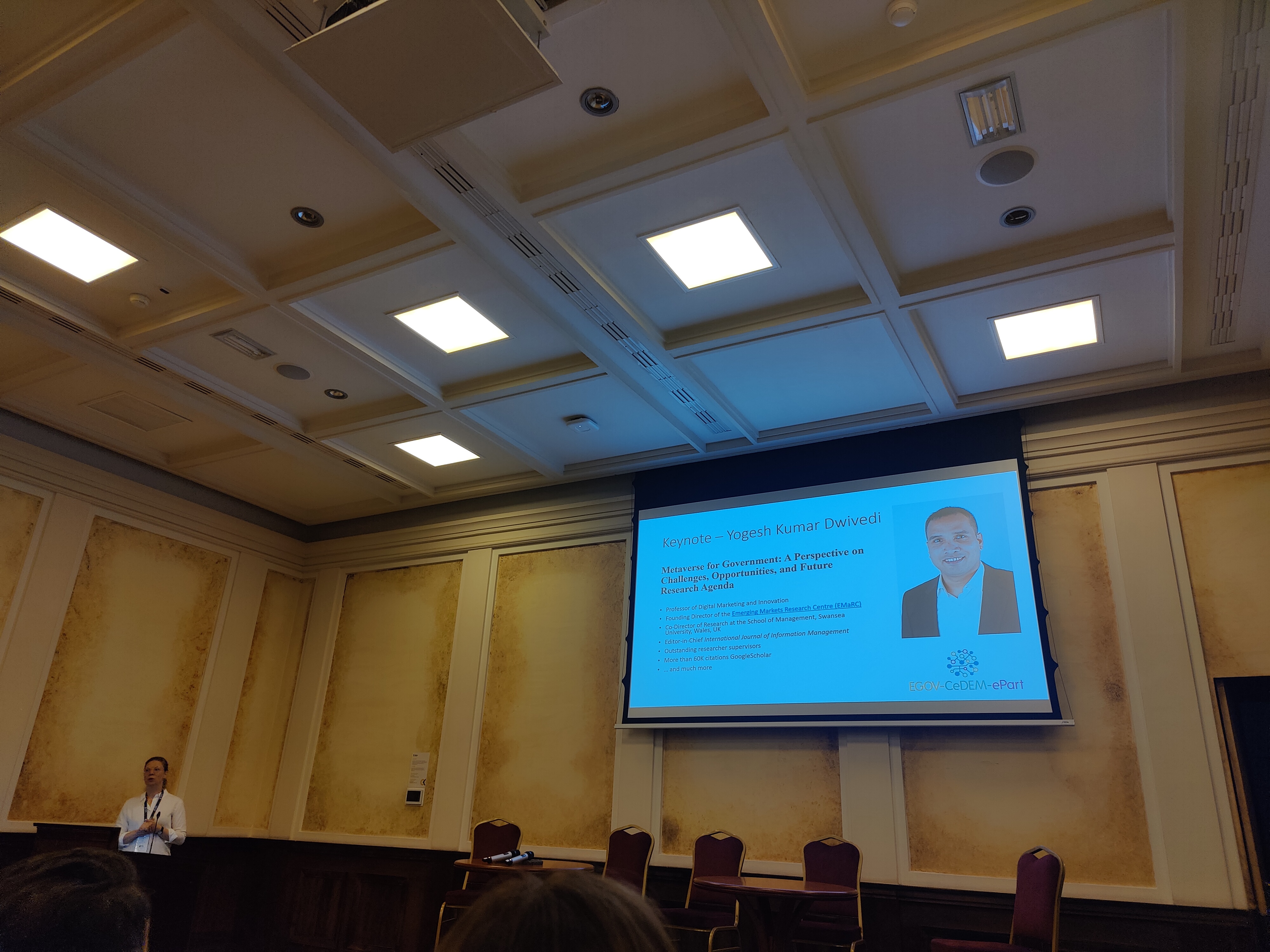
Let’s start with day#1… After conference opening by Ida Lindgren and Csaba Csaki – our local host, who did a great job – organized a very unique conference with exceptionally rich social programme, a brilliant keynote talk was delivered by Professor Yogesh K Dwivedi (possibly the most impactful researcher in the area) on Metaverse for Government and associated Challenges, Opportunities, as well as Future Research Agenda, as part of which the claim of a lack of studies on this topic was made. Luckily, our track “Emerging Issues and Innovations” has accepted one paper on Metaverse in digital government, which was the only at the conference, however, unfortunately, the discussion had not happened due to earlier departure of Yogesh and late arrival of authors. Anyway, almost immediately after the keynote the session, where I delivered a talk on HVD determination “Towards High-Value Datasets determination for data-driven development: a systematic literature review” (authors: Nikiforova, Rizun, Ciesielska, Alexopoulos, Miletić) took place. Just to remind you, I posted on this paper before – this is that paper, which has been already named “signal in the noise“, in which we asked ourselves and the current body of the knowledge (this is a systematic literature review-driven study):
❓how is the value of the open government data perceived / defined? Are local efforts being made at the country levels to identify dataset that provide the most value to stakeholders of the local open data ecosystem?
❓What datasets are considered to be of higher value in terms of data nature, data type, data format, data dynamism?
❓What indicators are used to determine HVD?
❓Whether there is a framework for determining country-specific HVD? I.e., is it possible to determine what datasets are of value and interest for their reuse & value creation, taking into account the specificities of the country, e.g., culture, geography, ethnicity, likelihood of crises and/or catastrophes.
Although neither OGD, nor the importance of data value are new topics, scholarly publications dedicated to HVD are very limited that makes study unique and constituting a call for action – probably this is also why it it is recommended for reading not only by us but also by The Living Library (by New York University, NYU Tandon School of Engineering, govlab). All in all, we have established some knowledge based, incl. several definitions of HVD, data-related aspects, stakeholders, some indicators and approaches that can now be used as a basis for establishing a discussion of what a framework for determining HVD should look like, which, along with the input we received from a series of international workshops as part of ICEGOV2022, ICOD2022 and DGO2023 with open data experts could enrich the common understanding of the goal, thereby contributing to the next open data wave.
👉Read the paper here
👉See slides here
👉Find supplementary data in open access at Zenodo here
Here I am very grateful to session attendees for raising a discussion around the topic, where some of those comments confirmed once more the correctness of both the problem statement and our future plans – thanks a lot!

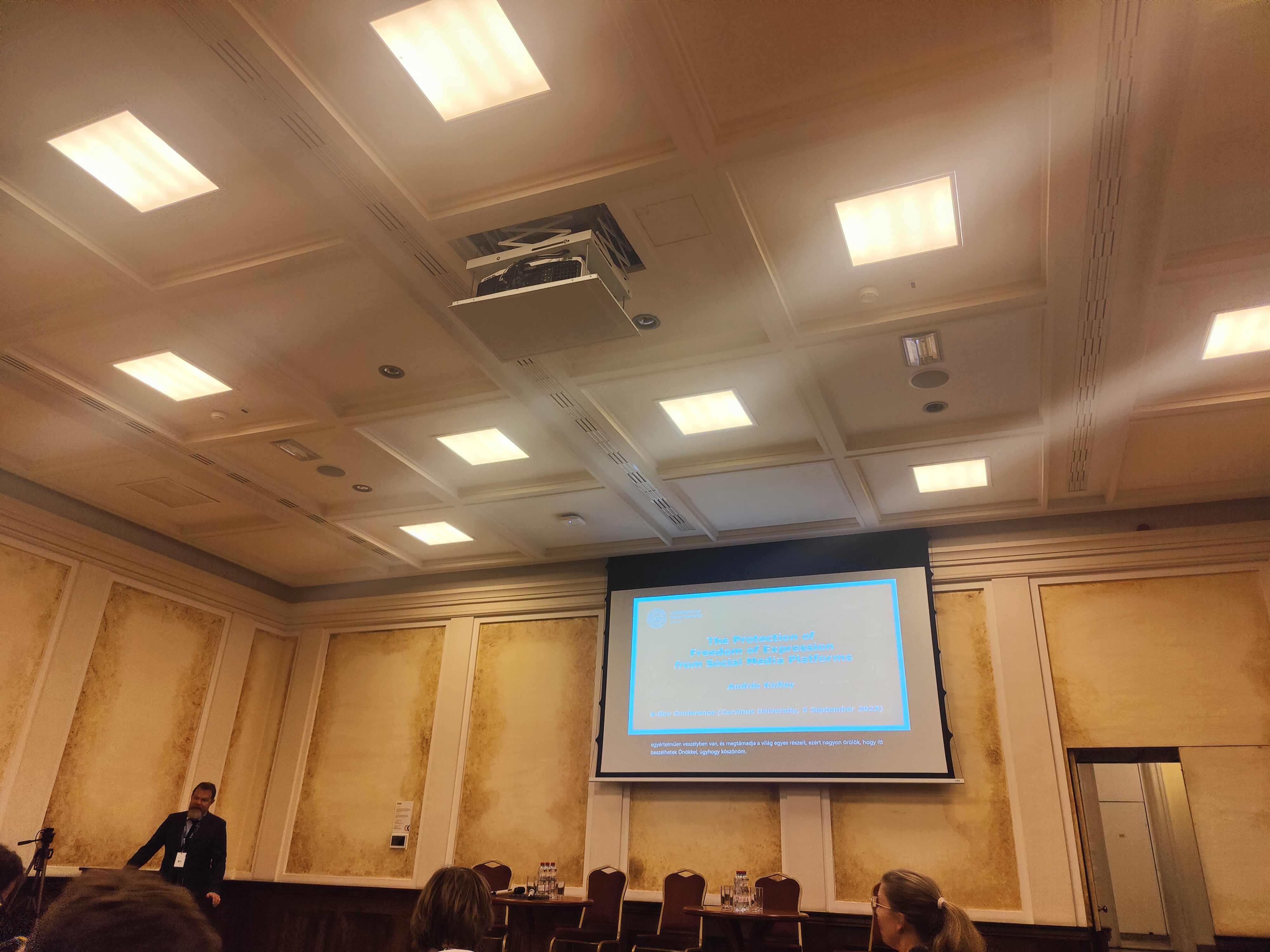
Day#2 of started with another keynote talk, whcih this time delivered by Andras Koltay (President of the National Media and Infocommunications Authority and the Media Council of Hungary) on the protection of freedom of expression from social media platforms – very different but yet very insightful talk. Then, my second role of the workshop organizer and chair followed. As part of our workshop “PPPS’2023 – Proactive and Personalised Public Services: Searching for Meaningful Human Control in Algorithmic Government” (chairs: Anastasija Nikiforova, Nitesh Bharosa, Dirk Draheim, Kuldar Taveter). As part of this workshop, which took place in a hybrid mode (not an easy task), we initiated a discussion about personalised and Proactive Public Services, i.e.:
🎯talked about the concepts of public services, reactive and proactive models of public services, and models of their personalization;
🎯asked participants to share their views on public services and the levels of proactivity and personalisation of these services in their countries aiming to develop concepts for holistic proactive and personalised public service delivery;
🎯tried to establish a clearer vision of the “as-is” model and the necessary transition to the “to-be” model, their underlying factors, as well as pitfalls of which governments should be aware when designing, developing, and setting up proactive and personalised public services, trying to understand what are those emerging technologies that will likely have greater effect on public services in terms of both driving them or creating obstacles / barriers for their development and maintenance.
Read a bit more 👉 here
Special thanks to all participants, who attended and were very active (and survived)!

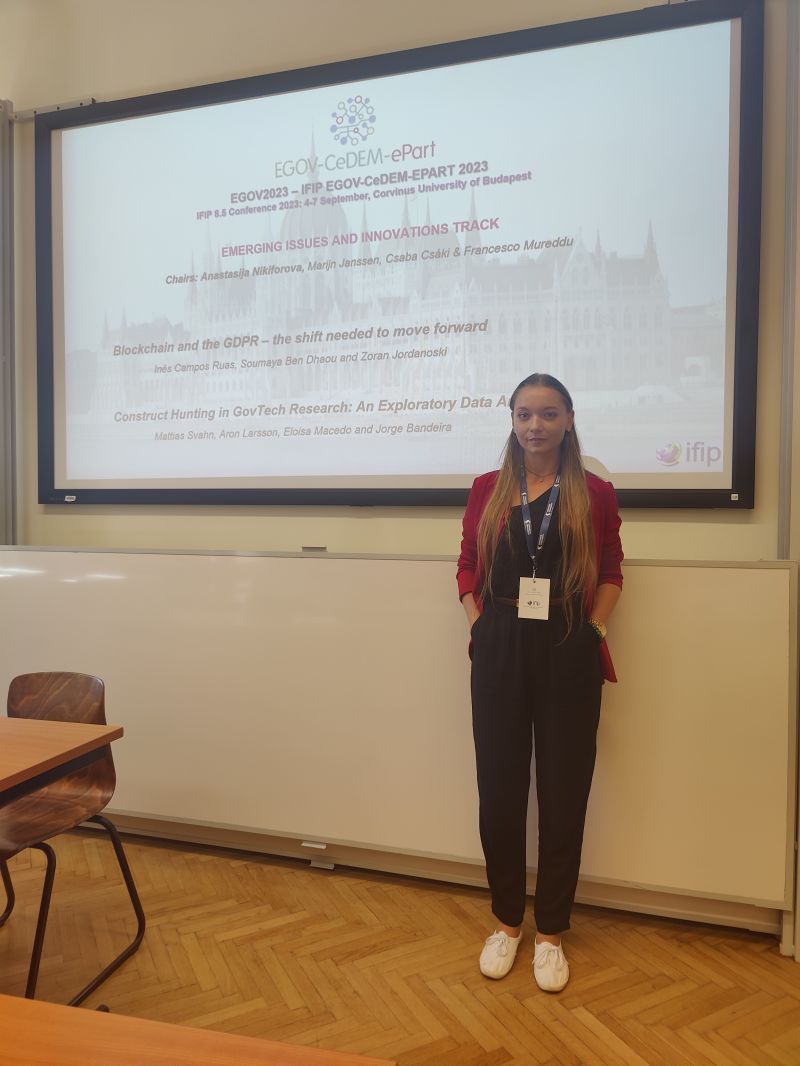
And now a few insights from day#3, when three sessions of our Emerging Issues and Innovations track (chairs: Marijn Janssen, Anastasija Nikiforova, Dr. Csaba Csaki, Francesco Mureddu) finally took place, where I was delighted to chair two of these sessions. Within these three sessions, 8 very diverse, but at the same time super interesting and insightful talks were delivered (predominantly from the United Nations University and Sweden), namely:
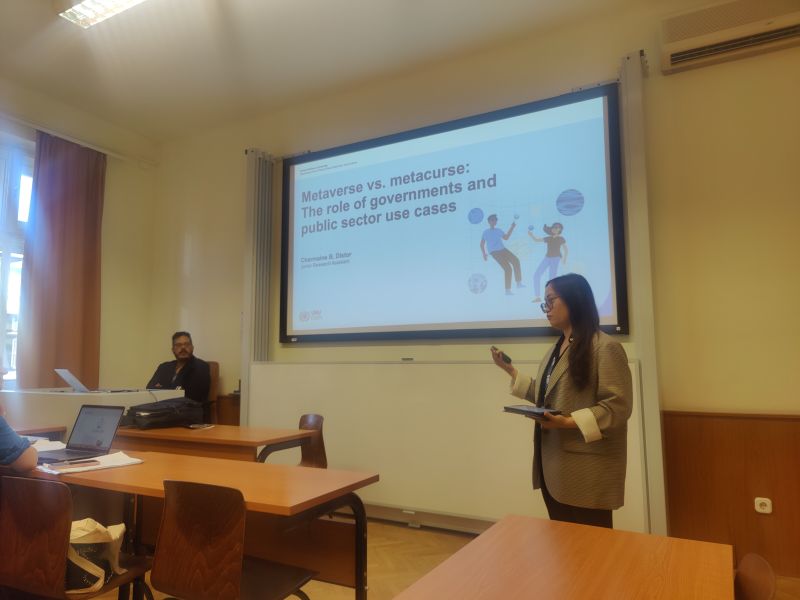
✍Metaverse vs. metacurse: The role of governments and public sector use cases by Charmaine Distor, Soumaya Ben Dhaou, & Morten Meyerhoff Nielsen that can be seen as a continuation of the keynote talk by Prof. Yogesh Dwivedi delivered at the 1st day;
✍Dynamic Capabilities and Digital Transformation in Public sector: Evidence from Brazilian case study by Larissa Magalhães;
✍Affording and constraining digital transformation: The enactment of structural change in three Swedish government agencies by Malin Tinjan, Robert Åhlén, Susanna Hammelev Jörgensen & Johan Magnusson
✍The Vicious Cycle of Magical Thinking: How IT Governance Counteracts Digital Transformation by Susanna H. Jörgensen, Tomas Lindroth, Johan Magnusson, Malin Tinjan, Jacob Torell & Robert Åhlen
✍Buridan’s Ass: Encapsulation as a Possible Solution to the Prioritization Dilemma of Digital Transformation by Johan Magnusson, Per Persson, Jacob Torell & Ingo Paas
✍Measuring digital transformation at the local level: assessing the current state of Flemish municipalities by Lieselot Danneels & Sarah Van Impe
✍Blockchain and the GDPR – the shift needed to move forward by Inês Campos Ruas, Soumaya Ben Dhaou & Zoran Jordanoski
✍Construct Hunting in GovTech Research: An Exploratory Data Analysis by Mattias Svahn, Aron Larsson, Eloisa Macedo and Jorge Bandeira
Read papers 👉 here, here & here
Big thanks go to both authors and presenters, as well as the audience, who was very active (even despite the fact that it was the very last day of the conference) and made these sessions a success!
And right after these two sessions, the third keynote by Laszlo Trautmann “The ethics of expertise – the political economy implications of AI”.


And the last but not the least, yet another social event – wine tasting at Etyeki Kúria Borászat / Winery, which was the perfect happy end of the EGOV2023!
Exceptional organization by Corvinus University of Budapest, Csaba Csaki and his team, International Federation for Information Processing (IFIP), Digital Government Society – cheers!🍷🍷🍷
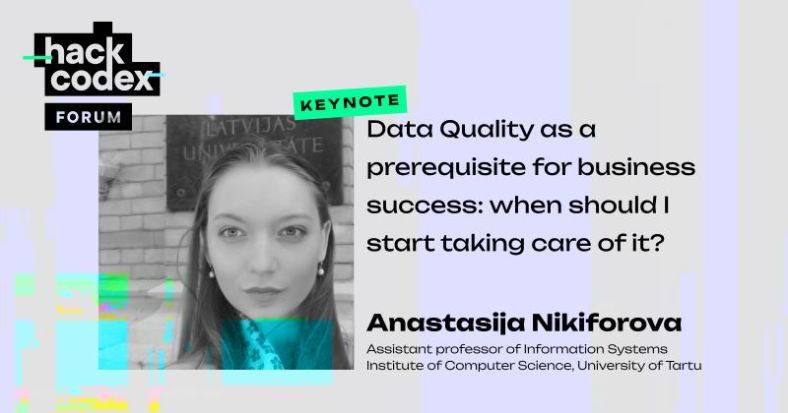
HackCodeX and my role of the Keynote speaker with “Data Quality as a prerequisite for business success: when should I start taking care of it?”

June 3-5, 2023 HackCodeX hackathon – a weekend-long experience, gathering tech enthusiasts from all over Europe to develop new ideas with the latest technology in a unique environment and atmosphere that serves as the meeting place for like-minded developers, designers, and business professionals eager to explore new paths – takes place. It will be accompanied by a one-day tech industry conference gathering international and local experts to discuss the key trends in technology and computing, where I act as one of those keynotes invited to deliver the talk devoted to the Data Quality that I entitled “Data Quality as a prerequisite for business success: when should I start taking care of it?

A full weekend of hacking and catching up with more than 400 other tech heads in an atmosphere and spirit like no other.

Sounds interesting? 🗓️ 🗓️ 🗓️ Save the date! June 5, 2023 – topics focused on the key topics, such as emerging technologies, security and privacy, hardware and infrastructure, data quality, quantum technologies, as well as language and framework updates. From the growing interest in Artificial Intelligence to practical tips for securing software applications and dwelling into performance optimization – HackCodeX aims to inspire and provide new knowledge for tech experts of all levels. 

Stay tuned and do not miss the opportunity to attend and meet me there! Read more here -> https://www.hackcodex.eu/forum

Rii Forum 2023 “Innovation 5.0: Navigating shocks and crises in uncertain times Technology-Business-Society” & a plenary debate “Advances in ICT & the Society”

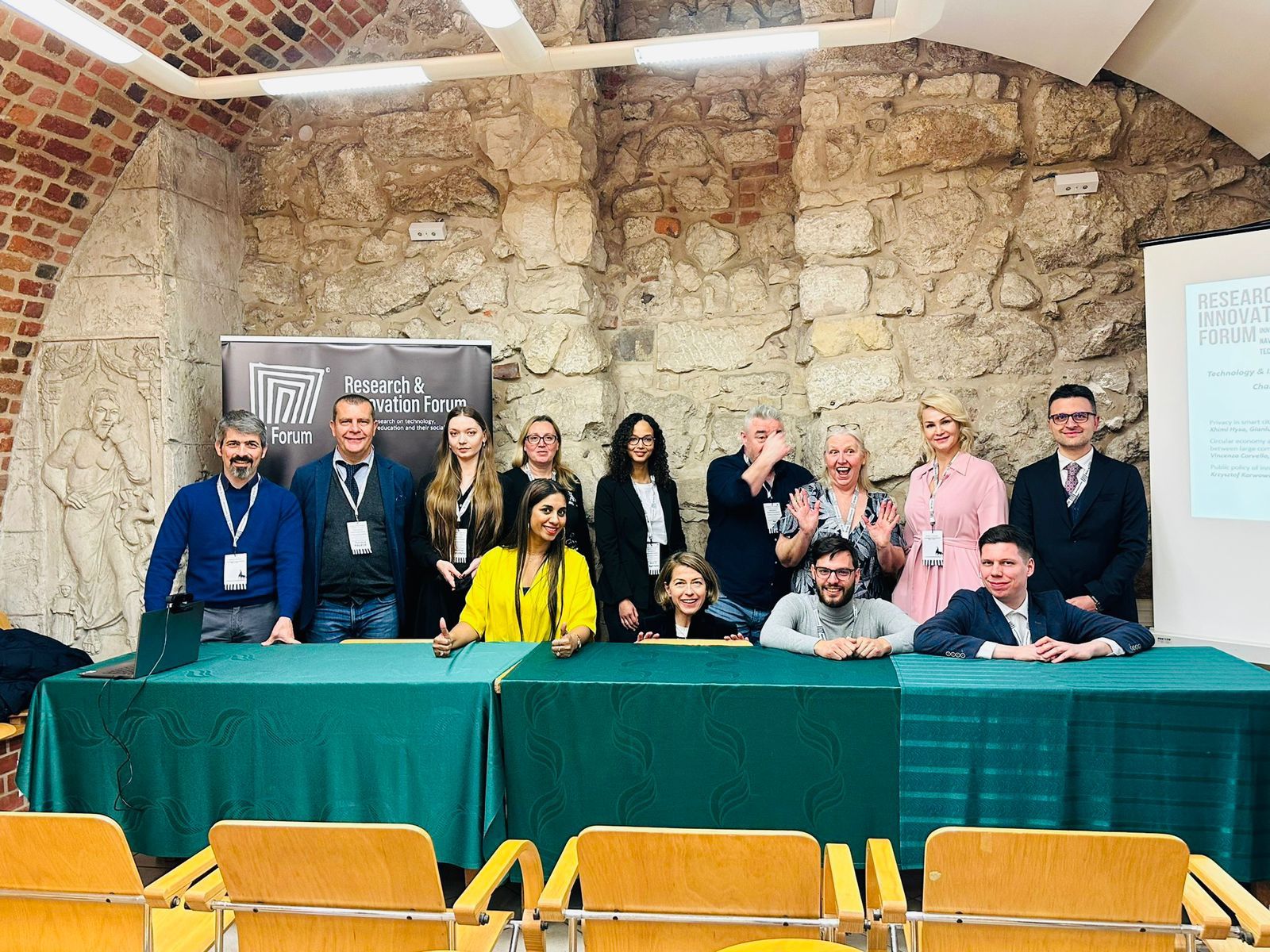
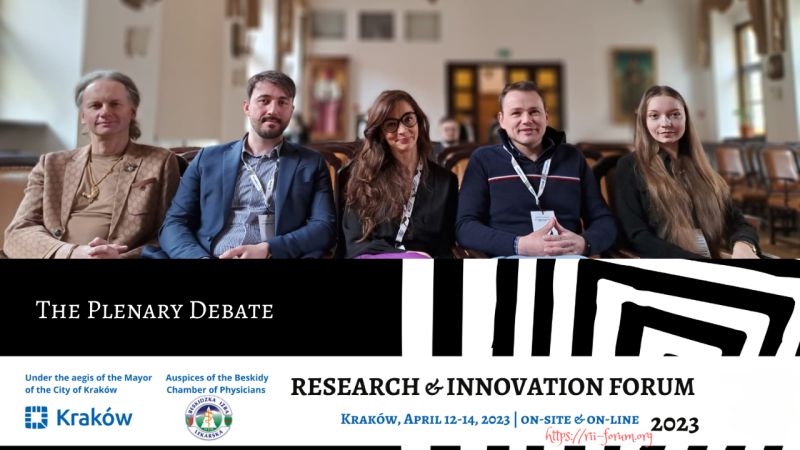
Last week, I had an unforgettable experience at the Research and Innovation Forum (RiiForum) on which I posted previously in Krakow, Poland, serving as plenary speaker and session chair. It was another great experience to have an absolutely amazing plenary session titled “Advances in ICT & the Society: threading the thin line between progress, development and mental health”, where we – Prof. Dr. Yves Wautelet, Prof. Dr. Marek Krzystanek, Karolina Laurentowska & Prof. Marek Pawlicki – discussed disruptive technologies in our professional lives in the past years, how they affected us and our colleagues, how they affect(ed) society and its specific groups, including their mental health, and general perception of technology, i.e. an enemy of humanity, or rather a friend and support, and how to make sure the second take place. And from this we have developed a discussion around AI, chatGPT, Metaverse, blockchain, even slightly touching on quantum computing. Of course, all this was placed in the context of democracy and freedoms / liberties. All in all, we approached the topic of governance and policy-making, which is too often reactive rather than proactive, which, in turn, leads to many negative consequences, as well as elaborated on the engineering practices. 

To sum up – emerging and disruptive technologies, Blockchain, AI, Metaverse, digital competencies, education, liberty, democracy, openness, engagement, metaverse, inclusivity, Industry 5.0, Society 5.0 – and it is not a list of buzzwords, but a list of topics we have managed to cover both plenary speakers and the audience and continued to talk about them during the whole conference. Rich enough, isn’t it?

And then the day did not end, continuing with several super insightful sessions, where, of course, one I enjoyed most is the one that I chaired. Three qualitative talks with further rich discussion after each thanks to an excellent audience, despite the fact this was the last session of the day (before the dinner), namely:

  • Privacy in smart cities using VOSviewer: a bibliometric analysis by Xhimi Hysa, Gianluca Maria Guazzo, Vilma Cekani, Pierangelo Rosati
  • Public policy of innovation in China by Krzysztof Karwowski, Anna Visvizi
  • How Human-Centric solutions and Artificial Intelligence meet smart cities in Industry 5.0 by Tamai Ramirez, Sandra Amador, Antonio Macia-Lillo, Higinio Mora
     

And the last, but not the least, Krakow surprised me lot (in a positive sense, of course) – it was my first time in Poland, and I am absolutely glad that it was on such a beautiful city as Krakow – the place with the rich history and culture! Thank you dear RiiForum2023 organizers – Anna Visvizi, Vincenzo Corvello, ORLANDO TROISI, Mara Grimaldi, Giovanni Baldi and everyone who was involved – it is always a pleasure to be a part of this community!


14th International Joint Conference on Knowledge Discovery, Knowledge Engineering and Knowledge Management (IC3K): how it was and who got the Best Paper Award?

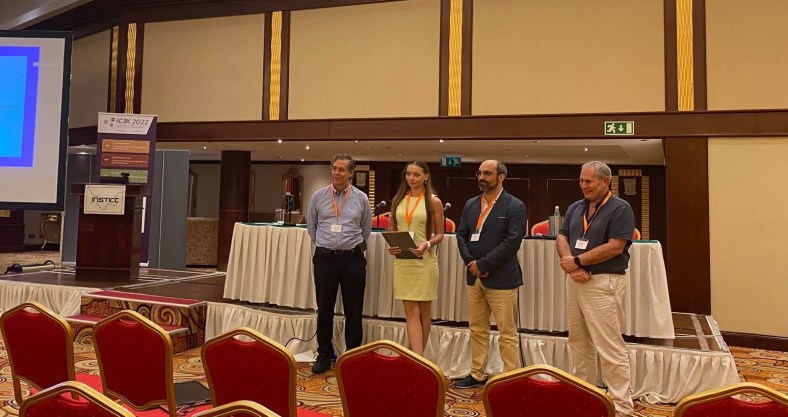
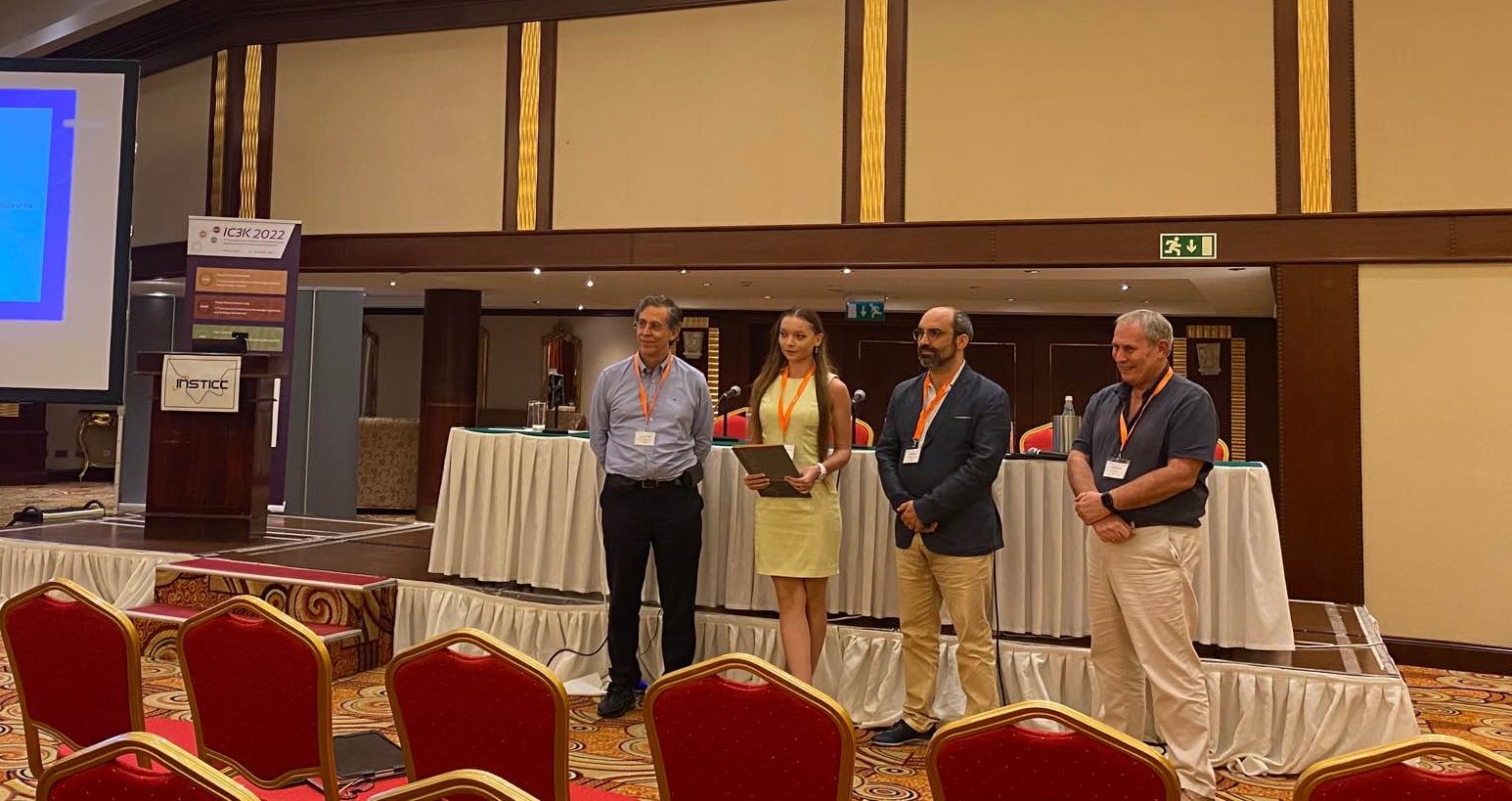
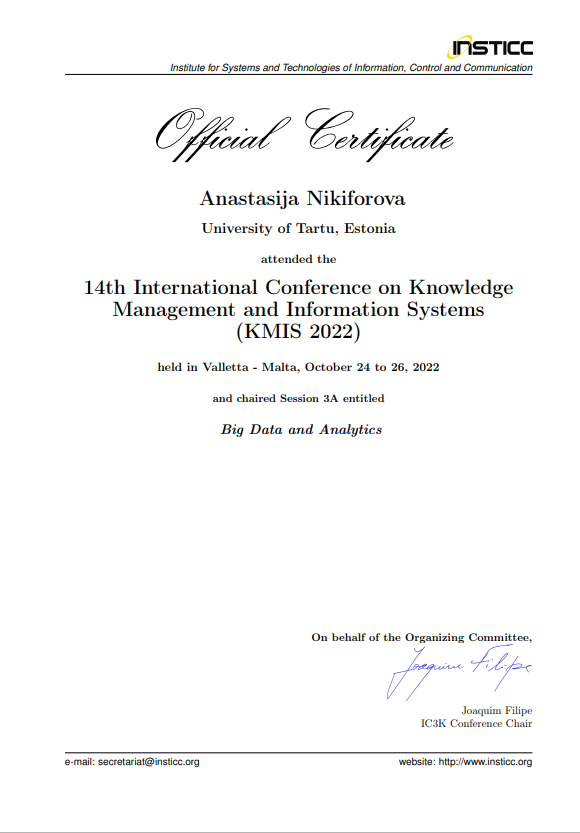
In this post I would like to briefly elaborate on a truly insightful 14th International Joint Conference on Knowledge Discovery, Knowledge Engineering and Knowledge Management (IC3K), where I was honored to participate as a speaker, presenting our paper “Putting FAIR principles in the context of research information: FAIRness for CRIS and CRIS for FAIRness” (authors: Otmane Azeroual, Joachim Schopfel and Janne Polonen, and Anastasija Nikiforova), and as a chair of two absolutely amazing sessions, where live and fruitful discussions took place, which is a real indicator of the success of such! And spoiler, our paper was recognized as the Best Paper! (i.e., best paper award goes to… :))

IC3K consists of three subconferences, namely 14th International Conference on Knowledge Discovery and Information Retrieval (KDIR), 14th International Conference on Knowledge Engineering and Ontology Development (KEOD), and 14th International Conference on Knowledge Management and Information Systems (KMIS), where the latter is the one, to which my paper has been accepted, and also won the Best Paper Award – I know, this is a repetition, but I am glad to receive it, same as the euroCRIS community is proud for us – read more here…!

Briefly about our study, with which we mostly wanted to urge a call for action in the area of CRIS and their FAIRness. Of course, this is all about the digitization, which take place in various domain, including but not limited to the research domain, where it refers to the increasing integration and analysis of research information as part of the research data management process. However, it is not clear whether this research information is actually used and, more importantly, whether this information and data are of sufficient quality, and value and knowledge could be extracted from them. It is considered that FAIR principles (Findability, Accessibility, Interoperability, Reusability) represent a promising asset to achieve this. Since their publication (by one of the colleagues I work together in European Open Science Cloud), they have rapidly proliferated and have become part of both national and international research funding programs. A special feature of the FAIR principles is the emphasis on the legibility, readability, and understandability of data. At the same time, they pose a prerequisite for data and their reliability, trustworthiness, and quality. In this sense, the importance of applying FAIR principles to research information and respective systems such as Current Research Information Systems (CRIS, also known as RIS, RIMS), which is an underrepresented subject for research, is the subject of our study. What should be kept in mind is that the research information is not just research data, and research information management systems such as CRIS are not just repositories for research data. They are much more complex, alive, dynamic, interactive and multi-stakeholder objects. However, in the real-world they are not directly subject to the FAIR research data management guiding principles. Thus, supporting the call for the need for a ”one-stop-shop and register-once use-many approach”, we argue that CRIS is a key component of the research infrastructure landscape / ecosystem, directly targeted and enabled by operational application and the promotion of FAIR principles. We hypothesize that the improvement of FAIRness is a bidirectional process, where CRIS promotes FAIRness of data and infrastructures, and FAIR principles push further improvements to the underlying CRIS. All in all, three propositions on which we elaborate in our paper and invite  everyone representing this domain to think of, are:

1. research information management systems (CRIS) are helpful to assess the FAIRness of research data and data repositories;

2. research information management systems (CRIS) contribute to the FAIRness of other research infrastructure;

3. research information management systems (CRIS) can be improved through the application of the FAIR principles.

Here, we have raised a discussion on this topic showing that the improvement of FAIRness is a dual or bidirectional process, where CRIS promotes and contributes to the FAIRness of data and infrastructures, and FAIR principles push for further improvement in the underlying CRIS data model and format, positively affecting the sustainability of these systems and underlying artifacts. CRIS are beneficial for FAIR, and FAIR is beneficial for CRIS. Nevertheless, as pointed out by (Tatum and Brown, 2018), the impact of CRIS on FAIRness is mainly focused on the (1) findability (“F” in FAIR) through the use of persistent identifiers and (2) interoperability (“I” in FAIR) through standard metadata, while the impact on the other two principles, namely accessibility and reusability (“A” and “R” in FAIR) seems to be more indirect, related to and conditioned by metadata on licensing and access. Paraphrasing the statement that “FAIRness is necessary, but not sufficient for ‘open’” (Tatum and Brown, 2018), our conclusion is that “CRIS are necessary but not sufficient for FAIRness”.

This study differs significantly from what I typically talk about, but it was to contribute to it, thereby sharing the experience I gain in European Open Science Cloud (EOSC), and respective Task Force I am involved in – “FAIR metrics and data quality”. It also allowed me to provide some insights on what we are dealing with within this domain and how our activities contribute to the currently limited body of knowledge on this topic.

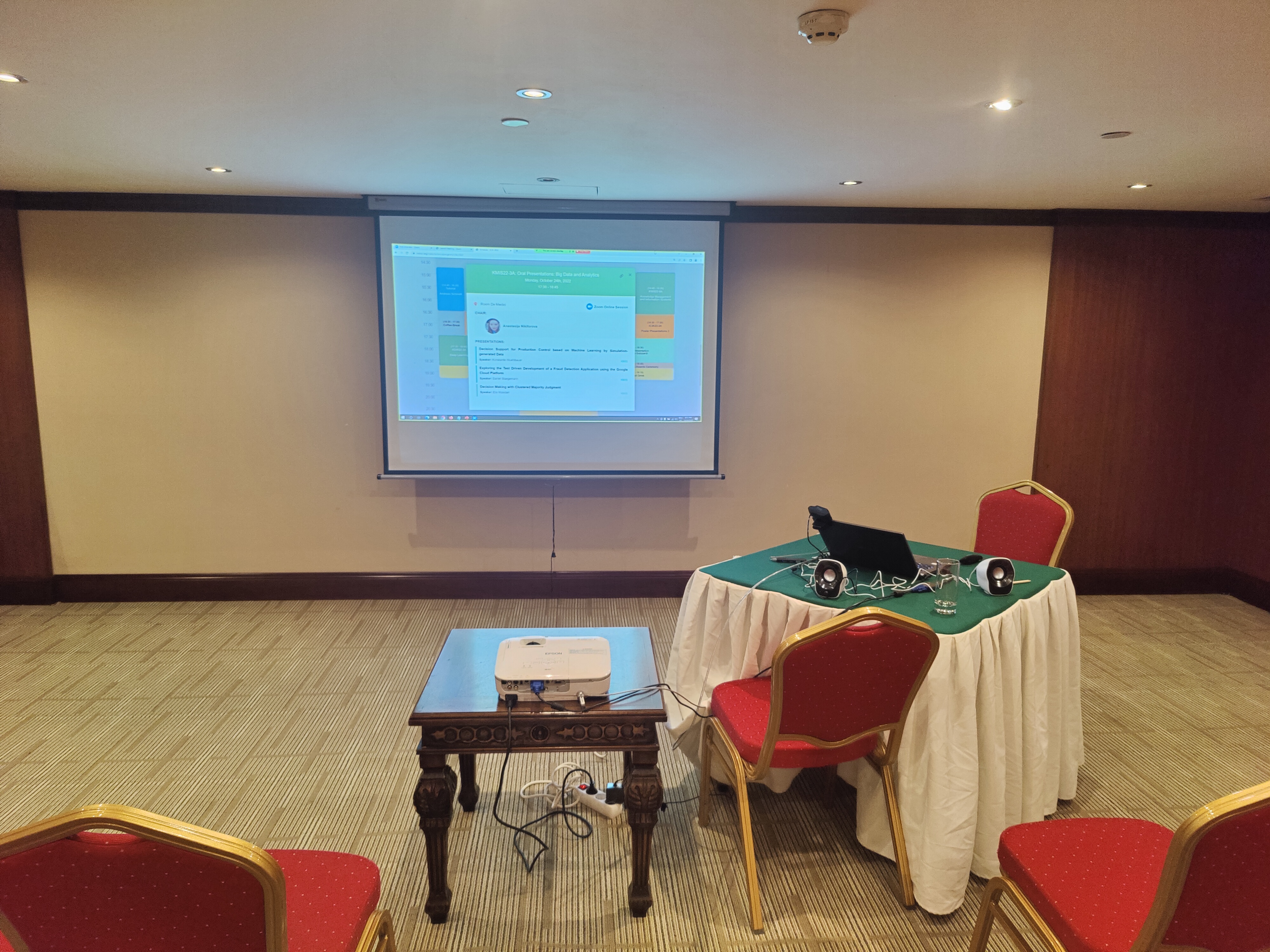
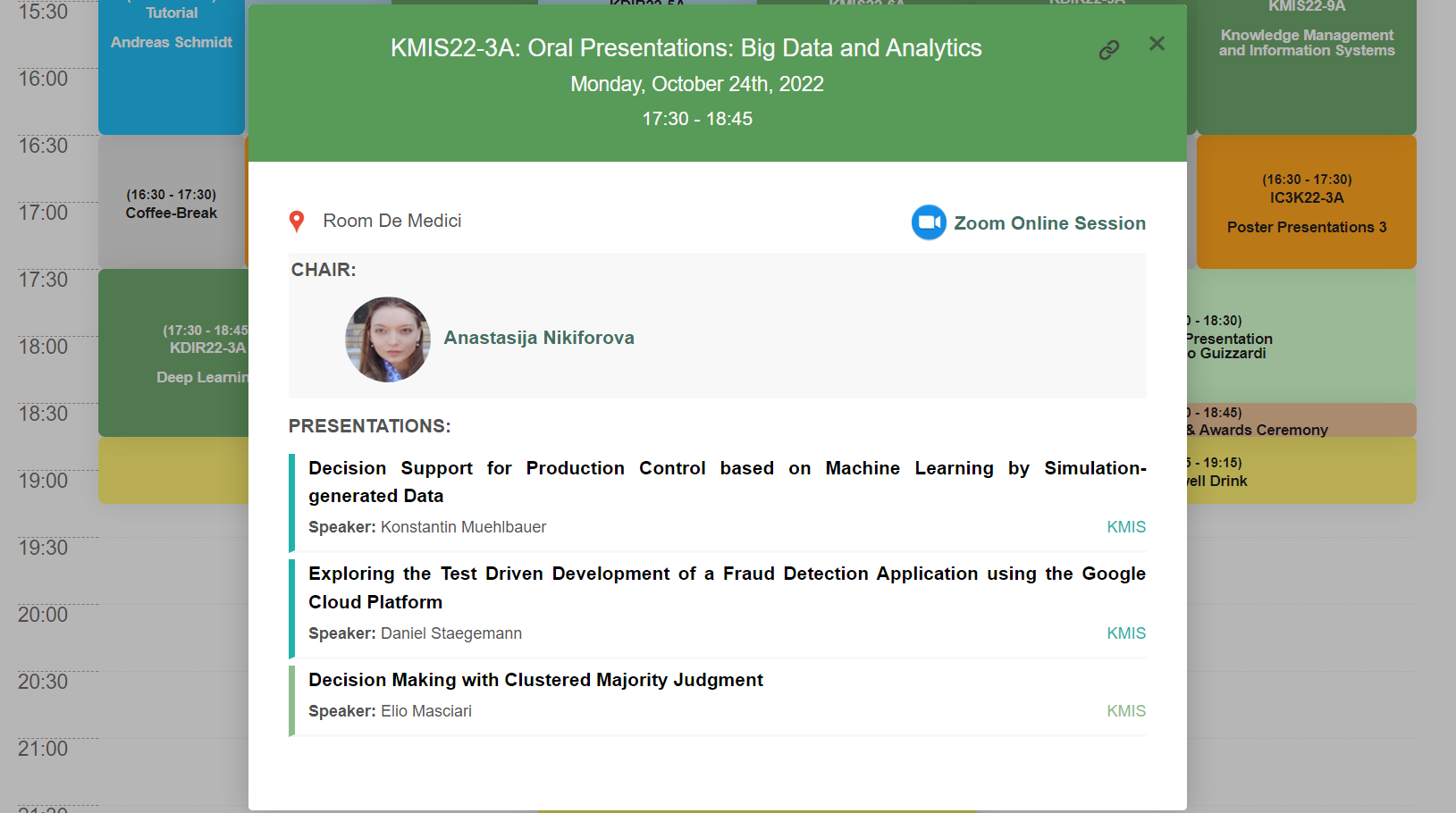
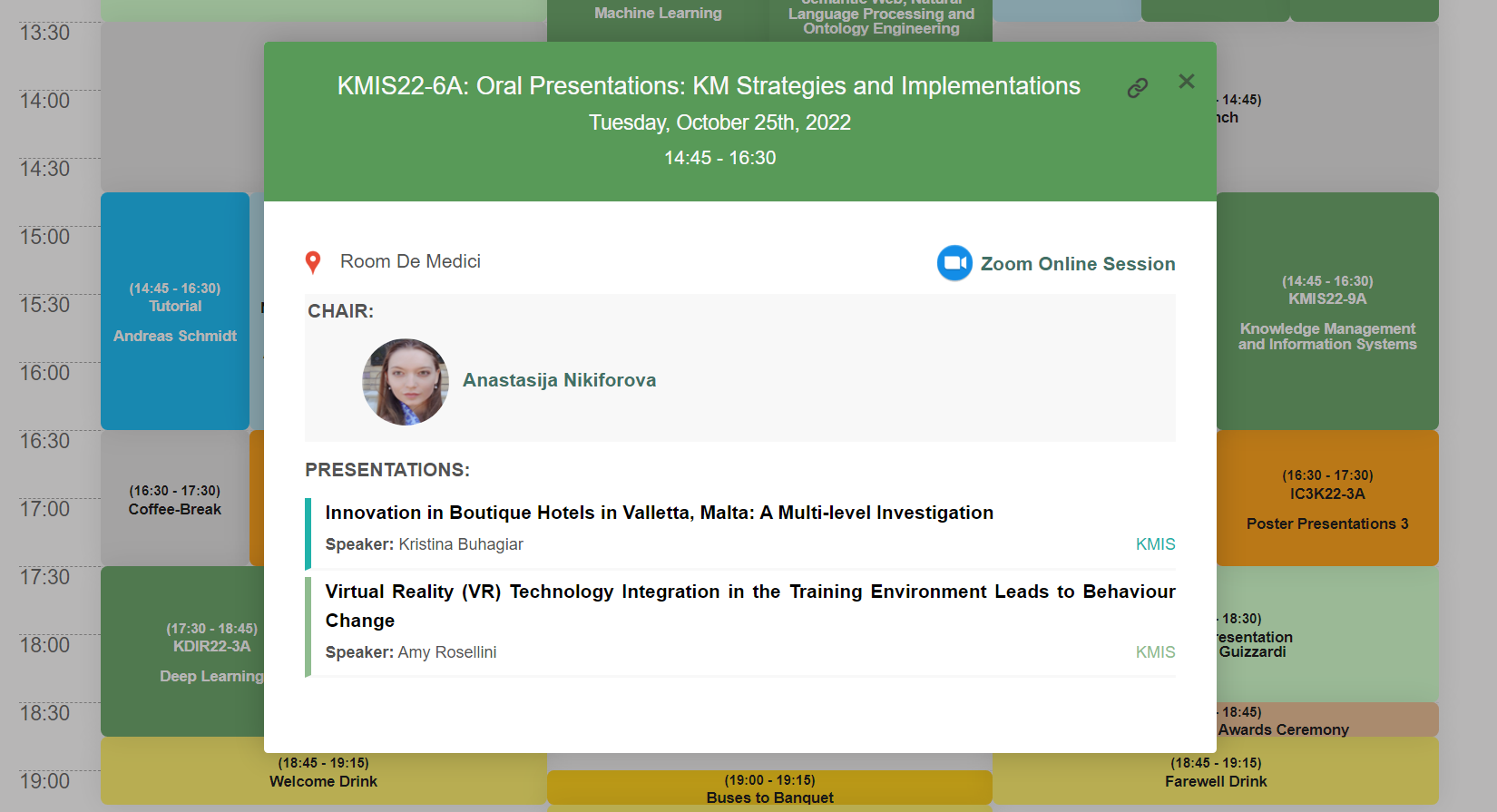
A bit about the sessions I chaired and topics raised within them, which were very diverse but equally relevant and interesting. I was kindly invited to chair two sessions, namely “Big Data and Analytics” and “Knowledge management Strategies and Implementations”, where the papers on the following topics were presented:

  • Decision Support for Production Control based on Machine Learning by Simulation-generated Data (Konstantin Muehlbauer, Lukas Rissmann, Sebastian Meissner, Landshut University of Applied Sciences, Germany);
  • Exploring the Test Driven Development of a Fraud Detection Application using the Google Cloud Platform (Daniel Staegemann, Matthias Volk, Maneendra Perera, Klaus Turowski, Otto-von-Guericke University Magdeburg, Germany) – this paper was also recognized as the best student paper;
  • Decision Making with Clustered Majority Judgment (Emanuele D’ajello , Davide Formica, Elio Masciari, Gaia Mattia, Arianna Anniciello, Cristina Moscariello, Stefano Quintarelli, Davide Zaccarella, University of Napoli Federico II, Copernicani, Milano, Italy.
  • Virtual Reality (VR) Technology Integration in the Training Environment Leads to Behaviour Change (Amy Rosellini, University of North Texas, USA)
  • Innovation in Boutique Hotels in Valletta, Malta: A Multi-level Investigation (Kristina, University of Malta, Malta)

And, of course, as is the case for each and every conference, the keynotes are panelists are those, who gather the highest number of attendees, which is obvious, considering the topic they elaborate on, as well as the topics they raise and discuss. IC3K is not an exception, and the conference started with a very insightful discussion on Current Data Security Regulations and the discussion on whether they Serve or rather Restrict the Application of the Tools and Techniques of AI. Each of three speakers, namely Catholijn Jonker, Bart Verheijen, and Giancarlo Guizzardi, presented their views considering the domain they represent. As a result, both were very different, but at the same time leading you to “I cannot agree more” feeling!

One of panelists – Catholijn Jonker (TU Delft) delivered then an absolutely exceptional keynote speech on Self-Reflective Hybrid Intelligence: Combining Human with Artificial Intelligence and Logic. Enjoyed not only the content, but also the style, where the propositions are critically elaborated on, pointing out that they are not indented to serve as a silver bullet, and the scope, as well as side-effects should be determined and considered. Truly insightful and, I would say, inspiring talk.

All in all, thank you, organizers – INSTICC (Institute for Systems and Technologies of Information, Control and Communication), for bringing us together!

ICEGOV2022: 4 insightful days and four roles – participant / attendee, author / presenter, workshop chair and Best Paper Awards nominee (part 1)

This October (2022) I had a pleasure and honor to spend four absolutely insightful days at ICEGOV2022 conference – 15th International Conference on Theory and Practice of Electronic Governance, which took place in a very specific place – Guimarães that is considered the birthplace of Portugal. The conference took place under the “Digital Governance for Social, Economic, and Environmental Prosperity” moto and was organized by organized by the University of Minho (Universidade do Minho) and UNU-eGOV – United Nations University.


Just to start, the conference was indeed something very special starting with the very first seconds since the conference was opened by United Nations Secretary-General António Guterres. 6 exceptional keynote talks were delivered during 3 days of the conference, while the last day was fully dedicated to workshops, which were 7 – one of them organized by me and my colleagues, triggered by the study I presented at ICEGOV in 2021 (although only in a virtual / online mode).

All in all, this made it exceptionally honorable to play not one, not two or even three, but four roles. In other words, I was not only a regular participant / attendee or even just an author presenting the paper, but also a workshop chair and even a Best Paper Awards nominee.

Let me start with the reflection on the paper I presented here, since it is also very special for me, considering how it was developed. In other words, it was a joint paper we wrote together with my colleague Anneke Zuiderwijk as part of my 6-months long research visit to the University of Delft, Faculty of Technology, Policy and Management. Even more, it was the topic we discussed with many colleagues from TU Delft, when I was kindly invited to participate in an ICT colloquium, where we had an opportunity to talk about it (among other things such as my general research interests). Moreover, we got this paper accepted exactly at time, when my role of visiting researcher at Delft University of Technology was close to the end.

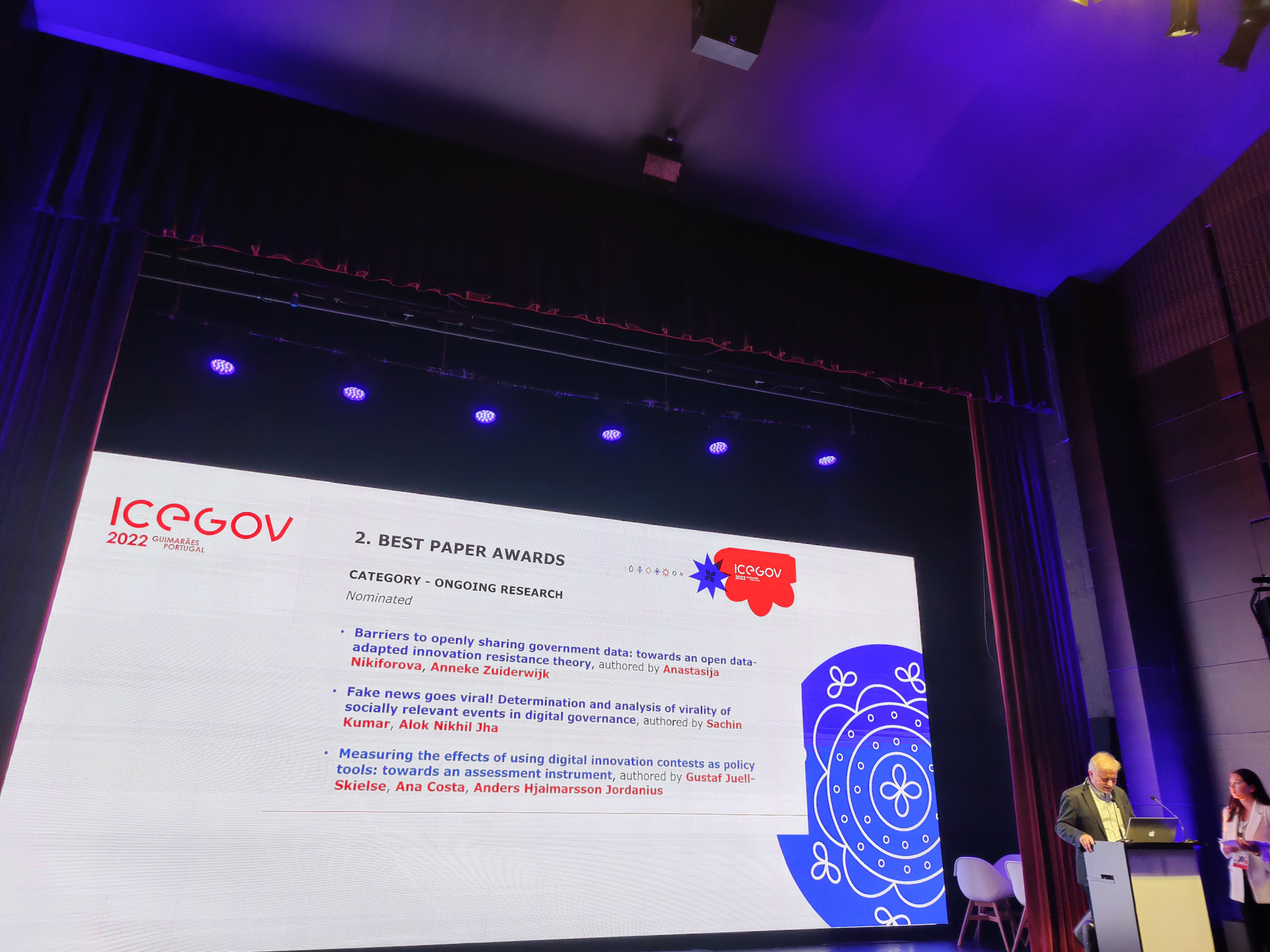
And before I will briefly elaborate on it, just to make you curious about it, let me mention that it was recognized as one of the best papers, which was nominated to ICEGOV2022 Best Paper Awards in its category. More precisely, it was in top-3 best papers among 61 papers! And although another paper got this award, we still consider it as a small victory! And citing the awards committee “the goal of ICEGOV Best Paper Awards is to acknowledge excellent research” isn’t that a win? ✌️✌️✌️

So… let me now provide a brief insight on the paper (finally). The paper itself is a reflection on the current ongoing research and is titled “Barriers to openly sharing government data: towards an open data-adapted innovation resistance theory”.

To say in a few words, the study itself aims to develop an Open Government Data-adapted Innovation Resistance Theory model to empirically identify predictors affecting public agencies’ resistance to openly sharing government data. Here we want to understand:
💡what are functional and behavioural factors that facilitate or hamper opening government data by public organizations?
💡does IRT provide a new and more complete insight compared to more traditional UTAUT and TAM? – IRT has not been applied in this domain, yet, so we are checking whether it should be considered, or rather those models we are familiar so much are the best ones?
💡and additionally – does the COVID-19 pandemic had an [obvious/significant] effect on the public agencies in terms of their readiness or resistance to openly share government data?
Based on a review of the literature on both IRT research and barriers associated with open data sharing by public agencies, we developed an initial version of the model, which was presented here at ICEGOV2022. Here I should immediately express my huge gratitude to the audience and very positive feedback I received after the session. At the same time, considering that many of these compliments came from people representing , TU Delft, I feel even more belongness to it, despite even have not been there physically during the above-mentioned stay (thanks to pandemic).

Taking a step back to the research – now, we plan to conduct exploratory interviews in multiple countries, preferably of different maturity levels (Estonia, Latvia, Netherlands, Italy (?), Belgium (?) – who else?), to refine the model. And once the model is refined, we will validate it to study the resistance of public authorities to openly sharing government data in a quantitative study.

📢📢📢 By the way, in case you are interested in this research and would like to get involved, we are now seeking for people who could conduct exploratory interviews in their countries, so in case you are such person, let us know even if your country is listed above – the interview protocol is already ready and we are about to start these interviews. The more countries will be involved, the more “universal” model we will be able to bring to this world!

In the meantime, find the paper (and cite as) -> Nikiforova A., Zuiderwijk A. (2022) Barriers to openly sharing government data: towards an open data-adapted innovation resistance theory, In 15th International Conference on Theory and Practice of Electronic Governance (ICEGOV 2022). Association for Computing Machinery, New York, NY, USA, 215–220, https://doi.org/10.1145/3560107.3560143

And just to close this post, and considering very positive impressions I had on them, let me at least list keynotes we had, since the organizers paid a very special attention to them, same as later – we as participants to their actual talks. All in all, ICEGOV2022 invited 6 keynotes we truly enjoyed – starting with the opening keynote delivered by Portuguese Secretary of State for Digitalisation and Administrative Modernisation Mário Campolargo, continuing with the following keynotes, which in many cases were later complemented with plenaries. These keynotes were very diverse in nature, more precisely – “Harnessing multilateralism for digital governance development?” by Cristina Duarte (Under-Secretary-General and Special Adviser on Africa to the United Nations Secretary-General), Digital transformation across countries and continents by Tony Shannon (Department of Public Expenditure & Reform, Dublin, Ireland), “AI+X: building a transformation agenda” by Theresa A. Pardo (University at Albany (SUNY)), “What is digital humanism?” by Walter Gehr (Federal Ministry for European and International Affairs), and “Reinforcing Interoperability Policy in the EU: Interoperable Europe” by Veronica Gaffey (European Commission (DG DIGIT)). Truly massive set of high-quality keynotes!

Thank you, of Guimarães, Portugal, and, of course, organizers of ICEGOV2022 – University of Minho (Universidade do Minho) and UNU-eGOV – United Nations University!

P.S. do not forget to read another post on the workshop I had at ICEGOV2022!