Call for Papers: Accountable and Inclusive Digital Ecosystems for Public Value Creation — dg.o 2026

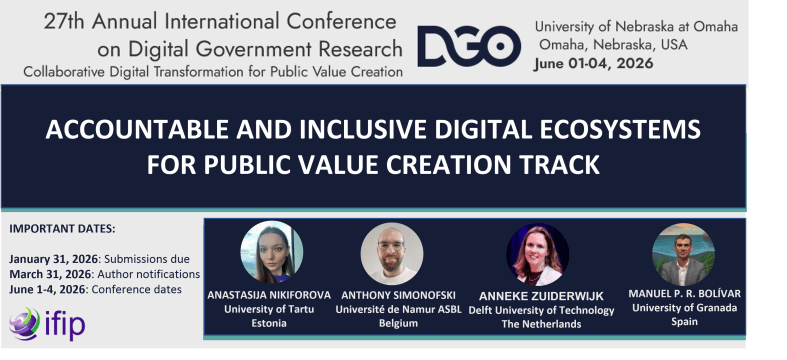
Call for Papers is now open for our track “Accountable and Inclusive Digital Ecosystems for Public Value Creation” at the 27th Annual International Conference on Digital Government Research (dg.o 2026). The conference will take place June 2–5, 2026, at the University of Nebraska at Omaha, USA.

This track continues and expands the work we initiated in 2024 and 2025 on public and open data ecosystems. Responding to new technological and societal realities, we broaden the focus this year toward AI-enabled, interoperable, sustainable, and human-centered digital ecosystems—their design, governance, and impact on public value creation.

Why this track? Why now?

Digital ecosystems are undergoing profound transformation. Emerging technologies—AI (including generative AI), interoperable data spaces, IoT, cloud–edge infrastructures, and new governance frameworks—now form the backbone of digital public action. These technologies unlock unprecedented opportunities for insight generation, collaboration, transparency, and service co-creation across sectors.

Yet they also introduce new challenges: ethics, accountability, trust, digital literacy, and inclusion. As governments and organizations navigate this shift, we need research that bridges technical innovation, institutional capacity, and societal expectations.

Our track provides a space for this conversation.

What the track explores

We invite contributions that examine the conceptual, technical, institutional, and societal dimensions of digital and data ecosystems, with an emphasis on accountability, sustainability, inclusivity, and public value.

Topics of interest include (but are not limited to):

  • Ethical and accountable AI, data governance, algorithmic transparency, privacy, security
  • Interoperability and trust frameworks, identity infrastructures, standards, reference architectures
  • AI, Generative AI, LLMs, NLP, IoT/cloud/edge integration, green computing, Metaverse applications
  • Human–AI interaction, explainability, accessibility, inclusion in digital public services
  • Stakeholder engagement, empowerment, co-creation, digital literacy, data sovereignty
  • Institutional and organizational mechanisms for ecosystem governance and sustainable management
  • Open, public, and cross-sector data ecosystems, including data spaces and platform ecosystems
  • Social, economic, and environmental sustainability and other public value dimensions
  • Case studies from cities, communities, public-sector organizations, and multi-stakeholder collaborations
  • Impact assessments of digital ecosystems on individuals, organizations, and society

Connection to the dg.o 2026 theme

The conference theme—Collaborative Digital Transformation for Public Value Creation—aligns perfectly with our track’s purpose.
Digital ecosystems represent socio-technical infrastructures where governance, technology, and societal needs intersect. Understanding how to make these ecosystems accountable, inclusive, and sustainable is essential for collaborative digital transformation and for delivering tangible societal outcomes.

Track chairs

  • Anastasija Nikiforova, University of Tartu (Estonia)
  • Anthony Simonofski, Université de Namur (Belgium)
  • Anneke Zuiderwijk – van Eijk, Delft University of Technology (Netherlands)
  • Manuel Pedro Rodríguez Bolívar, Universidad de Granada (Spain)

Together, we bring perspectives from digital government, data governance, public administration, information systems, and socio-technical ecosystem design.

Submission details

Full CFP and submission guidelines are available here:
🔗 https://dgsociety.org/dgo-2026/

We look forward to receiving your submissions and to advancing the conversation on how accountable, inclusive, and sustainable digital ecosystems can drive the next generation of public value creation.

If you have questions about fit or ideas you’d like to discuss, feel free to reach out.

Editorial Board Member of International Journal of Information Management (IJIM)

As of February 2024, I am an Editorial Board Member of the probably the most prestigious journal in my area – International Journal of Information Management (IJIM) (SJR Q1, ABDC: A*, IF 21), which focuses on high quality papers that address contemporary issues for all those involved in information management and which make a contribution to advancing information management theory and practice.

The International Journal of Information Management is an international, peer-reviewed journal which aims to bring its readers the very best analysis and discussion in the developing field of information management, which topics include: aspects of information management in learning organisations, health care (patients as well health workers and managers), business intelligence, security in organizations, social interactions and community development, knowledge management, information design and delivery, information for health care, Information for knowledge creation, legal and regulatory issues, IS-enabled innovations in information, content and knowledge management, philosophical and methodological approaches to information management research, new and emerging agendas for information research and reflective accounts of professional practice.

While it is already a great honor to become part of this journal, it is even more honorable considering that I am the first representative of Estonia, as well as Baltic Countries in general (Estonia, Latvia – my home country, and Lithuania). I look forward to contributing to the continuous success of this journal and Information Management and Information Systems areas in general.

Read more about the journal on its official webpage.

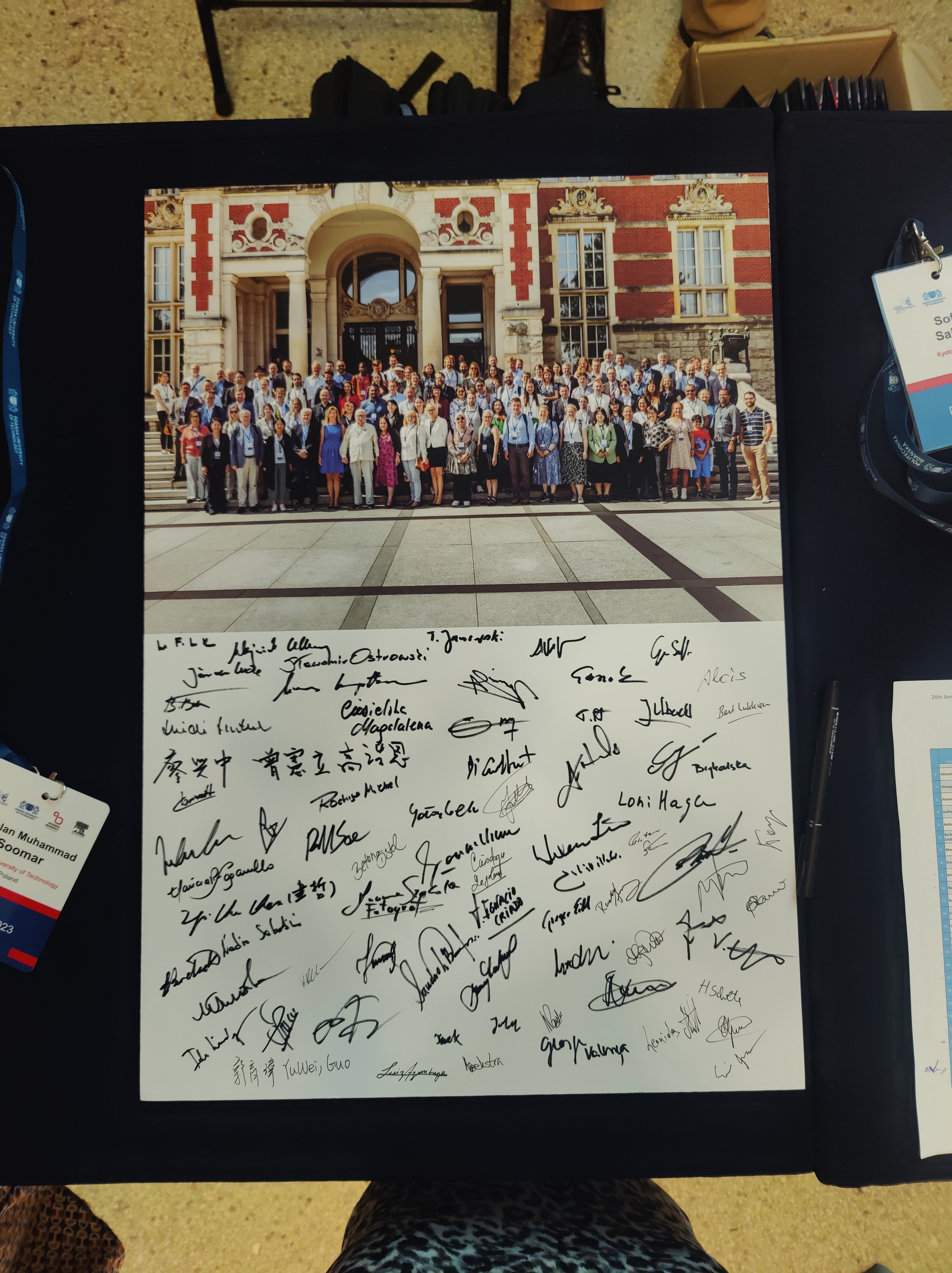
24th Annual International Conference on Digital Government Research: from the former President of Poland & Nobel Prize laureate Lech Wałęsa to the 3rd edition of our workshop on HVD

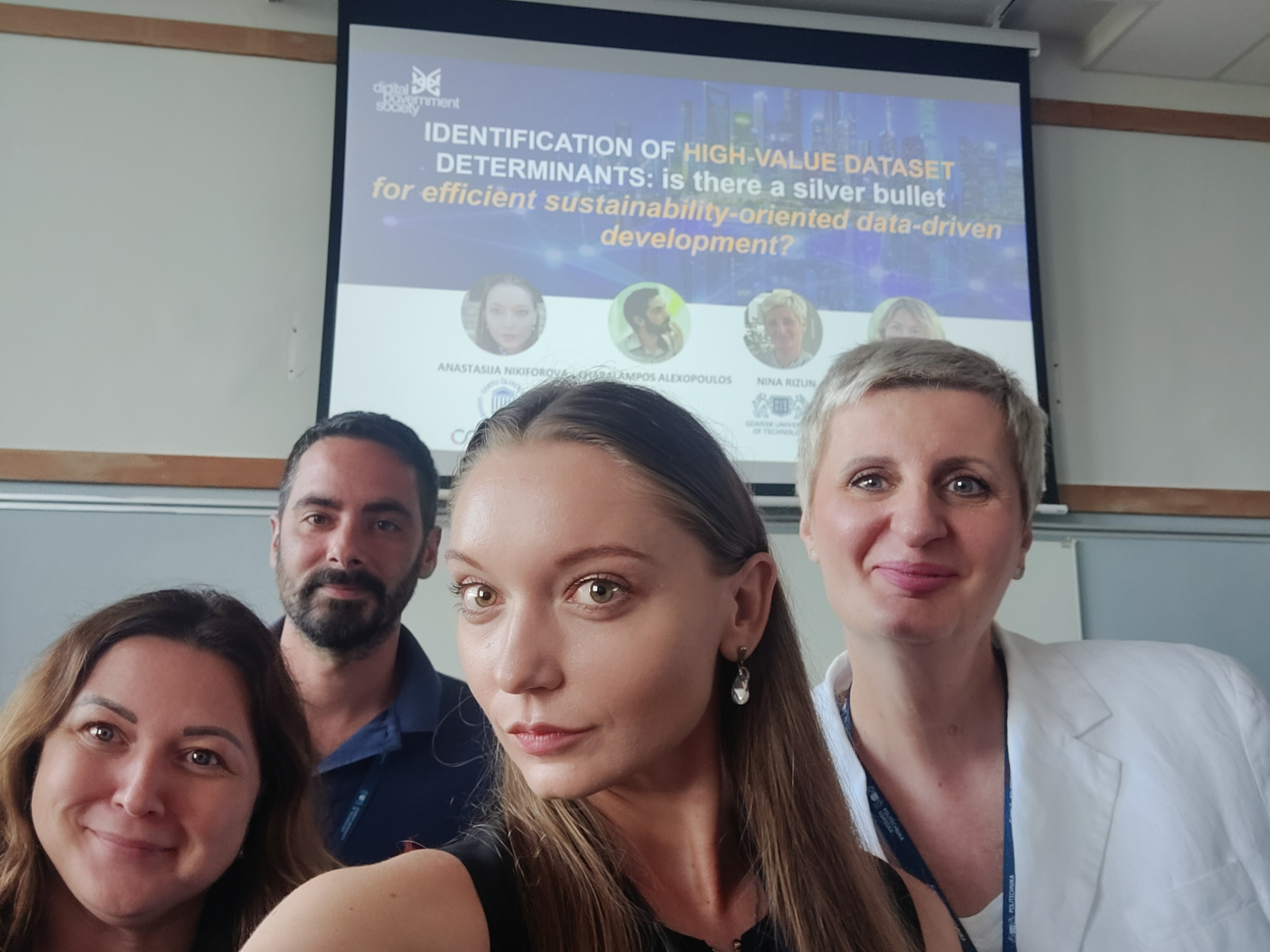
The week was full of impressions (positive) from the the 24th Annual International Conference on Digital Government Research in the charming Gdańsk (Poland), which started with our workshop, followed by the keynote talk delivered by the former President of Poland & Nobel Prize laureate Lech Wałęsa, until the very last session & coming to my hometown and meeting John Malkovich there! Although this was already the 3rd working trip in the last 4 weeks and the 5th from the very beginning of June, during which I delivered two keynote lectures, presented two papers (with two more papers presented by my colleagues at other conferences), chaired the workshop with several more events & activities, it was still an absolutely great experience, where we finally had the 3rd edition of our workshop “Identification of high value dataset determinants: is there a silver bullet for efficient sustainability-oriented data-driven development? as part of dg.o2023, which brought more than 20 participants, with whom we jointly tried to understand:

💡What can be the country-specific HVD determinants (aspects)? Incl. who should be the expected beneficiary of the availability of HVD? what are the current approaches towards HVD determination?

💡What mechanisms or methods can be put in place to determine them?

💡Can this be done (semi-)automatically?

💡How a framework for determining country-specific HVD could look like?

As part of the workshop, we also validated the results of our Towards High-Value Datasets determination for data-driven development: a systematic literature review (Anastasija Nikiforova, Nina Rizun, Magdalena Ciesielska, Charalampos Alexopoulos, Andrea Miletič) paper we expect to present to EGOV community, which has been already named a “sound in the noise” (we work hard to correspond to this characteristic!). As part of the above, we verified whether the findings from the literature are relevant, valid & complete discussing:

💡What can be data-centered characteristic of HVD? (and should they be predefined?)
💡What are the expected characteristics of the HVD determination indicators, i.e. (1) ex-ante / ex-post / both?, (2) qualitative / quantitative / both? (3) Internal (such as usage statistics) / external (e.g., report, indices, charters) / both?, (4) SMART / not necessarily? Diving then into the above questions, as well as evaluating relevance of indicators identified previously (lit-re & current practices / ad-hoc approaches & previous workshops)

Many thanks to everyone who participated in the ICEGOV, ICOD or DGO workshops (more than 60 people in total), as well as thanks to Maria, who was part of the ICOD workshop!

Thanks to the organizers, including but not limited to the local organizing committee – Gdansk University, Digital Government Society, Emerald Publishing – for giving an opportunity to have a good time and to finally meet the colleagues in person (some of whom never met before despite a relatively long collaboration)!

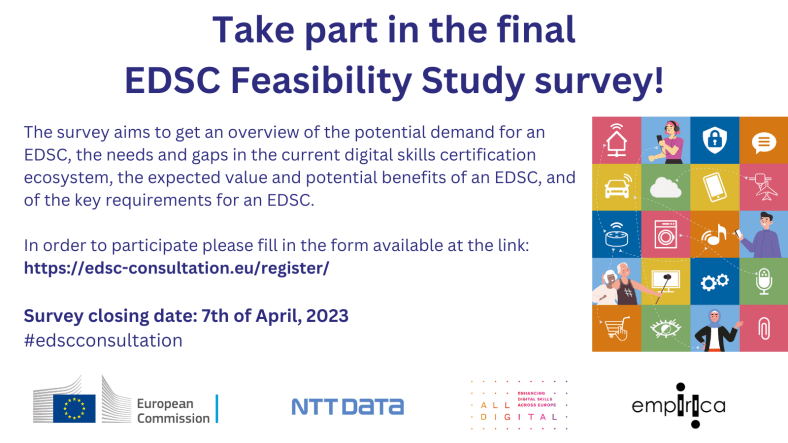
Participate in the European Digital Skills Certificate (EDSC) feasibility study!

📣📣📣 This is a short post to let you know that we have reached the most important phase of the consultation process for the European Digital Skills Certificate (#EDSC) feasibility study, and on behalf of EDSC – as EDSC Ambassador – I sincerely invite Public authorities, Policy makers, Education & Training providers working in the fields of education, digitalisation, and employment, and to education and training providers at the national, regional and/or local level to participate in this last survey.

🎯🎯🎯This survey aims to get an overview of the potential demand for an EDSC, the needs and gaps in the current digital skills certification ecosystem, the expected value and potential benefits of an EDSC, and of the key requirements for an EDSC. 


The European Commission’s Directorate-General for Employment, Social Affairs and Inclusion has initiated Action 9 of the Digital Education Action Plan (DEAP 2021-2017), that is, to develop a European Digital Skills Certificate (EDSC) that may be recognised and accepted by governments, employers, and other stakeholders across Europe. This would allow Europeans to indicate their level of digital competences, corresponding to the Digital Competence Framework (DigComp) proficiency levels.

In order to participate, you have to first register. If you are not yet registered, please fill in the form available at the link: https://edsc-consultation.eu/register/ 

The survey takes around 30 minutes,  and it will be open until the 7th of April 2023

Thank you in advance for taking the time to complete the questionnaire! 

Our – EOSC TF “FAIR Metrics and Data Quality” paper “Towards a data quality framework for EOSC” is released!🍷🍷🍷

I am glad to announce the release of “Towards a data quality framework for EOSC” document, which we have been hard at work on hard for several months as the Data Quality subgroup of the “FAIR Metrics and Data Quality” Task Force European Open ScienceCloud (EOSC) Association) – Carlo Lacagnina, Romain David, Anastasija Nikiforova, Mari Elisa Kuusniemi, Cinzia Cappiello, Oliver Biehlmaier, Louise Wright, Chris Schubert, Andrea Bertino, Hannes Thiemann, Richard Dennis.

This document explains basic concepts to build a solid basis for a mutual understanding of data quality in a multidisciplinary environment such as EOSC. These range from the difference between quality control, assurance, and management to categories of quality dimensions, as well as typical approaches and workflows to curate and disseminate dataset quality information, minimum requirements, indicators, certification, and vocabulary. These concepts are explored considering the importance of evaluating resources carefully when deciding the sophistication of the quality assessments. Human resources, technology capabilities, and capacity-building plans constrain the design of sustainable solutions. Distilling the knowledge accumulated in this Task Force, we extracted cross-domain commonalities (each TF member brings his / her own experience and knowledge – we all represent different domains and therefore try to make our contributions domain-agnostic, but at the same time considering every nuance that our specialism can bring and what deserves to be heard by others), as well as lessons learned, and challenges.

The resulting main recommendations are:

  1. Data quality assessment needs standards; unfortunately, not all communities have agreed on standards, so EOSC should assist and push each community to agree on community standards to guarantee the FAIR exchange of research data. Although we extracted a few examples highlighting this gap, the current situation requires a more detailed and systematic evaluation in each community. Establishing a quality management function can help in this direction because the process can identify which standard already in use by some initiatives can be enforced as a general requirement for that community. We recommend that EOSC considers taking the opportunity to encourage communities to reach a consensus in using their standards.
  2. Data in EOSC need to be served with enough information for the user to understand how to read and correctly interpret the dataset, what restrictions are in place to use it, and what processes participate in its production. EOSC should ensure that the dataset is structured and documented in a way that can be (re)used and understood. Quality assessments in EOSC should not be concerned with checking the soundness of the data content. Aspects like uncertainty are also important to properly (re)use a dataset. Still, these aspects must be evaluated outside the EOSC ecosystem, which only checks that evidence about data content assessments is available. Following stakeholders’ expectations, we recommend that EOSC is equipped with essential data quality management, i.e., it should perform tasks like controlling the availability of basic metadata and documentation and performing basic metadata compliance checks. The EOSC quality management should not change data but point to deficiencies that the data provider or producer can address.
  3. Errors found by the curators or users need to be rectified by the data producer/provider. If not possible, errors need to be documented. Improving data quality as close to the source (i.e., producer or provider) as possible is highly recommended. Quality assessments conducted in EOSC should be shown first to the data provider to give a chance to improve the data and then to the users.
  4. User engagement is necessary to understand the user requirements (needs, expectations, etc.); it may or may not be part of a quality management function. Determining and evaluating stakeholder needs is not a one-time requirement but a continuous and collaborative part of the service delivery process.
  5. It is recommended to develop a proof-of-concept quality function performing basic quality assessments tailored to the EOSC needs (e.g., data reliability and usability). These assessments can also support rewarding research teams most committed to providing FAIR datasets. The proof-of-concept function cannot be a theoretical conceptualization of what is preferable in terms of quality. Still, it must be constrained by the reality of dealing with an enormous amount of data within a reasonable time and workforce.
  6. Data quality is a concern for all stakeholders, detailed further in this document. The quality assessments must be a multi-actor process between the data provider, EOSC, and users, potentially extended to other actors in the long run. The resulting content of quality assessments should be captured in structured, human- and machine-readable, and standard-based formats. Dataset information must be easily comparable across similar products, which calls for providing homogeneous quality information.
  7. A number of requirements valid for all datasets in EOSC (and beyond) and specific aspects of a maturity matrix gauging the maturity of a community when dealing with quality have been defined. Further refinement will be necessary for the future, and specific standards to follow will need to be identified.

We sincerely invite you to take a look at this very concise 76-pages long overview of the topic and look forward to your recommendations / suggestions / feedback – we hope to provide you with the opportunity to communicate the above conveniently very soon, so take your time to read, while we are making our last preparations 📖 🍷📖🍷📖🍷 But make sure you have a glass of wine at the time of reading it, as this will make sense at some point of reading, i.e. when we compare data quality with wine quality with reference to both flavour type and intensity (intrinsic quality), brand, packaging (extrinsic quality)… but no more teasers and bon appetite! 🍷🍷🍷
The document can be found in an Open Access here.

We also want to acknowledge the contribution and input of colleagues from several European institutions, the EOSC Association and several external-to-TF stakeholders who gave feedback based on their own experience, and the TF Support Officer Paola Ronzino, as well as to our colleagues – Sarah Stryeck and Raed Al-Zoubi, and the last but not the list – to all respondents and everyone involved.