“Meet the publishers” or “Meet me with the Data & Policy” (Cambridge University Press) at CUDAN2023

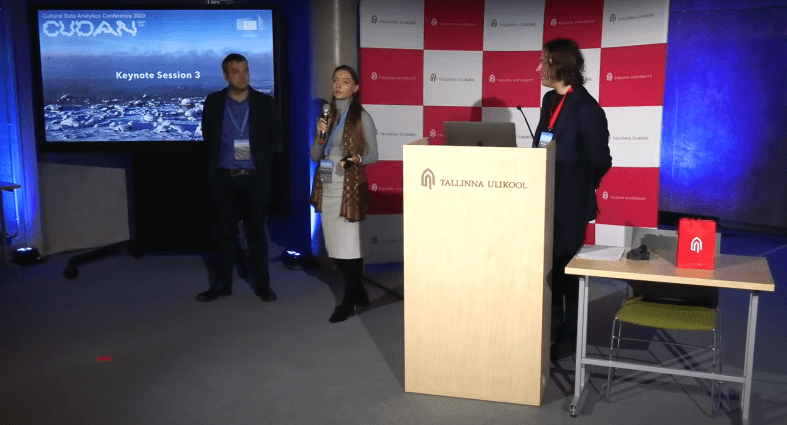
Cultural Data Analytics Conference 2023 (CUDAN 2023) took place this week at Tallinn University, where I was kindly invited by the organizers to take part in the Meet The Publishers session representing Data & Policy journal (Cambridge University Press), where I serve as editor for “Focus on Digital & Data-Driven Transformations in Governance” area.
Together with colleague – Innar Liiv, who kindly joined me in promoting our journal, Data & Policy was represented by researchers representing two leading universities in Estonia – University of Tartu and TalTech – Tallinn University of Technology. The conference was hosted by another large Estonian university – Tallinn University, which did a great job since, although I am not related to cultural data analytics, I enjoyed the sessions, keynotes – Mauro Martino from IBM Research, Anu Masso from TalTech – Tallinn University of Technology, Lev Manovich from The City University of New York, and AI Art exhibition as part of a social event. Thank you Maximilian Schich for this event and invitation!
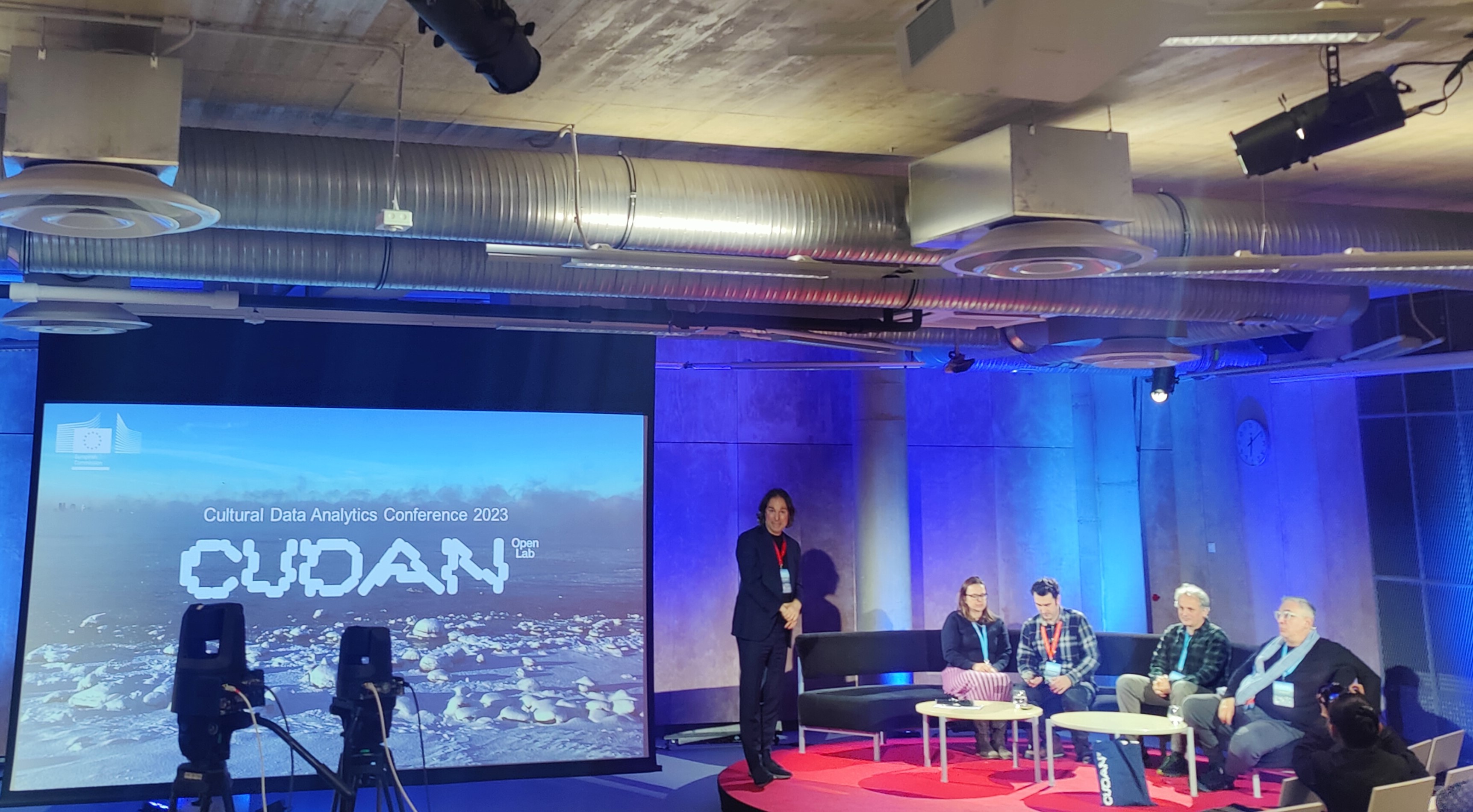
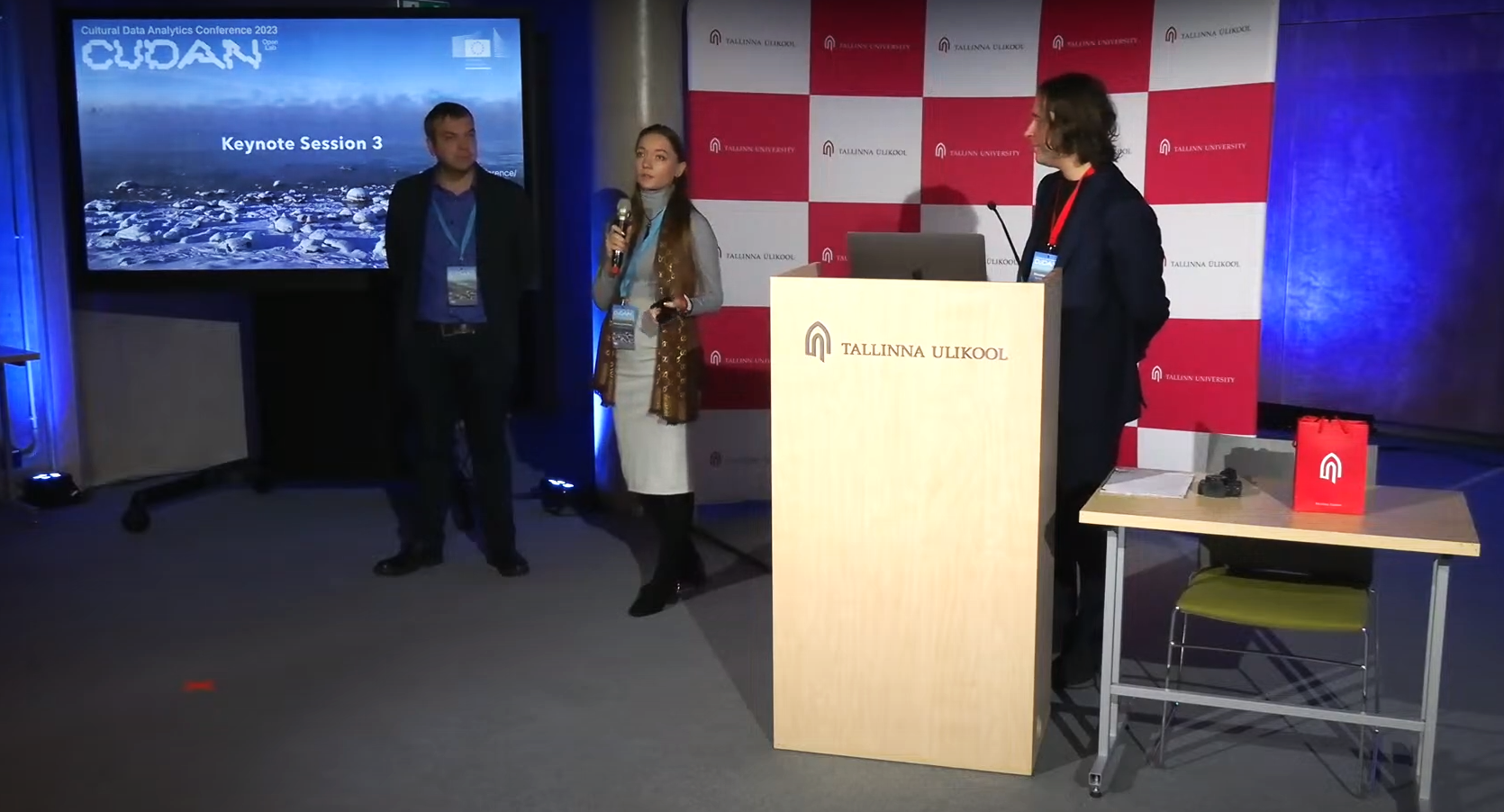
Referring back to the “Meet the Data & Policy“, and delivering the main message of this post – I invite you all to do the same and consider this relatively new but increasingly popular journal with a very good reputation.


Do not forget also the Special Issues we have, one of which is co-edited by me (together with Jérôme Chenal, EPFL (École polytechnique fédérale de Lausanne), Cédric Stéphane Teakouabou Koumetio, UM6P – Mohammed VI Polytechnic University, El Arbi Abdellaoui Alaoui) and is devoted to Emerging Data- and Policy-driven Approaches for African Cities Challenges, with a submission deadline of January 8, 2024. Just to remind, this Special Issue aims to expand the reach and scope of urban data research, innovation and entrepreneurship activities and policies to address urban challenges in Africa through the digitisation of cities. It will compile recent expert work on the topic to advance and promote scientific advance / excellence, promote the digital transition and its benefits for creating, collecting, storing and using urban data to achieve sustainable development goals (SDG) in African cities.

You can read more about the call in my previous post.
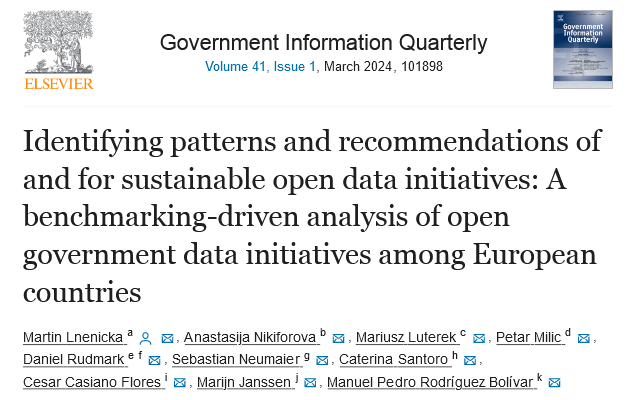
📢✍️🗞️New paper alert! “Identifying patterns and recommendations of and for sustainable open data initiatives: A benchmarking-driven analysis of open government data initiatives among European countries”, GIQ

With this post I would like to introduce our new paper entitled “Identifying patterns and recommendations of and for sustainable open data initiatives: A benchmarking-driven analysis of open government data initiatives among European countries” (authors: Martin Lnenicka, Anastasija Nikiforova, Mariusz Luterek, Petar Milic, Daniel Rudmark, Sebastian Neumaier, Caterina Santoro, Cesar Casiano Flores, Marijn Janssen, and Manuel Pedro Rodríguez Bolívar) that has been just published in Government Information Quarterly journal (Elsevier) – the leading journal in the world for articles on e-governemnt, public administration, and, in fact, many other topics.

This paper focuses on benchmarking of open data initiatives over the years and attempts to identify patterns observed among European countries that could lead to disparities in the development, growth, and sustainability of open data ecosystems, considering different potentially relevant contexts such as e-government, open government data, open data indices and rankings, and others relevant for the country under consideration. Specifically, this study conducts a comparative analysis of different patterns of open (government) data initiatives and their effects in the eight European countries – Austria, Belgium, Czech Republic, Italy, Latvia, Poland, Serbia, Sweden, using six open data benchmarks Global Open Data Index (GODI), Open Data Maturity Report (ODMR), Open Data Inventory (ODIN), Open Data Barometer (ODB), Open, Useful and Re-usable data (OURdata) Index, Open Government Development Index (OGDI), two e-government reports (57 editions in total), and other relevant resources, covering the period of 2013–2022. In other words, to attain the objective of the study, we developed the composite benchmarks-driven analytical protocol.

Using the developed composite benchmarks-driven analytical protocol and a Delphi method, we reached a consensus within a panel of experts and validated a final list of 94 patterns, including their frequency of occurrence among studied countries and their effects on the respective countries. Finally, we took a closer look at the developments in identified contexts over the years and defined 21 recommendations for more resilient and sustainable open government data initiatives and ecosystems and future steps in this area.

We then performed the cluster analysis to find similarities between patterns based on their occurrence and effects (impacts). Both these analyses suggest a close link between approaches to benchmarking of open data initiatives and the development of e-government over the years. We found that e-government services, their interoperability, availability, transparency, efficiency, etc., have a positive influence here, i.e., to what extent OGD and related concepts will merge with e-government and can use its infrastructure and related services for their growth. Finally, we were also able to extract from the 25 patterns six high-level recommendations that are considered the key to success, i.e., for a sustainable and resilient OGD initiative. The discussion, in turn, allowed us to formulate 15 more recommendations for public administration, those who use/interpret indices, benchmarks, and reports, and academia, indicating some research agenda.

These are expected to lead to improved performance in applied indices and rankings and, more importantly, will facilitate the achievement of the benefits with which open (government) data are associated. While this is expected to be primarily important in instructing ODEs’ stakeholders (mainly policymakers), the findings identified the current research gaps to be further explored by researchers. As future research, we will expand the study to other countries, focusing our attention in specific areas of the OGD ecosystems to get valuable insights concerning OGD strategies used and in identifying development stages in OGD.

Sounds interesting? Read the article here!

In case of interest, cite this paper as:

  • Lnenicka, M., Nikiforova, A., Luterek, M., Milic, P., Rudmark, D., Neumaier, S., Santoro, C., Casiano Flores, C., Janssen, M., & Rodríguez Bolívar, M. P. (2024). Identifying patterns and recommendations of and for sustainable open data initiatives: A benchmarking-driven analysis of open government data initiatives among European countries. Government Information Quarterly, 41(1): 101898. https://doi.org/10.1016/j.giq.2023.101898

EGOV2024 – IFIP EGOV-CeDEM-EPART 2024 & our Emerging Issues and Innovations Track

Are you focusing on new topics emerging in the field of ICT and public sector, incl. public-private ecosystems? Then it is time to start preparing your submission for EGOV2023 – IFIP EGOV-CeDEM-EPART Emerging Issues and Innovations Track (chairs: Anastasija Nikiforova, Marijn Janssen, Francesco Mureddu).

EGOV2023 – IFIP EGOV-CeDEM-EPART is one of the most recognized conference in e-Government, ICT and public administration and related topics, which this year will be hosted in Belgium, in the heart of Europe, by Ghent University and KU Leuven – both top 100 universities.

 Innovation and application of emerging technologies is now more and more in the thinking of Governments at all levels. While it would be easy to consider the public sector as being less flexible or slow in adoption, presentations at recent EGOV-CeDEM-ePart conferences proved that one should not come to such a conclusion too easily. Upcoming technologies, innovative organizational solutions, or new avenues of involvement in public sector activities seem to be more commonplace – along with the potential issues and challenges that come with such endeavours. Policy-makers and public sector officials are now expected to embrace change, consider digital transformation, or improve governance practices. At the same time, public sector researchers are also influenced by new views, methods, tools and techniques.

🎯The goal of this track is to provide a platform for the discussion of new ideas, issues, problems, and solutions, that keep entering the public sphere. Ideas that are emerging but might not fit other conference tracks are also welcome. Focus may include but is not limited to:

  • 💡 Looking ahead into social innovation
  • 💡Future studies, the future of government, policy-making and democracy
  • 💡New trends in public sector research such as Metaverse, Large Language Models (LLMs), generative AI and its implementations such as chatGPT, Claude, ChatSonic, Poe – benefits, risks, adoption and resistance to its adoption by the public sector and citizens;
  • 💡Global challenges that go beyond nation states (such as migration, climate change etc.) and which require international collaboration of individual governments;
  • 💡Digital transformation in public sector context;
  • 💡The future of digital governance;
  • 💡Public values in transforming the government;
  • 💡The role of government in smart cities (incl. smart sustainable cities) and sustainable living;
  • 💡The role of the public sector in Human-Centered Society known as Society 5.0;
  • 💡Government in the metaverse;
  • 💡Self-Service Structures for Inclusion;
  • 💡Public-private sector collaboration and integration;
  • 💡Decentralized Autonomous Organizations (DAOs), smart contracts and blockchain;
  • 💡Preparing for the policy challenges of future technologies;
  • 💡Regulating misinformation;
  • 💡New technologies for automated decision-making;
  • 💡The future public sector use and regulation of latest AI or genAI solutions;
  • 💡Public use as well as regulations of industry 4.0 and Industry 5.0 and the Internet of Things (IoT);
  • 💡The relationships of governments and Fintech;
  • 💡Upcoming issues of eVoting / internet voting including application of digital signatures in the public sector;
  • 💡Online public community building;
  • 💡Utilization of digital billboards;
  • 💡Latest trends in co-creation and service delivery;
  • 💡Discussion of new research methods that have not been applied in this context;
  • 💡Application of role theory in the analysis of public sector functions and processes;
  • 💡Forward looking insights from case studies – let it be successful or failed experiments.

Track Chairs

  • Anastasija Nikiforova, Tartu University, Estonia
  • Marijn Janssen, Delft University of Technology, the Netherlands
  • Francesco Mureddu, The Lisbon Council, Belgium

This time International Federation for Information Processing (IFIP) EGOV-CeDEM-EPART will be hosted by KU Leuven and Ghent University, September 2024, while the deadline for submitting your paper is set to March, 2024.

Stay tuned, more info to come!

On my keynote “Unlocking the symbiotic relationship of Artificial Intelligence, Data Intelligence, and Collaborative Intelligence for Innovative Decision-Making and Problem Solving” (DemocrAI / PRICAI)

This November I was glad to deliver a keynote at The 3rd International Workshop on Democracy and AI (DemocrAI2023) held in conjunction with the 20th Pacific Rim International Conference on Artificial Intelligence (PRICAI2023), which I entitled “Unlocking the symbiotic relationship of Artificial Intelligence, Data Intelligence, and Collaborative Intelligence for Innovative Decision-Making and Problem Solving”.

In the pursuit of enhancing the efficiency and effectiveness of Artificial Intelligence, it is imperative to explore synergies with other form of intelligence, such Data Intelligence and Collaborative intelligence. These forms of intelligence (along with Embodied Intelligence) constitute a new transformative paradigm of intelligence proposed by Verhulst et al. (2021) that offers potential for increased added value when synergized. However, their synergy requires understanding and harnessing the symbiotic relationship between these intelligences. The reimagination of decision making and problem-solving processes, is essential to unlock this symbiotic potential fostering more meaningful, but at the very same time more sustainable AI utilization. In other words, AI itself brings a certain value that can be (and must be) increased through integration with other forms of Intelligence. This, in turn, has a list of preconditions / prerequisites that must be satisfied by the above – Artificial, Data and Collaborative Intelligence – components. These prerequisites are diverse in nature and span both the artifacts in question, such as AI, data (type, format, quality, value, availability, accessibility, incl. openness), stakeholders’ skills and literacies, but also management and organizational aspects. In other words, each form of Intelligence influences the others, making it crucial to explore their interconnections. This talk endeavoured to uncover this intricate web of relationships between the three forms of intelligence, taking a step towards a more meaningful and intelligent approach to decision making and problem solving.

As part of this talk we referred to the theory of multiple intelligences by Howard Gardner presented in his famous book “Frames of Mind: A Theory of Multiple Intelligences”. Then. we referred to the above mentioned intelligence paradigm proposed by Stefaan G. Verhulst, Peter Martey Addo, Dominik Baumann, Juliet Mcmurren, Andrew Young, Andrew J. Zahuranec in “Emerging Uses of Technology for Development: A New Intelligence Paradigm” To put it into the context of the workshop devoted to the role of AI to solving challenging problems by current-day communities and promoting conversational democracy, including but not limited to AI tools in social platforms, we reflected on democratic process, their variety – monitorial, deliberative and participatory democratic processes, and Democratic Activity Model of Open Data Use (DAMODU) proposed by Ruijer, E., Grimmelikhuijsen, S. and Meijer. Then, we finally turned to the discussion on the symbiotic relationship of Artificial Intelligence, Data Intelligence, and Collaborative Intelligence in several contexts with a focus on public and open data ecosystems, which included a brief reflections and outcomes on previous research jointly conducted with my colleagues (such as our paper on open data ecosystems, their calssification, transparency etc.) and indicating future avenues in the light of changing paradigms (or need for such) of both, intelligences, public and open data ecosystems, mechanisms for users (and citizens) engagement and processes accompanying these ecosystems.

This followed up by the fruitful discussion with the participants of the conference that I enjoyed very much (regardless of the fact it was 4AM my time 🙂 since the conference took place in Jakarta). Great thanks to the organizers of The 3rd International Workshop on Democracy and AI (DemocrAI2023) and 20th Pacific Rim International Conference on Artificial Intelligence (PRICAI2023) for having me!

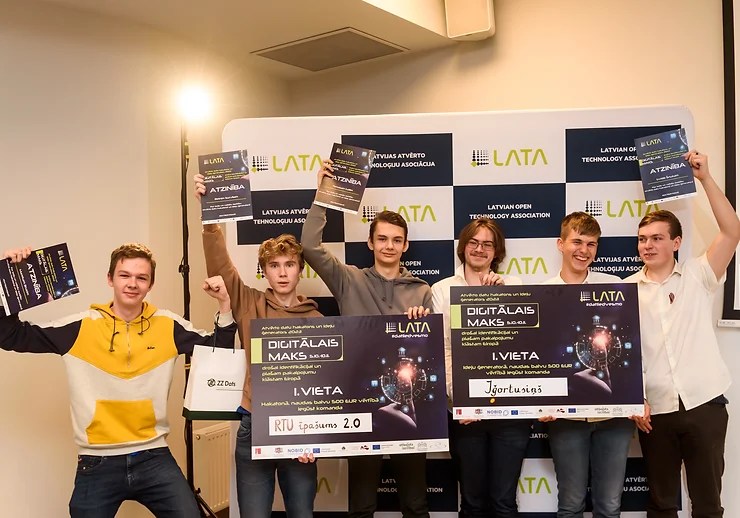
Latvian Open Data Hackathon 2023 winners are announced

The annual Open Data Hackathon and Idea Generator of the Latvian Open Technologies Association (LATA), this year dedicated to the digital wallet, is over and we finally know the winners:

  • 🏆The winner of Hackathon – “Application for finding a family doctor” by RTU Engineering High School team “RTU Property 2.0”
  • 🏆The winner of Idea generator – “Taročeks” – an application to simplify the process of returning a deposit for beverage packaging (as an cross-border service!) – by RTU Engineering High School team “Iġortusiņš”.

We also greet a few more teams on the podium:

  • 🥈“Savičs” team and their idea of “Delta – digital identity wallet” (latv. “Delta – digitālais identitāšu maks”)
  • 🥈“Inov8hers” team and “MyWall8”
  • 🥈“Pilsētas putni” and their idea to improve the health of Latvian society – “Latvijas sabiedrības veselības uzlabošana”

Both teams received prizes and some funding for implementing their ideas and for all the efforts they put into this, working on them for a month.

We – the mentors – were there to support them and we are really proud of all the finalists and their solutions – it is a great pleasure to contribute to the development of the younger generation by helping to develop their ideas, mindsets and skills at this fairly early stage as these participants are predominantly from 6th to 12th grade, although their ideas tend to be incredibly innovative, as are the skills demonstrated in developing those solutions.

It is my 4th time/year in a row to act as a mentor and each and every time I got surprised with all those ideas our mindsets bring on the table with healthcare, wellbeing, sustainability, ecology and simplification of processes as the main topics covered by participants, which are addressed (at least partly) with open data – this year combining them with the idea of digital wallets – not the easiest task, bust still – challenge completed!

All in all, great event and the outcome for what we are thankful to both organizers – Latvian Open Technologies Association, partners – Latvijas Valsts radio un televīzijas centrs, Vides aizsardzības un reģionālās attīstības ministrija, Valsts izglītības satura centrs, NOBID Consortium, Rīgas Tehniskā universitāte (Riga Technical University), E-KLASE, European Commission and supporters – Omniva, ZZ Dats, Latvijas Banka!