In previous post I already shared my impressions with ICEGOV ICEGOV2022 conference – 15th International Conference on Theory and Practice of Electronic Governance, which took place in a very specific place – Guimarães that is considered the birthplace of Portugal, providing some general insight on how it was, elaborated a bit on paper I presented there and the fact that it was nominated to the Best Paper Awards. Thus, this post I dedicate to one particular role I played, i.e. workshop chair.
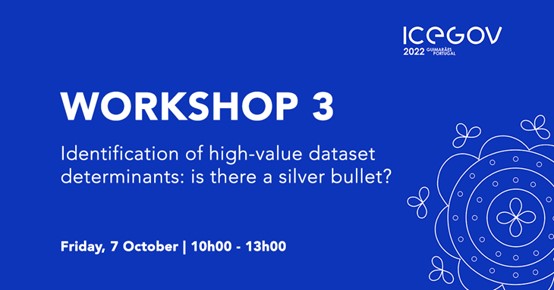
If you actively follow me, you probably remember that some time ago I already posted that our workshop titled “Identification of high-value dataset determinants: is there a silver bullet?” organized by me, Charalampos Alexopoulos, Nina Rizun and Magdalena Ciesielska was accepted for ICEGOV2022. So now we finally brought it alive! Our workshop was among 7 accepted workshops, organized by such prominent organizations as UNDESA – United Nations Department of Economic and Social Affairs, European Commission, UNESCO – United Nations Educational, Scientific and Cultural Organization and several more, which is just “wow”!
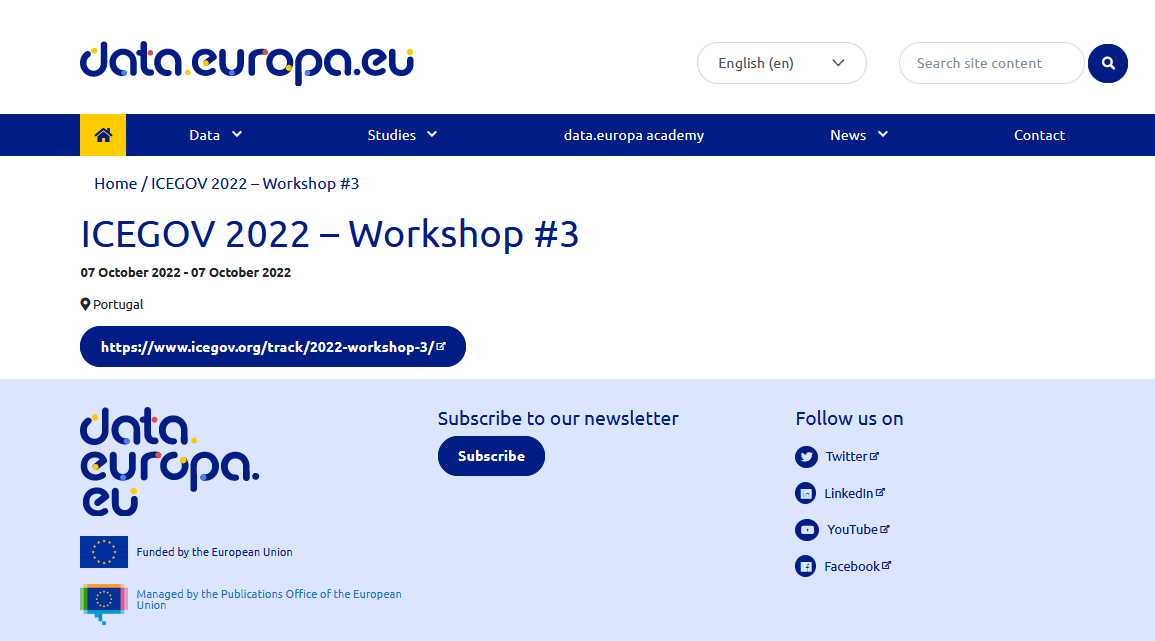
It took some time since as you might remember, the very first steps in this topic I took a year ago, i.e. this workshop is a continuation of the paper I presented at ICEGOV2021 – “Towards enrichment of the open government data: a stakeholder-centered determination of High-Value Data sets for Latvia“, which, in turn, was something what I did as a response to the request I received from my government, which was curious about this topic in the light of Open Data Directive (previously Public Sector Information (PSI) Directive). It was a simple one study, which was based on a survey of individual users and SME of Latvia aimed at clarifying their level of awareness about the existence of the OGD, their usage habits, as well as the overall level of satisfaction with the value of the OGD and their potential. Now the topic became even more topical, considering that even European Open Data Maturity Report is updating its methodology, as one of the new aspects including HVD. This, in turn, led to the fact that our workshop was even included in the list of upcoming events they suggest to consider and attend (see screenshots of schedule :)).
To say in a few words, in this workshop we initiated a discussion about the value of open data, and, more precisely, the concept of high value data(sets) and determinants / indicators that could allow not only identify them among existing data, but rather to identify, i.e., even if they are not previously published.
Together with our participants, we spoke about: 💡How can the “value” of open data be defined? 💡What are the current indicators for determining the value of data? Can they be used to identify valuable datasets to be opened? What are the country-specific high-value determinants (aspects)? 💡How high-value datasets can be identified? What mechanisms and/ or methods should be put in place to allow their determination? 💡Could it be there an automated way to gather information for HVD? 💡Can they be identified by third parties, e.g. researchers, enthusiasts AND potential data publishers, i.e. data owners? 💡What should be the scope of the framework?
The main point to be said on the mode of this workshop that it was a community-based, participatory, interactive workshop. Although it is clear that on the last day of the conference (the day after the official closing ceremony) all those registered for this workshop could not gather, it was still a valuable experience and we managed to have a nice event full of discussions with the participants, who got actively involved, which is especially pleasant, i.e. we managed to avoid sit-and-listen mode!!!
All in all, we had a nice event, where at least the first step in the direction we selected, were taken and some initial feedback was gathered.
Again, thank you, of Guimarães, Portugal, and, of course, organizers of ICEGOV2022 – University of Minho (Universidade do Minho) and UNU-eGOV – United Nations University!
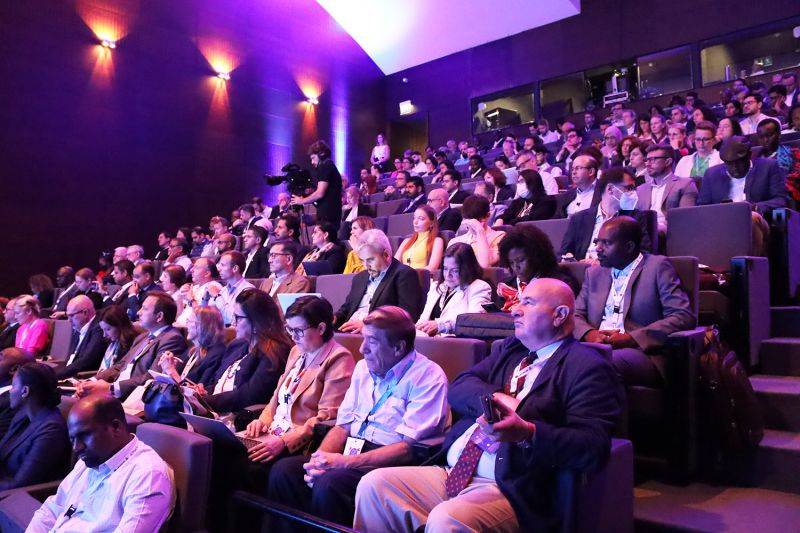
This October (2022) I had a pleasure and honor to spend four absolutely insightful days at ICEGOV2022 conference – 15th International Conference on Theory and Practice of Electronic Governance, which took place in a very specific place – Guimarães that is considered the birthplace of Portugal. The conference took place under the “Digital Governance for Social, Economic, and Environmental Prosperity” moto and was organized by organized by the University of Minho (Universidade do Minho) and UNU-eGOV – United Nations University.

Just to start, the conference was indeed something very special starting with the very first seconds since the conference was opened by United Nations Secretary-General António Guterres. 6 exceptional keynote talks were delivered during 3 days of the conference, while the last day was fully dedicated to workshops, which were 7 – one of them organized by me and my colleagues, triggered by the study I presented at ICEGOV in 2021 (although only in a virtual / online mode).
All in all, this made it exceptionally honorable to play not one, not two or even three, but four roles. In other words, I was not only a regular participant / attendee or even just an author presenting the paper, but also a workshop chair and even a Best Paper Awards nominee.
Let me start with the reflection on the paper I presented here, since it is also very special for me, considering how it was developed. In other words, it was a joint paper we wrote together with my colleague Anneke Zuiderwijk as part of my 6-months long research visit to the University of Delft, Faculty of Technology, Policy and Management. Even more, it was the topic we discussed with many colleagues from TU Delft, when I was kindly invited to participate in an ICT colloquium, where we had an opportunity to talk about it (among other things such as my general research interests). Moreover, we got this paper accepted exactly at time, when my role of visiting researcher at Delft University of Technology was close to the end.
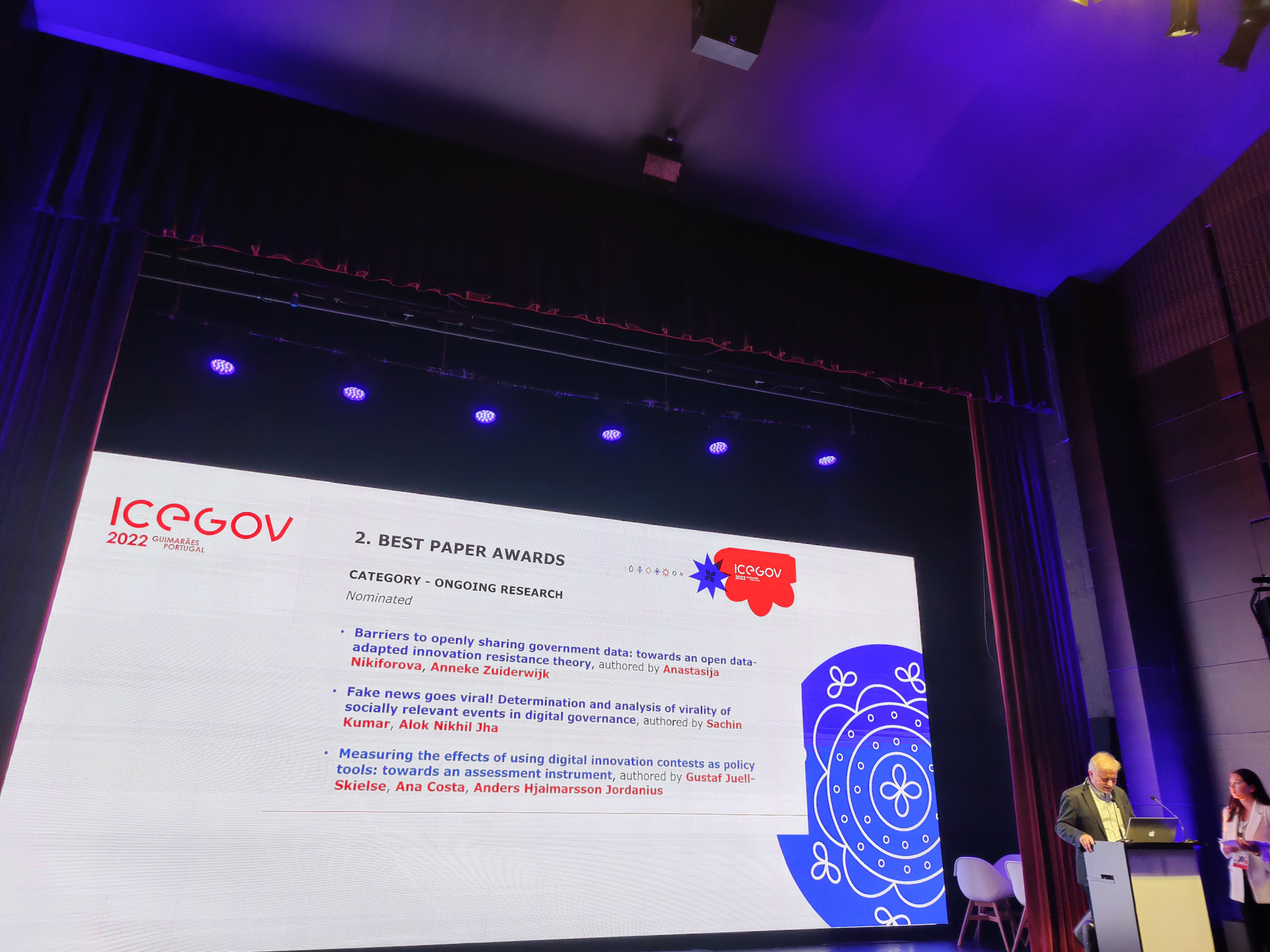
And before I will briefly elaborate on it, just to make you curious about it, let me mention that it was recognized as one of the best papers, which was nominated to ICEGOV2022 Best Paper Awards in its category. More precisely, it was in top-3 best papers among 61 papers! And although another paper got this award, we still consider it as a small victory! And citing the awards committee “the goal of ICEGOV Best Paper Awards is to acknowledge excellent research” isn’t that a win? ✌️✌️✌️
To say in a few words, the study itself aims to develop an Open Government Data-adapted Innovation Resistance Theory model to empirically identify predictors affecting public agencies’ resistance to openly sharing government data. Here we want to understand: 💡what are functional and behavioural factors that facilitate or hamper opening government data by public organizations? 💡does IRT provide a new and more complete insight compared to more traditional UTAUT and TAM? – IRT has not been applied in this domain, yet, so we are checking whether it should be considered, or rather those models we are familiar so much are the best ones? 💡and additionally – does the COVID-19 pandemic had an [obvious/significant] effect on the public agencies in terms of their readiness or resistance to openly share government data? Based on a review of the literature on both IRT research and barriers associated with open data sharing by public agencies, we developed an initial version of the model, which was presented here at ICEGOV2022. Here I should immediately express my huge gratitude to the audience and very positive feedback I received after the session. At the same time, considering that many of these compliments came from people representing , TU Delft, I feel even more belongness to it, despite even have not been there physically during the above-mentioned stay (thanks to pandemic).
Taking a step back to the research – now, we plan to conduct exploratory interviews in multiple countries, preferably of different maturity levels (Estonia, Latvia, Netherlands, Italy (?), Belgium (?) – who else?), to refine the model. And once the model is refined, we will validate it to study the resistance of public authorities to openly sharing government data in a quantitative study.
📢📢📢 By the way, in case you are interested in this research and would like to get involved, we are now seeking for people who could conduct exploratory interviews in their countries, so in case you are such person, let us know even if your country is listed above – the interview protocol is already ready and we are about to start these interviews. The more countries will be involved, the more “universal” model we will be able to bring to this world!
And just to close this post, and considering very positive impressions I had on them, let me at least list keynotes we had, since the organizers paid a very special attention to them, same as later – we as participants to their actual talks. All in all, ICEGOV2022 invited 6 keynotes we truly enjoyed – starting with the opening keynote delivered by Portuguese Secretary of State for Digitalisation and Administrative Modernisation Mário Campolargo, continuing with the following keynotes, which in many cases were later complemented with plenaries. These keynotes were very diverse in nature, more precisely – “Harnessing multilateralism for digital governance development?” by Cristina Duarte (Under-Secretary-General and Special Adviser on Africa to the United Nations Secretary-General), Digital transformation across countries and continents by Tony Shannon (Department of Public Expenditure & Reform, Dublin, Ireland), “AI+X: building a transformation agenda” by Theresa A. Pardo (University at Albany (SUNY)), “What is digital humanism?” by Walter Gehr (Federal Ministry for European and International Affairs), and “Reinforcing Interoperability Policy in the EU: Interoperable Europe” by Veronica Gaffey (European Commission (DG DIGIT)). Truly massive set of high-quality keynotes!
Thank you, of Guimarães, Portugal, and, of course, organizers of ICEGOV2022 – University of Minho (Universidade do Minho) and UNU-eGOV – United Nations University!
P.S. do not forget to read another post on the workshop I had at ICEGOV2022!
This September I was exceptionally proud to be invited to serve as one of two keynotes for the Innovation and Smart Government Conference 2022 (ISGOV2022) and open this conference, delivering my talk titled “Data as an asset for Sustainable Development of data-driven Smart Cities and Smart Society”. Another keynote was delivered by J. Ramon Gil-Garcia with the talk devoted to the use of Artificial Intelligence in the Public Sector.
ISGOV2022 keynotes
Some key takeaways or the main points of this talk (see slides above): 💡 Open data became a daily phenomenon, but making government data publicly available is not enough – there is time and need for the next steps towards sustainable and smart data ecosystems, requiring transformations at all levels; 💡 Open data is not only about OGD (B2G, crowdsourced data, sensor generated data etc.); 💡 Open data is not about data availability and accessibility. The data should –> must be qualitative (?), well-documented, valuabl (high value data (?)), smart (?), while the entry point from which they are available should be sufficiently user-friendly and interactive. Here, the concepts after which “?” follows is a subject for another 1.5h long talk :); 💡Open data quality is not only about metadata, their completeness and accuracy, it is also about the quality of content of dataset, where completeness of data is not the only criteria to be assessed! (reliability, internal and external consistency, timeliness, currency / up-to-date’ness and many more!); 💡{open, geospatial, smart, …} data ecosystem is not only about the platform (e.g., OGD portal), from which data can be downloaded, and not only about data governance or management. It is also not only about the data, which is, however, the key asset. It is many more… 💡Open data users – individuals, businesses (SME) etc., are not only end-users, they are (should be) an integral part of open data ecosystem. In other words, public data (eco)system is also about “public” –> stakeholders and actors of OD ecosystems should be identified (their role, needs etc.), which should then imply in requirements for newer and sustainable data ecosystems, which will facilitate interaction of (multiple) stakeholders 💡All in all, it’s all about data, portal, service, policy… 💡At the same time users and the whole society should be educated and acquire knowledge and skills needed to interact with the OD artifacts –> digital literacy, and open data literacy, where the latter term is not well-defined at this moment, while it is obvious that we need it!
I am very grateful ISGOV organizers, namely, the Autonomous University of Tamaulipas (UAT), the Autonomous University of the State of Mexico (UAEM), the University of Guadalajara (UDG), the I-Lab Public Innovation and Artificial Intelligence Laboratory – for having me as a part of this conference!!!
I am also grateful to all participants, especially those who participated in a discussion with so many relevant questions. Hope that this talk was interesting and contributed to the general understanding of the topic!
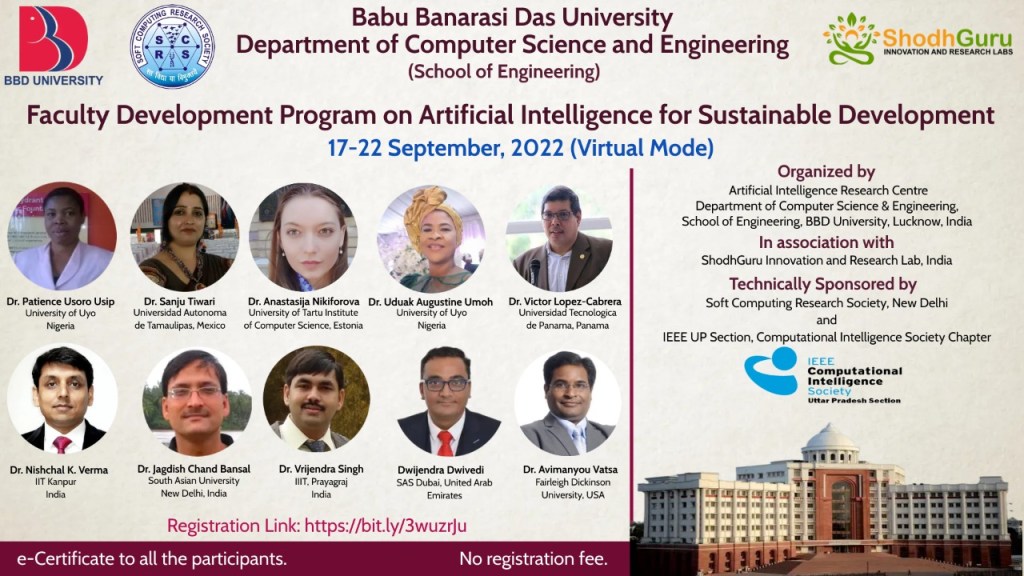
Recently I was honored to contribute to Babu Banarasi Das University (BBDU, Department of Computer Science and Engineering) Development Program «Artificial Intelligence for Sustainable Development» with the talk entitled “Artificial Intelligence for Open Data or Open Data for Artificial Intelligence?”. More precisely, this series of workshops is organized for the industry, i.e. representatives of industry, who want to get an insight on the current advances in various topic-related areas (AI in the sustainability context) from people representing research and academia, which is organized by AI Research Centre, Department of Computer Science & Engineering, Babu Banarasi Das University (India), ShodhGuru Research Labs, Soft Computing Research Society, IEEE UP Section, Computational Intelligence Society Chapter. My session, for instance, was attended by more than 130 attendees, which I consider to be a very good rate!
Regarding my talk, I was delighted to deliver in the last day of this event, being also a guest of honor for this event, when we speak about “Artificial Intelligence for Open Data or Open Data for Artificial Intelligence?” – in short, not OR but rather AND. In other words, AI for Open Data and Open Data for AI, where open data serves as a valuable asset for AI (of course, if a list of prerequisites is fulfilled), while AI defines new prerequisites for open data we should think of.
At the same time, although their combination is considered to play a transformational role in human society, and especially in prominent areas, as we discussed today, this “magic duo” is not always about “unicorns and ice creams“, where the current state-of-the-art suggests that open data my pose also certain risks.
Probably the most expressive example of such, I referred to, is an example, when based on easily obtainable open data on toxic molecules collected over the years, AI has managed to create 40,000 molecular associations potentially usable as biochemical weapons in just 6 hours. And while not all of them are actually usable, and the need to synthesize them still remains, some associations correspond to known chemical weapons with one even more toxic than the VX nerve gas, identified as a weapon of mass destruction by the United Nations.
So here comes a very interesting dilemma between openness as a philosophy and making data open, and threats it may pose, if used by a malevolent actor.
We also briefly touched a topic of risks associated with AI (although both perspectives of so-called cyber-pessimists and cyber-optimists in this regard were considered), open data, and their combination, along with the long list of benefits they can bring, including their contribution to the sustainability being in line with the general idea of this event. And, of course, we could not ignore the topic of green AI and a strong need to consider FATE principles (Fairness, Accountability, Transparency & Explainability).
All in all, it was a very nice experience and the audience so curious and passionate of topics elaborated on within this 6-days long event with speakers from both continents Asia, Africa, America and Europe (represented by me! 🤓🤓🤓). Exceptional audience with so relevant questions leading to a lively and fruitful discussion being of interest for both participants and speakers. Glad to be part of it and get this experience!
Considering that in last weeks I was pretty active in delivering very many talks, let me use this post to summarize some of them thereby remaining them in my memory as well as allowing you, my dear reader, to pick up some ideas or navigate to some projects (both projects, initiatives, postgraduate programs, joint workshops or “lunchs” for business and academia) of your interest. So this post is less about self-advertisement and my role in the below discussed events as both panelist, keynote, guest lecturer, invited speaker and expert, but more about very interesting projects, initiatives and labs currently running in different countries and at different scales – local, national, regional and international. And as “thank you” for the organizers of each of them, I would like to shed a light on them in this post, drawing your attention to them!
All in all, this post is about participating as a panelist for One Conference 2022, keynote for African Smart Cities Lab projects’ workshop (Morocco, Ghana, Tunisia, South Africa, Rwanda, Benin, Switzerland), Guest Lecture for master and doctoral students of the Federal University of Technology – Paraná (UTFPR, Postgraduate Program in Production Engineering, Brasil), and invited speaker / expert for monthly “Virtual Brown Bag Lunch” (Mexico), and EFSA & EBTC joint project (Italy) on the creation of a standard for data exchange in support of automation of Systematic Review.
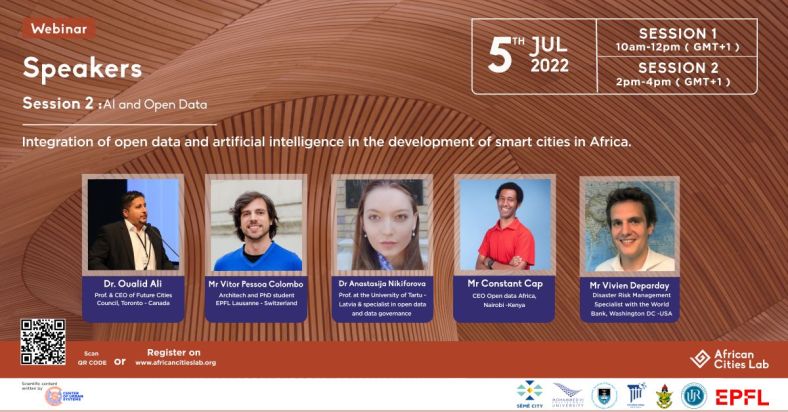
So, let’s start with the most spontaneous, namely “Integration of open data and artificial intelligence in the development of smart cities in Africa” workshop organized as part of the African Cities Lab Project, where I was invited as a keynote speaker. Actually, African Smart Cities Lab project is a very interesting initiative I recently was glad to get familiar with. It is a joint initiative led by École polytechnique fédérale de Lausanne (Switzerland), the Kwame Nkrumah’ University of Science and Technology, Kumasi (Ghana), the UM6P – Mohammed VI Polytechnic University (Maroc), Sèmè City campus (Benin), the Faculty of Sciences of Bizerta – University of Carthage (Tunisia), the University of Cape Town (South Africa), and the University of Rwanda that aims to create a digital education platform on urban development in Africa, offering quality MOOC and online, continuing education training for professionals. It is also expected to act as a forum for the exchange of digital educational resources and the management and governance of African cities to foster sustainable urban development. The very first workshop took place July 5 in an online mode, where 9 speakers were invited to share their experience on this topic and allow setting the scene for the development of African Smart Cities, considering their potential, but also some bottlenecks.
All in all, two very fruitful sessions with presentations delivered by me, Vitor Pessoa Colombo, Constant Cap, Oualid Ali, Jérôme Chenal, Nesrine Chehata, AKDIM Tariq, Christelle Gracia Gbado, Willy Franck Sob took place and raised a lot of questions, finding the answers for many of them. My talk was titled “Open data and crowdsourced data as enablers and drivers for smart African cities” (see slides below…)
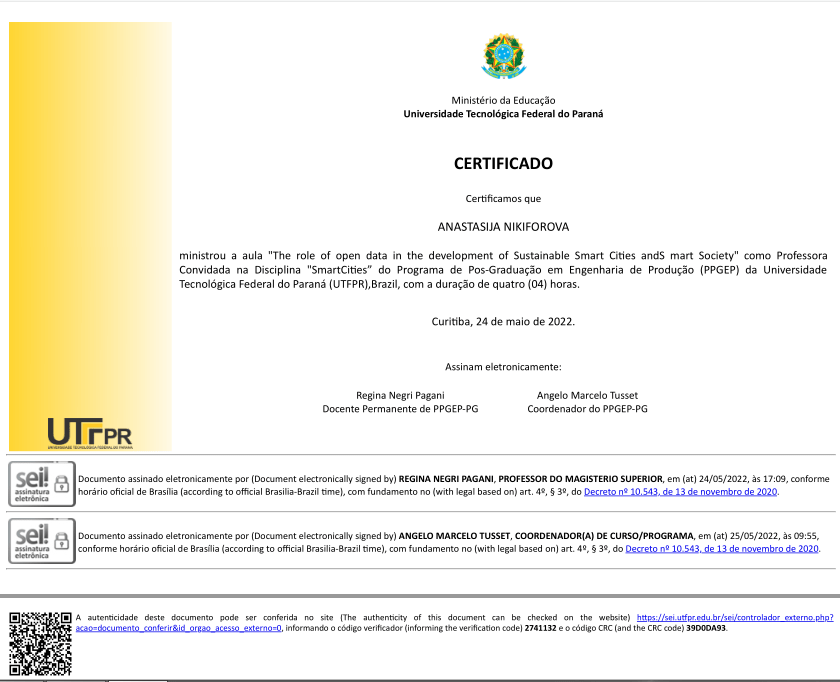
Here, let me immediately mention another activity – a Guest Lecture “The role of open data in the development of sustainable smart cities and smart society“, I delivered to students of the Federal University of Technology – Parana (UTFPR, Brazil) and, more precisely so-called PPGEP program – Postgraduate Program in Production Engineering (port. Programa de Pós-Graduação em Engenharia de Produção), in scope of which I was pleasured to raise a discussion on three topics of particular interest – open data, Smart City, and Society 5.0, which are actually very interrelated. This also allowed me to refer to one of our recent studies – Transparency of open data ecosystems in smart cities: definition and assessment of the maturity of transparency in 22 smart cities– published together with my colleagues – Martin Lnenicka, Mariusz Luterek, Otmane Azeroual, Dandison Ukpabi, Visvadis Valtenbergs, and Renata Machova in Sustainable Cities and Society (Q1, Impact Factor: 7.587, SNIP: 2.347, CiteScore: 10.7).
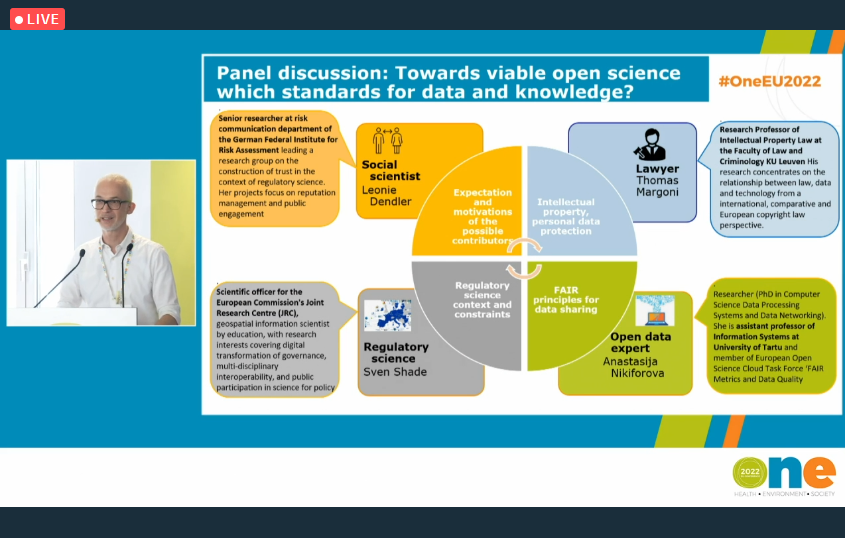
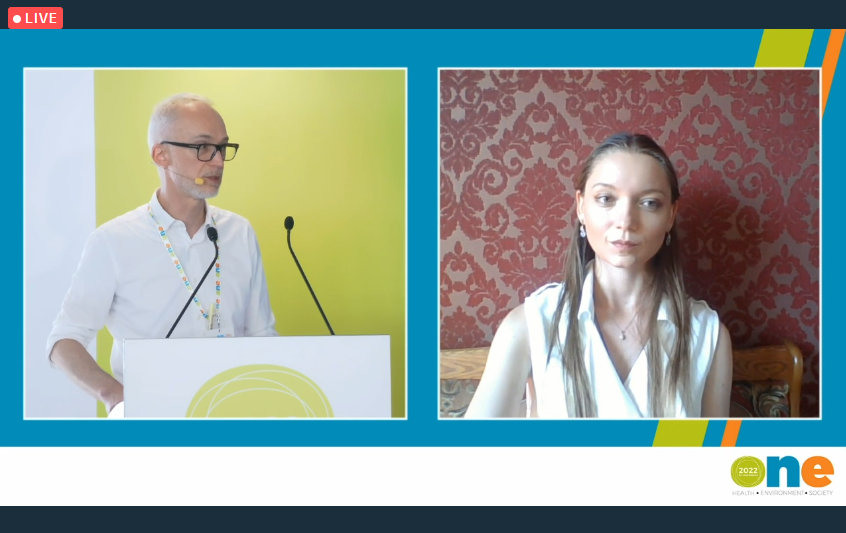
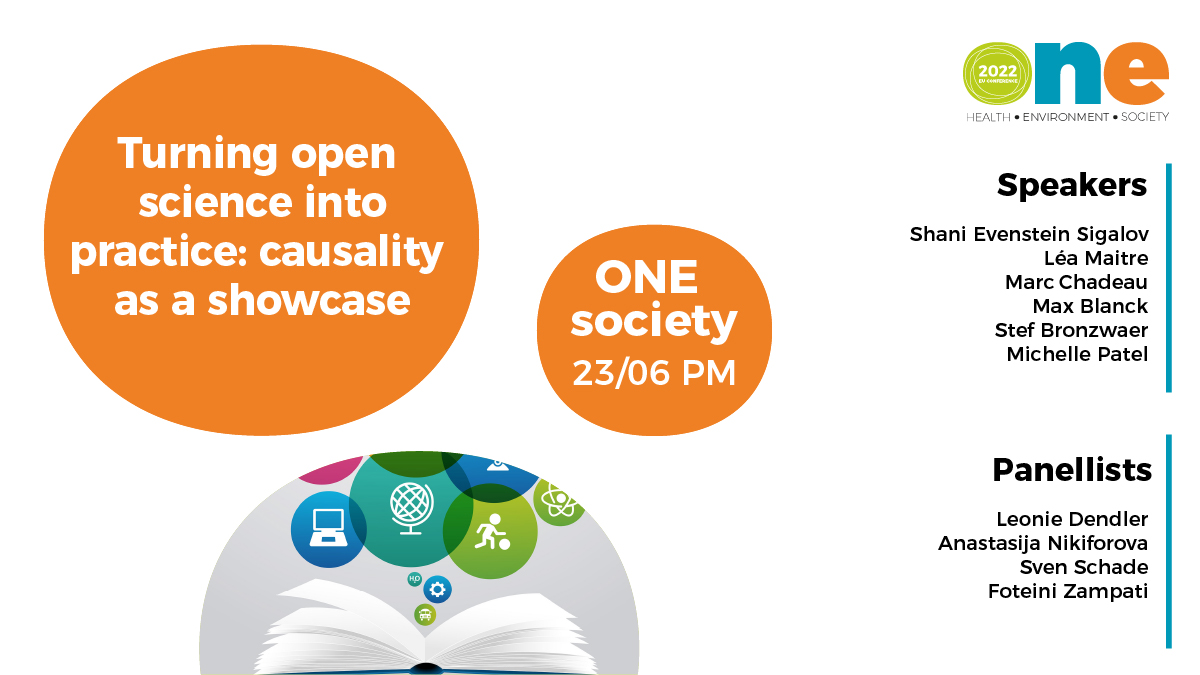
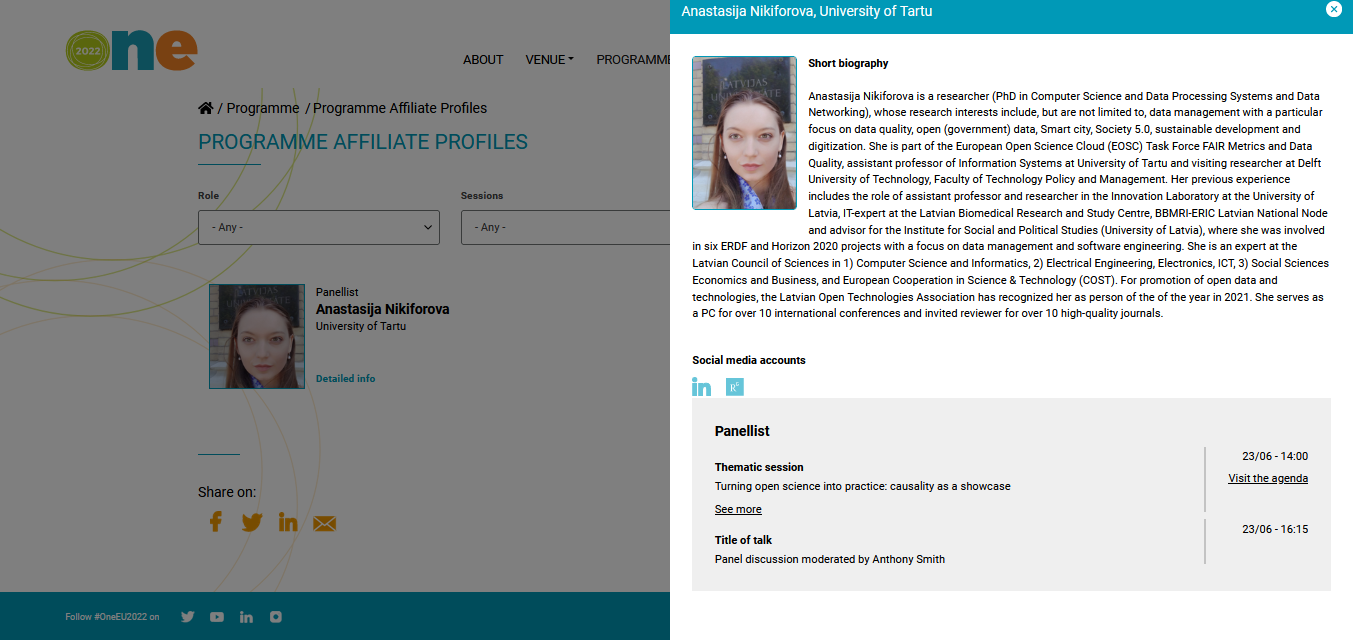
And now, it’s time to turn to two events organized by European Food Safety Authority (EFSA). The first and probably the most “crowded” due to a very high rate of the attendance was the ONE Conference 2022 (Health, Environment, Society), which took place between June 21 and 24, Brussels, Belgium. It was co-organised by European Food Safety Authority (EFSA) and its European sister agencies European Environment Agency, European Medicines Agency, European Chemicals Agency, European Centre for Disease Prevention and Control (ECDC), but if you are an active follower of my blog, you know this already, same as probably remember that I posted about this event previously inviting you to join us in Belgium or online. Since I have elaborated on the course of the event, its main objectives and tracks, I will not repeat this information. Instead, let me briefly summarize key takeaways with a particular focus on the panel for which I served as a panelist – the “ONE society” thematic track, panel discussion“Turning open science into practice: causality as a showcase”. It was a very nice experience and opportunity for sharing our experience on obstacles, benefits and the feasibility of adopting open science approaches, and elaborate on the following questions (although they were more but these one are my favorites): 💡Can the use of open science increase trust to regulatory science? Or does it increase the risk to lose focus, introduce conflicting interests and, thus, threaten reputation? What are the barriers to make open science viable in support to the scientific assessment process carried out by public organizations? 💡What are the tools/ methods available enabling, supporting and sustaining long term open science initiatives today and what could be envisaged for the future? 💡Do we need a governance to handle open data in support to scientific assessment processes carried out by regulatory science bodies? 💡How the data coming from different sources can be harmonized making it appropriate for further use and combination?
These and many more questions were discussed by panelists with different background and expertise, which were nicely presented by European Food Safety Authority (EFSA) breaking down our experience in four categories – social science (Leonie Dendler, German Federal Institute for Risk Assessment BfR), open data expert (Anastasija Nikiforova,) EOSC Association, University of Tartu, Institute of Computer Science, lawyer (Thomas Margoni, KU Leuven ), regulatory science (Sven Schade, Joint Research Centre, EU Science, Research and Innovation). Many thanks Laura Martino, Federica Barrucci, Claudia Cascio, Laura Ciccolallo, Marios Georgiadis, Giovanni Iacono, Yannick Spill (European Food Safety Authority (EFSA)), and of course to Tony Smith and Jean-François Dechamp (European Commission). For more information, refer to this page.
And as a follow-up for this event, I was kindly invited by EFSA to contribute to setting the scene on the concept of ‘standards for data exchange’, ‘standards for data content’ and ‘standards for data generation’ as part of European Food Safety Authority (EFSA) and Evidence-Based Toxicology Collaboration (EBTC) ongoing project on thecreation of a standard for data exchange in support of automation of Systematic Review (as the answer to the call made in “Roadmap for actions on artificial intelligence for evidence management in risk assessment”). It was really nice to know that what we are doing in EOSC Association (Task Force “FAIR metrics and data quality”) is of interest for our colleagues from EFSA and EBTC. Also, it was super nice to listen other points of view and get involved in the discussion with other speakers and organisers – Elisa Aiassa, Angelo Cafaro, Fulvio Barizzone, Ermanno Cavalli, Marios Georgiadis, Irene Pilar, Irene Muñoz Guajardo, Federica Barrucci, Daniela Tomcikova, Carsten Behring, Irene Da Costa, Raquel Costa, Maeve Cushen, Laura Martino, Yannick Spill, Davide Arcella, Valeria Ercolano, Vittoria Flamini, Kim Wever, Gunn Vist, Annette Bitsch, Daniele Wikoff, Carlijn Hooijmans, Sebastian Hoffmann, Seneca Fitch, Paul Whaley, Katya Tsaioun, Alexandra Bannach-Brown, Ashley Elizabeth Muller, Anne Thessen, Julie McMurray, Brian Alper, Khalid Shahin, Bryn Rhodes, Kaitlyn Hair. The next workshop is expected to take place in September with the first draft ready by the end of this year and presented during one of the upcoming events. More info on this will follow 🙂
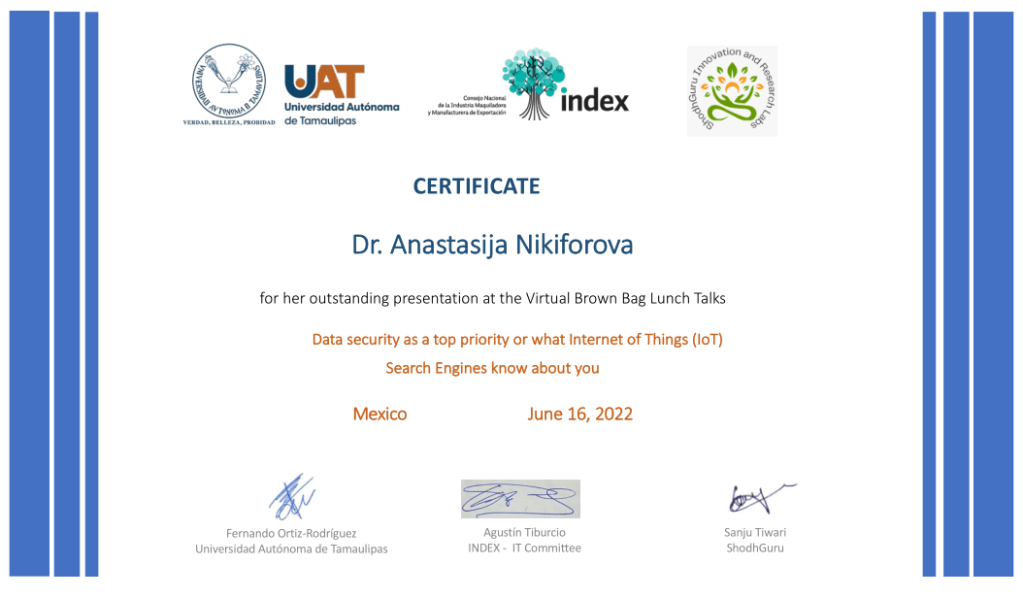
In addition, I was asked by my Mexican colleagues to deliver an invited talk for monthly “Virtual Brown Bag Lunch Talks” intended for the Information Technologies, Manufacturing, and Engineering Employees in Companies associated with Index Manufacturing Association (Mexico, web-based). After discussing several topics with the organizers of this event, we decided that this time the most relevant talk for the audience would be “Data Security as a top priority or what Internet of Things (IoT) Search engines know about you“. Again, if you are an active follower, you will probably realize quickly that it is based on a list of my previous studies – study#1, study#2, study#3 and book chapter.
Certificates from Universidad Autononma de Tamaulipas & Index (Mexico) and Universidad Techlogica Federal de Parana (Brasil)
All in all, while these were just a few activities I was busy with during the last weeks and, these weeks were indeed very busy but extreeeemely interesting with so many different events! I am grateful to all those people, who invited me to take part in them and believe that this is just one of the opportunities we had to collaborate and there are many more in the future!









 Anastasija Nikiforova, PhD