PhD Opportunity: Responsible & Sustainable AI, University of Tartu

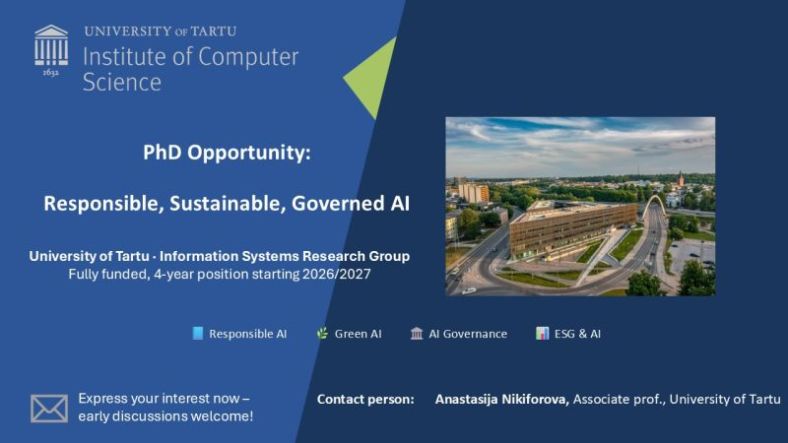
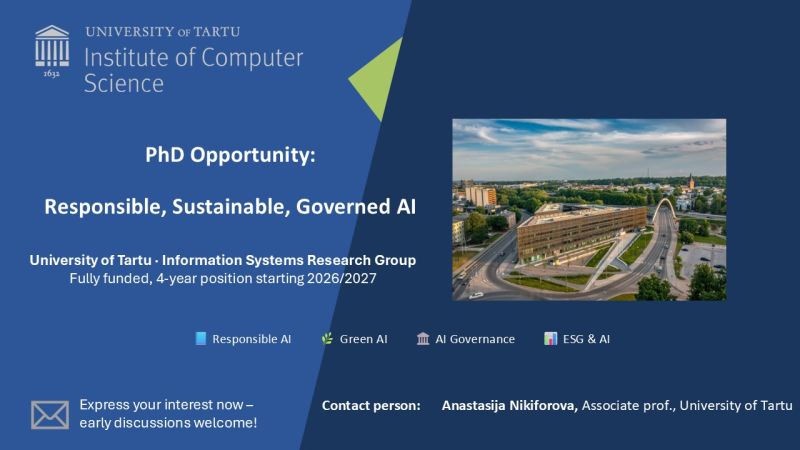
We are planning to open fully funded 4-year PhD position(s) starting in 2026/2027 (University of Tartu · Information Systems Research Group), seeking ambitious, motivated candidates to explore the frontier of Responsible and Sustainable AI. To this end, we open the call for Expression of Interest.

This PhD program is ideal for those interested in:
🔹 Sustainable / Green AI & AI lifecycle sustainability
🔹 Organisational capability development for Sustainable AI
🔹 Responsible AI adoption & governance in organisational or public sector contexts
🔹 AI for trust, transparency, and organisational impact

Illustrative example topics include but are not limited to Sustainable / Green AI capability models, Green AI lifecycle & data ecosystem sustainability, Responsible GenAI adoption & governance, AI-enabled ESG reporting and impact assurance. Candidates, however, are welcome and are even encouraged to propose their own research angle within the scope of Responsible or Sustainable AI.

Who can apply?

  • Backgrounds: Information Systems, Digital Government, Sustainability, Management, Computer Science, Public Administration, or related fields
  • Experience with qualitative/quantitative research, mixed methods, or Design Science Research is a plus
  • Strong motivation and interest can compensate for limited experience

📄 How to express interest? Send a brief note including:

  1. CV
  2. 1–2 page research idea
  3. Transcript of records
  4. (Optional) Writing sample

📬 Email: anastasija.nikiforova@ut.ee. Subject line: EOI — PhD in Responsible/Sustainable AI and Information Systems

Why express interest now?

  • This is pre-application, not the formal call, but can strengthen your chances in a competitive pool (50+ applications per position).
  • Selected candidates may receive guidance on refining research ideas and preparing a strong application aligned with the Information Systems focus.

🌟 Join us at the University of Tartu Institute of Computer Science, among the top 1% of globally cited universities, to shape the future of responsible, sustainable, and trustworthy AI.

Advancing Democracy & AI: Reflections from IJCAI, PRICAI, and ICA 2025 Workshops

Artificial intelligence is rapidly reshaping how societies govern, deliberate, and make collective decisions. Over the past year, our Democracy & AI workshop series—held across IJCAI, PRICAI, and ICA—has become a global forum for examining both the promise and the perils of AI in democratic contexts. From Montréal to Wellington to Wuhan, our community continues to grow, connecting researchers across AI, political science, HCI, law, design, ethics, and public administration.

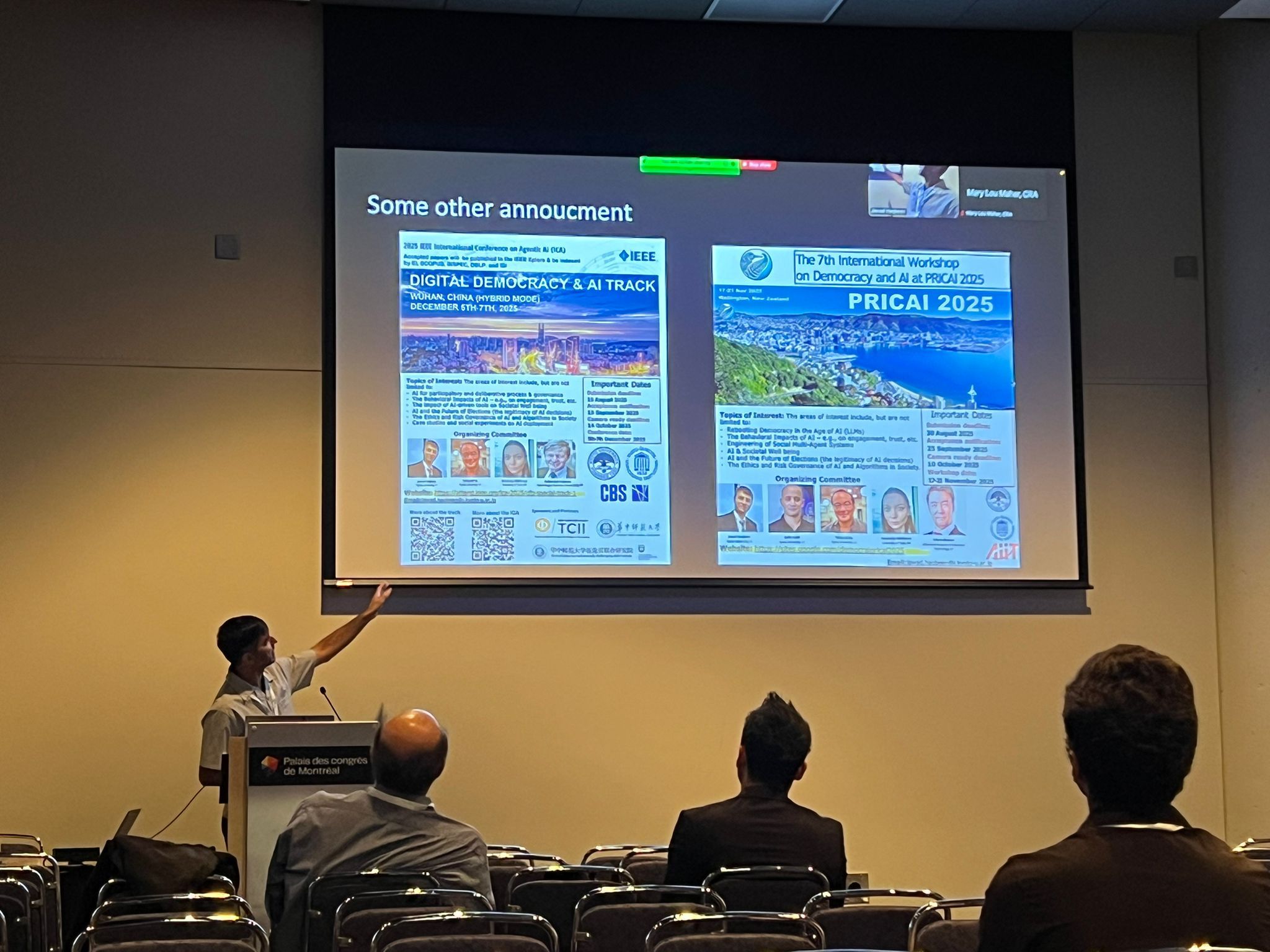
DemocrAI at IJCAI 2025: AI at the Service of Society

As part of the IJCAI International Joint Conferences on Artificial Intelligence in Montréal, themed “AI at the service of society,” we (Jawad Haqbeen, Takayuki Ito, Rafik Hadfi, and myself) convened the 6th International Workshop on Democracy & AI (DemocrAI25).
Although I could not attend in person, I am deeply grateful to my co-organizers for leading the workshop and for representing our team—as well as for the chance to meet Yoshua Bengio, one of the pioneers of modern deep learning and the one who recently became the very first researcher who while still being active in research achieved the milestone of 1 million citations!

The workshop opened with two outstanding keynote talks:

  • Mary Lou Maher (UNC Charlotte) — “The Imperative for AI Literacy”
  • Michael Inzlicht (University of Toronto) — “In Praise of Empathic AI”

Across 13 diverse presentations, contributors explored: AI’s impact on trust, civic engagement, and deliberation, risks and governance of LLMs in judicial settings and policymaking, collective intelligence and value aggregation for democratic processes, AI applications in education, law, and policy design, governance, fairness, inclusion, and global research equity.

We were delighted to recognize several exceptional contributions:

  • Best Paper Award“LLMs in Court: Risks and Governance of LLMs in Judicial Decision-Making” (Djalel Bouneffouf & Sara Migliorini)
  • Best Student Paper Award“Finding Our Moral Values: Guidelines for Value System Aggregation” (Víctor Abia Alonso, Marc Serramia & Eduardo Alonso Sánchez)
  • Best Extended Abstract Award“Group Discussions Are More Positive with AI Facilitation” (Sofia Sahab, Jawad Haqbeen & Takayuki Ito)
  • Best Presentation Award“Democracy as a Scaled Collective Intelligence Process” (Marc-Antoine Parent)

A key message echoed throughout the day: AI can enhance social cohesion, participation, and equity—but only through responsible design and robust governance frameworks.

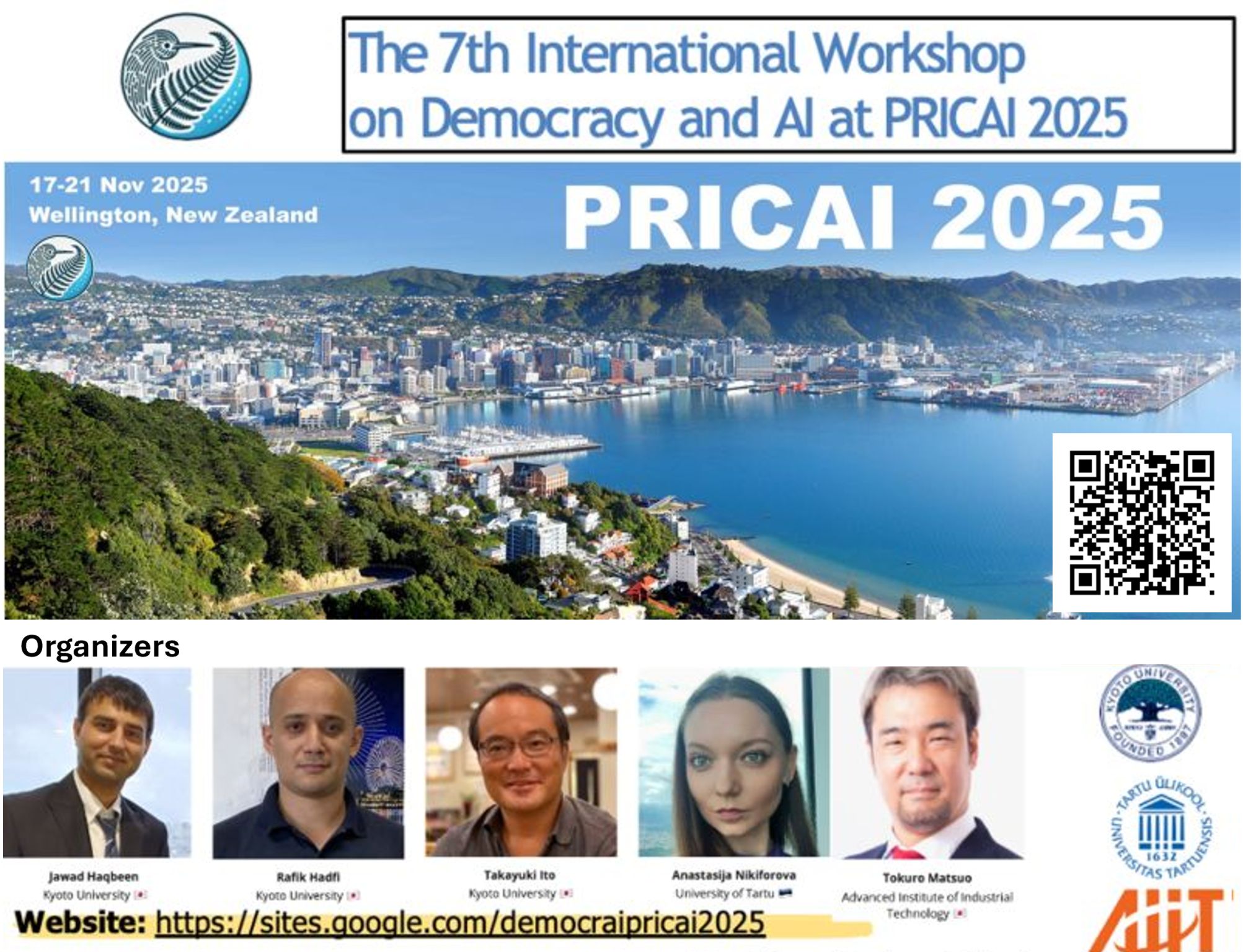
DemocrAI at PRICAI 2025: Participation, Values, and Governance

Following IJCAI, I joined the organizing committee for the 7th Democracy & AI Workshop at PRICAI 2025, held in Wellington, New Zealand. Two years ago, I had the privilege of giving a keynote at PRICAI DemocrAI on symbiotic relationship of Artificial Intelligence, Data Intelligence, and Collaborative Intelligence for Innovative Decision-Making and Problem Solving. This year, I am excited to help shape the conversation from the organizing side.

The workshop explored the expanding role of AI in democratic life, including AI-assisted policy design and decision-making, AI in governance, elections, and public administration, citizen participation and deliberative democracy tools, behavioral impacts of AI on trust, engagement, and polarization, transparency, accountability, and legitimacy of algorithmic decisions, ethics, socio-technical risks, and AI’s impact on societal wellbeing, and reimagining democracy in the LLM era.

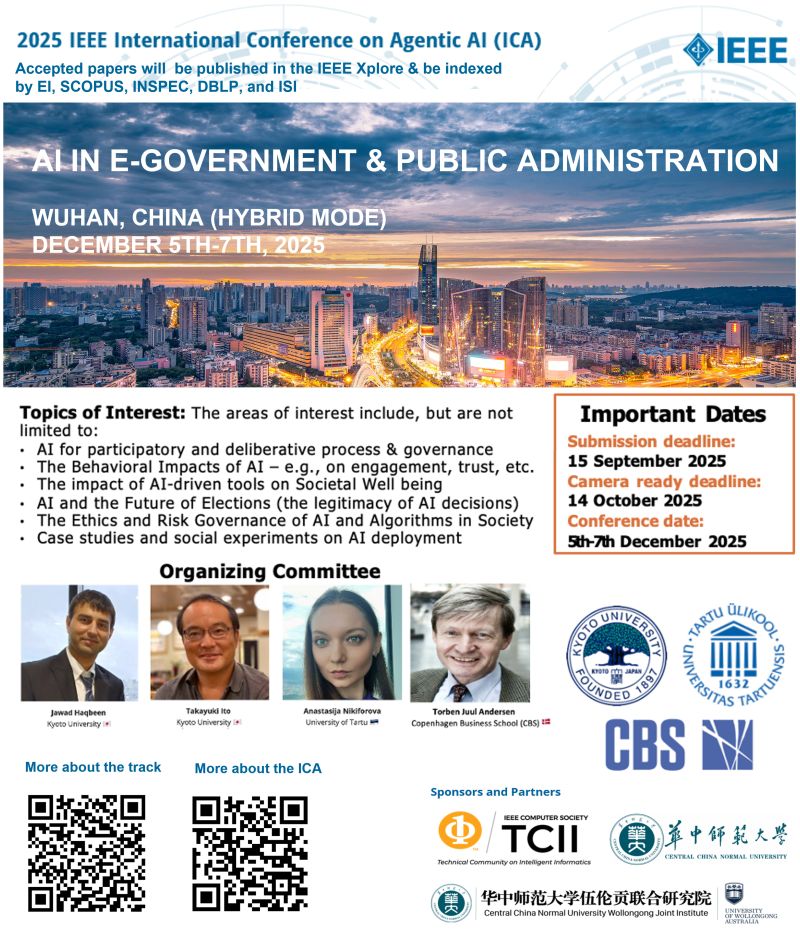
Special Track at ICA 2025: AI in e-Government & Public Administration

Our workshop series expands further with a dedicated Special Track on AI in e-Government & Public Administration at the IEEE International Conference on Agentic AI (ICA 2025), held in Wuhan, China.

Co-organized with Jawad Haqbeen, Takayuki Ito, and Torben Juul Andersen, this track examines how AI-driven tools are transforming public governance—from policy co-creation and civic engagement to service delivery and institutional decision-making.

Topics include:

  • AI for participatory and deliberative governance
  • AI’s impact on societal wellbeing
  • AI in public service delivery and policy design
  • Ethics and risk governance in public-sector AI
  • Case studies and experiments with deployed systems
  • Transparency, accountability, and responsible administration

Across IJCAI, PRICAI, and ICA, one theme is clear: AI’s role in democracy is neither predetermined nor neutral. It can support inclusion, transparency, and collective intelligence—or undermine trust, equity, and participation. The outcome depends on the choices we make now: the values we embed, the governance we build, and the communities we bring together.

Our Democracy & AI workshop series exists to advance this work—uniting technologists, policymakers, social scientists, designers, and ethicists in a shared mission: to ensure AI serves democracy, rather than the other way around.

Huge thanks to all speakers, awardees, participants, and co-organizers.
Onward to DemocrAI at PRICAI and ICA 2025!
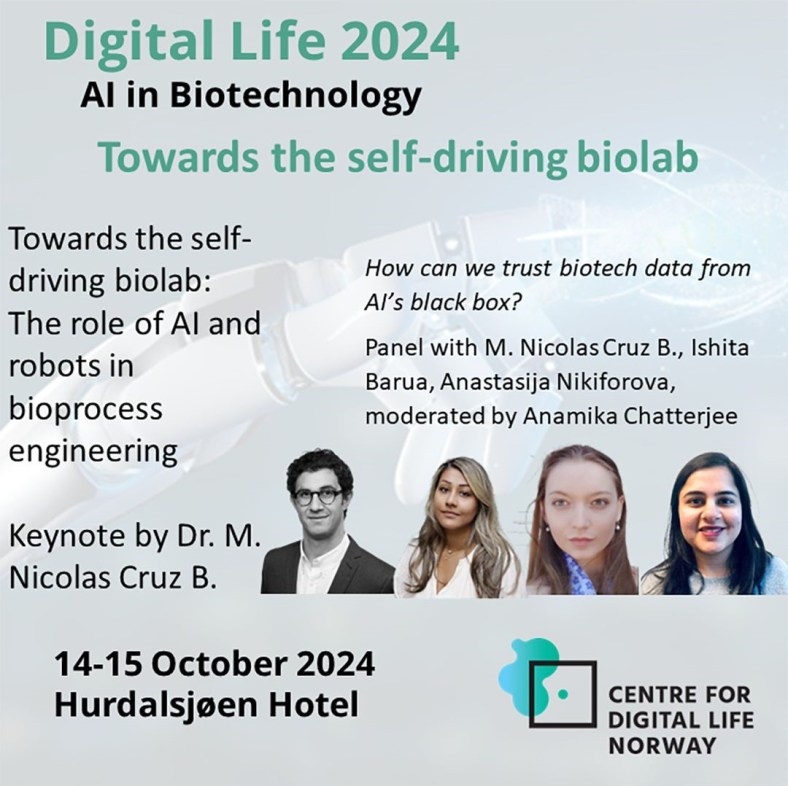
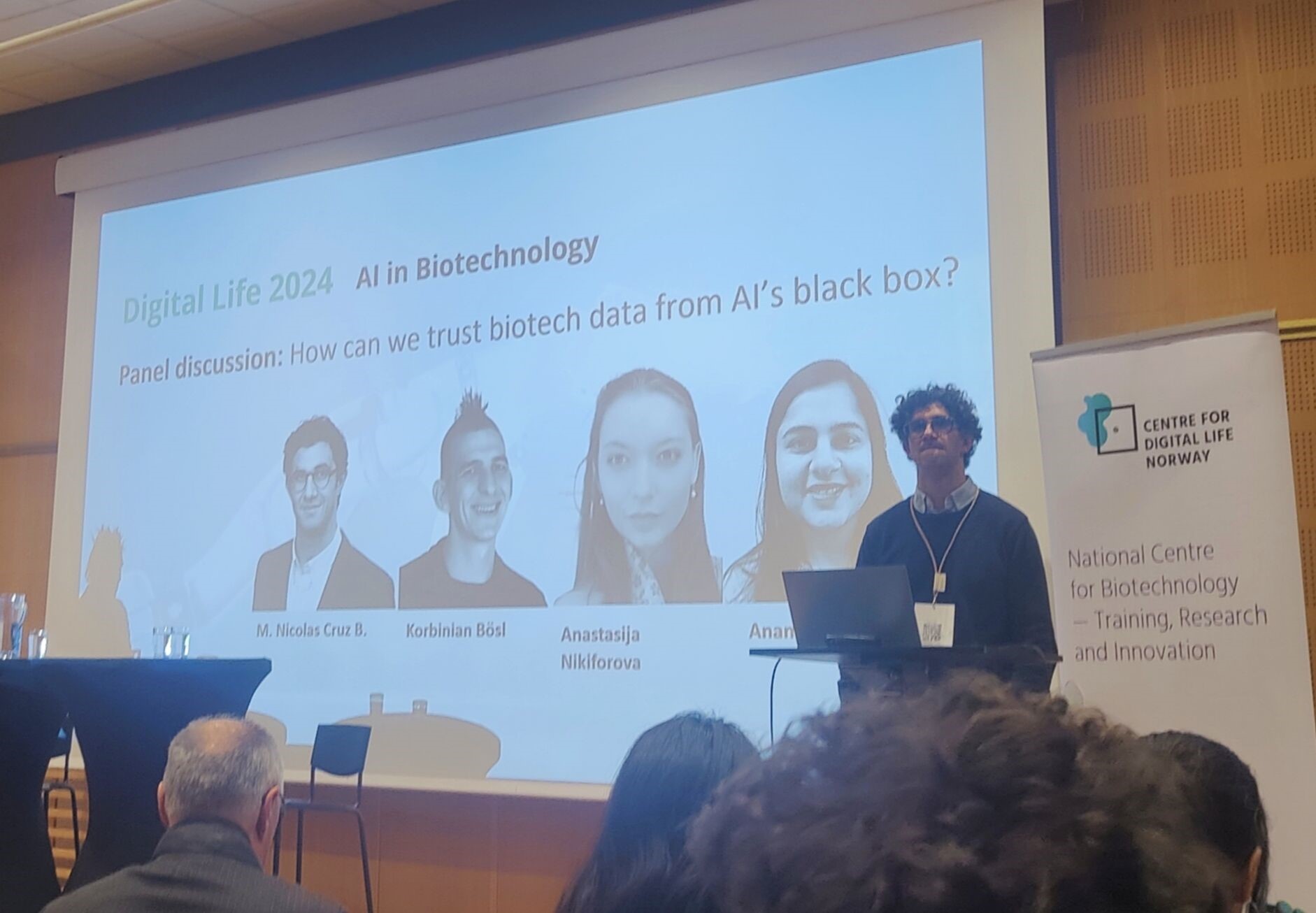
Panel on Trust in AI @Digital Life Norway: In AI we trust!? (or don’t we? / should we?)

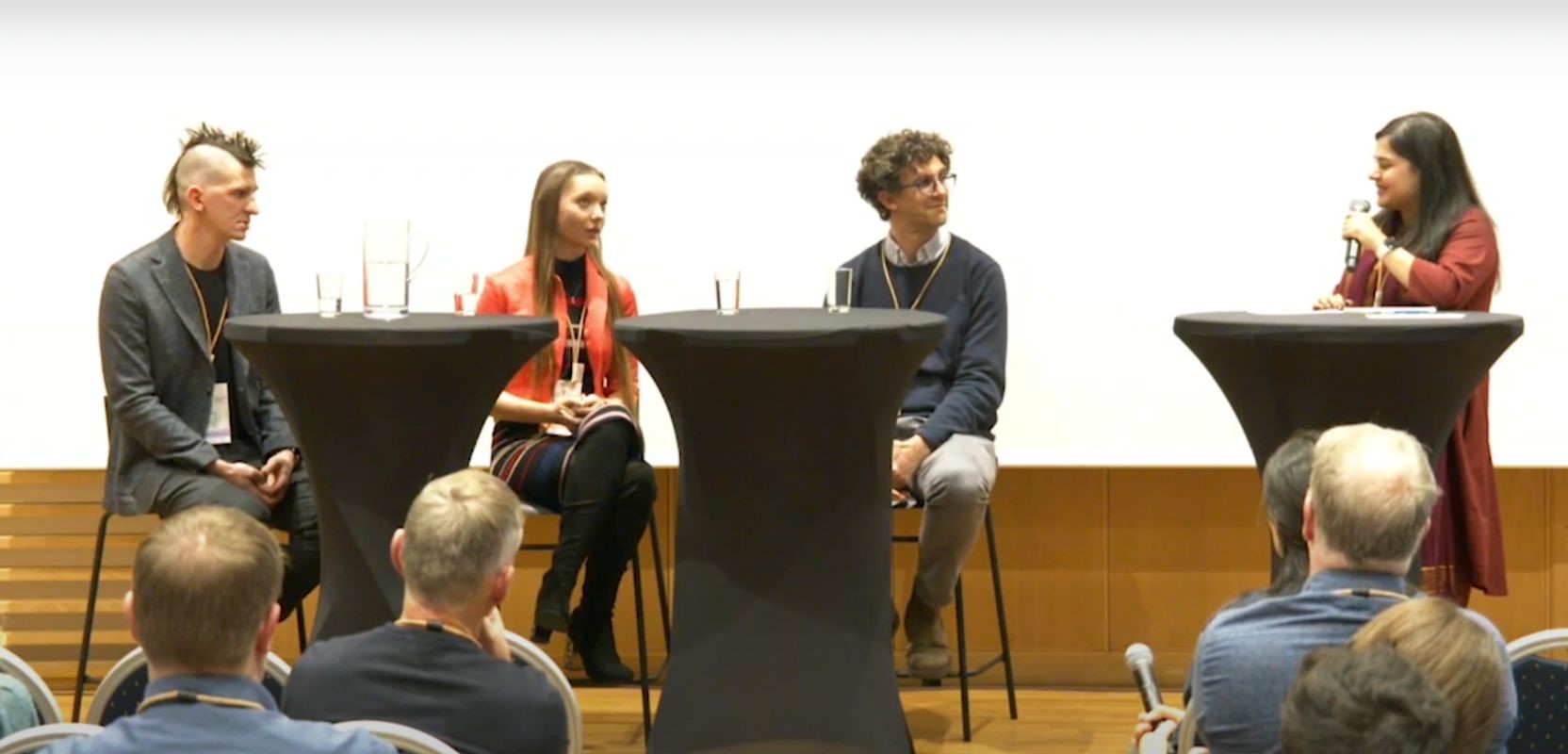
This October, I had an opportunity to participate in the panel on Trust in AI that took place as part of Digital Life Norway conference organized by Centre for Digital Life Norway (Norwegian University of Science and Technology (NTNU)) that took place in a very peaceful Hurdal (Norway) 🇳🇴🇳🇴🇳🇴.


As part of this panel, together with M. Nicolas Cruz B. (KIWI-biolab), Korbinian Bösl (ELIXIR, both of us being also part of EOSC Association)), and Anamika Chatterjee (Norwegian University of Science and Technology (NTNU)), who masterly chaired this discussion, we discussed trust in AI and data (as an integral part of it), emphasizing the need for transparency, reproducibility, and responsibility in managing them.


What made this discussion to be rather insightful – for ourselves, and, hopefully, for the audience as well – is that each of us represented a distinct stage in the data lifecycle debated upon the aspect of trust and where concerns arise as data moves from the lab to inform AI tools [in biotechnology].
As such we:
✅highlighted the interconnectedness of human actors involved in data production, governance, and application;
✅highlighted the importance of proper documentation to make data usable and trustworthy, along with the need for transparency – not only for data but also for AI in general, incl. explainable AI;
✅discussed how responsibility becomes blurred as AI-driven methodologies become more prevalent, agreeing that responsibility for AI systems must be shared across teams.
Lastly, despite being openness advocate, I used this opportunity to touch on the risks of open data, including the potential for misuse and ethical concerns, esp. when it comes to medical- and biotechnologies-related topics.


All in all, although rather short discussion with some more things we would love to cover but were forced to omit this time, but very lively and insightful. Sounds interesting? Watch the video, incl. keynote by Nico Cruz 👇.

And not of least interest was a diverse set of other events – keynotes, panels, posters etc. – takeaways from which to take back home (not really to home, as from the DNL, I went to the Estonian Open Data Forum, from which to ECAI, and then, finally back home to digest all the insights), where “Storytelling: is controversy good? How to pitch your research to a non-academic audience” by Kam Sripada and panel on supervision are probably the main things I take with me.


Many thanks go organizers for having me and the hospitality, where the later also goes to Hurdal 🇳🇴 in general, as we were lucky enough to have a very sunny weather, which made this very first trip to Norway – and, hopefully, not the last one – very pleasant!

The Estonian Open Data Forum – Celebrating Progress and Recognizing Achievements

This October, I had the distinct honor of participating in Estonia’s premier event on open data, the Open Data Forum (Avaandmete foorum), organized by the Ministry of Economic Affairs and Communications of Estonia, invited to talk about the role of academia and private sector in the open government data landscape. This annual gathering brings together industry experts, academic researchers, and government leaders to discuss key trends, achievements, and the future of open data in Estonia, along with highlighting the contributions coming from universities awarding the best dissertations developed by Estonian students. The latter made this event very special for me, as one of my students – Kevin Kliimask – was awarded for his outstanding bachelor’s thesis 🏆 🥇 🏅!

In his thesis –“Automated Tagging of Datasets to Improve Data Findability on Open Government Data Portals,” Kevin developed an LLM-powered interface to automate dataset tagging in both English and Estonian, thereby augmenting metadata preparation by data publishers and improving data findability on portals by users – as the practice shows their presence tend to be a challenge. E.g., our analysis conducted on the Estonian Open Data Portal, revealed that 11% datasets have no associated tags, while 26% had only one tag assigned to them, which underscores challenges in data findability and accessibility within the portal, which, according to the recent Open Data Maturity Report, is considered trend-setter. The developed solution was evaluated by users and their feedback was collected to define an agenda for future prototype improvements. The thesis has been already transformed into the scientific paper 👉 TAGIFY: LLM-powered Tagging Interface for Improved Data Findability on OGD portals presented at the IEEE international conference (I posted on this earlier 👉 here).

As for my talk titled Unlocking the Power of Open Data: The Role of Academia and the Private Sector in Building Inclusive and Sustainable Open Data Ecosystems, I emphasized the need for a holistic approach to open data that transcends merely opening/publishing data, rather requiring adopting a systemic view that considers an open data initiative as an Open Data Ecosystem (also confirmed by Open Data Charter 👉here), as we deal not only with open data (availability), portal, stakeholders, actors, but also processes surrounding them, emerging technologies & different forms of intelligence, going beyond just Artificial Intelligence, whose role, however, is crucial (see our paper on the eight-fold role of AI in OGD).

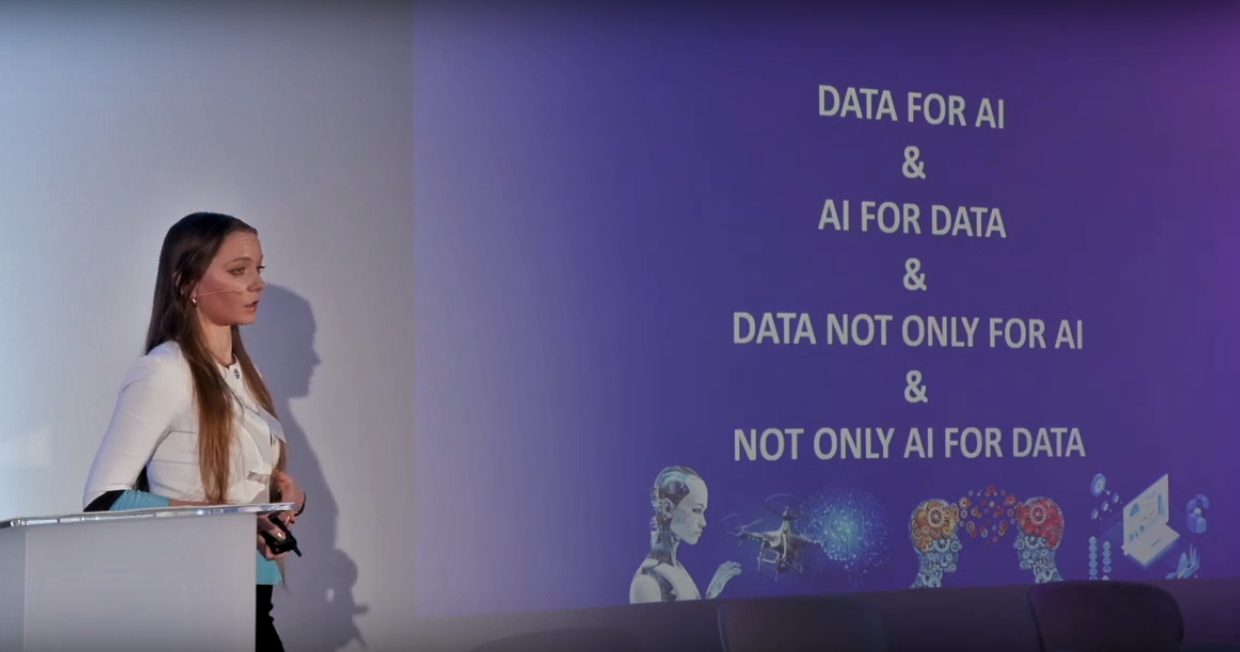
As such, while discussing the main idea of ​​the talk – the role of academia & the private sector in the ODE, which as per me is at least four-fold, namely – data consumers, data providers, contributors to ODE sustainability & myth busters on the global stage (assigning “Made in Estonia” tag to OGD in addition to the one we have for e-government), I also expanded the general mantra of “Data For AI” to “data for AI, AI for data, data not only for AI and not only AI for data”.


A big thank you to the organisers, who gathered so many speakers (Cybernetica, FinEst Centre for Smart Cities, Riigi Infosüsteemi Amet // Estonian Information System Authority (NCSC-EE), University of Tartu and many others) to discuss the highlights of today & tomorrow for Estonian Open Data and High-Value Datasets in particular as it was the main focus of the Forum – was happy to be part of these discussions!

Editorial Board Member of Data & Policy (Cambridge University Press)

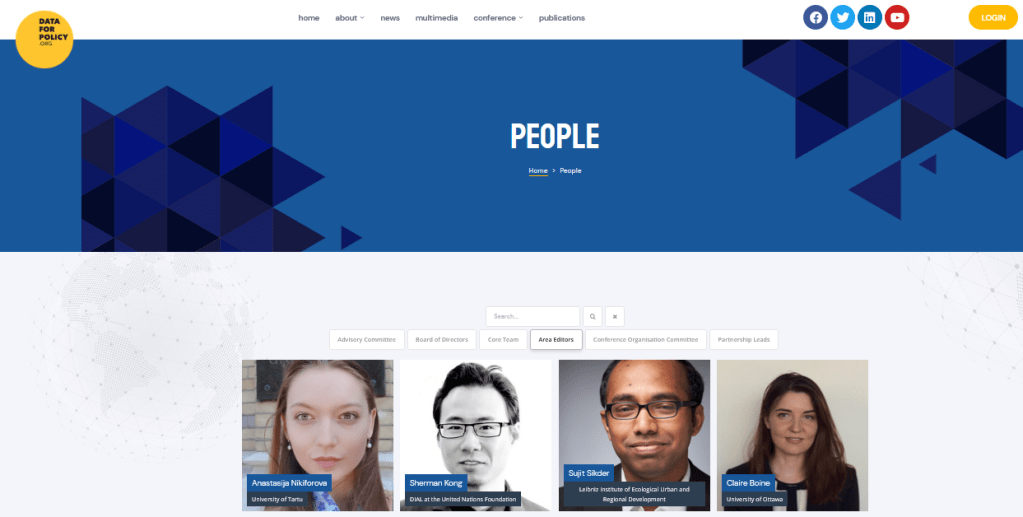
Since July 2022, I am elected by Syndicate of Cambridge University Press as an Editorial Board Member of the Cambridge University Journal Data & Policy. Data & Policy is a peer-reviewed, open access venue dedicated to the potential of data science to address important policy challenges. For more information about the goal and vision of the journal, read the Editorial Data & Policy: A new venue to study and explore policy–data interaction by Stefaan G. Verhulst, Zeynep Engin, and Jon Crowcroft. More precisely, I act as an Area Editor of “Focus on Data-driven Transformations in Policy and Governance” area (with a proud short name “Area 1“). This Area focuses on the high-level vision for philosophy, ideation, formulation and implementation of new approaches leading to paradigm shifts, innovation and efficiency gains in collective decision making processes. Topics include, but are not limited to:

  • Data-driven innovation in public, private and voluntary sector governance and policy-making at all levels (international; national and local): applications for real-time management, future planning, and rethinking/reframing governance and policy-making in the digital era;
  • Data and evidence-based policy-making;
  • Government-private sector-citizen interactions: data and digital power dynamics, asymmetry of information; democracy, public opinion and deliberation; citizen services;
  • Interactions between human, institutional and algorithmic decision-making processes, psychology and behaviour of decision-making;
  • Global policy-making: global existential debates on utilizing data-driven innovation with impact beyond individual institutions and states;
  • Socio-technical and cyber-physical systems, and their policy and governance implications.

The remaining areas represent more specifically the current applications, methodologies, strategies which underpin the broad aims of Data & Policy‘s vision: Area 2 “Data Technologies and Analytics for Policy and Governance“, Area 3 “Policy Frameworks, Governance and Management of Data-driven Innovations“, Area 4 “Ethics, Equity and Trust in Policy Data Interactions“, Area 5 “Algorithmic Governance“, Area 6 “Data to Tackle Global Issues and Dynamic Societal Threats“.

Editorial committees of Data & Policy (Area 1)

For the types of submission we are interested in, they are four:

  • Research articles that use rigorous methods that investigate how data science can inform or impact policy by, for example, improving situation analysis, predictions, public service design, and/or the legitimacy and/or effectiveness of policy making. Published research articles are typically reviewed by three peer reviewers: two assessing the academic or methodological rigour of the paper; and one providing an interdisciplinary or policy-specific perspective. (Approx 8,000 words in length).
  • Commentaries are shorter articles that discuss and/or problematize an issue relevant to the Data & Policy scope. Commentaries are typically reviewed by two peer reviewers. (Approx 4,000 words in length).
  • Translational articles are focused on the transfer of knowledge from research to practice and from practice to research. See our guide to writing translational papers. (Approx 6,000 words in length).
  • Replication studies examine previously published research, whether in Data & Policy or elsewhere, and report on an attempt to replicate findings.

Read more about Data & Policy and consider submitting your contribution!

Moreover, as a part of this journal, we (Data & Policy community) organize a hybrid physical-virtual format, with one-day, in-person conferences held in three regions: Asia (Hong Kong), America (Seattle) and Europe (Brussels). “Data for Policy: Ecosystems of innovation and virtual-physical interactions” conference I sincerely recommend you to consider and preferably to attend! While this is already the seventh edition of the conference, I take part in its organization for the first year, thus am especially excited and interested in its success!

Data for policy, Area Editors

In addition to its six established Standard Tracks, and reflecting its three-regions model this year, the Data for Policy 2022 conference highlights “Ecosystems of innovation and virtual-physical interactions” as its theme. Distinct geopolitical and virtual-physical ecosystems are emerging as everyday operations and important socio-economic decisions are increasingly outsourced to digital systems. For example, the US’s open market approach empowering multinational digital corporations contrasts with greater central government control in the Chinese digital ecosystem, and radically differs from Europe’s priority on individual rights, personal privacy and digital sovereignty. Other localised ecosystems are emerging around national priorities: India focuses on the domestic economy, and Russia prioritises public and national security. The Global South remains underrepresented in the global debate. The developmental trajectory for the different ecosystems will shape future governance models, democratic values, and the provision of citizen services. In an envisioned ‘metaverse’ future, boundaries between physical and virtual spaces will become even more blurred, further underlining the need to scrutinise and challenge the various systems of governance.

The Data for Policy conference series is the premier global forum for multiple disciplinary and cross-sector discussions around the theories, applications and implications of data science innovation in governance and the public sector. Its associated journal, Data & Policy, published by Cambridge University Press has quickly established itself as a major venue for publishing research in the field of data-policy interactions. Data for Policy is a non-profit initiative, registered as a community interest company in the UK, supported by sustainer partners Cambridge University Press, the Alan Turing Institute and the Office for National Statistics.

Read more about Data for Policy and become a part of it!