📢✍️🗞️New paper alert! “Identifying patterns and recommendations of and for sustainable open data initiatives: A benchmarking-driven analysis of open government data initiatives among European countries”, GIQ

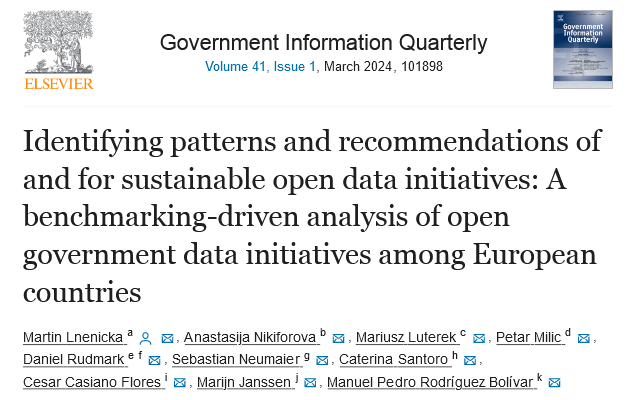
With this post I would like to introduce our new paper entitled “Identifying patterns and recommendations of and for sustainable open data initiatives: A benchmarking-driven analysis of open government data initiatives among European countries” (authors: Martin Lnenicka, Anastasija Nikiforova, Mariusz Luterek, Petar Milic, Daniel Rudmark, Sebastian Neumaier, Caterina Santoro, Cesar Casiano Flores, Marijn Janssen, and Manuel Pedro Rodríguez Bolívar) that has been just published in Government Information Quarterly journal (Elsevier) – the leading journal in the world for articles on e-governemnt, public administration, and, in fact, many other topics.

This paper focuses on benchmarking of open data initiatives over the years and attempts to identify patterns observed among European countries that could lead to disparities in the development, growth, and sustainability of open data ecosystems, considering different potentially relevant contexts such as e-government, open government data, open data indices and rankings, and others relevant for the country under consideration. Specifically, this study conducts a comparative analysis of different patterns of open (government) data initiatives and their effects in the eight European countries – Austria, Belgium, Czech Republic, Italy, Latvia, Poland, Serbia, Sweden, using six open data benchmarks Global Open Data Index (GODI), Open Data Maturity Report (ODMR), Open Data Inventory (ODIN), Open Data Barometer (ODB), Open, Useful and Re-usable data (OURdata) Index, Open Government Development Index (OGDI), two e-government reports (57 editions in total), and other relevant resources, covering the period of 2013–2022. In other words, to attain the objective of the study, we developed the composite benchmarks-driven analytical protocol.

Using the developed composite benchmarks-driven analytical protocol and a Delphi method, we reached a consensus within a panel of experts and validated a final list of 94 patterns, including their frequency of occurrence among studied countries and their effects on the respective countries. Finally, we took a closer look at the developments in identified contexts over the years and defined 21 recommendations for more resilient and sustainable open government data initiatives and ecosystems and future steps in this area.

We then performed the cluster analysis to find similarities between patterns based on their occurrence and effects (impacts). Both these analyses suggest a close link between approaches to benchmarking of open data initiatives and the development of e-government over the years. We found that e-government services, their interoperability, availability, transparency, efficiency, etc., have a positive influence here, i.e., to what extent OGD and related concepts will merge with e-government and can use its infrastructure and related services for their growth. Finally, we were also able to extract from the 25 patterns six high-level recommendations that are considered the key to success, i.e., for a sustainable and resilient OGD initiative. The discussion, in turn, allowed us to formulate 15 more recommendations for public administration, those who use/interpret indices, benchmarks, and reports, and academia, indicating some research agenda.

These are expected to lead to improved performance in applied indices and rankings and, more importantly, will facilitate the achievement of the benefits with which open (government) data are associated. While this is expected to be primarily important in instructing ODEs’ stakeholders (mainly policymakers), the findings identified the current research gaps to be further explored by researchers. As future research, we will expand the study to other countries, focusing our attention in specific areas of the OGD ecosystems to get valuable insights concerning OGD strategies used and in identifying development stages in OGD.

Sounds interesting? Read the article here!

In case of interest, cite this paper as:

  • Lnenicka, M., Nikiforova, A., Luterek, M., Milic, P., Rudmark, D., Neumaier, S., Santoro, C., Casiano Flores, C., Janssen, M., & Rodríguez Bolívar, M. P. (2024). Identifying patterns and recommendations of and for sustainable open data initiatives: A benchmarking-driven analysis of open government data initiatives among European countries. Government Information Quarterly, 41(1): 101898. https://doi.org/10.1016/j.giq.2023.101898

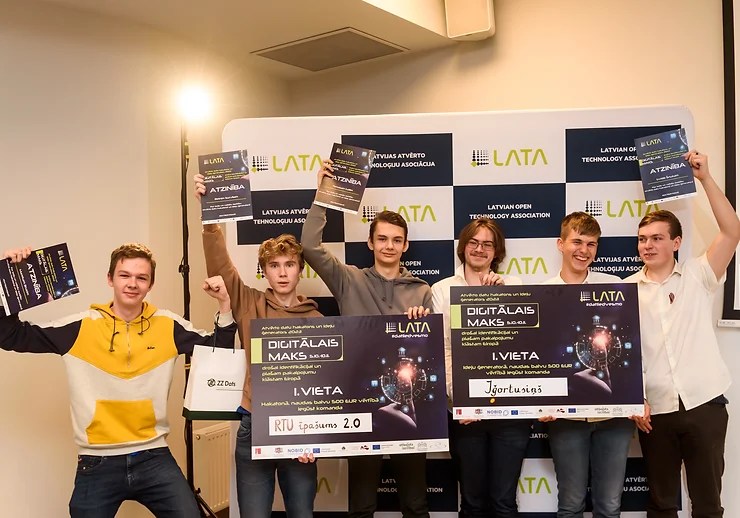
Latvian Open Data Hackathon 2023 winners are announced

The annual Open Data Hackathon and Idea Generator of the Latvian Open Technologies Association (LATA), this year dedicated to the digital wallet, is over and we finally know the winners:

  • 🏆The winner of Hackathon – “Application for finding a family doctor” by RTU Engineering High School team “RTU Property 2.0”
  • 🏆The winner of Idea generator – “Taročeks” – an application to simplify the process of returning a deposit for beverage packaging (as an cross-border service!) – by RTU Engineering High School team “Iġortusiņš”.

We also greet a few more teams on the podium:

  • 🥈“Savičs” team and their idea of “Delta – digital identity wallet” (latv. “Delta – digitālais identitāšu maks”)
  • 🥈“Inov8hers” team and “MyWall8”
  • 🥈“Pilsētas putni” and their idea to improve the health of Latvian society – “Latvijas sabiedrības veselības uzlabošana”

Both teams received prizes and some funding for implementing their ideas and for all the efforts they put into this, working on them for a month.

We – the mentors – were there to support them and we are really proud of all the finalists and their solutions – it is a great pleasure to contribute to the development of the younger generation by helping to develop their ideas, mindsets and skills at this fairly early stage as these participants are predominantly from 6th to 12th grade, although their ideas tend to be incredibly innovative, as are the skills demonstrated in developing those solutions.

It is my 4th time/year in a row to act as a mentor and each and every time I got surprised with all those ideas our mindsets bring on the table with healthcare, wellbeing, sustainability, ecology and simplification of processes as the main topics covered by participants, which are addressed (at least partly) with open data – this year combining them with the idea of digital wallets – not the easiest task, bust still – challenge completed!

All in all, great event and the outcome for what we are thankful to both organizers – Latvian Open Technologies Association, partners – Latvijas Valsts radio un televīzijas centrs, Vides aizsardzības un reģionālās attīstības ministrija, Valsts izglītības satura centrs, NOBID Consortium, Rīgas Tehniskā universitāte (Riga Technical University), E-KLASE, European Commission and supporters – Omniva, ZZ Dats, Latvijas Banka!

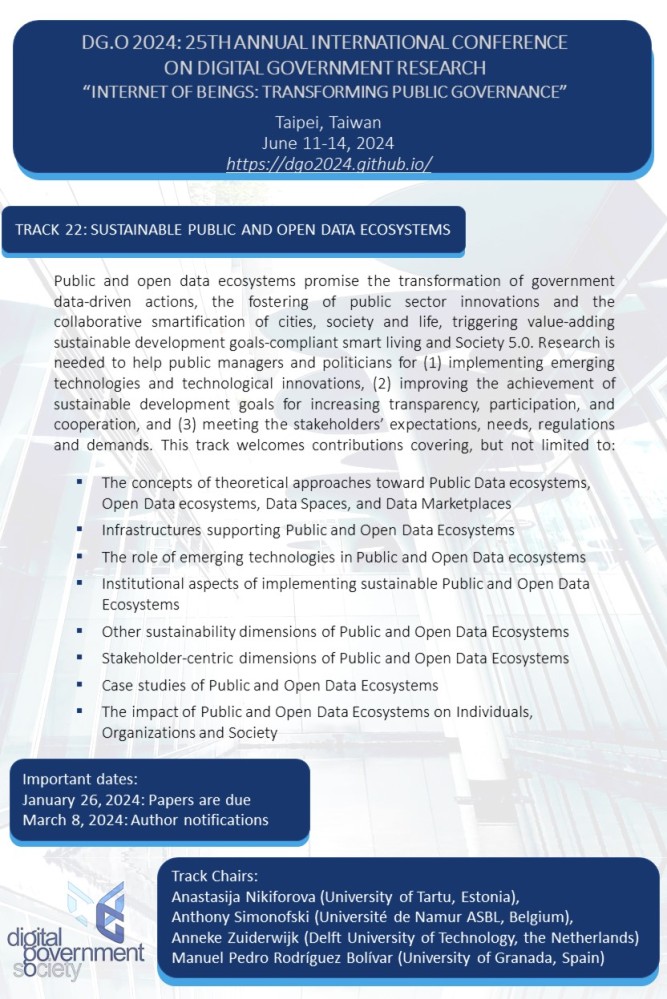
CFP for a new dg.o2024 SUSTAINABLE PUBLIC AND OPEN DATA ECOSYSTEMS track

25th Annual International Conference on Digital Government Research (dg.o2024) is coming with the revised list of tracks, where the special attention I invite you to draw to is a new track “Sustainable Public and Open Data Ecosystems” (chairs: Anastasija Nikiforova (University of Tartu, Estonia), Anthony Simonofski (Université de Namur ASBL, Belgium), Anneke Zuiderwijk (Delft University of Technology, the Netherlands) & Manuel Pedro Rodríguez Bolívar (University of Granada, Spain)).

Briefly about the track… Public and open data ecosystems promise the transformation of government data-driven actions, the fostering of public sector innovations and the collaborative smartification of cities, society and life, triggering value-adding sustainable development goals-compliant smart living and society 5.0 (Nikiforova, 2021, Nikiforova et al., 2023). Recent research found that concepts affecting and shaping the ecosystem are: 1) stakeholders / actors and their roles, 2) phases of the data lifecycle, in which a stakeholder participates in the ecosystem, 3) technical and technological infrastructure, 4) generic services and platforms, 5) human capacities and skills of both providers and consumers, 6) smart city domains (thematic categories) as the targeted areas for data reuse, 7) externalities affecting goals, policy, and resources, 8) level of (de)centralization of data sources – development, restrictions, 9) perception of importance and support from public officials, and 10) user interface, user experience, and usability (Lnenicka et al., 2021). The body of knowledge in the above areas (not to say about putting them all together) is very limited. New research is needed to help public managers and politicians for (1) implementing emerging technologies and technological innovations, (2) improving the achievement of sustainable development goals for increasing transparency, participation, and cooperation, and (3) meeting the stakeholders’ expectations, needs, regulations and demands.

This track welcomes contributions covering, but not limited to:

💡 The concepts of theoretical approaches toward Public Data ecosystems, Open Data ecosystems, Data Spaces, and Data Marketplaces;

💡Infrastructures supporting Public and Open Data Ecosystems;

💡The role of emerging technologies in Public and Open Data ecosystems;

💡Institutional aspects of implementing sustainable Public and Open Data Ecosystems;

💡Other sustainability dimensions of Public and Open Data Ecosystems;

💡Stakeholder-centric dimensions of Public and Open Data Ecosystems;

💡Case studies of Public and Open Data Ecosystems;

💡The impact of Public and Open Data Ecosystems on Individuals, Organizations and Society.

The track welcomes both contributions covering the current state-of-the-art of public data ecosystems (what components constitute them, what are the relationships between these components, what makes an ecosystem resilient and sustainable), incl. individual case studies reflecting best or bad practices, as well as those addressing how these ecosystems can be transformed into more sustainable ecosystems that will “fuel” or “smartify” society (Information Society aka Society 4.0 to Super Smart Society aka Society 5.0 transition), cities and various areas of life.

The track is very in line with the conference theme of DGO 2024, namely: Internet of Beings – Transforming Public Governance, where, “the Internet of Beings focuses on digital technologies that enable integration, people-centric, and creation of open platforms for collaborative multi-user to co-create services and products” (as mentioned in the theme description). Public and open data ecosystems can be considered as such open platforms, where data providers and data users find each other and collaborate and co-create to develop services and products useful for society. While digital technologies enable the development of public and open data ecosystems, the adoption of such ecosystems has been fragmented.

Is your research related to any of the above topics? Then do not wait – submit!

🗓️🗓️🗓️Important Dates:

January 26, 2024: Papers, workshops, tutorials, and panels are due
Feb 1, 2021: Application deadline for doctoral colloquium
March 8, 2024: Author notifications (papers, workshops, tutorials, panels)

References:

Nikiforova, A. (2021). Smarter open government data for society 5.0: are your open data smart enough?. Sensors, 21(15), 5204.

Nikiforova, A., Flores, M. A. A., & Lytras, M. D. (2023). The role of open data in transforming the society to Society 5.0: a resource or a tool for SDG-compliant Smart Living?. In Smart Cities and Digital Transformation: Empowering Communities, Limitless Innovation, Sustainable Development and the Next Generation (pp. 219-252). Emerald Publishing Limited.

Lnenicka, M., Nikiforova, A., Luterek, M., Azeroual, O., Ukpabi, D., Valtenbergs, V., & Machova, R. (2022). Transparency of open data ecosystems in smart cities: Definition and assessment of the maturity of transparency in 22 smart cities. Sustainable Cities and Society, 82, 103906.

IFIP EGOV-CeDEM-EPART 2023 – retrospective on how it was? From Metaverse to wine tasting

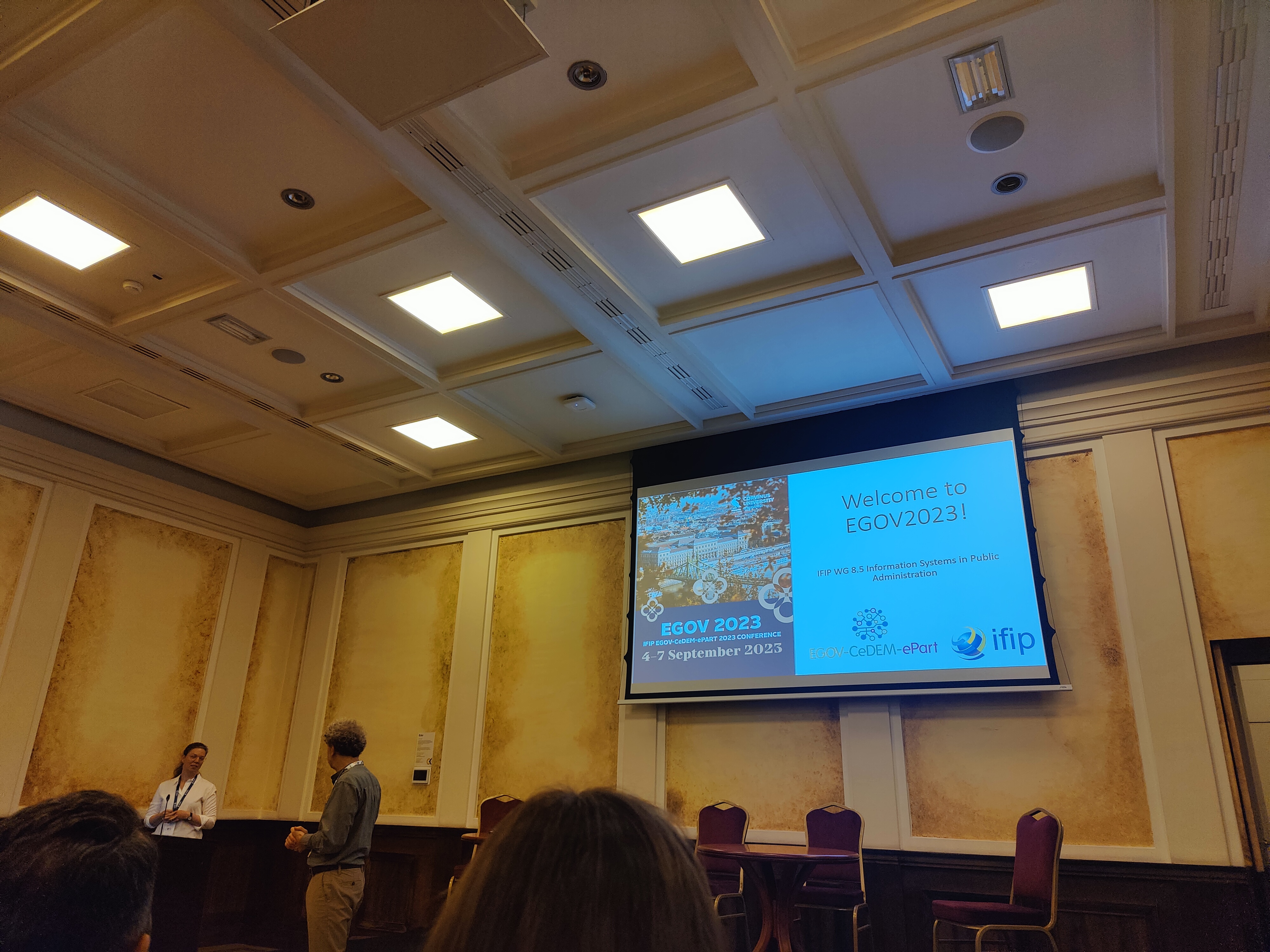
It finally took place! EGOV2023 – IFIP EGOV-CeDEM-EPART – one of the most recognized conference in e-Government, ICT and public administration and related topics (incl., Smart Cities, Sustainability, Innovation and many more) that lasted 3 days in charming city of Budapest (Hungary) is over, and I am here to reflect on it (just in a few words), since although these were just 3 days, they were very busy and full of insights, as well as activities, since every day I took another role, i.e., day#1 – presenter of the paper, day#2 – workshop organizer, day#3 – chair of two out of three sessions of “Emerging Issues and Innovations” track I co-chaired together with Marijn Janssen, Csaba Csaki and Francesco Mureddu. Not to forget, in this conference I am also a program committee of Open Data track.

Let me now provide a few insights on all these days, including my roles.

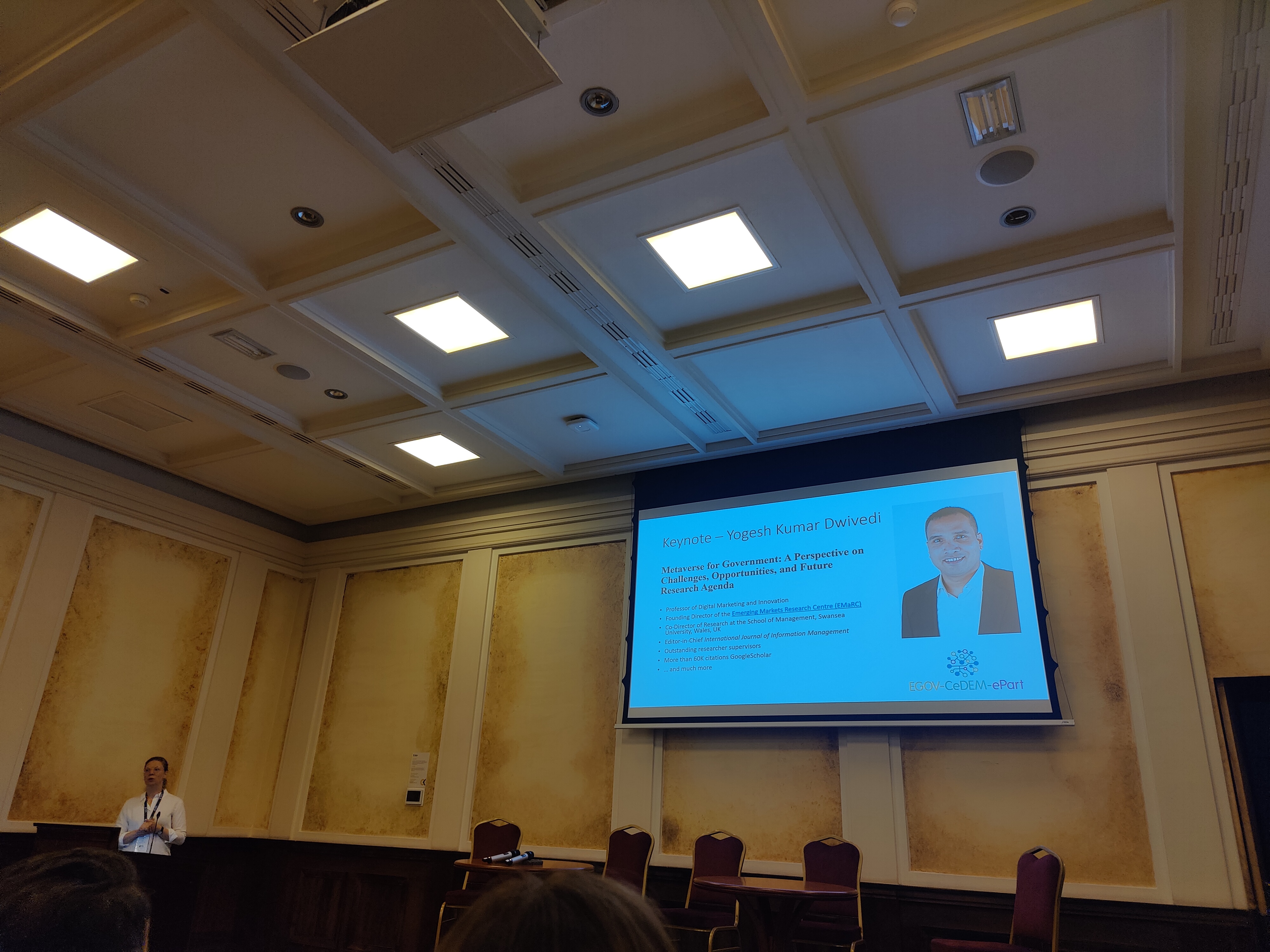
Let’s start with day#1… After conference opening by Ida Lindgren and Csaba Csaki – our local host, who did a great job – organized a very unique conference with exceptionally rich social programme, a brilliant keynote talk was delivered by Professor Yogesh K Dwivedi (possibly the most impactful researcher in the area) on Metaverse for Government and associated Challenges, Opportunities, as well as Future Research Agenda, as part of which the claim of a lack of studies on this topic was made. Luckily, our track “Emerging Issues and Innovations” has accepted one paper on Metaverse in digital government, which was the only at the conference, however, unfortunately, the discussion had not happened due to earlier departure of Yogesh and late arrival of authors. Anyway, almost immediately after the keynote the session, where I delivered a talk on HVD determination “Towards High-Value Datasets determination for data-driven development: a systematic literature review” (authors: Nikiforova, Rizun, Ciesielska, Alexopoulos, Miletić) took place. Just to remind you, I posted on this paper before – this is that paper, which has been already named “signal in the noise“, in which we asked ourselves and the current body of the knowledge (this is a systematic literature review-driven study):
❓how is the value of the open government data perceived / defined? Are local efforts being made at the country levels to identify dataset that provide the most value to stakeholders of the local open data ecosystem?
❓What datasets are considered to be of higher value in terms of data nature, data type, data format, data dynamism?
❓What indicators are used to determine HVD?
❓Whether there is a framework for determining country-specific HVD? I.e., is it possible to determine what datasets are of value and interest for their reuse & value creation, taking into account the specificities of the country, e.g., culture, geography, ethnicity, likelihood of crises and/or catastrophes.
Although neither OGD, nor the importance of data value are new topics, scholarly publications dedicated to HVD are very limited that makes study unique and constituting a call for action – probably this is also why it it is recommended for reading not only by us but also by The Living Library (by New York University, NYU Tandon School of Engineering, govlab). All in all, we have established some knowledge based, incl. several definitions of HVD, data-related aspects, stakeholders, some indicators and approaches that can now be used as a basis for establishing a discussion of what a framework for determining HVD should look like, which, along with the input we received from a series of international workshops as part of ICEGOV2022, ICOD2022 and DGO2023 with open data experts could enrich the common understanding of the goal, thereby contributing to the next open data wave.
👉Read the paper here
👉See slides here
👉Find supplementary data in open access at Zenodo here
Here I am very grateful to session attendees for raising a discussion around the topic, where some of those comments confirmed once more the correctness of both the problem statement and our future plans – thanks a lot!

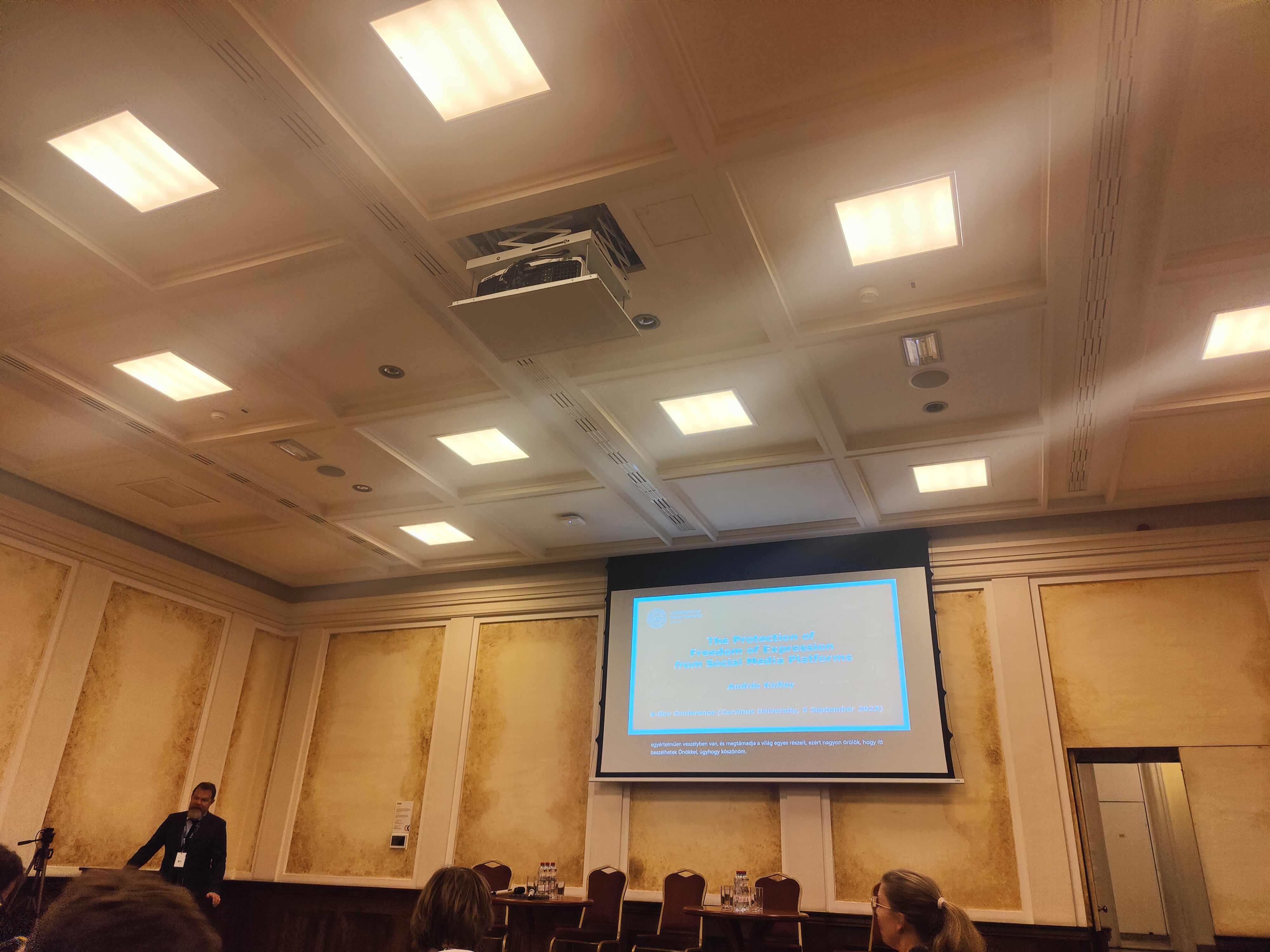
Day#2 of started with another keynote talk, whcih this time delivered by Andras Koltay (President of the National Media and Infocommunications Authority and the Media Council of Hungary) on the protection of freedom of expression from social media platforms – very different but yet very insightful talk. Then, my second role of the workshop organizer and chair followed. As part of our workshop “PPPS’2023 – Proactive and Personalised Public Services: Searching for Meaningful Human Control in Algorithmic Government” (chairs: Anastasija Nikiforova, Nitesh Bharosa, Dirk Draheim, Kuldar Taveter). As part of this workshop, which took place in a hybrid mode (not an easy task), we initiated a discussion about personalised and Proactive Public Services, i.e.:
🎯talked about the concepts of public services, reactive and proactive models of public services, and models of their personalization;
🎯asked participants to share their views on public services and the levels of proactivity and personalisation of these services in their countries aiming to develop concepts for holistic proactive and personalised public service delivery;
🎯tried to establish a clearer vision of the “as-is” model and the necessary transition to the “to-be” model, their underlying factors, as well as pitfalls of which governments should be aware when designing, developing, and setting up proactive and personalised public services, trying to understand what are those emerging technologies that will likely have greater effect on public services in terms of both driving them or creating obstacles / barriers for their development and maintenance.
Read a bit more 👉 here
Special thanks to all participants, who attended and were very active (and survived)!

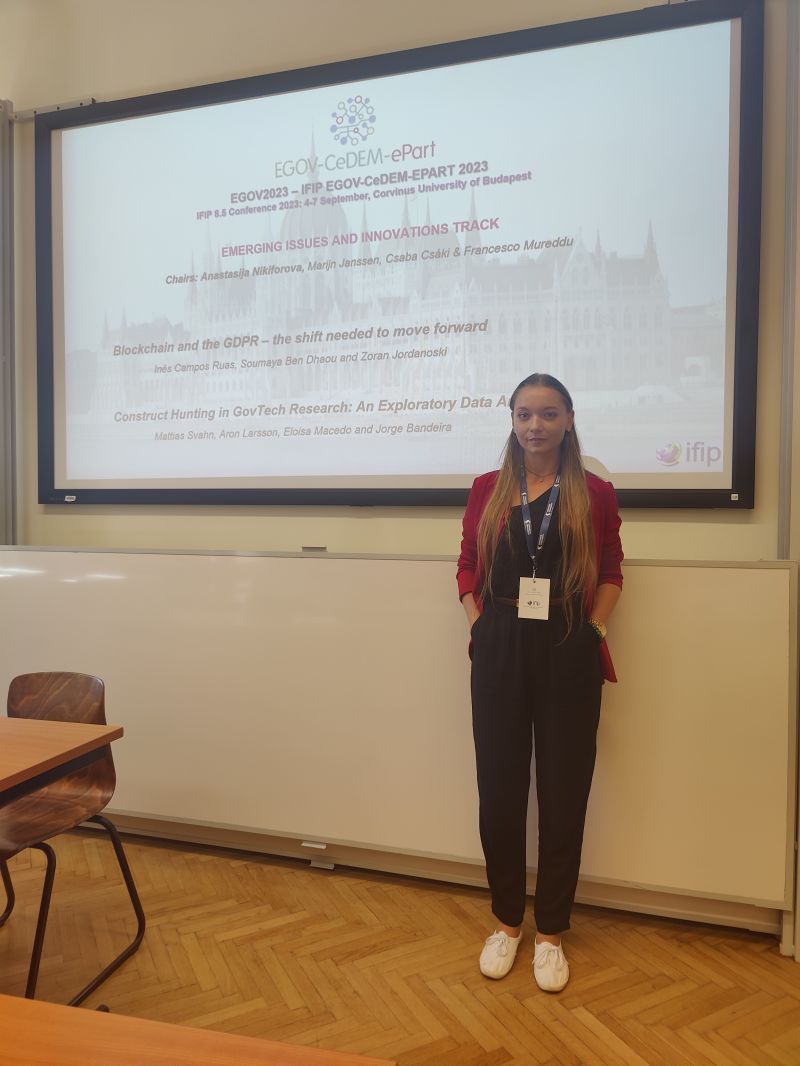
And now a few insights from day#3, when three sessions of our Emerging Issues and Innovations track (chairs: Marijn Janssen, Anastasija Nikiforova, Dr. Csaba Csaki, Francesco Mureddu) finally took place, where I was delighted to chair two of these sessions. Within these three sessions, 8 very diverse, but at the same time super interesting and insightful talks were delivered (predominantly from the United Nations University and Sweden), namely:
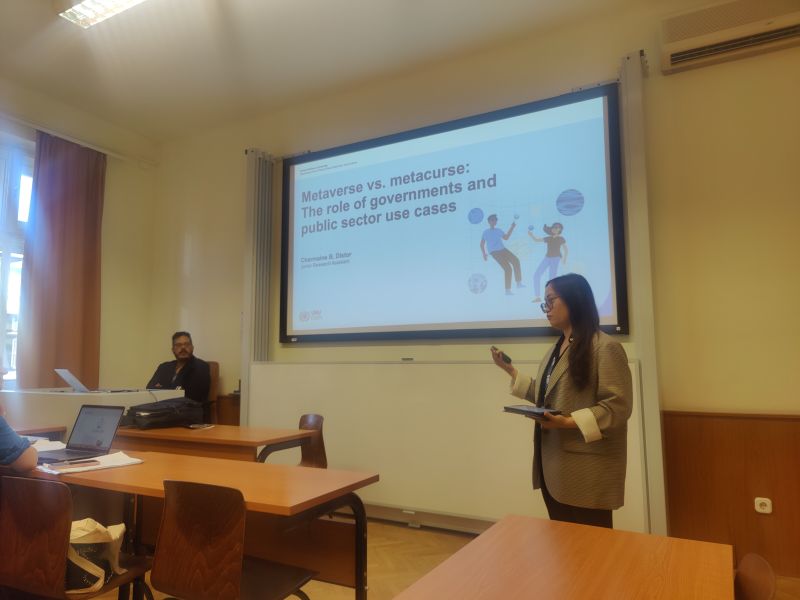
✍Metaverse vs. metacurse: The role of governments and public sector use cases by Charmaine Distor, Soumaya Ben Dhaou, & Morten Meyerhoff Nielsen that can be seen as a continuation of the keynote talk by Prof. Yogesh Dwivedi delivered at the 1st day;
✍Dynamic Capabilities and Digital Transformation in Public sector: Evidence from Brazilian case study by Larissa Magalhães;
✍Affording and constraining digital transformation: The enactment of structural change in three Swedish government agencies by Malin Tinjan, Robert Åhlén, Susanna Hammelev Jörgensen & Johan Magnusson
✍The Vicious Cycle of Magical Thinking: How IT Governance Counteracts Digital Transformation by Susanna H. Jörgensen, Tomas Lindroth, Johan Magnusson, Malin Tinjan, Jacob Torell & Robert Åhlen
✍Buridan’s Ass: Encapsulation as a Possible Solution to the Prioritization Dilemma of Digital Transformation by Johan Magnusson, Per Persson, Jacob Torell & Ingo Paas
✍Measuring digital transformation at the local level: assessing the current state of Flemish municipalities by Lieselot Danneels & Sarah Van Impe
✍Blockchain and the GDPR – the shift needed to move forward by Inês Campos Ruas, Soumaya Ben Dhaou & Zoran Jordanoski
✍Construct Hunting in GovTech Research: An Exploratory Data Analysis by Mattias Svahn, Aron Larsson, Eloisa Macedo and Jorge Bandeira
Read papers 👉 here, here & here
Big thanks go to both authors and presenters, as well as the audience, who was very active (even despite the fact that it was the very last day of the conference) and made these sessions a success!
And right after these two sessions, the third keynote by Laszlo Trautmann “The ethics of expertise – the political economy implications of AI”.


And the last but not the least, yet another social event – wine tasting at Etyeki Kúria Borászat / Winery, which was the perfect happy end of the EGOV2023!

Exceptional organization by Corvinus University of Budapest, Csaba Csaki and his team, International Federation for Information Processing (IFIP), Digital Government Society – cheers!🍷🍷🍷

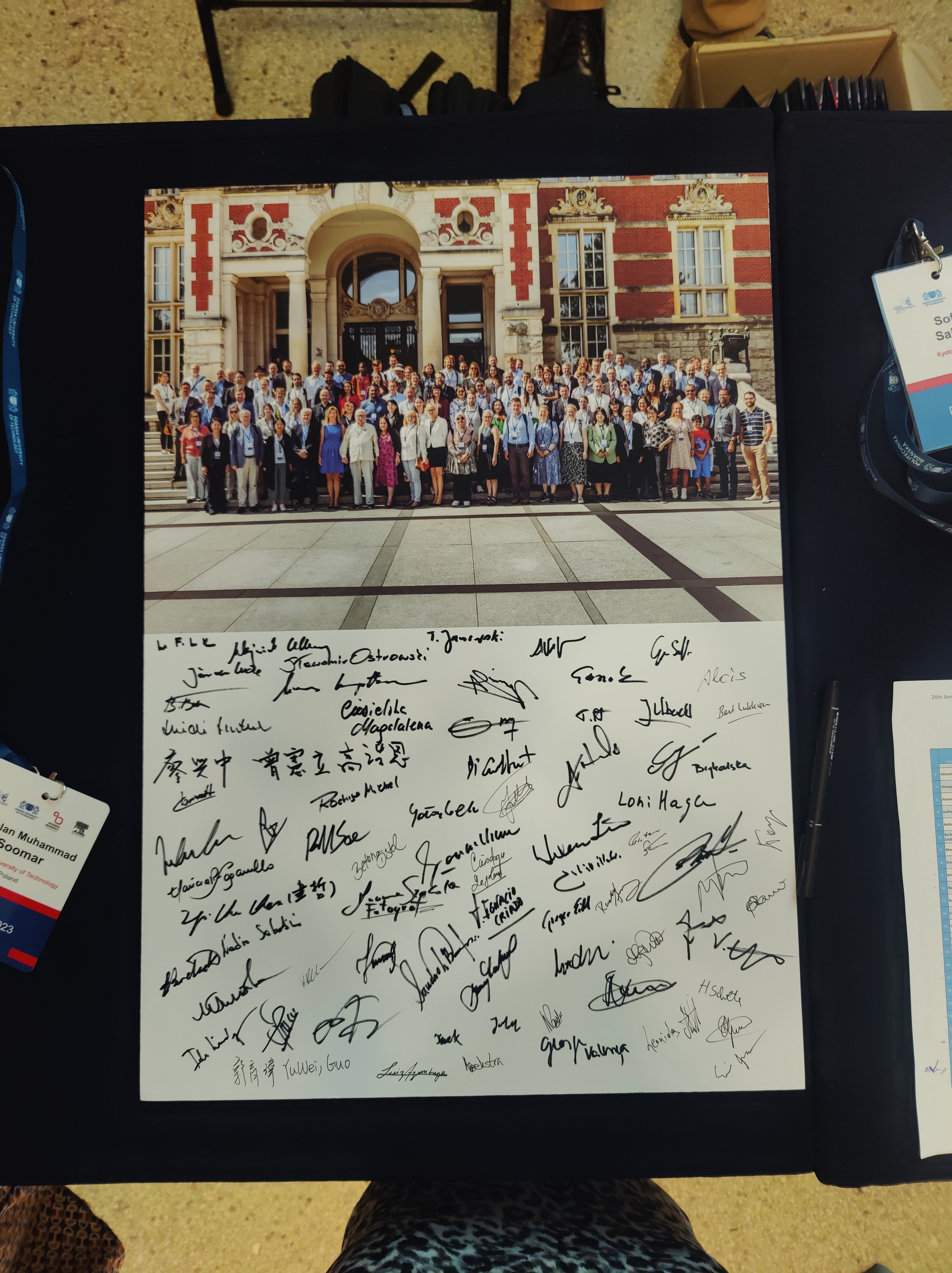
24th Annual International Conference on Digital Government Research: from the former President of Poland & Nobel Prize laureate Lech Wałęsa to the 3rd edition of our workshop on HVD

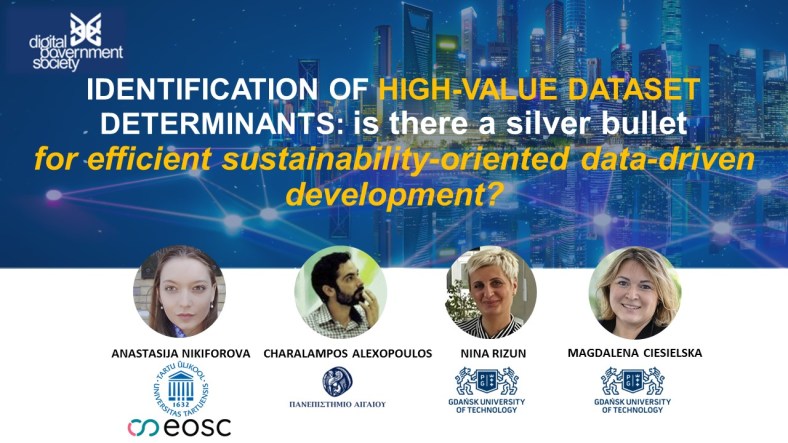
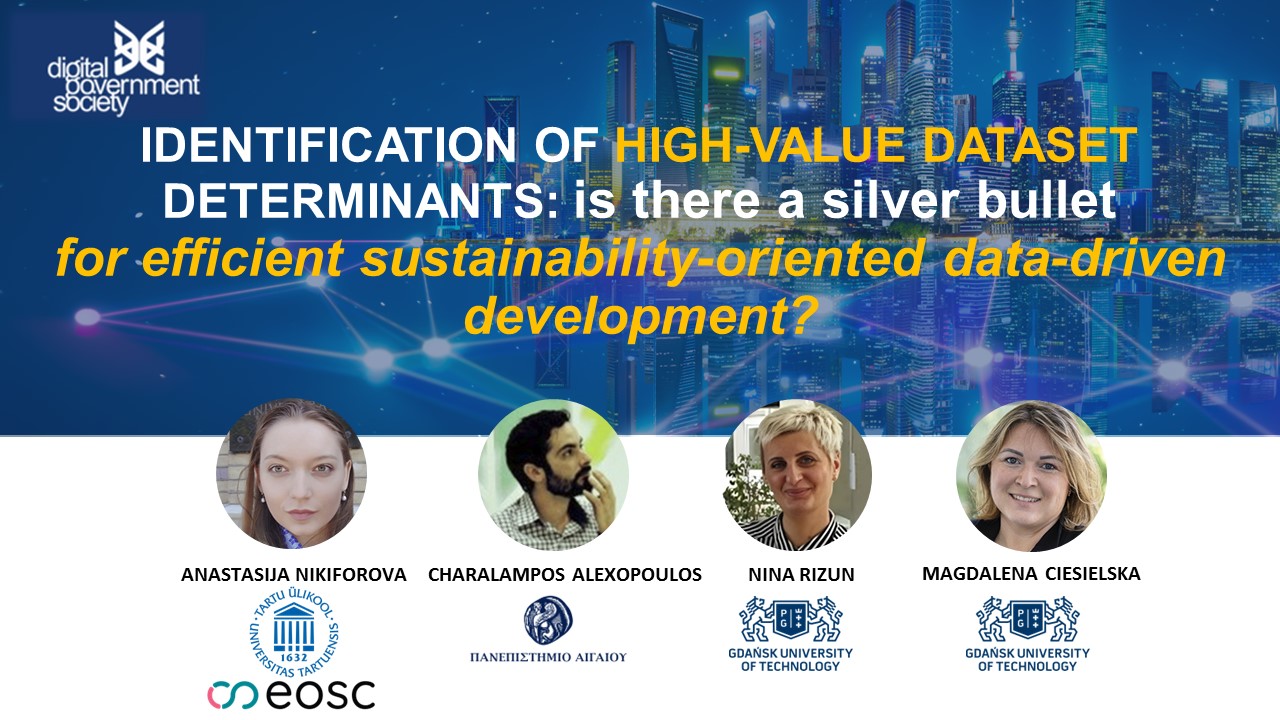
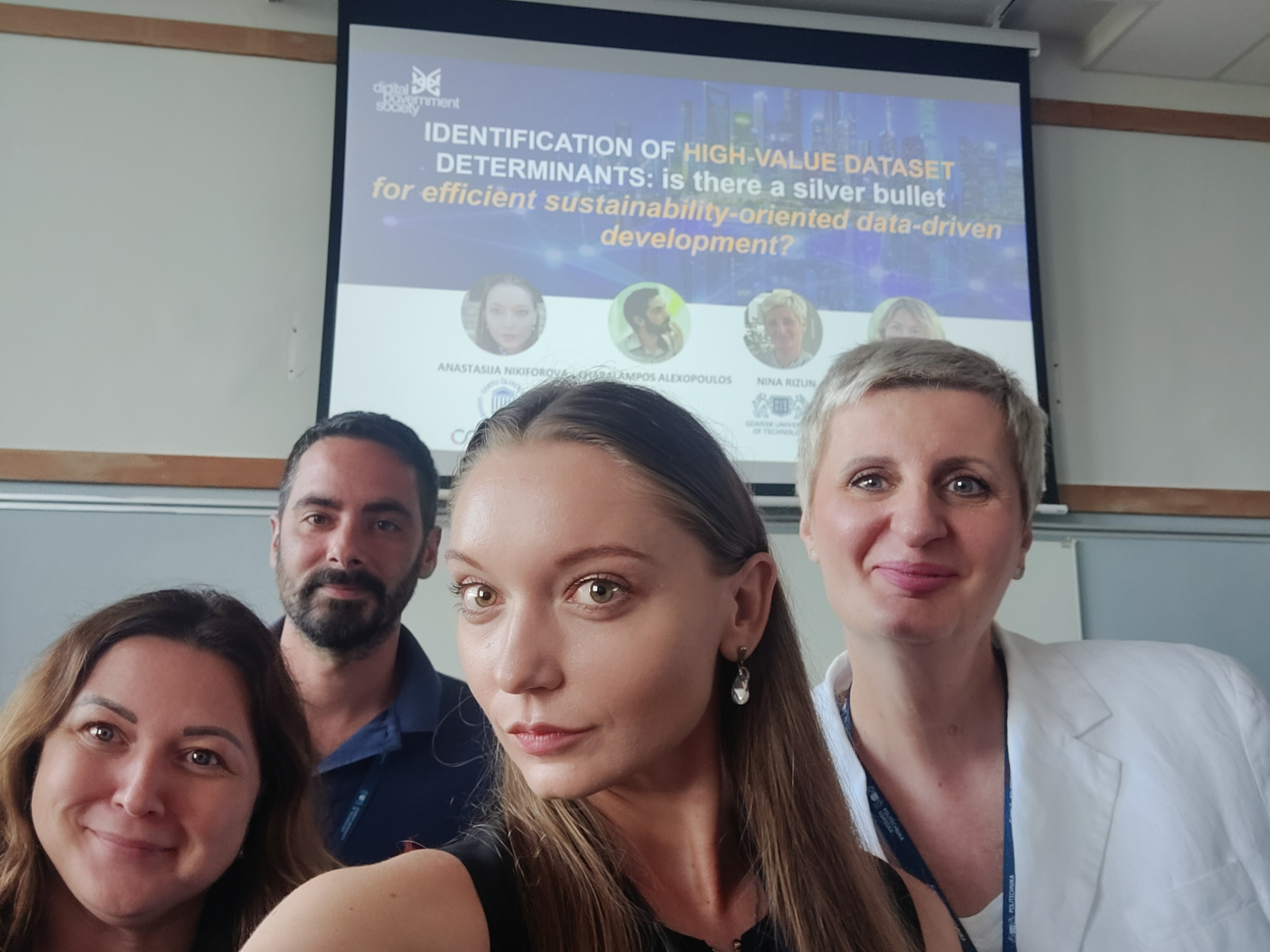
The week was full of impressions (positive) from the the 24th Annual International Conference on Digital Government Research in the charming Gdańsk (Poland), which started with our workshop, followed by the keynote talk delivered by the former President of Poland & Nobel Prize laureate Lech Wałęsa, until the very last session & coming to my hometown and meeting John Malkovich there! Although this was already the 3rd working trip in the last 4 weeks and the 5th from the very beginning of June, during which I delivered two keynote lectures, presented two papers (with two more papers presented by my colleagues at other conferences), chaired the workshop with several more events & activities, it was still an absolutely great experience, where we finally had the 3rd edition of our workshop “Identification of high value dataset determinants: is there a silver bullet for efficient sustainability-oriented data-driven development? as part of dg.o2023, which brought more than 20 participants, with whom we jointly tried to understand:

💡What can be the country-specific HVD determinants (aspects)? Incl. who should be the expected beneficiary of the availability of HVD? what are the current approaches towards HVD determination?

💡What mechanisms or methods can be put in place to determine them?

💡Can this be done (semi-)automatically?

💡How a framework for determining country-specific HVD could look like?

As part of the workshop, we also validated the results of our Towards High-Value Datasets determination for data-driven development: a systematic literature review (Anastasija Nikiforova, Nina Rizun, Magdalena Ciesielska, Charalampos Alexopoulos, Andrea Miletič) paper we expect to present to EGOV community, which has been already named a “sound in the noise” (we work hard to correspond to this characteristic!). As part of the above, we verified whether the findings from the literature are relevant, valid & complete discussing:

💡What can be data-centered characteristic of HVD? (and should they be predefined?)
💡What are the expected characteristics of the HVD determination indicators, i.e. (1) ex-ante / ex-post / both?, (2) qualitative / quantitative / both? (3) Internal (such as usage statistics) / external (e.g., report, indices, charters) / both?, (4) SMART / not necessarily? Diving then into the above questions, as well as evaluating relevance of indicators identified previously (lit-re & current practices / ad-hoc approaches & previous workshops)

Many thanks to everyone who participated in the ICEGOV, ICOD or DGO workshops (more than 60 people in total), as well as thanks to Maria, who was part of the ICOD workshop!

Thanks to the organizers, including but not limited to the local organizing committee – Gdansk University, Digital Government Society, Emerald Publishing – for giving an opportunity to have a good time and to finally meet the colleagues in person (some of whom never met before despite a relatively long collaboration)!