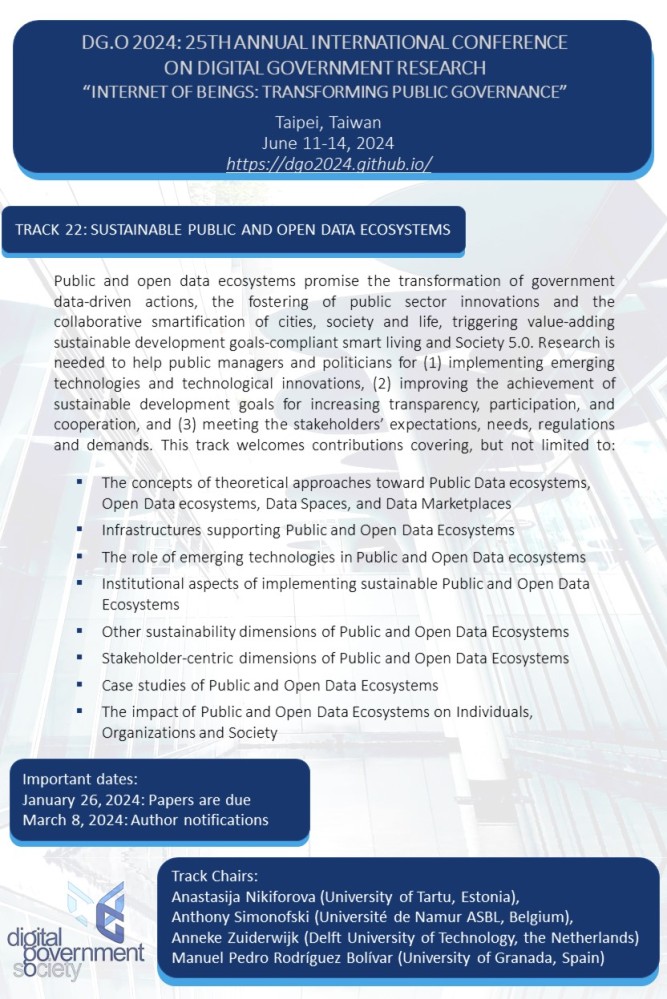
25th Annual International Conference on Digital Government Research (dg.o2024)is coming with the revised list of tracks, where the special attention I invite you to draw to is a new track “Sustainable Public and Open Data Ecosystems” (chairs: Anastasija Nikiforova (University of Tartu, Estonia), Anthony Simonofski (Université de Namur ASBL, Belgium), Anneke Zuiderwijk (Delft University of Technology, the Netherlands) & Manuel Pedro Rodríguez Bolívar (University of Granada, Spain)).
Briefly about the track… Public and open data ecosystems promise the transformation of government data-driven actions, the fostering of public sector innovations and the collaborative smartification of cities, society and life, triggering value-adding sustainable development goals-compliant smart living and society 5.0 (Nikiforova, 2021, Nikiforova et al., 2023). Recent research found that concepts affecting and shaping the ecosystem are: 1) stakeholders / actors and their roles, 2) phases of the data lifecycle, in which a stakeholder participates in the ecosystem, 3) technical and technological infrastructure, 4) generic services and platforms, 5) human capacities and skills of both providers and consumers, 6) smart city domains (thematic categories) as the targeted areas for data reuse, 7) externalities affecting goals, policy, and resources, 8) level of (de)centralization of data sources – development, restrictions, 9) perception of importance and support from public officials, and 10) user interface, user experience, and usability (Lnenicka et al., 2021). The body of knowledge in the above areas (not to say about putting them all together) is very limited. New research is needed to help public managers and politicians for (1) implementing emerging technologies and technological innovations, (2) improving the achievement of sustainable development goals for increasing transparency, participation, and cooperation, and (3) meeting the stakeholders’ expectations, needs, regulations and demands.
This track welcomes contributions covering, but not limited to:
💡 The concepts of theoretical approaches toward Public Data ecosystems, Open Data ecosystems, Data Spaces, and Data Marketplaces;
💡Infrastructures supporting Public and Open Data Ecosystems;
💡The role of emerging technologies in Public and Open Data ecosystems;
💡Institutional aspects of implementing sustainable Public and Open Data Ecosystems;
💡Other sustainability dimensions of Public and Open Data Ecosystems;
💡Stakeholder-centric dimensions of Public and Open Data Ecosystems;
💡Case studies of Public and Open Data Ecosystems;
💡The impact of Public and Open Data Ecosystems on Individuals, Organizations and Society.
The track welcomes both contributions covering the current state-of-the-art of public data ecosystems (what components constitute them, what are the relationships between these components, what makes an ecosystem resilient and sustainable), incl. individual case studies reflecting best or bad practices, as well as those addressing how these ecosystems can be transformed into more sustainable ecosystems that will “fuel” or “smartify” society (Information Society aka Society 4.0 to Super Smart Society aka Society 5.0 transition), cities and various areas of life.
The track is very in line with the conference theme of DGO 2024, namely: Internet of Beings – Transforming Public Governance, where, “the Internet of Beings focuses on digital technologies that enable integration, people-centric, and creation of open platforms for collaborative multi-user to co-create services and products” (as mentioned in the theme description). Public and open data ecosystems can be considered as such open platforms, where data providers and data users find each other and collaborate and co-create to develop services and products useful for society. While digital technologies enable the development of public and open data ecosystems, the adoption of such ecosystems has been fragmented.
Is your research related to any of the above topics? Then do not wait – submit!
🗓️🗓️🗓️Important Dates:
January 26, 2024: Papers, workshops, tutorials, and panels are due Feb 1, 2021: Application deadline for doctoral colloquium March 8, 2024: Author notifications (papers, workshops, tutorials, panels)
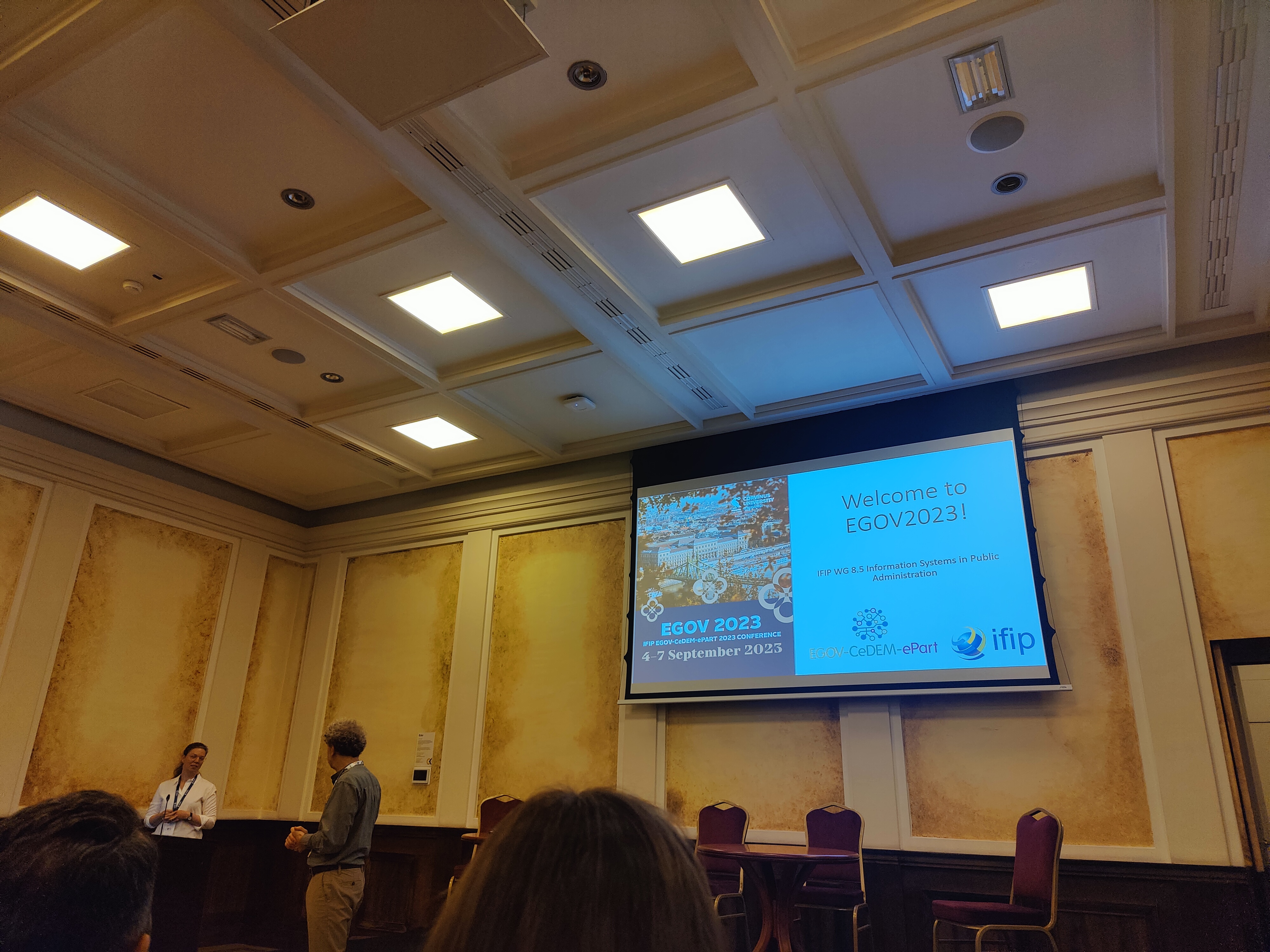
It finally took place! EGOV2023 – IFIP EGOV-CeDEM-EPART – one of the most recognized conference in e-Government, ICT and public administration and related topics (incl., Smart Cities, Sustainability, Innovation and many more) that lasted 3 days in charming city of Budapest (Hungary) is over, and I am here to reflect on it (just in a few words), since although these were just 3 days, they were very busy and full of insights, as well as activities, since every day I took another role, i.e., day#1 – presenter of the paper, day#2 – workshop organizer, day#3 – chair of two out of three sessions of “Emerging Issues and Innovations” track I co-chaired together with Marijn Janssen, Csaba Csaki and Francesco Mureddu. Not to forget, in this conference I am also a program committee of Open Data track.
Let me now provide a few insights on all these days, including my roles.
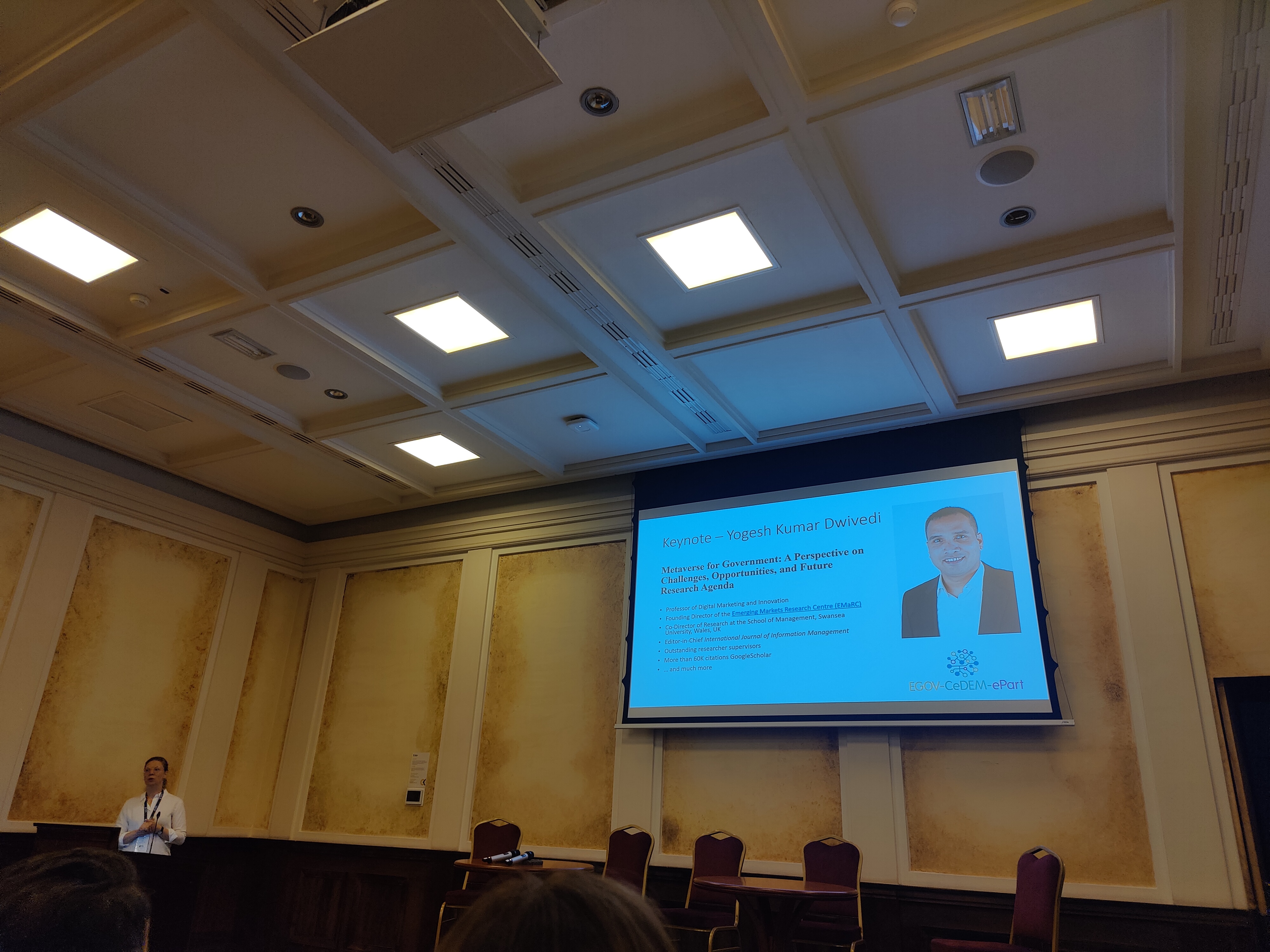
Let’s start with day#1… After conference opening by Ida Lindgren and Csaba Csaki – our local host, who did a great job – organized a very unique conference with exceptionally rich social programme, a brilliant keynote talk was delivered by Professor Yogesh K Dwivedi (possibly the most impactful researcher in the area) on Metaverse for Government and associated Challenges, Opportunities, as well as Future Research Agenda, as part of which the claim of a lack of studies on this topic was made. Luckily, our track “Emerging Issues and Innovations” has accepted one paper on Metaverse in digital government, which was the only at the conference, however, unfortunately, the discussion had not happened due to earlier departure of Yogesh and late arrival of authors. Anyway, almost immediately after the keynote the session, where I delivered a talk on HVD determination “Towards High-Value Datasets determination for data-driven development: a systematic literature review” (authors: Nikiforova, Rizun, Ciesielska, Alexopoulos, Miletić) took place. Just to remind you, I posted on this paper before – this is that paper, which has been already named “signal in the noise“, in which we asked ourselves and the current body of the knowledge (this is a systematic literature review-driven study): ❓how is the value of the open government data perceived / defined? Are local efforts being made at the country levels to identify dataset that provide the most value to stakeholders of the local open data ecosystem? ❓What datasets are considered to be of higher value in terms of data nature, data type, data format, data dynamism? ❓What indicators are used to determine HVD? ❓Whether there is a framework for determining country-specific HVD? I.e., is it possible to determine what datasets are of value and interest for their reuse & value creation, taking into account the specificities of the country, e.g., culture, geography, ethnicity, likelihood of crises and/or catastrophes. Although neither OGD, nor the importance of data value are new topics, scholarly publications dedicated to HVD are very limited that makes study unique and constituting a call for action – probably this is also why it it is recommended for reading not only by us but also by The Living Library (by New York University, NYU Tandon School of Engineering, govlab). All in all, we have established some knowledge based, incl. several definitions of HVD, data-related aspects, stakeholders, some indicators and approaches that can now be used as a basis for establishing a discussion of what a framework for determining HVD should look like, which, along with the input we received from a series of international workshops as part of ICEGOV2022, ICOD2022 and DGO2023 with open data experts could enrich the common understanding of the goal, thereby contributing to the next open data wave. 👉Read the paper here 👉See slides here 👉Find supplementary data in open access at Zenodo here Here I am very grateful to session attendees for raising a discussion around the topic, where some of those comments confirmed once more the correctness of both the problem statement and our future plans – thanks a lot!
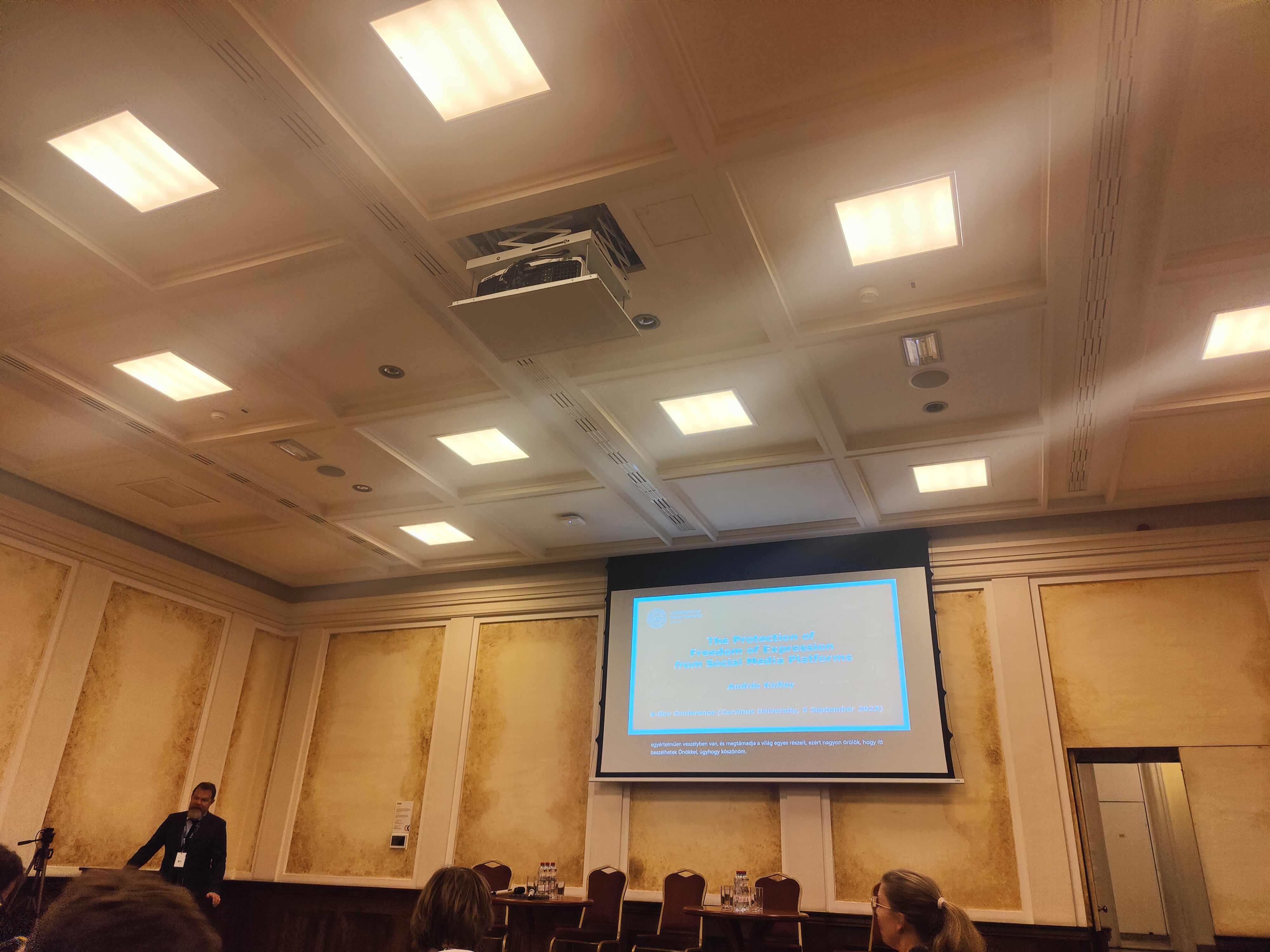
Day#2 of started with another keynote talk, whcih this time delivered by Andras Koltay (President of the National Media and Infocommunications Authority and the Media Council of Hungary) on the protection of freedom of expression from social media platforms – very different but yet very insightful talk. Then, my second role of the workshop organizer and chair followed. As part of our workshop “PPPS’2023 – Proactive and Personalised Public Services: Searching for Meaningful Human Control in Algorithmic Government” (chairs: Anastasija Nikiforova, Nitesh Bharosa, Dirk Draheim, Kuldar Taveter). As part of this workshop, which took place in a hybrid mode (not an easy task), we initiated a discussion about personalised and Proactive Public Services, i.e.: 🎯talked about the concepts of public services, reactive and proactive models of public services, and models of their personalization; 🎯asked participants to share their views on public services and the levels of proactivity and personalisation of these services in their countries aiming to develop concepts for holistic proactive and personalised public service delivery; 🎯tried to establish a clearer vision of the “as-is” model and the necessary transition to the “to-be” model, their underlying factors, as well as pitfalls of which governments should be aware when designing, developing, and setting up proactive and personalised public services, trying to understand what are those emerging technologies that will likely have greater effect on public services in terms of both driving them or creating obstacles / barriers for their development and maintenance. Read a bit more 👉 here Special thanks to all participants, who attended and were very active (and survived)!
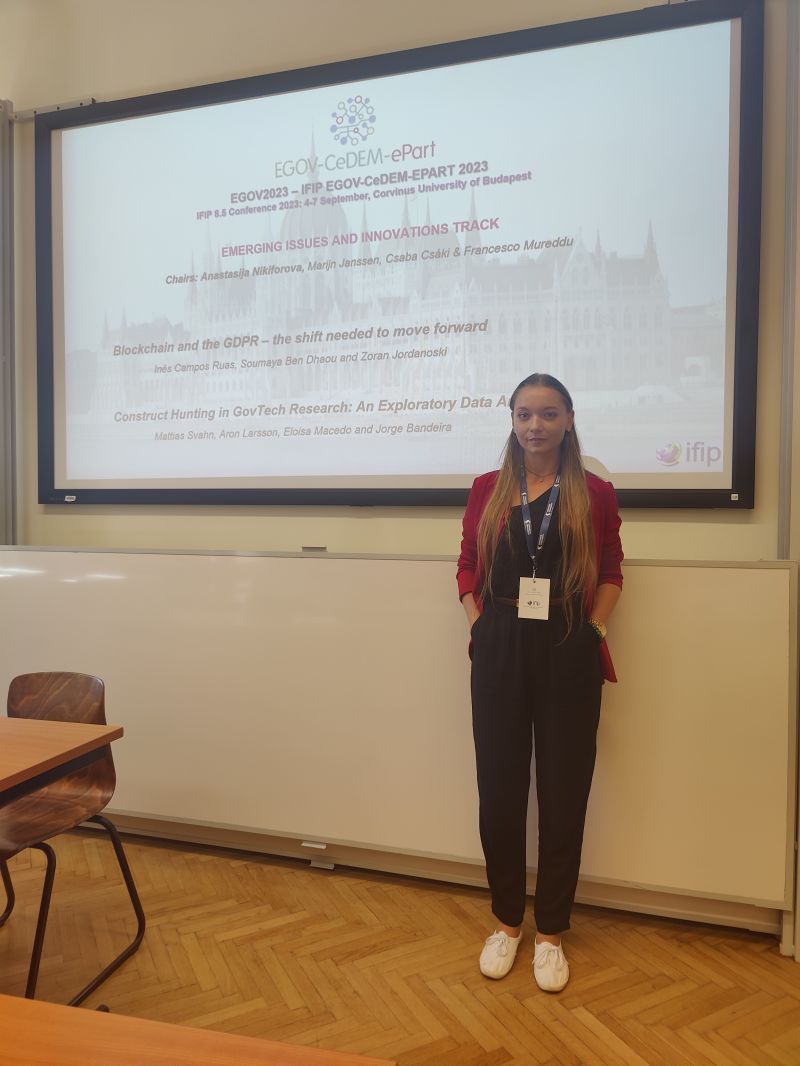
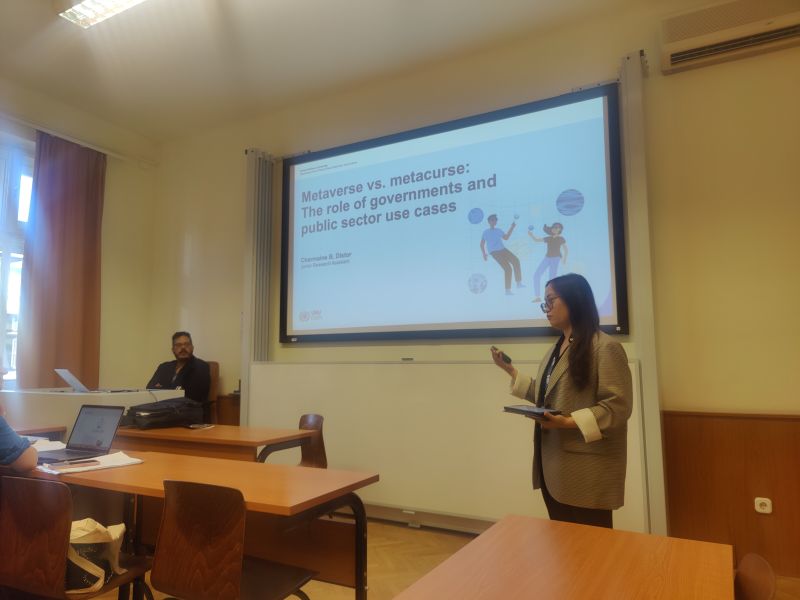
And now a few insights from day#3, when three sessions of our Emerging Issues and Innovations track (chairs: Marijn Janssen, Anastasija Nikiforova, Dr. Csaba Csaki, Francesco Mureddu) finally took place, where I was delighted to chair two of these sessions. Within these three sessions, 8 very diverse, but at the same time super interesting and insightful talks were delivered (predominantly from the United Nations University and Sweden), namely: ✍Metaverse vs. metacurse: The role of governments and public sector use cases by Charmaine Distor, Soumaya Ben Dhaou, & Morten Meyerhoff Nielsen that can be seen as a continuation of the keynote talk by Prof. Yogesh Dwivedi delivered at the 1st day; ✍Dynamic Capabilities and Digital Transformation in Public sector: Evidence from Brazilian case study by Larissa Magalhães; ✍Affording and constraining digital transformation: The enactment of structural change in three Swedish government agencies by Malin Tinjan, Robert Åhlén, Susanna Hammelev Jörgensen & Johan Magnusson ✍The Vicious Cycle of Magical Thinking: How IT Governance Counteracts Digital Transformation by Susanna H. Jörgensen, Tomas Lindroth, Johan Magnusson, Malin Tinjan, Jacob Torell & Robert Åhlen ✍Buridan’s Ass: Encapsulation as a Possible Solution to the Prioritization Dilemma of Digital Transformation by Johan Magnusson, Per Persson, Jacob Torell & Ingo Paas ✍Measuring digital transformation at the local level: assessing the current state of Flemish municipalities by Lieselot Danneels & Sarah Van Impe ✍Blockchain and the GDPR – the shift needed to move forward by Inês Campos Ruas, Soumaya Ben Dhaou & Zoran Jordanoski ✍Construct Hunting in GovTech Research: An Exploratory Data Analysis by Mattias Svahn, Aron Larsson, Eloisa Macedo and Jorge Bandeira Read papers 👉 here, here & here Big thanks go to both authors and presenters, as well as the audience, who was very active (even despite the fact that it was the very last day of the conference) and made these sessions a success! And right after these two sessions, the third keynote by Laszlo Trautmann “The ethics of expertise – the political economy implications of AI”.
And the last but not the least, yet another social event – wine tasting at Etyeki Kúria Borászat / Winery, which was the perfect happy end of the EGOV2023!
Exceptional organization by Corvinus University of Budapest, Csaba Csaki and his team, International Federation for Information Processing (IFIP), Digital Government Society – cheers!🍷🍷🍷
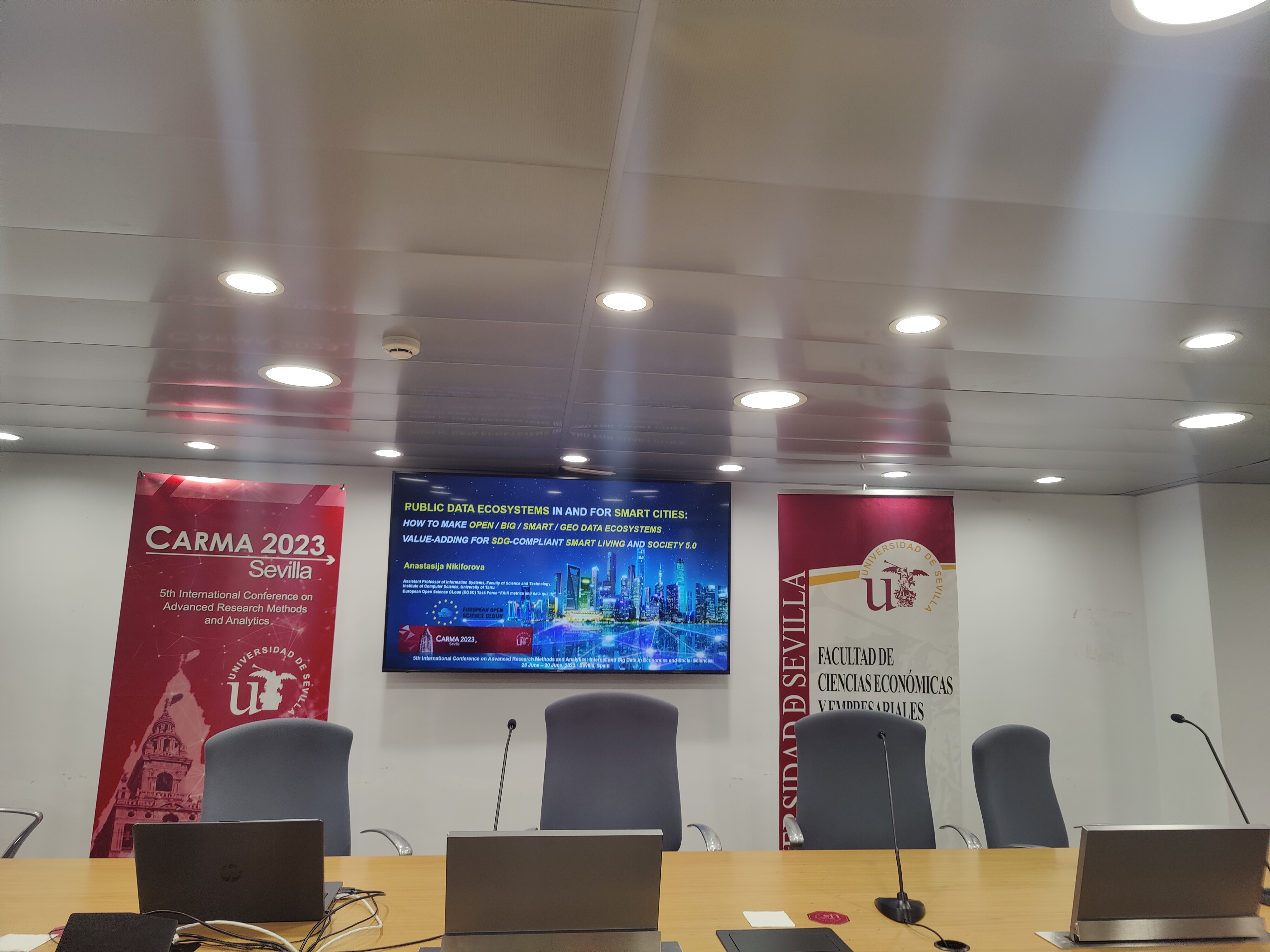
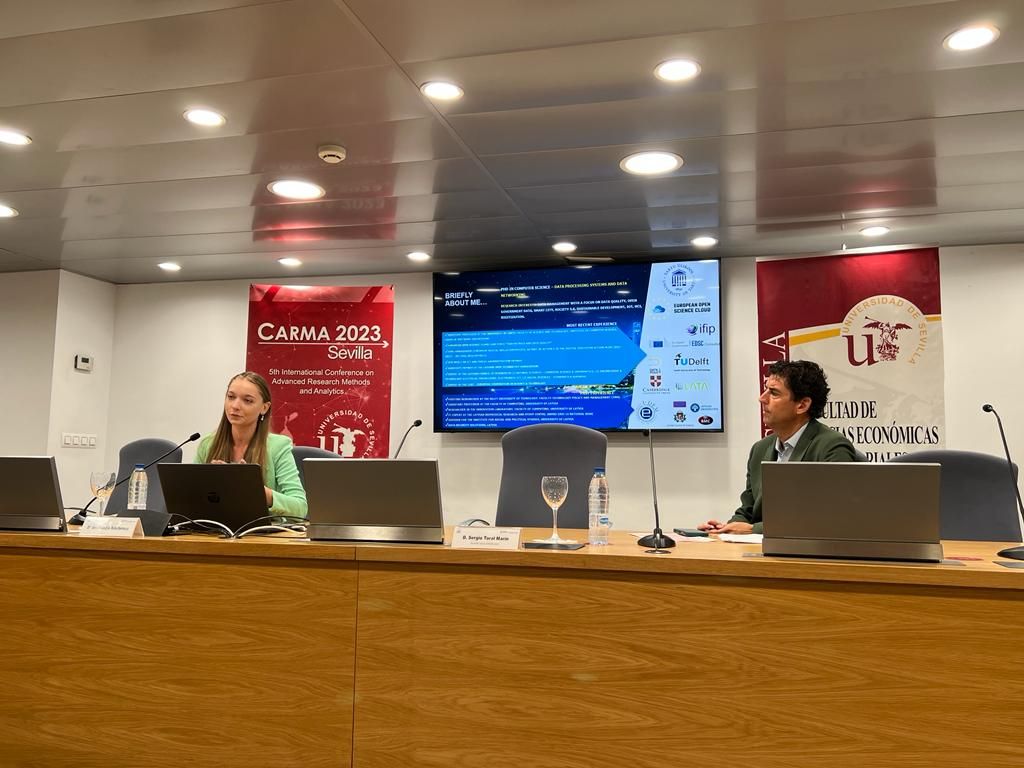
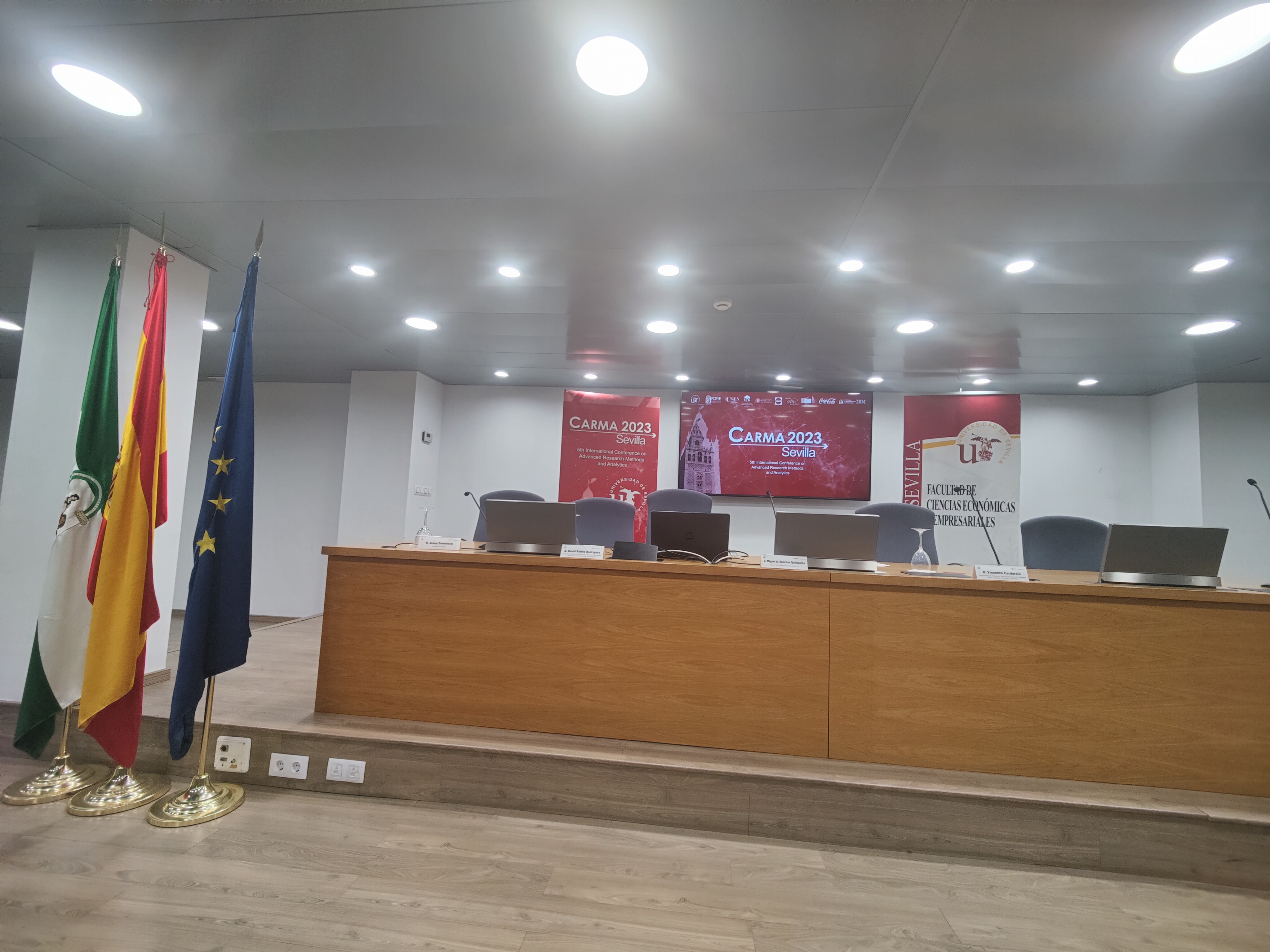
June 28 I had the honor to participate in the opening of CARMA2023 – 5th International Conference on Advanced Research Methods and Analytics “Internet and Big Data in Economics and Social Sciences” delivering my keynote “Public data ecosystems in and for smart cities: how to make open / Big / smart / geo data ecosystems value-adding for SDG-compliant Smart Living and Society 5.0?” in the spectacular city of Sevilla, Spain 🇪🇸 🇪🇸 🇪🇸. What a honor to open the conference, immediately after the inaugural speech by organizers and sponsors, including representatives of Joint Research Center, European Commission (JRC), who even mentioned the topics I covered in my keynote (not limited to them, of course) as those that make this conference an event to attend and to learn from!!!
In this talk, as the title suggests, I:
elaborated on the concepts of public /open data (incl. OGD), smart city and SDG and how are they related?
introduced the concept of Society 5.0 and how is it related to open data?
and finally, and more importantly, public/ open data ecosystem – what it is? what does it consist of?
I then dived into (1) data-related aspects of the public data ecosystem, i.e. what are the data-related prerequisites for a sustainable and resilient data ecosystem? (2) data portal / platforms as entry points and how to make it sufficiently attractive for the target audience? (3) stakeholder engagement – how to involve the target audience? what are the benefits of their involvement? and some more things.
CARMA is a forum for researchers and practitioners to exchange ideas and advances on how emerging research methods and sources are applied to different fields of social sciences as well as to discuss current and future challenges with main focus on the topics such as Internet and Big Data sources in economics and social sciences including Social media and public opinion mining, Web scraping, Google Trends and Search Engine data, Geospatial and mobile phone data, Open data and public data, Big Data methods in economics and social sciences such as Sentiment analysis, Internet econometrics, AI and Machine learning applications, Statistical learning, Information quality and assessment, Crowdsourcing, Natural Language processing, Explainability and interpretability, the applications of the above including but not limited to Politics and social media, Sustainability and development, Finance applications, Official statistics, Forecasting and nowcasting, Bibliometrics and sciencetometrics, Social and consumer behaviour, mobility patterns, eWOM and social media marketing, Labor market, Business analytics with social media, Advances in travel, tourism and leisure, Digital management, Marketing Intelligence analytics, Data governance, and Digital transition and global society, which, in turn, expects contributions in relation to Privacy and legal aspects, Electronic Government, Data Economy, Smart Cities, Industry adoption.
In addition to the regular sessions, poster session and two keynotes, a Special JRC session (EC) took place, during which Luca Barbaglia, Nestor Duch Brown, Matteo Sostero and Paolo Canfora presented projects they work on.
Great thanks goes to organizers and sponsors of CARMA2023 – Universidad de Sevilla, Cátedra Metropol Parasol, Cátedra Digitalización Empresarial, IBM, Universitat Politècnica de València, Joint Research Center – European Commission and Coca-Cola, who made this event a true success. Enjoyed this experience very much! Excellent venue! Great audience! ¡Muchas gracias!
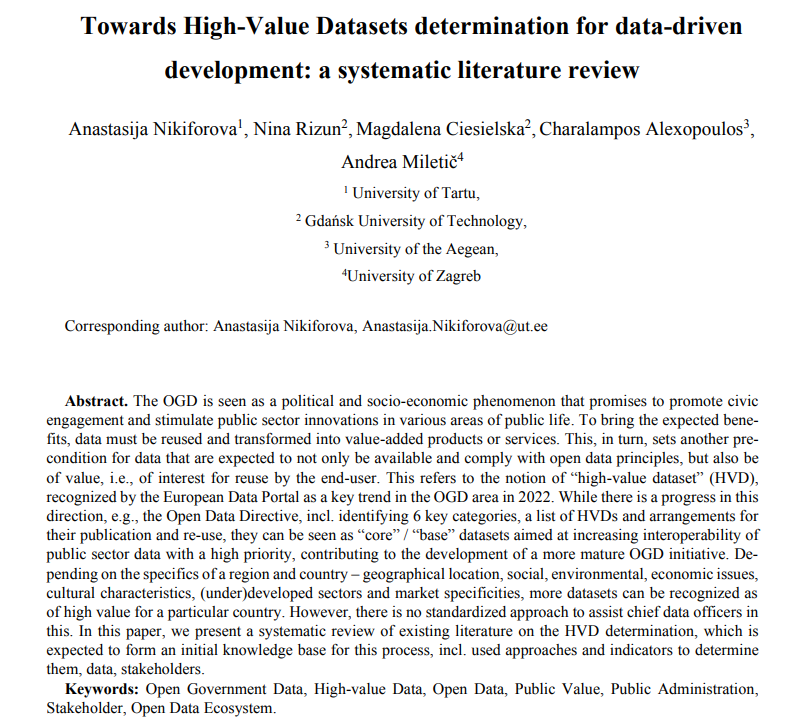
Nikiforova, A., Rizun, N., Ciesielska, M., Alexopoulos, C., & Miletič, A. (2023). Towards High-Value Datasets determination for data-driven development: a systematic literature review.
It was a hard work, especially for the editors of the book, who indeed did a great job in adapting to the situation and taking care of us – authors – as much as possible! Kudos!
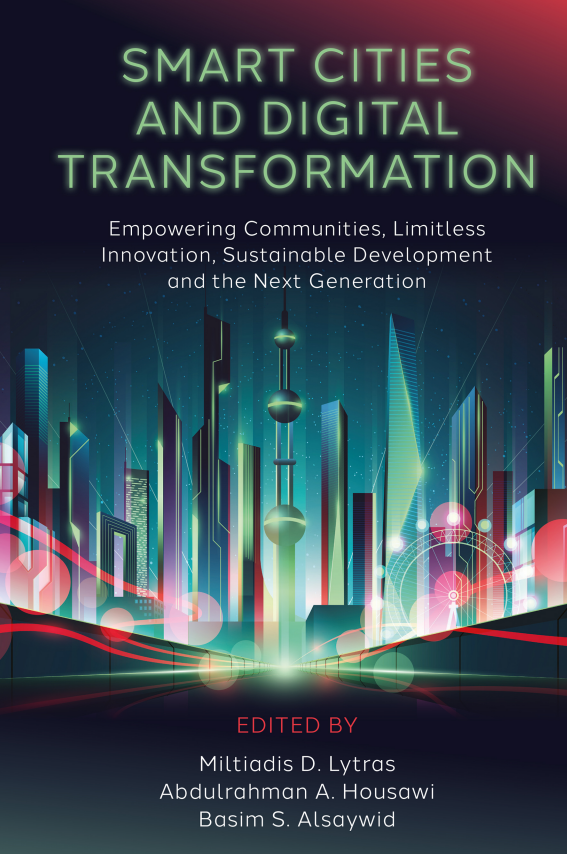
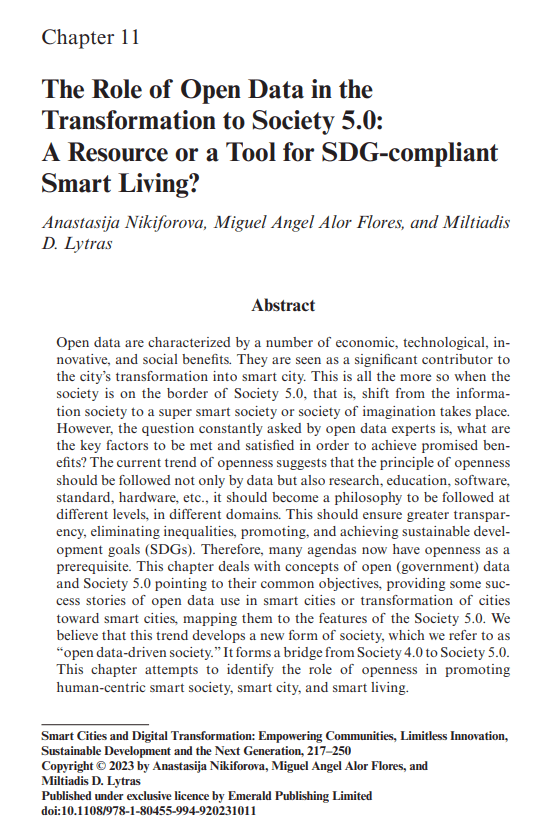
So, almost traditionally a few words about the content or “what is it about?“. Today we all know that open data and open government data are characterized by a number of economic, environmental, technological, innovative, and social benefits. They are seen as a significant contributor to the city’s transformation into smart city. This is all the more so when the society is on the border of Society 5.0, that is, shift from the Information Society (Society 4.0) to a “super smart society” or “society of imagination” (Society 5.0) takes place. However, the question constantly asked by open data experts is, what are the key factors to be met and satisfied in order to achieve promised benefits?The current trend of openness suggests that the principle of openness should be followed not only by data but also research, education, software, standard, hardware, etc., it should become a philosophy to be followed at different levels, in different domains. This should ensure greater transparency, eliminating inequalities, promoting, and achieving sustainable development goals (SDGs). I.e., the openness in both, data, science, technology (software or hardware) is considered as one of the keys for meeting SDGs, while supporting some of them “by default” simultaneously (general principles of open data covered by Open Data Charter applicable to all data to perceive and treat it as open data) and domain, which the open data represents. This was also emphasized at the 76th session of the United Nations General Assembly, highlighting that the openness contributes to the attainment of the United Nations Sustainable Development Goals (SDGs). Therefore, many agendas (sustainable development strategies, action plans) now have openness as a prerequisite. This chapter deals with concepts of open (government) data and Society 5.0 pointing to their interconnection, i.e., common objectives, providing some success stories of open data use in smart cities or transformation of cities toward smart cities, mapping them to the features of the Society 5.0. We believe that this trend develops a new form of society, which we refer to as “open data-driven society.” It forms a bridge from Society 4.0 to Society 5.0. This chapter attempts to identify the role of openness in promoting human-centric smart society, smart city, and smart living, incl. identifying and elaborating on both determinants or prerequisites capable of promoting the development of the Society 5.0 by means of open data and barriers, which stakeholders of different types may face on the way towards sustainable smart city and super smart society
Sounds catchy? Hope so! If yes, read the chapter here or find its preprint here.
Citation
Nikiforova, A., Flores, M.A.A. and Lytras, M.D. (2023), “The Role of Open Data in Transforming the Society to Society 5.0: A Resource or a Tool for SDG-Compliant Smart Living?”, Lytras, M.D., Housawi, A.A. and Alsaywid, B.S. (Ed.) Smart Cities and Digital Transformation: Empowering Communities, Limitless Innovation, Sustainable Development and the Next Generation, Emerald Publishing Limited, Bingley, pp. 219-252. https://doi.org/10.1108/978-1-80455-994-920231011
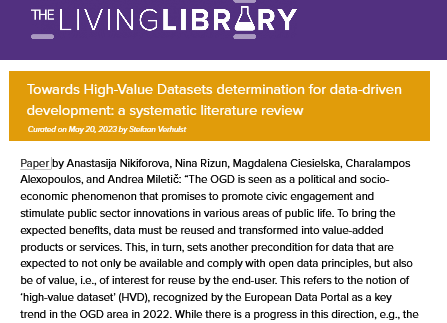
Our new article titled “Towards High-Value Datasets determination for data-driven development: a systematic literature review” (Nikiforova A., Rizun N., Ciesielska M., Alexopoulos C., Miletič A.) is now available at arXiv with supplementary data published at Zenodo and waiting for your read! Moreover, this is not only my recommendation – The Living Library has included it in their collection, which as you can remember from my posts on another paper that was also recommended by them for the reading, seeks to provide actionable knowledge on governance innovation, informing and inspiring policymakers, practitioners, technologists, and researchers working at the intersection of governance, innovation, and technology in a timely, digestible and comprehensive manner, identifying the “signal in the noise” by curating research, best practices, points of view, new tools, and developments.
The OGD is seen as a political and socio-economic phenomenon that promises to promote civic engagement and stimulate public sector innovations in various areas of public life. However, to bring the expected benefits, data must be reused and transformed into value-added products or services. This, in turn, sets another precondition for data that are expected to not only be available and comply with open data principles, but also be of value, i.e., of interest for reuse by the end-user. This refers to the notion of ‘high-value dataset’ (HVD). HVD are defined as datasets whose re-use is expected to create the most value for society, the economy, and the environment, contributing to the creation of “value-added services, applications and new, high-quality and decent jobs, and of the number of potential beneficiaries of the value-added services and applications based on those datasets” (Directive, 2019). HVD was recognized by the European Data Portal as a key trend in the OGD area in 2022, which is not included in the annual Open Data Maturity Report.
There has been some progress in this area over the last years, which refers to a list of initiatives and studies carried out by several organizations and communities, where at the European level, probably most notable progress has been made by the European Commission in the Open Data Directive (originally Public Sector Information Directive (PSI Directive), i.e. Directive (EU) 2019/1024 of the European Parliament and of the Council of 20 June 2019 on open data and the re-use of public sector information, according to which there are six thematic data categories of HVD – (1) geospatial, (2) earth observation and environment, (3) meteorological, (4) statistics, (5) companies and company ownership, (6) mobility data are considered as of high value. Further, a list of specific HVDs and the arrangements for their publication was developed and made available as “Commission Implementing Regulation (EU) 2023/138 of 21 December 2022 laying down a list of specific high-value datasets and the arrangements for their publication and re-use” (Commission, 2023) that can be seen as seeking for greater harmonization and interoperability of public sector data and data sharing across EU countries with reference to specific datasets, their granularity, key attributes, geographic coverage, requirements for their re-use, including licence (Creative Commons BY 4.0, any equivalent, or less restrictive open licence), specific format where appropriate, frequency of updates and timeliness, availability in machine-readable format, accessibility via API and bulk download, supported with metadata describing the data within the scope of the INSPIRE data themes that shall contain specific minimum set of the required metadata elements, description of the data structure and semantics, the use of controlled vocabularies and taxonomies (if relevant) etc. In addition, the Semantic Interoperability Community (SEMIC) is constantly hosting webinars on DCAT-AP (Data Catalogue Vocabulary Application Profile) for HVD to discuss with OGD portal owners, OGD publishers and enthusiasts the best approaches to use DCAT-AP to describe HVD and ensure their further findability, accessibility, and reusability.
In other words while it can be seen that progress has been made in this area, an examination of the above documents reveals that these datasets rather form a list of “mandatory” or “open by default”, sometimes also referred to as “base” or “core” datasets, aiming at open data interoperability with a high level of priority and a relatively equal level of value for most countries, which contributed to the development and promotion of a more mature open data ecosystem and OGD initiative. Depending on the specifics of a region and country – geographical location, social, current environment, social, economic issues, culture, ethnicity, likelihood of crises and / or catastrophes, (under)developed industries/ sectors and market specificities, and development trajectories, i.e., priorities. Depending on the above, more datasets can be recognized as having high value within a particular country or region (Utamachant & Anutariya, 2018; Huyer & Blank, 2020; Nikiforova, 2021). For example, meteorological data describing sea level rise can be of great value in the Netherlands as it has a strong impact on citizens and businesses as more than 1/3 of the country is below sea level, however, the same data will be less valuable for less affected to countries, such as Italy and France (Huyer & Blank, 2020). We believe that additional factors such as ongoing smart cities initiatives, as well as the Sustainable Development Goals, the current state of countries and cities in relation to their implementation and established priorities affect this list as well.
We find it is important to support the identification of country specific HVD that, in turn, could increase user interest ]by transforming data into innovative solution and services. Although this fact is recognized by countries and some local and regional efforts, mostly undertaken by governments with little support from the scientific and academia community, they are mainly faced with problems in the form of delays in their development or complete failure, or ending up with some set of HVD, but little information about how this was actually done. These ad-hoc attempts remain closed and not reusable, which is contrary to both the general OGD philosophy and the HVD-centric philosophy that is expected to be standardized. Most of them are ex-post or a combination of the ex-ante and ex-post, making the process of identifying them more resource-intensive, with an effect only visible after potentially valuable datasets have been discovered, published, and kept maintained, with the need for further evaluation of their impact, which is a resource-consuming task. All in all, it is considered that there is no standardized approach to assisting chief data officers in identifying HVDs, resulting in a failure in consistent identification and maintenance of HVDs.
Thus, we refer to this topic. As you can now from my blog it is not the first attempt we take. The very first activity related to this topic was taken by me back in 2019, where I studied this topic in Latvian settings, i.e. a stakeholder-centered determination of High-Value Data sets for Latvia was done as a response for the call made by the national OGD initiative, whose results were submitted to the holders of Latvia’s open data portal (Ministry of Environmental Protection and Regional Development) and used to prepare external reports submitted to Publications Office of the European Union). Later, several countries joined my study, namely, Poland, Greece, Croatia and Peru, and together with the colleagues we conducted several workshops that took place as part of international conferences, on which I posted before here and here.
This time, we conducted more theoretical study seeking for establishing a rich knowledge base for determining HVD, while the validation of identified indicators (as part of this study and derived from government reports) is expected to take place during the workshops with open (government) data and / or e-government experts. All in all, we focused on identifying all efforts taken with the reference to this topic. In other words, the objective was to examine how HVD determination has been reflected in the literature over the years and what has been found by these studies to date, incl. the indicators used in them, involved stakeholders, data-related aspects, and frameworks, which was done by conducting a Systematic Literature Review with the following research questions (RQ) defined to achieve the set objective:
(RQ1) how is the value of the open government data perceived / defined? In which contexts has the topic of HVD been investigated by previous research (e.g., research disciplines, countries)? Are local efforts being made at the country levels to identify the datasets that provide the most value to stakeholders of the local open data ecosystem?
(RQ1.1) How the high-value data are defined, if this definition differs from the definition introduced in the PSI /OD Directive,
(RQ1.2) What datasets are considered to be of higher value in terms of data nature, data type, data format, data dynamism?
(RQ2) What indicators are used to determine high-value datasets? How can these indicators be classified? Can they be measured? And whether this can be done (semi-)automatically?
(RQ3) Whether there is a framework for determining country specific HVD? In other words, is it possible to determine what datasets are of particular value and interest for their further reuse and value creation, taking into account the specificities of the country under consideration, e.g., culture, geography, ethnicity, likelihood of crises and/or catastrophes.
Although neither OGD, nor the importance of the value of data are new topics, scholarly publications dedicated to the topic of HVD are still very limited. This points out the limited body of knowledge on this topic, thereby making this study unique and constituting a call for action. Nevertheless, during this study, we have established some knowledge based on HVD determination-related aspects, including several definitions of HVD, data-related aspects, stakeholders, some indicators and approaches that can now be used as a basis for establishing a discussion of what a framework for determining HVD should look like, which, along with the input we received from a series of international workshops with open (government) data experts, covering more indicators and approaches found to be used in practice, could enrich the common understanding of the goal, thereby contributing to the next open data wave (van Loenen & Šalamon, 2022).
Sounds interesting? Want to know more? Read the article -> here! Please cite the paper as: Nikiforova, A., Rizun, N., Ciesielska, M., Alexopoulos, C., Miletič, A. (2023). Towards High-Value Datasets determination for data-driven development: a systematic literature review. In: Lindgren, I., Csáki, C., Kalampokis, E., Janssen, M.,, Viale Pereira, G., Virkar, S., Tambouris, E., Zuiderwijk, A. Electronic Government. EGOV 2023. Lecture Notes in Computer Science. Springer, Cham
References
Nikiforova, A. (2021, October). Towards enrichment of the open government data: a stakeholder-centered determination of High-Value Data sets for Latvia. In Proceedings of the 14th International Conference on Theory and Practice of Electronic Governance (pp. 367-372).
Directive (EU) 2019/1024 of the European Parliament and of the Council of 20 June 2019 on open data and the re-use of public sector information (recast)
Commission Implementing Regulation (EU) 2023/138 of 21 December 2022 laying down a list of specific high-value datasets and the arrangements for their publication and re-use
Huyer, E., Blank, M. (2020). Analytical Report 15: High-value datasets: understanding the perspective of data providers. Publications Office of the European Union, 2020 doi:10.2830/363773
Utamachant, P., & Anutariya, C. (2018, July). An analysis of high-value datasets: a case study of Thailand’s open government data. In 2018 15th international joint conference on computer science and software engineering (JCSSE) (pp. 1-6). IEEE
van Loenen, B., & Šalamon, D. (2022). Trends and Prospects of Opening Data in Problem Driven Societies. Interdisciplinary Description of Complex Systems: INDECS, 20(2), II-IV











 Anastasija Nikiforova, PhD