From Krems to Linz: Reflections from EGOV 2025 and a Research Visit to Austria

September brought a truly inspiring and intense sequence of events: the EGOV 2025 from Doctoral Colloquium to Junior Faculty School, and the main IFIP EGOV 2025 conference in Krems, followed by a research stay at Johannes Kepler University Linz. Five days of discussion, mentoring, presenting, and connecting in Krems with several more in Linz where the intensive research stay was enriched by a memorable dive into the Ars Electronica Festival and its conversations on technology, fear, and democratic futures.

What follows is a reflection on an academically dense but deeply rewarding journey across two Austrian cities.

EGOV2025: Doctoral Colloquium & Junior Faculty School

We began in the breathtaking setting of Göttweig Abbey with the EGOV 2025 Doctoral Colloquium, where 13 PhD students presented their research, shared challenges of the doctoral journey, and engaged in open discussions with mentors.

The following day, the Junior Faculty School expanded these conversations to early career researchers (up to five years post-PhD). Together with a wonderfully engaged group, we explored questions about career trajectories, researcher identity, publishing strategies, gender inequalities in academia, and the importance of being in a workplace that supports—not drains—well-being.

A recurring theme across both days was impact. We examined it from multiple perspectives:

  • during the Colloquium’s mentor panel
  • in Tomasz Janowski’s keynote
  • through the “from research to policy” workshop by Paula Rodriguez Müller, Sven Schade, and Luca Tangi
  • in the panel on publishing in top journals with Panos Panagiotopoulos and Manuel Pedro Rodríguez Bolívar
  • and in roundtable discussions on career development

Sincere thanks to the organizers—Gabriela Viale Pereira, Ida Lindgren, Lieselot Danneels, J. Ramon Gil-Garcia, and Michael Koddebusch—for making these events equally enriching for participants and mentors.

EGOV 2025 conference

With the main conference underway, we launched the Emerging Technologies and Innovations track, which I co-chaired with Francesco Mureddu and Paula Rodriguez Müller. This year, we welcomed Paula (European Commission JRC) to the team and continued pushing the track beyond academic silos, aiming to strengthen the bridge between research, policy, and practice.

We were delighted to see a record number of submissions—double compared to last year. A growing Information Systems community joined us, fulfilling the long-term ambition that Marijn Janssen and I have shared for the track.

Across three sessions, we explored topics that shape the future of governance:

  • the potential of generative AI and LLMs for administrative literacy and public sector transformation
  • trust frameworks and platform governance
  • GovTech incubators and the gap between prototypes and long-term implementation
  • self-assessment tools for climate adaptation
  • digital transformation patterns in smart city strategies

These studies together illustrated how emerging technologies and governance innovation are reshaping public institutions.

A special highlight was the Best Paper Award in the category “Most Innovative Research Contribution or Case Study”, received by Lukas Daßler for “GovTech Incubators: Bridging the Gap Between Prototypes and Long-Term Implementation” (co-authored with Andreas Hein and Helmut Krcmar). Congratulations once again!

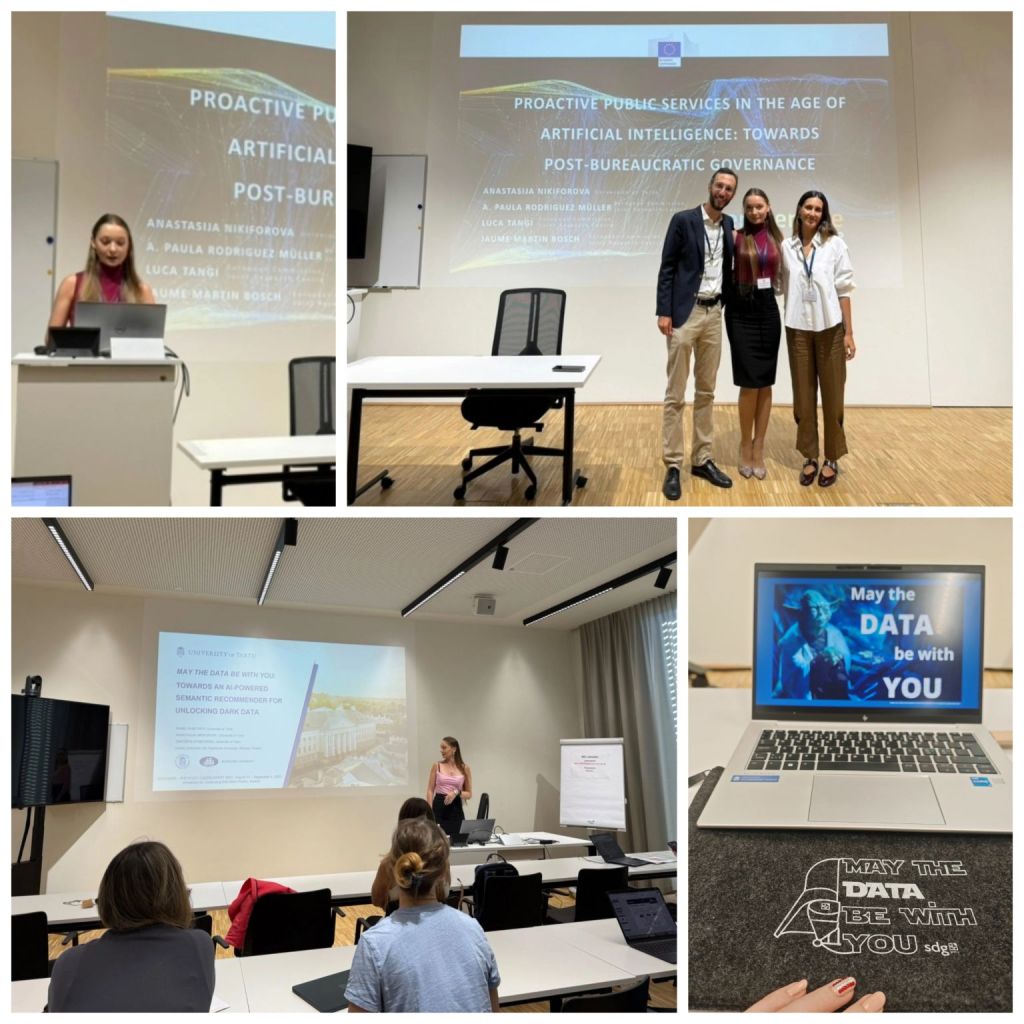
I was happy to present two papers at the conference:

  1. “Proactive Public Services in the Age of Artificial Intelligence: Towards Post-Bureaucratic Governance” with Paula Rodriguez Müller, Luca Tangi, and Jaume Martin Bosch – the first (or “step 0”) output of our ongoing research on AI-enabled proactive service provision.
  2. “May the Data Be with You: Towards an AI-Powered Semantic Recommender for Unlocking Dark Data” based on the master thesis of my former student, now at Microsoft, Ramil Huseynov; co-authored with Dimitris Simeonidis and David Duenas-Cid – a project that combines technical exploration with a generous dose of nerdiness and fun.

Research Visit to Linz

Right after EGOV, I travelled to JKU Linz, hosted by Christoph Schuetz at the Institute of Business Informatics – Data & Knowledge Engineering. During the visit, I delivered an invited talk titled “Responsible Data Ecosystems: From Data Governance to AI Adoption.”
We discussed how to establish trustworthy, effective data practices while responsibly integrating AI, and explored opportunities for future collaboration.

Beyond the academic exchange, Linz offered its own inspiration: diverse, vibrant, and beautifully intertwined with nature and art such as..

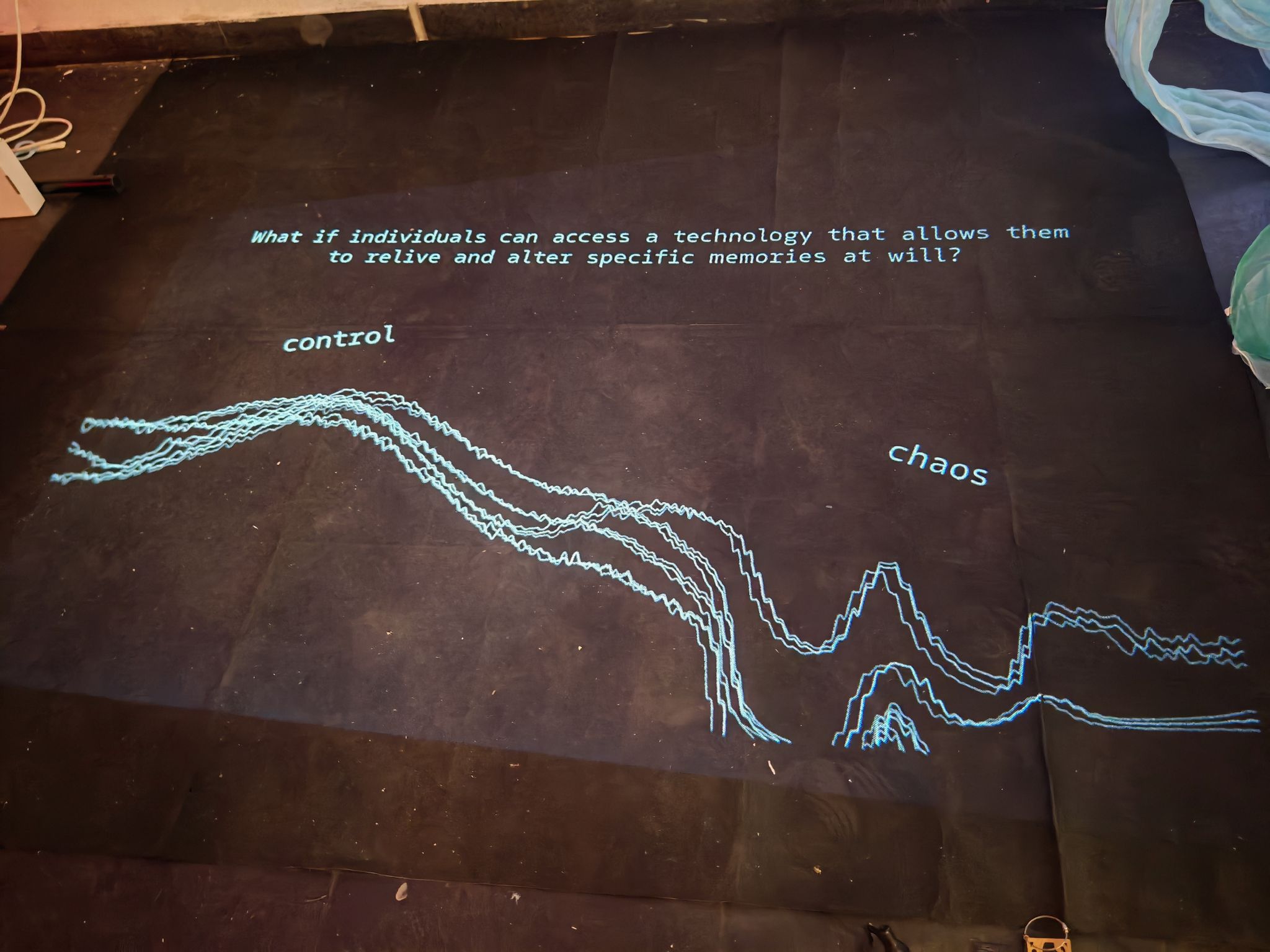
Ars Electronica 2025: Panic – Yes/No?

One of the standout experiences was the Ars Electronica Festival, which this year examined the theme “Panic – Yes/No?”. The exhibitions brought together over 1,400 contributors—artists, scientists, developers, entrepreneurs, and activists—questioning our collective sense of alarm and exploring whether “collective panic” is a rational response or a product of sensationalism.

AI and its societal implications stood at the heart of many installations: Who designs these systems? For whom? According to which values? These questions resonate strongly with the core of my own research and offered a refreshing, interdisciplinary lens on technology and democratic futures.

From mentoring early-stage researchers and running a dynamic track, to presenting new work, reconnecting with colleagues, expanding the Information Systems presence within EGOV, and diving into Linz’s research and cultural landscape—it was an intense but profoundly rewarding start of the semester. Weeks like these is a food reminder of why mentoring, connecting, and building research communities matter so much—and why an early Sunday alarm can indeed be worth it.

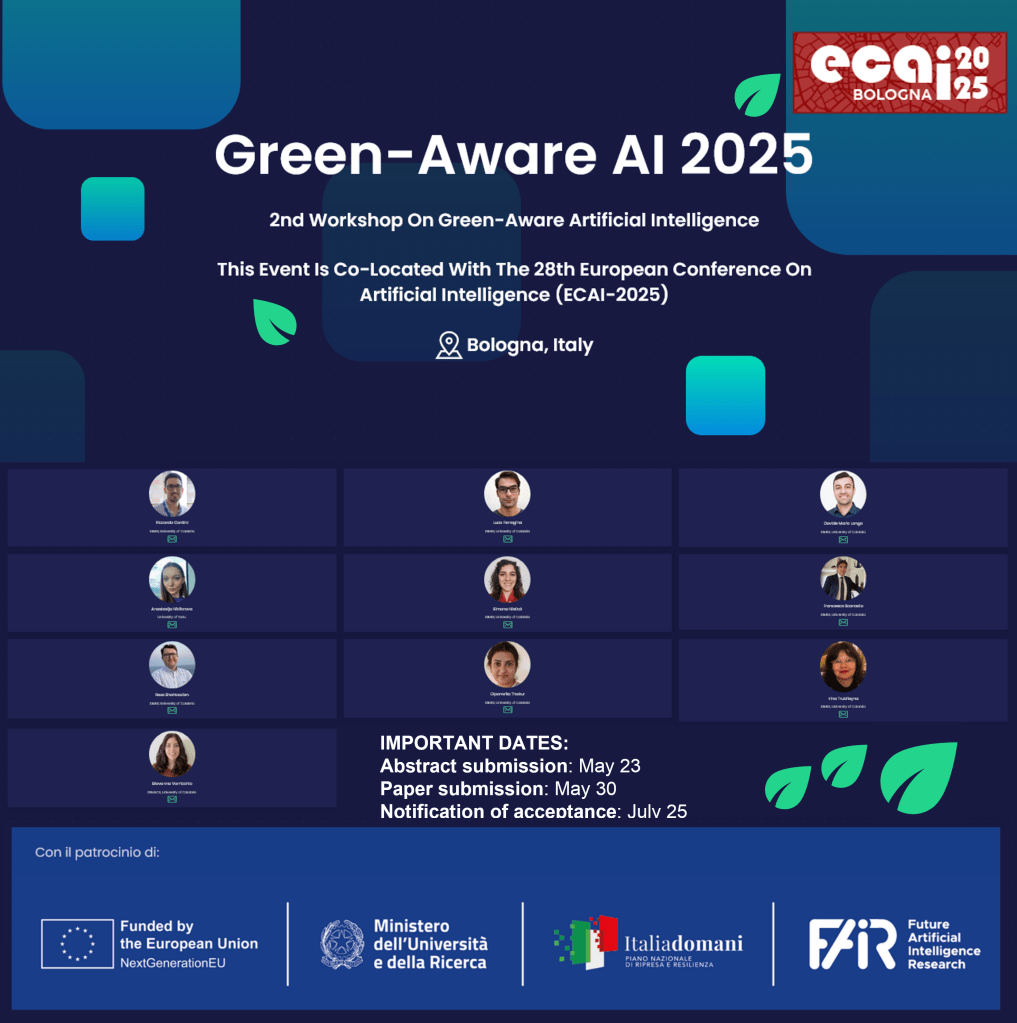
Green-Aware AI 2025 Workshop at ECAI2025

Join us – Riccardo Cantini, Luca Ferragina, Davide Mario Longo, Anastasija Nikiforova, Simona Nisticò, Francesco Scarcello, Reza Shahbazian, Dipanwita Thakur, Irina Trubitsyna, Giovanna Varricchio (University of Calabria & University of Tartu) – at the 2nd Workshop on Green-Aware Artificial Intelligence (Green-Aware AI 2025) to take place conjunction with the 28th European Conference on Artificial Intelligence (ECAI2025) in Bologna, Italy, October 25-30 to examine the sustainability challenges posed by widespread adoption of AI systems, particularly those powered by increasingly complex models, pushing toward responsible AI development and provide a timely response.

The widespread adoption of AI systems, particularly those powered by increasingly complex models, necessitates a critical examination of the sustainability challenges posed by this technological revolution. The call for green awareness in AI extends beyond energy efficiency—it encompasses the integration of sustainability principles into system design, theoretical modeling, and real-world applications.

Green-aware AI requires a multidisciplinary effort to ensure sustainability in its fullest sense, that is, where the green dimension is interpreted broadly, fostering the creation of inherently green-aware AI systems aligned with human-centered values. These systems should uphold sustainability principles such as transparency, accountability, safety, robustness, reliability, non-discrimination, eco-friendliness, interpretability, and fairness—principles reflected in the 17 Sustainable Development Goals (SDGs) defined by the United Nations. The ethical and sustainable advancement of AI systems faces diverse challenges across every stage, including architectural and framework design, algorithm conceptualization, user interaction, data collection, and deployment. This involves designing tools that are inherently green-aware or introducing mechanisms, such as incentives, to encourage agents in AI systems to adopt green-aware behaviors. This principle can be applied across various domains of AI, including but not limited to Algorithm Design, Fairness, Ethics, Game Theory and Economic Paradigms, Machine Learning, Multiagent Systems, and all their applications.

It is worthwhile noting that machine learning systems rank among the most energy-intensive computational applications, significantly impacting the environment through their substantial carbon emissions. Notable examples include the training of large-scale, cutting-edge AI models like those used in ChatGPT and AlphaFold. The creation of such systems demands vast resources, including high-performance computing infrastructure, extensive datasets, and specialized expertise. These requirements create barriers to the democratization of AI, limiting access to large organizations or well-funded entities while excluding smaller businesses, under-resourced institutions, and individuals. The lack of interpretability in AI systems further exacerbates these challenges, raising significant concerns about trustworthiness, accountability, and reliability. Such systems often function as black boxes, making it difficult to understand their underlying decision-making processes. This opaqueness can erode public trust and create barriers to holding developers accountable for harmful outcomes. Additionally, AI systems are prone to biases embedded in their training data and reinforced through user interactions, perpetuating discrimination and unfair treatment, disproportionately affecting marginalized and underrepresented groups.

By addressing these pressing challenges, the workshop aligns with the global push toward responsible AI development and provides a timely response to the environmental and social implications of AI technologies. The primary goal of this workshop is to foster discussions among scholars from diverse disciplines, facilitating the integration of technological advancements with environmental responsibility to drive progress toward a sustainable future. As such Green-Aware AI 2025 invites contributions around the following topics of interest (not limited to thm exclusively though):
💡Green-aware AI frameworks and applications;
💡AI methodologies for energy-efficient computing;
💡Human-centered and ethical AI design;
💡Reliable, transparent, interpretable, and explainable AI;
💡Trustworthy AI for resilient and adaptive systems;
💡Fairness in machine learning models and applications;
💡Impact of AI on underrepresented communities, bias mitigation, and exclusion studies (datasets and benchmarks);
💡Theoretical analysis of energy efficiency in AI systems;
💡Green and sustainable AI applications in environmental and social sciences, healthcare, smart cities, education, finance, and law;
💡Compression techniques and energy-aware training strategies for language models;
💡Approximate computing and efficient on-device learning;
💡Green-oriented models in game theory, economics, and computational social choice;
💡Green-awareness in multi-agent systems;
💡Security and privacy concerns in machine learning models.

Stay tuned about keynotes info on whom to come soon!

📆Important dates:
Abstract submission: May 23
Paper submission: May 30
Notification of acceptance: July 25
Camera-ready: July 31

Join us at Green-Aware AI to help facilitating the integration of technological advancements with environmental responsibility to drive progress toward a sustainable future.

Workshop is supported by the Future AI Research (FAIR), the Italian Ministry of Education, Universities and Research and Italia Domani.

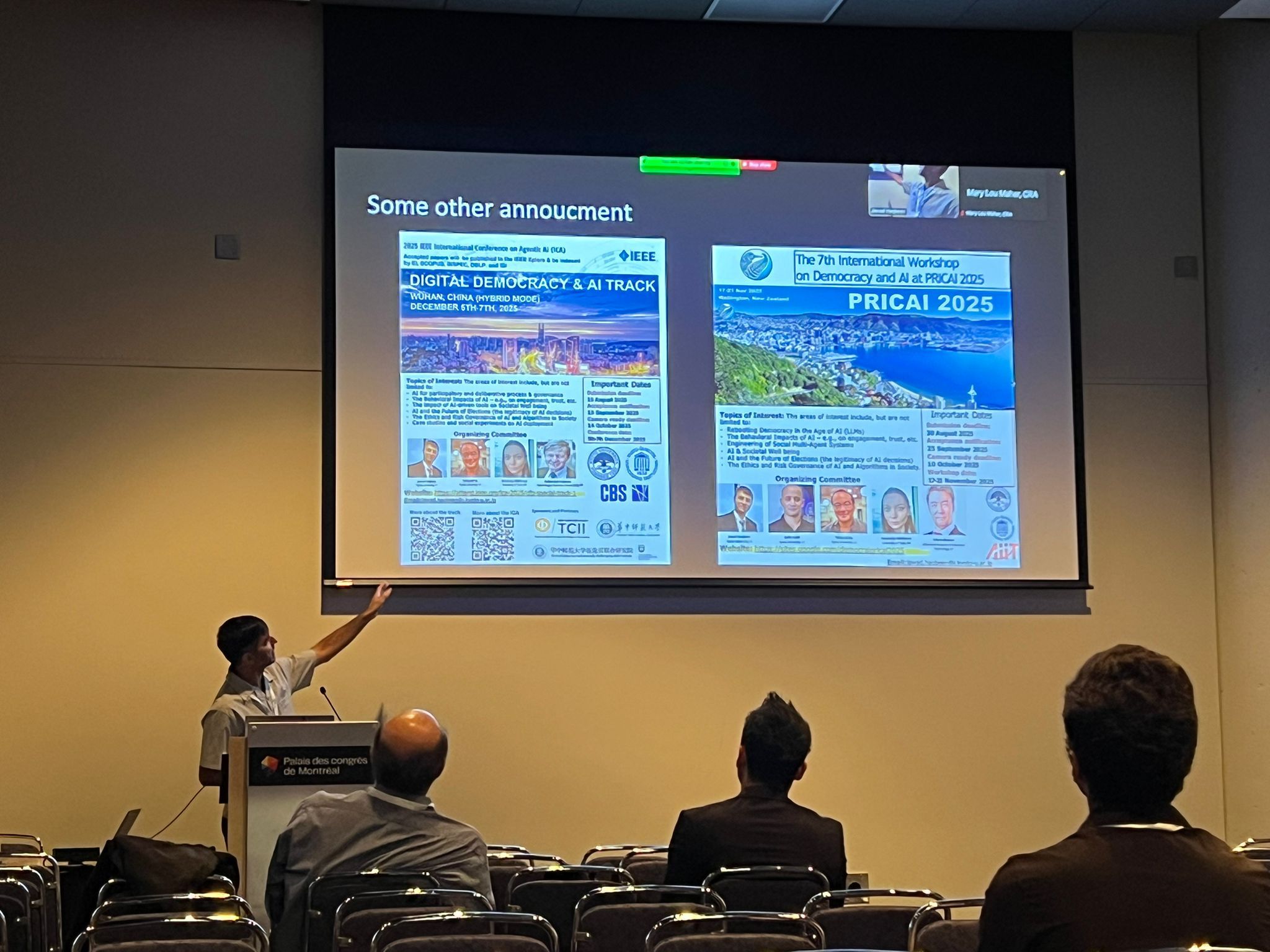
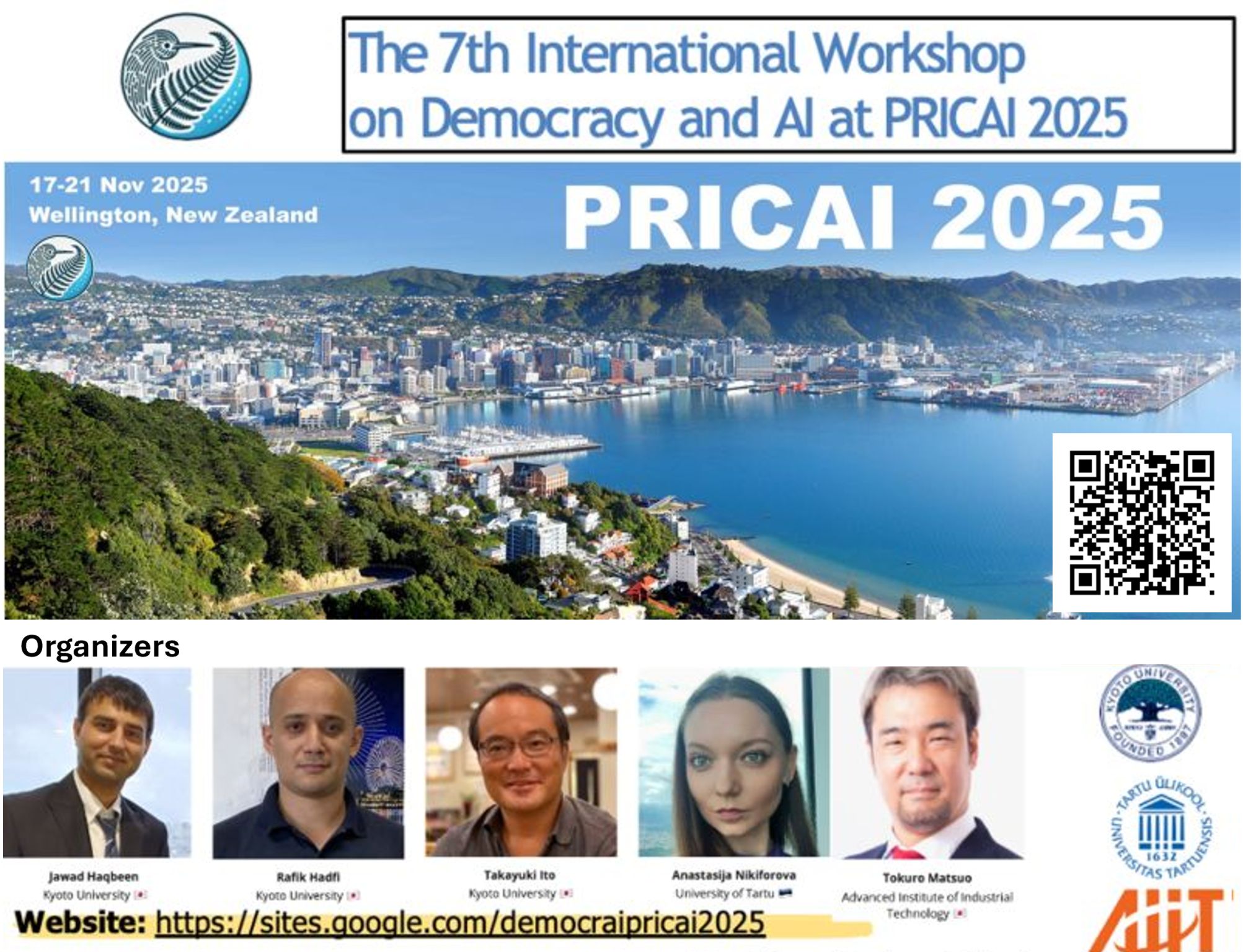
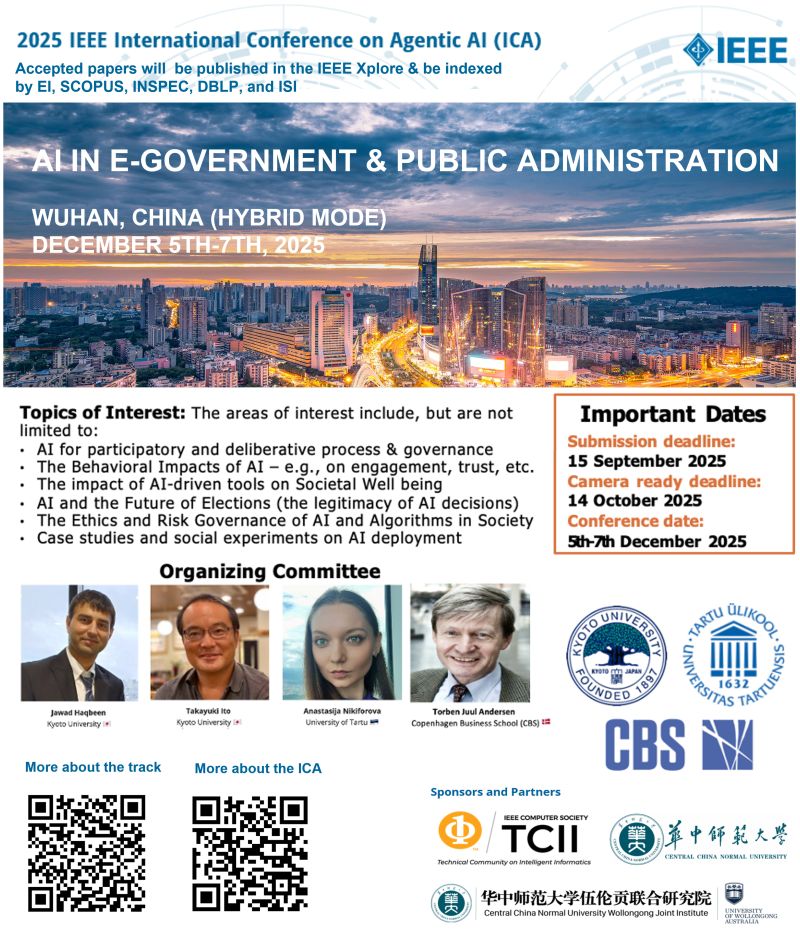
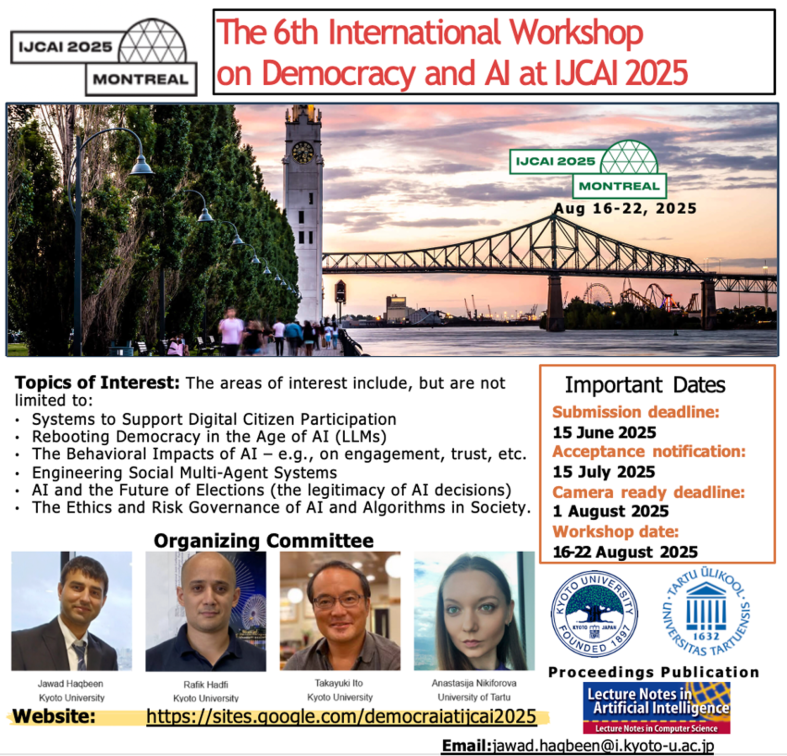
IJCAI2025 Workshop on Democracy and AI (DemocrAI 2025) workshop

Join us – Jawad Haqbeen, Rafik Hadfi, Takayuki Ito, Anastasija Nikiforova (Kyoto University & University of Tartu) – at the 6th International Workshop on Democracy and AI (DemocrAI 2025) to take place conjunction with the 34th International Joint Conference on Artificial Intelligence (IJCAI 2025) in Montreal (Canada), August 16-22 to examine opportunities and risks associated with AI in democratic contexts.

Recent technical advances in machine learning, natural language processing, and multi-agent systems have greatly expanded the use of artificial intelligence (AI) applications in our daily lives. AI-driven systems are transforming the way we process, monitor, and manage data and services, offering innovative solutions for evidence-based policy planning and decision management. AI offers enormous potential to boost efficiency and improve decision-making by processing large amounts of data. For example, AI-assisted conversational chatbots can help strengthen democratic processes by delivering better public services, customizing services for citizens, facilitating engagement with large groups, connecting their ideas and fostering social participation. However, alongside these benefits, AI may pose risks to individuals, organizations, and society as a whole. One significant concern is that machines lack accountability while generating information and can make decisions that fundamentally affect the lives of ordinary citizens by generating (mis)information. The focus of this workshop will be on both the current and potential uses of AI in society.

This workshop welcomes research on the intersection of AI and democracy, focusing on, but are not limited to:

  • Systems to Support Digital Citizen Participation
  • Tools to Support Decision-Making Process
  • The behavioral impacts of AI – e.g., on civic motivation & engagement, trust, etc.
  • The impact of AI on planning & policy development
  • The role of Societal factors in the implementation of AI
  • Rebooting Democracy in the Age of AI
  • AI and the Future of Wellbeing
  • AI in governance and public participation 
  • AI and the Future of Elections (the legitimacy of algorithmic decisions)
  • The ethics and risk governance of AI and algorithms in society
  • Transparency, Accountability, and Ethical Issues in Artificial Intelligence

Important dates:

  • Paper submission deadline: June 15, 2025
  • Notification of acceptance: July 15, 2025
  • Camera ready submission: August 1, 2025
  • Workshop Date: August 16-22, 2025

Join us at IJCAI 2025 to help shape the future of AI for democratic governance.

HICSS2026 Sustainable and Trustworthy Digital and Data Ecosystems for Societal Transformation mini-track


Are you researching sustainable and trustworthy digital ecosystems? Then, submit your work to our HICSS2026 “Sustainable and Trustworthy Digital and Data Ecosystems for Societal Transformation” mini-track we chair together with Daniel Staegemann and Asif Gill at the Association for Information Systems Hawaii International Conference on System Sciences (HICSS-59)!

In an era where data is the foundation of digital transformation, well-designed and managed sustainable and trustworthy digital and data ecosystems are critical for artificial intelligence (AI), strategic innovation, governance, competitive advantage, and trust in increasingly digital societies. With the rise of new data architectures (e.g., data meshes and data lakehouses), the shift from centralized to decentralized systems, and the integration of AI in data governance and management among others emerging technologies (e.g., blockchain, cloud computing), these ecosystems are becoming more dynamic, interconnected, and complex. However, alongside their potential benefits that is a common focus of the research around these ecosystems, challenges related to trustworthiness, transparency, security, sustainability, and governance must be addressed.

HICSS2026 “Sustainable and Trustworthy Digital and Data Ecosystems for Societal Transformation” mini-track we chair together with Daniel Staegemann and Asif Gill invites research on how digital and data ecosystems evolve in terms of resilience, trustworthiness, and sustainability while enabling strategic innovation and societal transformation. We welcome studies that explore the interplay between AI, data governance, policies, methodologies, human factors, and digital transformation across sectors such as finance, government, healthcare, and education.
We seek theoretical, empirical, design science, case study, and interdisciplinary contributions on topics including, but not limited to:

  1. AI, trustworthiness, and governance in digital and data ecosystems:
    • AI as an actor and stakeholder in data ecosystems;
    • AI-augmented governance, security, and data quality management;
    • human factors in AI-integrated ecosystems (trust, user acceptance, participation);
    • interoperability, observability, and data linking across ecosystems;
  2. Emerging technologies and strategic innovation:
    • transition from centralized to decentralized data architectures (e.g., data lakehouses, data meshes);
    • emerging technologies for trustworthy ecosystems;
    • AI-driven business process augmentation and decision-making;
    • industry and government case studies on evolving data ecosystems;
  3. Resilience and sustainability of data ecosystems:
    • ethical AI and responsible innovation in data ecosystems;
    • sustainability and long-term governance of digital and data infrastructures;
    • cross-sectoral and interdisciplinary approaches for building sustainable ecosystems;
    • impact of data democratization on digital transformation and innovation.

By combining the strengths of strategic innovation, trustworthy AI, and data ecosystem governance, this track expects to offer a holistic perspective at the intersection of information systems, AI governance, data science, and digital transformation. It will serve as a platform for researchers and practitioners to explore how digital and data ecosystems can be sustainable, resilient, and trustworthy while driving innovation and societal transformation.

We welcome conceptual, empirical, design science, case study, and theoretical papers from fields such as information systems, computer science, data science, management and process science, policy-making, behavioral economics, and social sciences.

This mini-track is part of HICSS59 “Organizational Systems and Technology” track (chairs: Hugh Watson and Dorothy Leidner) and more information about it can be found here.