
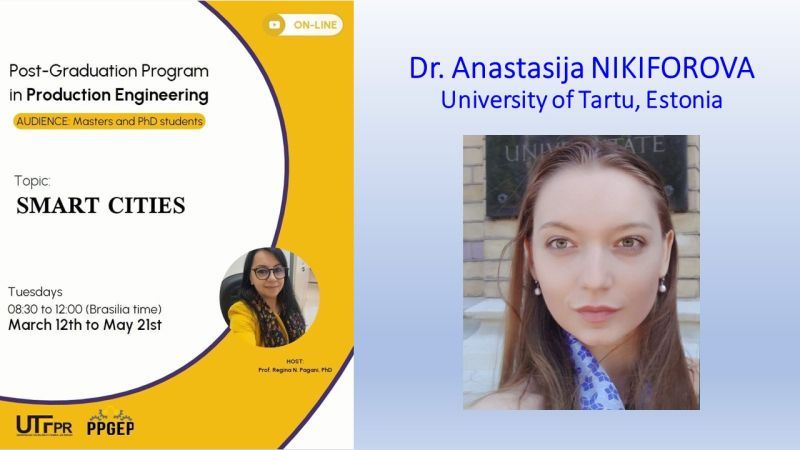
This May, I had a pleasure to deliver one more guest lecture for master and doctoral students of the Federal University of Technology – Paraná (Universidade Tecnológica Federal do Paraná (UTFPR)) as part of Smart Cities course delivered by prof. Regina Negri Pagani. This time the topic of my lecture was “Unlocking the symbiotic relationship of Artificial Intelligence, Data Intelligence, Collaborative Intelligence, and Embodied Intelligence for innovative urban planning and governance of Smart Cities”.
In the pursuit of enhancing the efficiency and effectiveness of Artificial Intelligence, it is imperative to explore synergies with other form of intelligence, such Data Intelligence and Collaborative intelligence. These forms of intelligence (along with Embodied Intelligence) constitute a new transformative paradigm of intelligence proposed by Verhulst et al. (2021) that offers potential for increased added value when synergized. However, their synergy requires understanding and harnessing the symbiotic relationship between these intelligences. The reimagination of decision making and problem-solving processes, is essential to unlock this symbiotic potential fostering more meaningful, but at the very same time more sustainable AI utilization. In other words, AI itself brings a certain value that can be (and must be) increased through integration with other forms of Intelligence. This, in turn, has a list of preconditions / prerequisites that must be satisfied by the above – Artificial, Data, Collaborative, and Embodied Intelligence – components. These prerequisites are diverse in nature and span both the artifacts in question, such as AI, data (type, format, quality, value, availability, accessibility, incl. openness), stakeholders’ skills and literacies, but also management and organizational aspects. In other words, each form of Intelligence influences the others, making it crucial to explore their interconnections. This talk endeavoured to uncover this intricate web of relationships between the three forms of intelligence, taking a step towards a more meaningful and intelligent approach to decision making and problem solving.

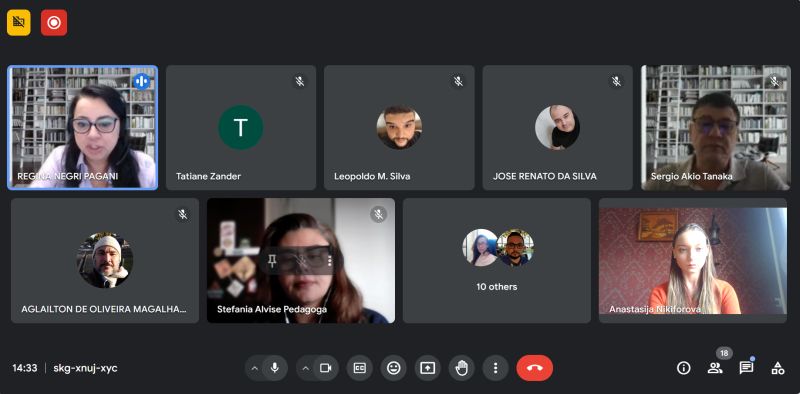
As part of this talk we referred to the theory of multiple intelligences by Howard Gardner presented in his famous book “Frames of Mind: A Theory of Multiple Intelligences”. Then, we referred to the above mentioned intelligence paradigm proposed by Stefaan G. Verhulst, Peter Martey Addo, Dominik Baumann, Juliet Mcmurren, Andrew Young, Andrew J. Zahuranec in “Emerging Uses of Technology for Development: A New Intelligence Paradigm“. Then, we finally turned to the actual discussion on the symbiotic relationship of Artificial Intelligence, Data Intelligence, Embodied Intelligence, Collaborative Intelligence, and Generative AI uncovering this intricate web of relationships between these forms of intelligence, putting the above into several contexts with a focus on public & public and open data ecosystems. The later topics, in turn, covered some of my previous research (such as “Sustainable open data ecosystems in smart cities: A platform theory-based analysis of 19 European cities, ” “Identifying patterns and recommendations of and for sustainable open data initiatives: A benchmarking-driven analysis of open government data initiatives among European countries“, “Transparency of open data ecosystems in smart cities: Definition and assessment of the maturity of transparency in 22 smart cities“ etc.). As such, we tried to indicate future avenues in the light of changing paradigms (or need for such) for intelligences, data ecosystems, mechanisms for citizen engagement & processes (incl., but not limited to data governance & data quality management) accompanying these ecosystems
This followed up by the fruitful discussion with the participants of the course that I enjoyed very much. I can only hope that this lecture was just a little bit as interesting as my dear Regina characterized it! There is nothing better than hear an immediate invitation for the next editions of this course – will be glad to continue this tradition!


 Anastasija Nikiforova, PhD