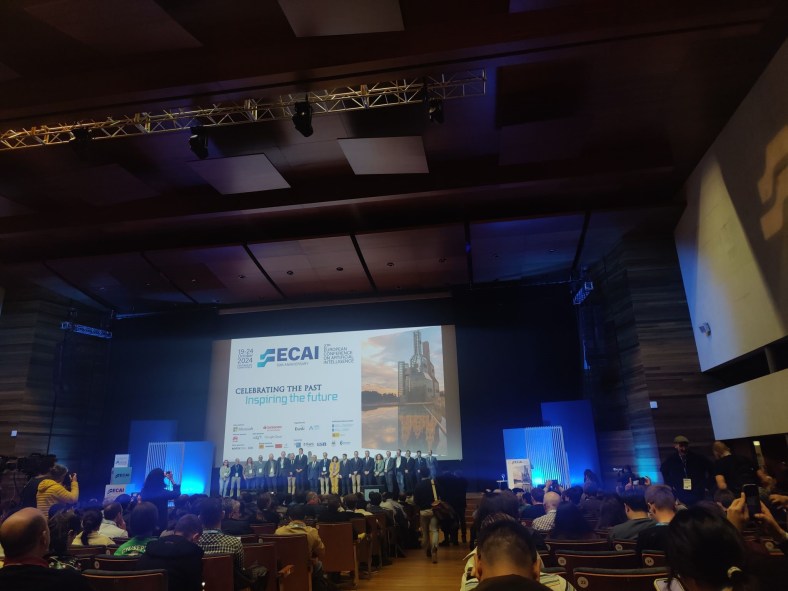
27th European Conference on Artificial Intelligence (ECAI 2024): Celebrating the past, inspiring the future

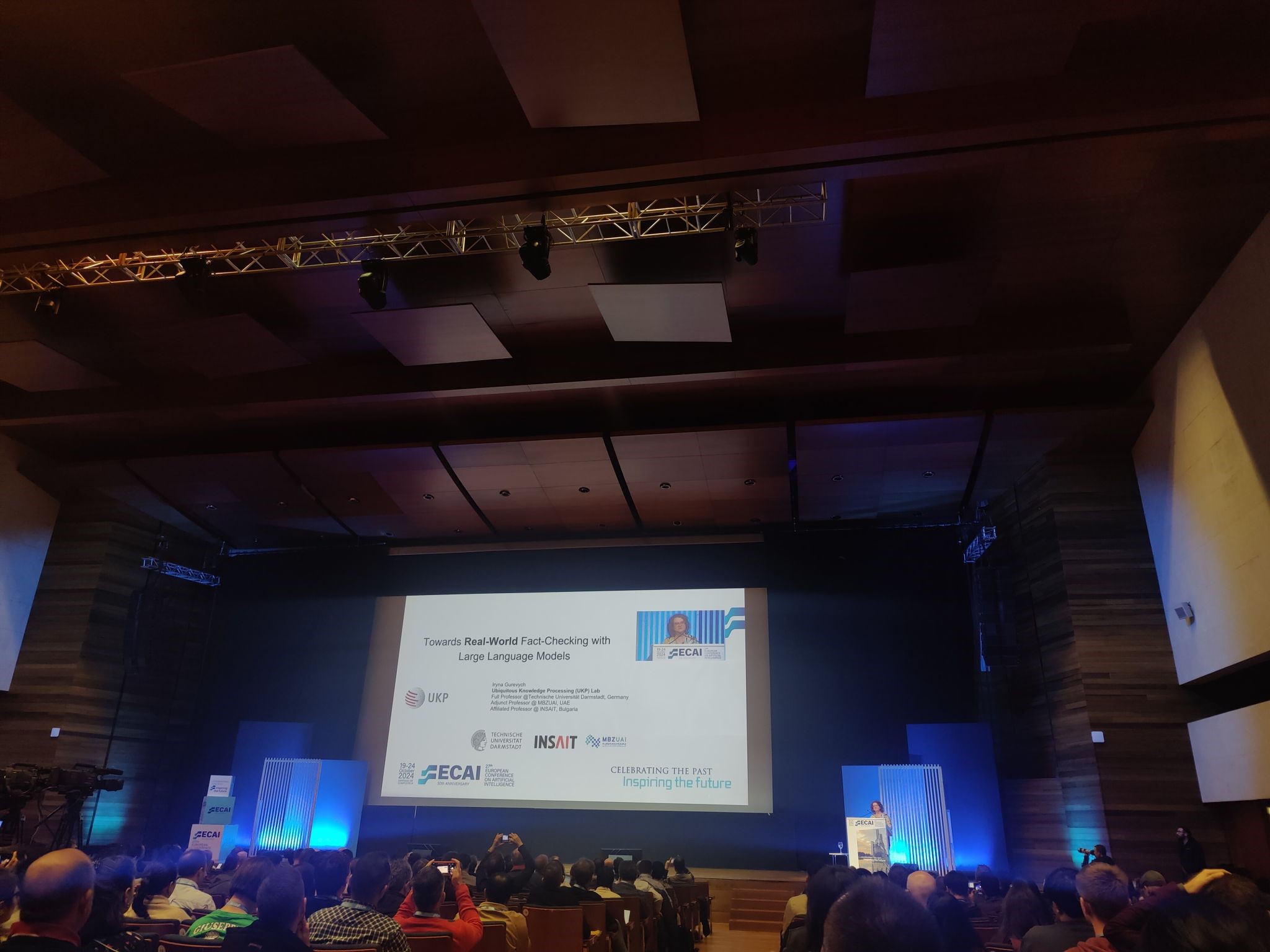
This October was one of the busiest yet most rewarding months of the year for me. Among several work trips, the highlight was attending the 27th European Conference on Artificial Intelligence (ECAI 2024) in Santiago de Compostela, Spain. Celebrating its 50th anniversary, ECAI remains Europe’s premier venue for AI research and innovation, bringing together thought leaders, researchers, and industry professionals from around the world.

This year’s theme, “Celebrating the Past, Inspiring the Future,” captured the spirit of ECAI’s half-century legacy while driving forward-looking discussions on the next era of artificial intelligence. With over 1,500 participants from 59 countries (so not so very European conference anymore, but rather a global event) and a packed schedule of more than 150 events, among which:

  • “Towards Real-World Fact-Checking with Large Language Models” keynote talk by Iryna Gurevych, (Technische Universität Darmstadt), reflecting on advancements in using language models for verifying information in real time;
  • “Robots (Still) Need Humans in the Loop,” keynote talk by Iolanda Leite (KTH Royal Institute of Technology), who underscored the essential role humans play in AI-driven robotics, even as systems grow more autonomous;
  • “Economic Complexity: Using Machine Learning to Understand Economic Development” keynote talk by Cesar A. Hidalgo (Toulouse School of Economics & Corvinus University of Budapest) that examined how machine learning is transforming our understanding of economic trends and predictions.

These were accompanied with a range of panels, with a few sessions that stood out (my personal opinion though):

  • Economic Impact of AI: Threats and Opportunities with Jeremy Rollison (Microsoft Corporation), David Autor (MIT), and Raquel Jorge Ricart (Elcano Royal Institute) on AI’s potential to reshape labor markets and economies around the world;
  • AI Regulation: The European Scenario (Kilian Gross, Dr. Clara Neppel, IEEE, Beatriz Alvargonzalez Largo, European Commission, JosĂ© Miguel Bello Villarino, ARC Centre of Excellence for Automated Decision-Making and Society), addressed regulatory considerations;
  • 50th Anniversary Session on the History of AI in Europe paying tribute to AI’s history in Europe, with Luc Steels, Stefano Cerri, Fredrik Heintz, and Tony Cohn sharing reflections on past achievements and a “follow-up” on it in the Future of AI: The Next 50 Years with Fredrik Heintz, Iryna Gurevych, JosĂ© Hernández-Orallo, Ann Nowe, Toby Walsh;
  • Designing Ethical and Trustworthy AI Research Policies for Horizon Europe centered on ethical standards and trustworthy AI research practices within the EU’s Horizon program, led by Mihalis Kritikos from the European Commission;
  • Funding your Scientific Research with the European Research Council (ERC) with Enrique Alba.

As part of this conference, I had pleasure of presenting a paper co-authored with my former student Jan-Erik Kalmus, based on his Master’s thesis, which I had the privilege of supervising. Our paper, “To Accept or Not to Accept? An IRT-TOE Framework to Understand Educators’ Resistance to Generative AI in Higher Education,” examined what barriers might prevent educators from adopting Generative AI tools in their classrooms? Since the public release of ChatGPT, there has been a lively debate about the potential benefits and challenges of integrating Generative AI in educational contexts. While the technology holds promise, it has also sparked concerns, particularly among educators. In the field of information systems, Technology Adoption models are often used to understand factors that encourage or inhibit the use of new technologies. However, many existing models focus primarily on acceptance drivers, often overlooking the unique barriers that educators face. This study seeks to fill that gap by developing a theoretical model specifically tailored to identify the barriers that may prevent educators—academic staff in particular—from integrating Generative AI into their teaching. Our approach builds on Innovation Resistance Theory, augmented by constructs from the Technology-Organization-Environment (TOE) framework. With the designed mixed-method measurement instrument, combining quantitative data with qualitative insights, to capture educators’ specific concerns around Generative AI adoption in higher education, our model has been applied in real-world settings, specifically focusing on Estonian higher education institutions. We examined whether academic staff at public universities in Estonia – often referred to as a “digital nation” – show reluctance toward Generative AI use in educational settings. Preliminary findings highlight several concerns unique to educators, which may shape how Generative AI is integrated into teaching practices.

A Heartfelt Thanks to ECAI’s Organizers – the European Association for Artificial Intelligence (EurAI), the Spanish Artificial Intelligence Society, CiTIUS (Research Centre on Intelligent Technologies), and, of course, the city of Santiago de Compostela for being such a welcoming place.
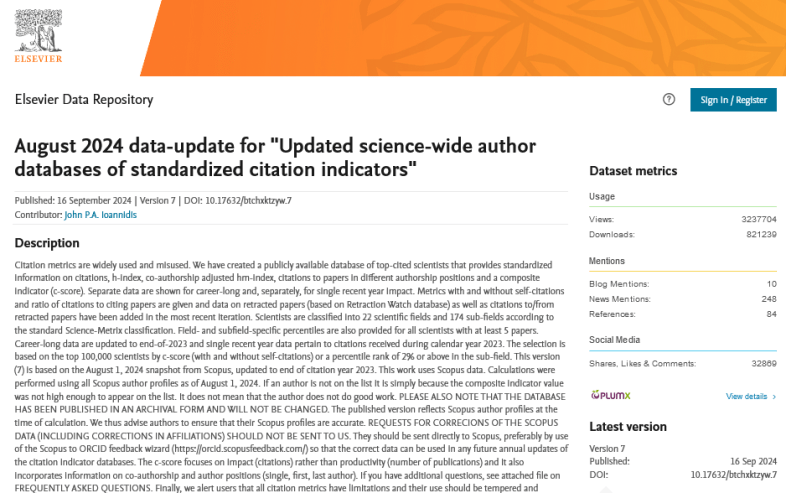
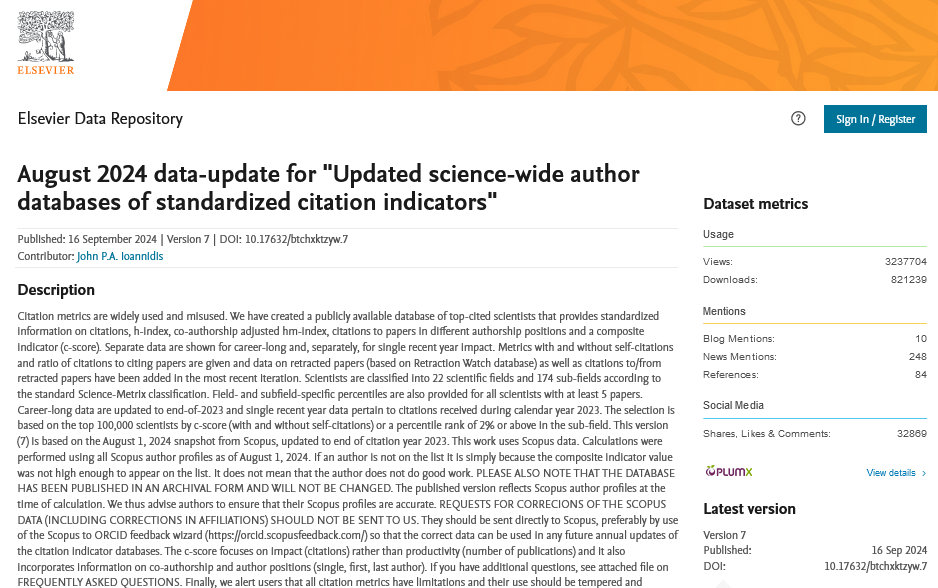
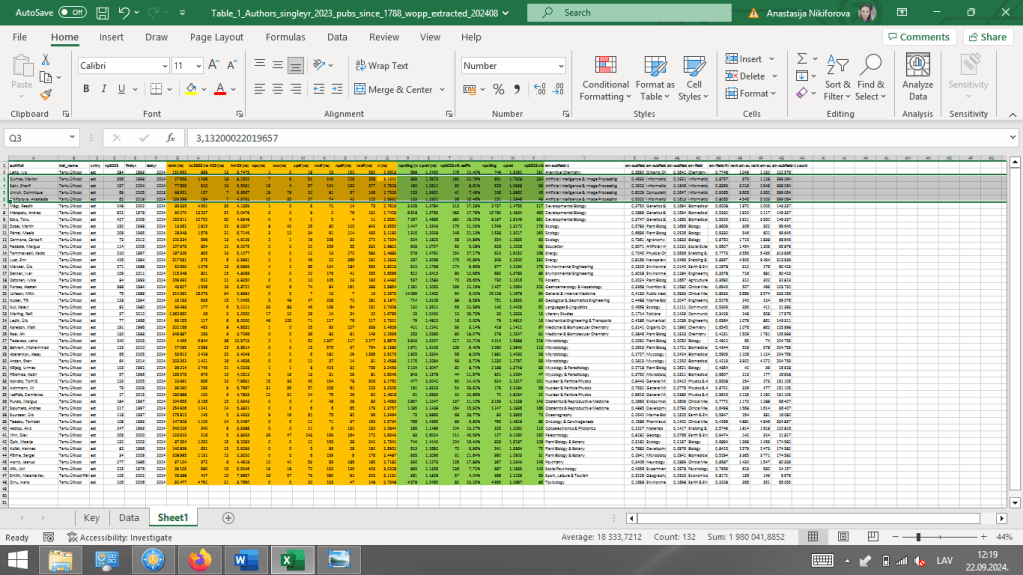
The University of Tartu ranks among the top 1% the world’s most highly-cited research institutions & Stanford Elsevier Top Scientists List

Did you know that the University of Tartu ranks among the top 1% the world’s most highly-cited research institutions in the world? This [but not only, of course] makes it one of Northern Europe’s leading universities and the highest-ranked university in the Baltics (according to Times Higher Education). Not bad, especially considering that Estonia is the smallest Baltic country in both area and population & the third most sparsely populated in the EU, isn’t it?

This is also somewhat supported by the latest Stanford Elsevier Top Scientists List of what they call to be “the top 2% of scientists“, which, as any list of this kind, should not be taken too seriously, but rather with an extreme caution, since of course quantitative metrics such as the number of publications and citations are far from perfect indicators for measuring research quality and impactâť— But, in the lack of alternatives…

Indeed all the “be cautious” for various reasons* and “do not overestimate those who is in it” that have been discussed at length should be “on,” going through the list, with reasons spanning from serious cases of scientific misconduct to the fact that, according to the list, Einstein published for over 120 years, with his recent paper in 2021 (perhaps we should stop complaining on our own schedules :D) and several other debates around the list (see here, here & here). However, nonetheless, finding yourself among colleagues you truly respect does make the colors around a bit brighter (though in the single recent year impact category (again, citations-based “impact”)).

Back to the point, more than 40 researchers from the University of Tartu—including 4 from my own University of Tartu Institute of Computer Science, incl. myself (? not sure of the total # as there are 300+ people in the Institute, so the count is filtered by Artificial Intelligence, ICT, Information Systems)—listed in Stanford’s single-year category, with slightly below 40 – career-long!

As for me, I’m taking this as a green light to treat myself by grabbing some yummy that I feel somewhat deserved 🍨 🚀as this is a sort of – one small step for research and the university (or not so small), one giant leap for an early career researcher (in the age of 18 years, with 10+ years of experience :D)

CFP for Special Issue in IEEE Transactions on Technology & Society: Trustworthy Data Ecosystems for Digital Societies

IEEE Transactions on Technology & Society launches the new Special Issue on the “Trustworthy Data Ecosystems for Digital Societies“, edited by Asif Gill, Anastasija Nikiforova, Ina M. Sebastian, Martin Lnenicka, Anushri Gupta. On behalf of the editors of this SI, I sincerely invite you to consider submitting your work to it.

Key topics surround intersection of data ecosystem and AI topics, i.e., AI in and for trustworthy data ecosystems, and include, but are not limited to:

  • Impact of trustworthy data ecosystem on digital societies at the local, national and global levels
  • Conceptualization of trustworthy data ecosystems domains and characteristics for digital societies
  • Data trust regulations, polices, strategies and standards
  • Trustworthy data ecosystem infrastructure as a social construct
  • Trustworthy data ecosystem architecture, interfaces, methodologies, orchestration, patterns, solutions, and technology platforms
  • System and data quality, governance, security, privacy, protection, and safety
  • Data linking, interoperability, sharing and observability

Read more in the below CFP or here.

European Open Science Cloud “FAIR Metrics and Digital Objects Task Force” or the 2nd chapter of my participation with EOSC TFs

From 2021 to 2024, I had the privilege of being part of the “FAIR Metrics and Data Quality” Task Force, where we made strides in advancing the FAIR principles and improving data quality across the research community. Following the recent reorganization of these task forces, I am now excited to continue this work with the newly formed FAIR Metrics and Digital Objects Task Force, which, as we decided just yesterday, will be chaired by “the father” will be chaired by “the father” FAIR principles Mark Wilkinson and Elli Papadopoulou!

Our mission is to develop and implement metrics for the FAIR principles (Findability, Accessibility, Interoperability, and Reusability) that enhance the utility and impact of digital objects in research. This initiative is crucial in advancing open science and ensuring that scientific data is more accessible, reusable, and beneficial for the global research community.

As a member of this task force, we will be collaborating with a diverse group of experts to:

  • Identify the limitations of the current FAIR assessment, which is mainly focused on the FAIRness of the repository, for evaluating the discoverability and reusability of data, which is insufficient for assessing the capability of data to be federated.
  • Watch and promote initiatives (such as GREI, Signposting, RO-Crates, etc) to facilitate the definition of common metadata schemas and their interoperability.
  • Identify issues on data privacy, considering data usage, data access and data licensing and specification for machine-actionable data usage policies (e.g. ODRL)
  • Analyse the impact of provenance, especially in the context of federated environments.
  • Identify synergies with the Data Spaces initiative.
  • Define FAIR metrics according to the objectives of the task force.
  • Engage with research clusters, empowering them to implement data quality practices tailored to their unique contexts by actionable recommendations, like DQ indicators to ensure data quality, addressing areas, for example, AI training and input data.

I am eager to contribute to this new chapter and look forward to the — hopefully — impactful changes we will bring to the scientific community.

Stay tuned for updates on our progress and initiatives, whereas the progress we made in the past years is documented here !

The 25th Annual International Conference on Digital Government Research (DGO2024): a brief summary on presenter, track chair, panel organizer, and moderator roles

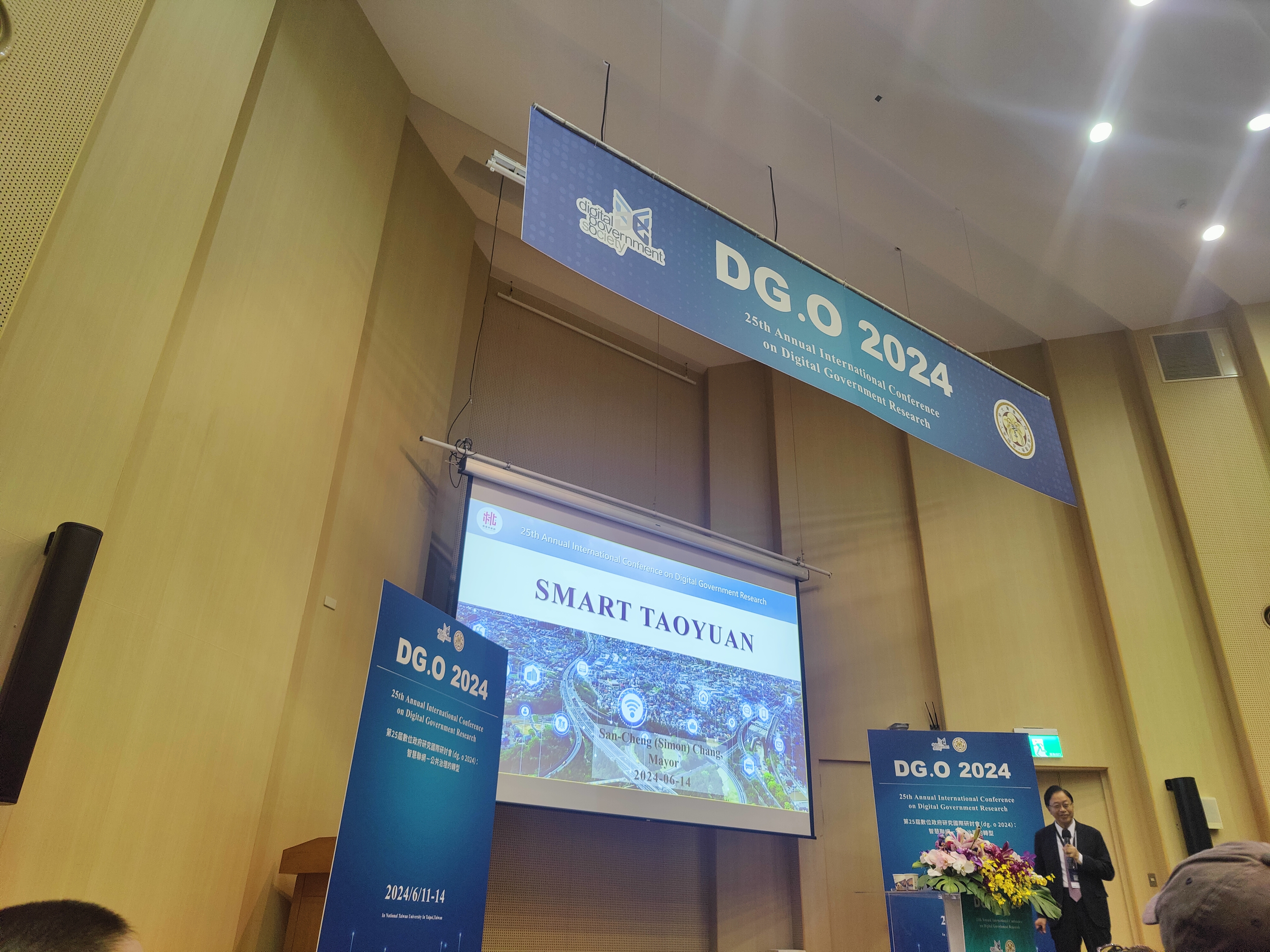
Last week, I had the pleasure of participating in the 25th Annual International Conference on Digital Government Research (DGO2024), organized by the Digital Government Society and hosted by National Taiwan University in the beautiful city of Taipei (Taiwan) under “Internet of Beings: Transforming Public Governance” theme. The conference offered an exceptional venue, warm hospitality from the local committee led by Helen Liu and her team, a rich social program, and an outstanding scientific program. The event featured well-selected keynotes and panels from prominent organizations such as Foxconn, the International Cooperation Center of TCA, Massachusetts Institute of Technology, Taipei Urban Intelligence Center, and the Ministry of Digital Affairs. Key topics included AI, Smart City initiatives, and Data Governance, which facilitated extensive networking and brainstorming sessions.

I was honored to contribute to this vibrant dialogue in multiple roles: presenter, track chair, panel organizer, and moderator. Together with my students and colleagues, we presented four papers, each reflecting our collaborative research efforts:

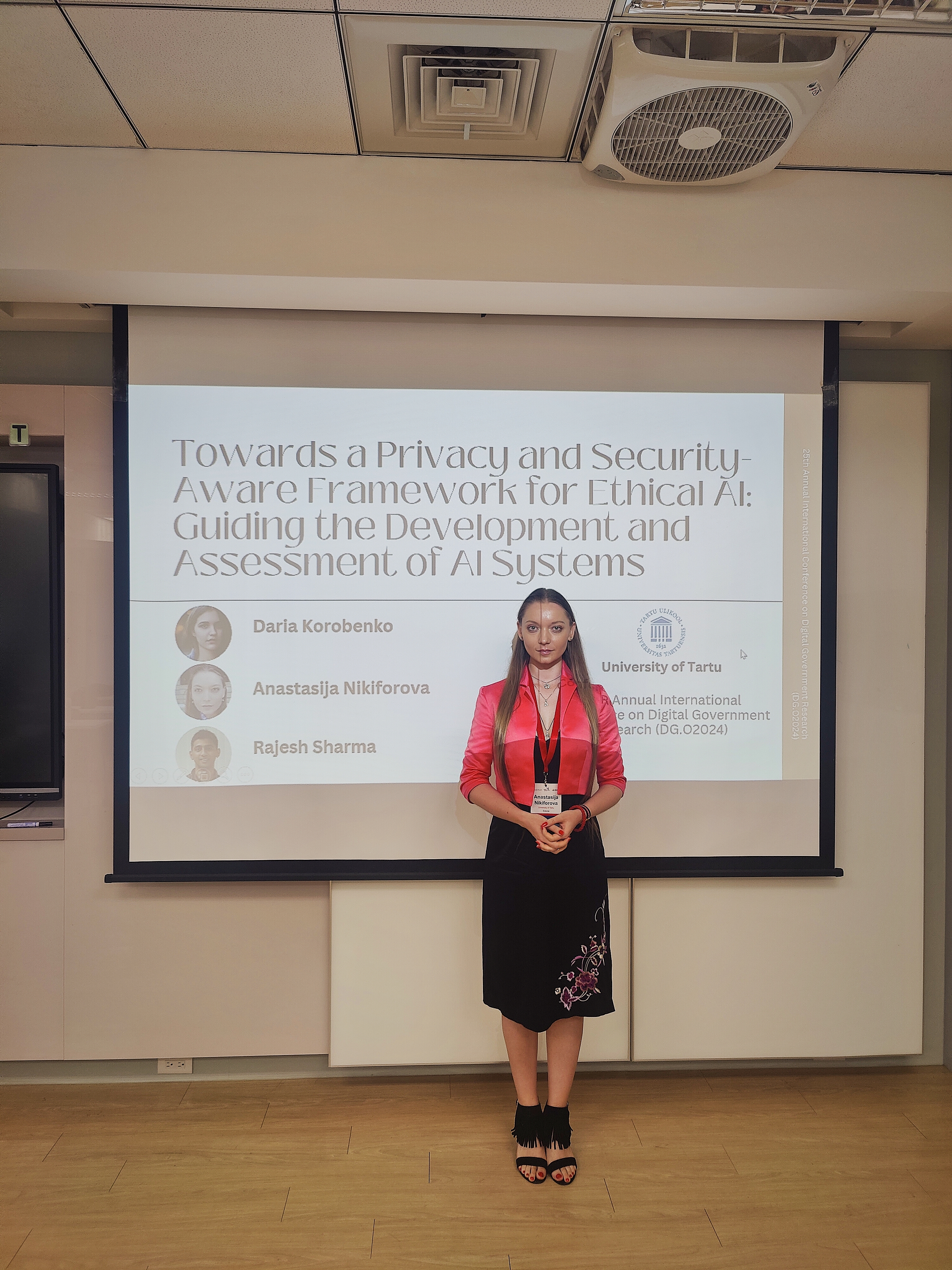
  1. Towards a Privacy and Security-Aware Framework for Ethical AI (Daria Korobenko, Anastasija NIkiforova, Rajesh Sharma). The proposed (conceptual at the moment) privacy and security-Aware Framework for ethical AI is centered around the Data, Technology, People, and Process dimensions, where each dimension is guided by a set of specific questions to encompass the overarching themes of privacy and security within AI systems, while the framework itself follows a risk-based approach (similar to the EU AI Act). As such, it is designed to assist diverse stakeholders, including organizations, academic institutions, and governmental bodies, in both the development and critical assessment of AI systems.
  2. Exploring Estonia’s Open Government Data Development as a Journey towards Excellence: Unveiling the Progress of Local Governments in Open Data Provision (Katrin Rajamae-Soosaar and Anastasija Nikiforova) that explores the evolution of Estonia’s 🇪🇪 OGD development at both national & local levels through analysis of indices, Estonian OGD portal, and a literature review. Findings reveal national progress due to portal improvements and legislative changes, while local governments lag in OGD provision, highlighting the need for future research on municipal OGD barriers and enablers.
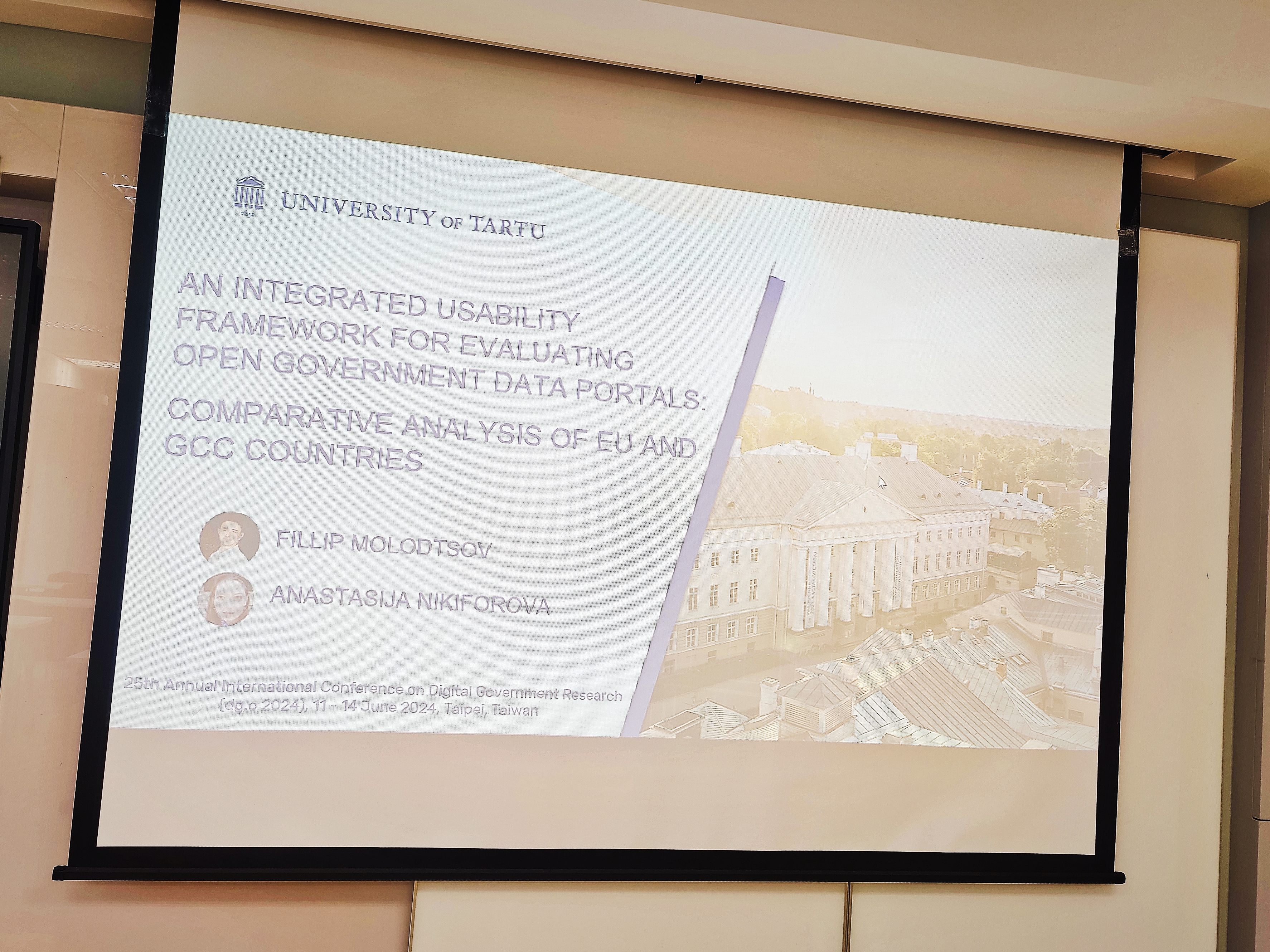
  3. An Integrated Usability Framework for Evaluating Open Government Data Portals: Comparative Analysis of EU and GCC Countries (Fillip Molodtsov and Anastasija Nikiforova) develops a framework to evaluate OGD portal usability, considering user diversity, collaboration, and data exploration capabilities, and applies it to 33 national portals in the EU and GCC 🇪🇺🇸🇦🇶🇦🇧🇭🇦🇪, highlighting good practices and common shortcomings, emphasizing competitiveness of GCC portals
  4. Unlocking the Potential of Open Government Data: Exploring the Strategic, Technical, and Application Perspectives of High-Value Datasets Opening in Taiwan (Hsien-Lee Tseng and Anastasija Nikiforova). In short, data has an unprecedented value. However, availability of data in an open data format creates a little added value, where the value of these data [to the real needs of the end user], is key. This is where the concept of high-value dataset (HVD) comes into play, which has become popular in recent years (predominantly beforehand OD Directive by European Commission). Defining and opening HVD, in turn, is a complex process consisting of a set of interrelated steps, the implementation of which may vary from one country or region to another. Therefore, there has recently been a call to conduct research in a country or region setting considered to be of greatest national value. So far, only a few studies have been conducted, most of which consider only one step of the process, such as identifying HVD or measuring their impact. With this study, we explore the entire lifecycle of HVD opening in case of one of the world’s leading producers of ICT products – Taiwan. To do this, we conduct a qualitative study with exploratory interviews with representatives from government agencies in Taiwan responsible for HVD opening, namely Ministry of Digital Affairs, Ministry of the Interior, Ministry of Transportation and Communications, and the Ministry of Environment. As part of these interviews, we examine strategic aspects associated with HVD determination, technical aspects related to the dataset preparation stage (incl. data quality, granularity, update frequency, integration methods, or data evaluation), and application aspects related to the further assessment of the impact generated by HVD, identifying some good practices and weaknesses to be further examined and fixed.

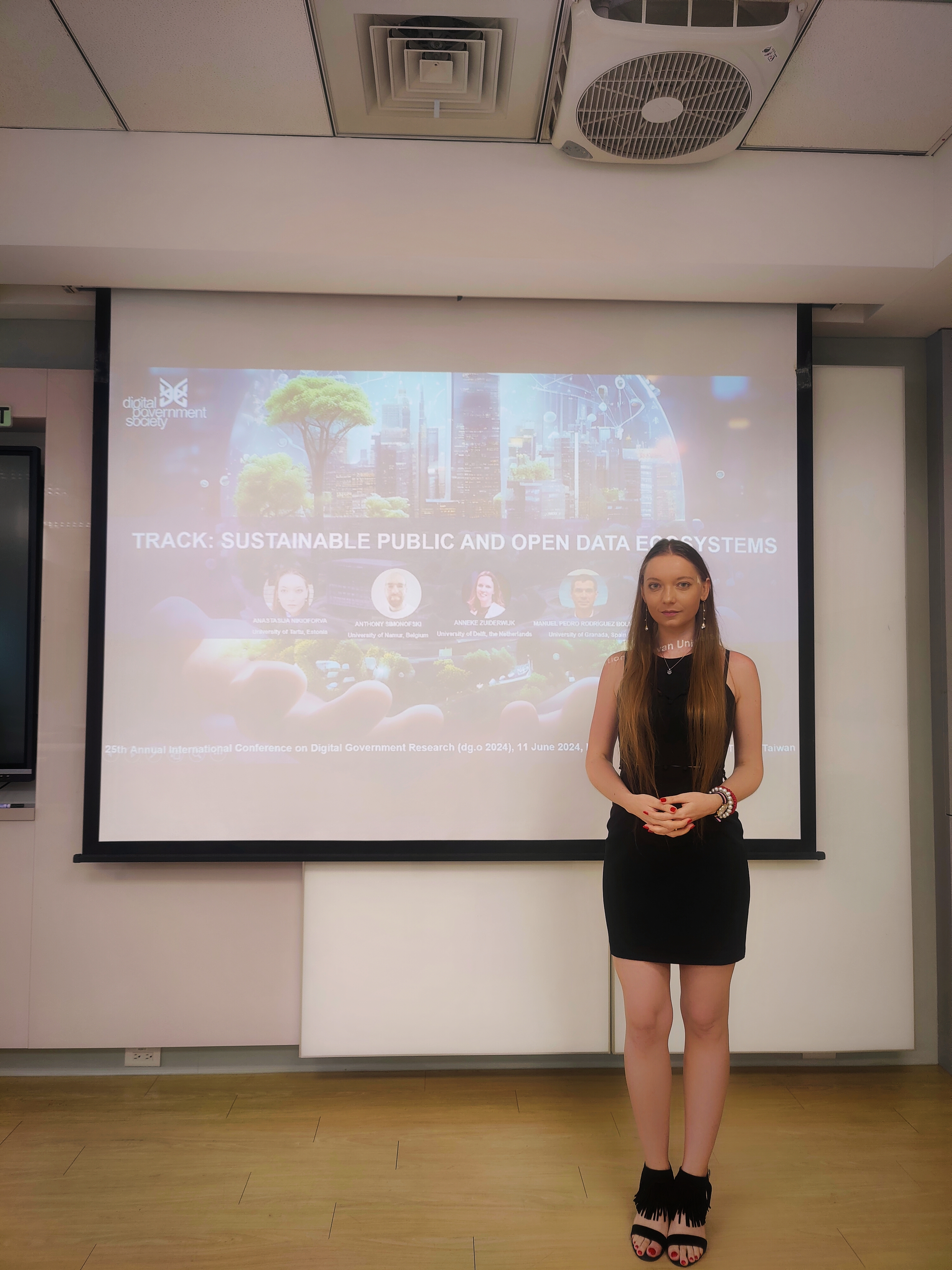
I also chaired the track “Sustainable Public and Open Data Ecosystems,” which we launched this year with colleagues, on which I posted before. Although this is the very new track, we received a good number of contributions as it appeared to be very timely and we hope to see it to have a continuation, serving as a stage for the dialogue by Digital Government Society around the public and open data ecosystem in and for our digital future. At least this session has demonstrated the interest in such an environment – many thanks to all, who actively participated in this discussion. BTW, should you be interested in difference between public vs open data ecosystem, I encourage you to read our conceptualization and typology in our “Understanding the development of public data ecosystems: from a conceptual model to a six-generation model of the evolution of public data ecosystems” paper. We also are optimistic that the best contributions from this track will soon be available in a special section of the Information Polity Journal that we have recently launched.

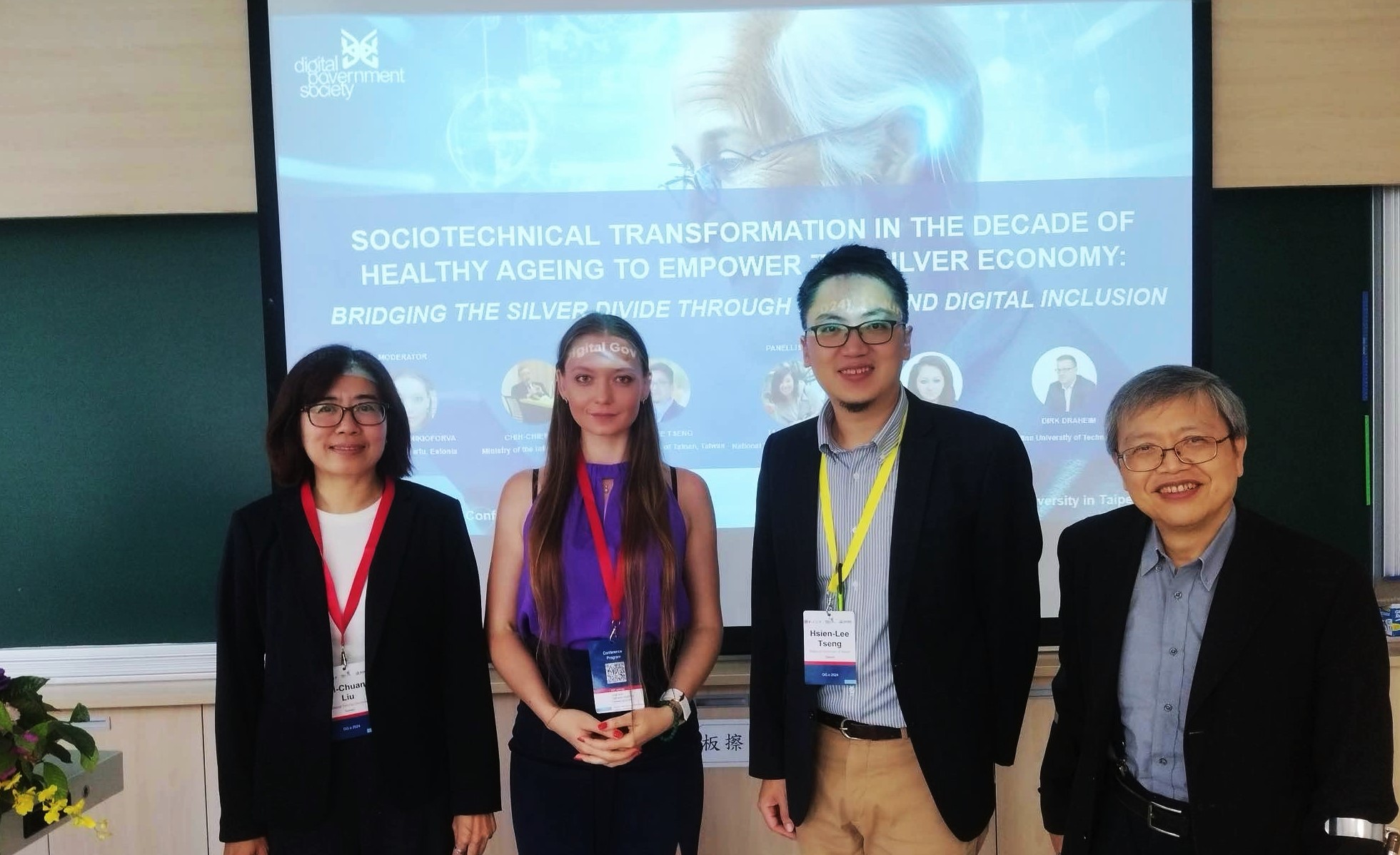
In addition, together with Hsien-Lee Tseng, we organized the panel “Sociotechnical Transformation in the Decade of Healthy Ageing to Empower the Silver Economy: Bridging the Silver Divide through Social and Digital Inclusion,” which addressed crucial issues related to the integration of aging populations into the digital economy and society. Our discussions focused on case studies from Taiwan and Estonia, two regions with significant aging populations and leaders in ICT and digital government. We explored several innovative initiatives:

  1. The Aged Dwelling Plan by the Ministry of Interior of Taiwan, which proactively delivers resources to those most in need through the Senior Living Needs Index Framework. It integrates cross-agency data such as household registration, building information, long-term care, low-income households, and open geospatial data.
  2. The Digital Silver Hub constituting the ecosystem fosters innovative solutions for the silver population, involving the public sector, private sector, academia, and end-users. It utilizes a collective intelligence model to address the challenges faced by older adults.
  3. Health Promotion, Technology Inclusion by National Taitung University aimed at achieving technological inclusion, this project focuses on non-discriminatory health promotion technology policies and activities for people with chronic diseases.

As such, our discussions highlighted the opportunities and challenges in supporting the Decade of Healthy Ageing, an initiative by the United Nations. Key themes included Data Management, Security, and Privacy, Digital Literacy and Regional Adoption, Human-Computer Interaction (HCI) and User-Centric Design, Interoperability. Our panel concluded that there is no one-size-fits-all solution to the challenges faced by the aging population. Instead, it is crucial to recognize and leverage the capacities and strengths of each region to develop tailored solutions, whether they be social, technical, or sociotechnical. By doing so, we can create effective and sustainable strategies to support healthy aging and bridge the silver divide.

The conference also featured a working meeting on the new Digital Government Society Chapter, “Artificial Intelligence & Government.” I contributed to the discussions and look forward to continued involvement and impact in this ambitious initiative led by Fadi Salem.

In summary, DGO2024 was an incredibly insightful and productive week.