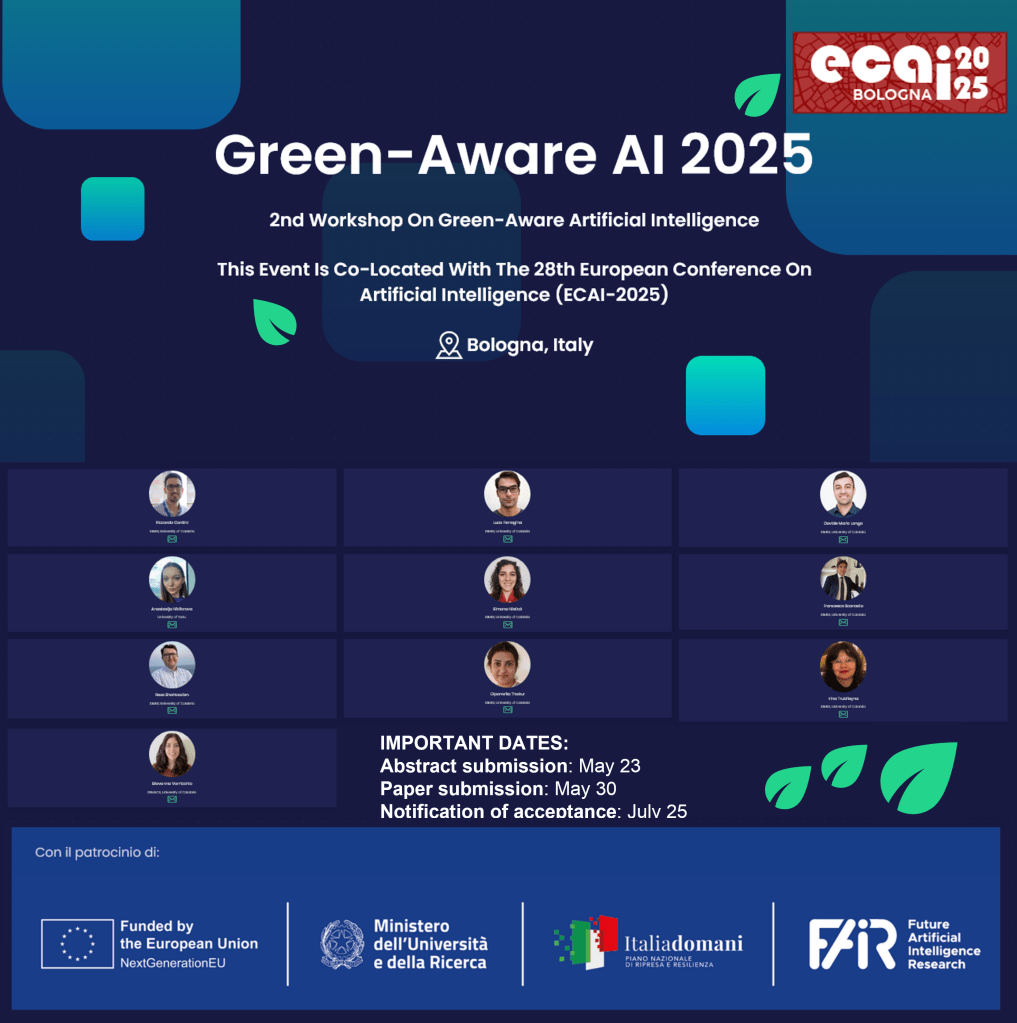
Green-Aware AI 2025 Workshop at ECAI2025

Join us – Riccardo Cantini, Luca Ferragina, Davide Mario Longo, Anastasija Nikiforova, Simona Nisticò, Francesco Scarcello, Reza Shahbazian, Dipanwita Thakur, Irina Trubitsyna, Giovanna Varricchio (University of Calabria & University of Tartu) – at the 2nd Workshop on Green-Aware Artificial Intelligence (Green-Aware AI 2025) to take place conjunction with the 28th European Conference on Artificial Intelligence (ECAI2025) in Bologna, Italy, October 25-30 to examine the sustainability challenges posed by widespread adoption of AI systems, particularly those powered by increasingly complex models, pushing toward responsible AI development and provide a timely response.

The widespread adoption of AI systems, particularly those powered by increasingly complex models, necessitates a critical examination of the sustainability challenges posed by this technological revolution. The call for green awareness in AI extends beyond energy efficiency—it encompasses the integration of sustainability principles into system design, theoretical modeling, and real-world applications.

Green-aware AI requires a multidisciplinary effort to ensure sustainability in its fullest sense, that is, where the green dimension is interpreted broadly, fostering the creation of inherently green-aware AI systems aligned with human-centered values. These systems should uphold sustainability principles such as transparency, accountability, safety, robustness, reliability, non-discrimination, eco-friendliness, interpretability, and fairness—principles reflected in the 17 Sustainable Development Goals (SDGs) defined by the United Nations. The ethical and sustainable advancement of AI systems faces diverse challenges across every stage, including architectural and framework design, algorithm conceptualization, user interaction, data collection, and deployment. This involves designing tools that are inherently green-aware or introducing mechanisms, such as incentives, to encourage agents in AI systems to adopt green-aware behaviors. This principle can be applied across various domains of AI, including but not limited to Algorithm Design, Fairness, Ethics, Game Theory and Economic Paradigms, Machine Learning, Multiagent Systems, and all their applications.

It is worthwhile noting that machine learning systems rank among the most energy-intensive computational applications, significantly impacting the environment through their substantial carbon emissions. Notable examples include the training of large-scale, cutting-edge AI models like those used in ChatGPT and AlphaFold. The creation of such systems demands vast resources, including high-performance computing infrastructure, extensive datasets, and specialized expertise. These requirements create barriers to the democratization of AI, limiting access to large organizations or well-funded entities while excluding smaller businesses, under-resourced institutions, and individuals. The lack of interpretability in AI systems further exacerbates these challenges, raising significant concerns about trustworthiness, accountability, and reliability. Such systems often function as black boxes, making it difficult to understand their underlying decision-making processes. This opaqueness can erode public trust and create barriers to holding developers accountable for harmful outcomes. Additionally, AI systems are prone to biases embedded in their training data and reinforced through user interactions, perpetuating discrimination and unfair treatment, disproportionately affecting marginalized and underrepresented groups.

By addressing these pressing challenges, the workshop aligns with the global push toward responsible AI development and provides a timely response to the environmental and social implications of AI technologies. The primary goal of this workshop is to foster discussions among scholars from diverse disciplines, facilitating the integration of technological advancements with environmental responsibility to drive progress toward a sustainable future. As such Green-Aware AI 2025 invites contributions around the following topics of interest (not limited to thm exclusively though):
💡Green-aware AI frameworks and applications;
💡AI methodologies for energy-efficient computing;
💡Human-centered and ethical AI design;
💡Reliable, transparent, interpretable, and explainable AI;
💡Trustworthy AI for resilient and adaptive systems;
💡Fairness in machine learning models and applications;
💡Impact of AI on underrepresented communities, bias mitigation, and exclusion studies (datasets and benchmarks);
💡Theoretical analysis of energy efficiency in AI systems;
💡Green and sustainable AI applications in environmental and social sciences, healthcare, smart cities, education, finance, and law;
💡Compression techniques and energy-aware training strategies for language models;
💡Approximate computing and efficient on-device learning;
💡Green-oriented models in game theory, economics, and computational social choice;
💡Green-awareness in multi-agent systems;
💡Security and privacy concerns in machine learning models.

Stay tuned about keynotes info on whom to come soon!

📆Important dates:
Abstract submission: May 23
Paper submission: May 30
Notification of acceptance: July 25
Camera-ready: July 31

Join us at Green-Aware AI to help facilitating the integration of technological advancements with environmental responsibility to drive progress toward a sustainable future.

Workshop is supported by the Future AI Research (FAIR), the Italian Ministry of Education, Universities and Research and Italia Domani.
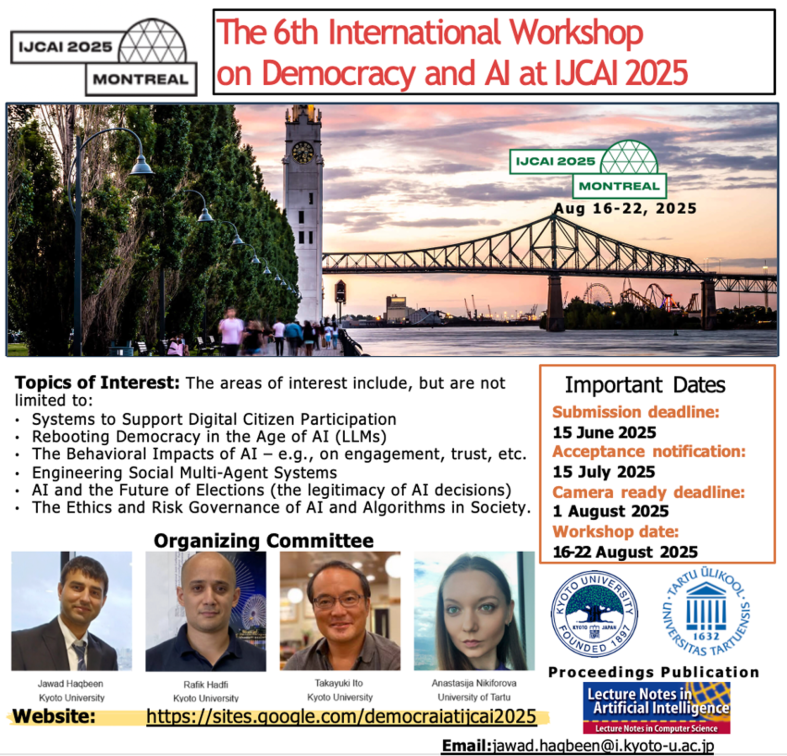
IJCAI2025 Workshop on Democracy and AI (DemocrAI 2025) workshop

Join us – Jawad Haqbeen, Rafik Hadfi, Takayuki Ito, Anastasija Nikiforova (Kyoto University & University of Tartu) – at the 6th International Workshop on Democracy and AI (DemocrAI 2025) to take place conjunction with the 34th International Joint Conference on Artificial Intelligence (IJCAI 2025) in Montreal (Canada), August 16-22 to examine opportunities and risks associated with AI in democratic contexts.

Recent technical advances in machine learning, natural language processing, and multi-agent systems have greatly expanded the use of artificial intelligence (AI) applications in our daily lives. AI-driven systems are transforming the way we process, monitor, and manage data and services, offering innovative solutions for evidence-based policy planning and decision management. AI offers enormous potential to boost efficiency and improve decision-making by processing large amounts of data. For example, AI-assisted conversational chatbots can help strengthen democratic processes by delivering better public services, customizing services for citizens, facilitating engagement with large groups, connecting their ideas and fostering social participation. However, alongside these benefits, AI may pose risks to individuals, organizations, and society as a whole. One significant concern is that machines lack accountability while generating information and can make decisions that fundamentally affect the lives of ordinary citizens by generating (mis)information. The focus of this workshop will be on both the current and potential uses of AI in society.

This workshop welcomes research on the intersection of AI and democracy, focusing on, but are not limited to:

  • Systems to Support Digital Citizen Participation
  • Tools to Support Decision-Making Process
  • The behavioral impacts of AI – e.g., on civic motivation & engagement, trust, etc.
  • The impact of AI on planning & policy development
  • The role of Societal factors in the implementation of AI
  • Rebooting Democracy in the Age of AI
  • AI and the Future of Wellbeing
  • AI in governance and public participation 
  • AI and the Future of Elections (the legitimacy of algorithmic decisions)
  • The ethics and risk governance of AI and algorithms in society
  • Transparency, Accountability, and Ethical Issues in Artificial Intelligence

Important dates:

  • Paper submission deadline: June 15, 2025
  • Notification of acceptance: July 15, 2025
  • Camera ready submission: August 1, 2025
  • Workshop Date: August 16-22, 2025

Join us at IJCAI 2025 to help shape the future of AI for democratic governance.

Guest Lecture for the Federal University of Technology – Paraná (UTFPR) on “Unlocking the symbiotic relationship of Artificial Intelligence, Data Intelligence, Collaborative Intelligence, and Embodied Intelligence for innovative urban planning and governance of Smart Cities”

This May, I had a pleasure to deliver one more guest lecture for master and doctoral students of the Federal University of Technology – Paraná (Universidade Tecnológica Federal do Paraná (UTFPR)) as part of Smart Cities course delivered by prof. Regina Negri Pagani. This time the topic of my lecture was “Unlocking the symbiotic relationship of Artificial Intelligence, Data Intelligence, Collaborative Intelligence, and Embodied Intelligence for innovative urban planning and governance of Smart Cities”.

In the pursuit of enhancing the efficiency and effectiveness of Artificial Intelligence, it is imperative to explore synergies with other form of intelligence, such Data Intelligence and Collaborative intelligence. These forms of intelligence (along with Embodied Intelligence) constitute a new transformative paradigm of intelligence proposed by Verhulst et al. (2021) that offers potential for increased added value when synergized. However, their synergy requires understanding and harnessing the symbiotic relationship between these intelligences. The reimagination of decision making and problem-solving processes, is essential to unlock this symbiotic potential fostering more meaningful, but at the very same time more sustainable AI utilization. In other words, AI itself brings a certain value that can be (and must be) increased through integration with other forms of Intelligence. This, in turn, has a list of preconditions / prerequisites that must be satisfied by the above – Artificial, Data, Collaborative, and Embodied Intelligence – components. These prerequisites are diverse in nature and span both the artifacts in question, such as AI, data (type, format, quality, value, availability, accessibility, incl. openness), stakeholders’ skills and literacies, but also management and organizational aspects. In other words, each form of Intelligence influences the others, making it crucial to explore their interconnections. This talk endeavoured to uncover this intricate web of relationships between the three forms of intelligence, taking a step towards a more meaningful and intelligent approach to decision making and problem solving.

As part of this talk we referred to the theory of multiple intelligences by Howard Gardner presented in his famous book “Frames of Mind: A Theory of Multiple Intelligences”. Then, we referred to the above mentioned intelligence paradigm proposed by Stefaan G. Verhulst, Peter Martey Addo, Dominik Baumann, Juliet Mcmurren, Andrew Young, Andrew J. Zahuranec in “Emerging Uses of Technology for Development: A New Intelligence Paradigm“. Then, we finally turned to the actual discussion on the symbiotic relationship of Artificial Intelligence, Data Intelligence, Embodied Intelligence, Collaborative Intelligence, and Generative AI uncovering this intricate web of relationships between these forms of intelligence, putting the above into several contexts with a focus on public & public and open data ecosystems. The later topics, in turn, covered some of my previous research (such as “Sustainable open data ecosystems in smart cities: A platform theory-based analysis of 19 European cities, ” “Identifying patterns and recommendations of and for sustainable open data initiatives: A benchmarking-driven analysis of open government data initiatives among European countries“, “Transparency of open data ecosystems in smart cities: Definition and assessment of the maturity of transparency in 22 smart cities etc.). As such, we tried to indicate future avenues in the light of changing paradigms (or need for such) for intelligences, data ecosystems, mechanisms for citizen engagement & processes (incl., but not limited to data governance & data quality management) accompanying these ecosystems


This followed up by the fruitful discussion with the participants of the course that I enjoyed very much. I can only hope that this lecture was just a little bit as interesting as my dear Regina characterized it! There is nothing better than hear an immediate invitation for the next editions of this course – will be glad to continue this tradition!

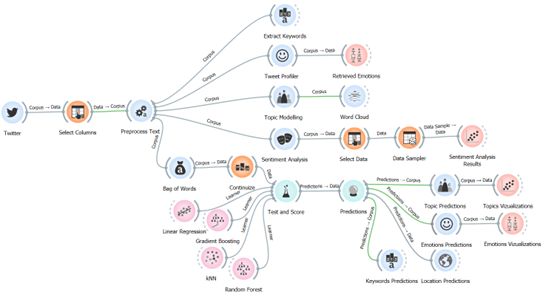
📢New paper alert 📢“Predictive Analytics intelligent decision-making framework and testing it through sentiment analysis on Twitter data” or what people do and will think about ChatGPT?

This paper alert is dedicated to “Predictive Analytics intelligent decision-making framework and testing it through sentiment analysis on Twitter data” (authors: Otmane Azeroual, Radka Nacheva, Anastasija Nikiforova, Uta Störl, Amel Fraisse) paper, which is now publicly available in ACM Digital Library!

In this paper we present a predictive analytics-driven decision framework based on machine learning and data mining methods and techniques. We then demonstrate it in action by predicting sentiments and emotions in social media posts as a use-case choosing perhaps the trendiest topic – ChatGPT. In other words we check whether it is eternal love and complete trust or rather 🤬?

Why PA?

Predictive Analytics are seen to be useful in business, medical/ healthcare domain, incl. but not limited to crisis management, where, in addition to health-related crises, Predictive Analytics have proven useful in natural disasters management, industrial use-cases, such as energy to forecast supply and demand, predict the impact of equipment costs, downtimes / outages etc., aerospace to predict the impact of specific maintenance operations on aircraft reliability, fuel use, and uptime, while the biggest airlines – to predict travel patterns, setting ticket prices and flight schedules as well as predict the impact of, e.g., price changes, policy changes, and cancellations. And, of course, business process management and specifically retail, where Predictive Analytics allows retailers to follow customers in real-time, delivering targeted marketing and incentives, forecast inventory requirements, and configure their website (or store) to increase sales. It business process management area, in turn, Predictive Analytics give rise to what is called predictive process monitoring (PPM). Predictive Analytics uses were also found in Smart Cities and Smart Transportation domain, i.e. to support smart transportation services using open data, but also in education, i.e., to predict performance in MOOCs.

This popularity can be easily explained by examining their key strategic objectives, which IBM (Siegel, 2015) has summarized as: (1) competition – to secure the most powerful and unique stronghold of competitiveness, (2) growth – to increase sales and keep customers competitively, (3) enforcement – to maintain business integrity by managing fraud, (4) improvement – to advance core business capacity competitively, (5) satisfaction – to meet rising consumer expectations, (6) learning – to employ today’s most advanced analytics, (7) acting – to render business intelligence and analytics truly effective actionable. Marketing, sales, fraud detection, call center and core businesses of business units, same as customers and the enterprise as  a whole are expected to gain benefits, which makes PA a “must”.

And although according to (MicroStrategy, 2020), in 2020, 52% of companies worldwide used predictive analytics to optimize operations as part of business intelligence platform solution, although so far, predictive analytics have been used mostly by large companies (65% of companies with $100 million to $500 million in revenue, and 46% of companies under $10 million in revenue), with less adoption in medium-sized companies, not to say about small companies

Based on management theory and Gartner’s Business Intelligence and Performance Management Maturity Model, our framework covers four management levels of business intelligence – (a) Operational, (b) Tactical, (c) Strategic and (d) Pervasive. These are the levels that determine the need to manage data in organizations, transform them into information and turn them into knowledge, which is also the basis for making forecasts. The end result of applying it for business purposes is to generate effective solutions for each of these levels.

Sounds catchy? Read the paper here.

Many thanks to my co-authors – Radka and Otmane, who invited me to contribute to this study, and drove the entire process!

Cite paper as:

O. Azeroual, R. Nacheva, A. Nikiforova, U. Störl, and A. Fraisse. 2023. Predictive Analytics intelligent decision-making framework and testing it through sentiment analysis on Twitter data. In Proceedings of the 24th International Conference on Computer Systems and Technologies (CompSysTech ’23). Association for Computing Machinery, New York, NY, USA, 42–53. https://doi.org/10.1145/3606305.3606309

📢🚨⚠️Paper alert! Overlooked aspects of data governance: workflow framework for enterprise data deduplication

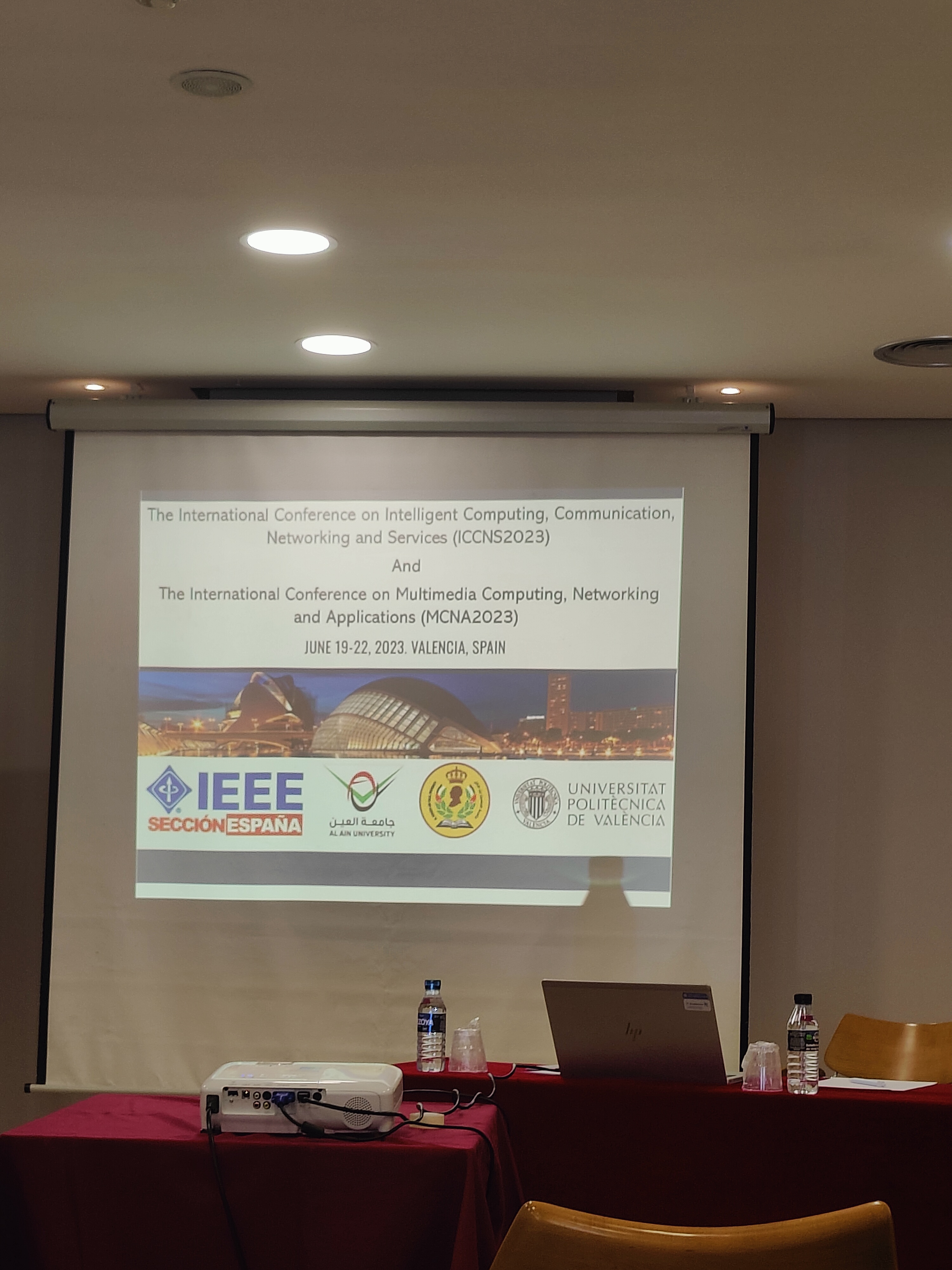
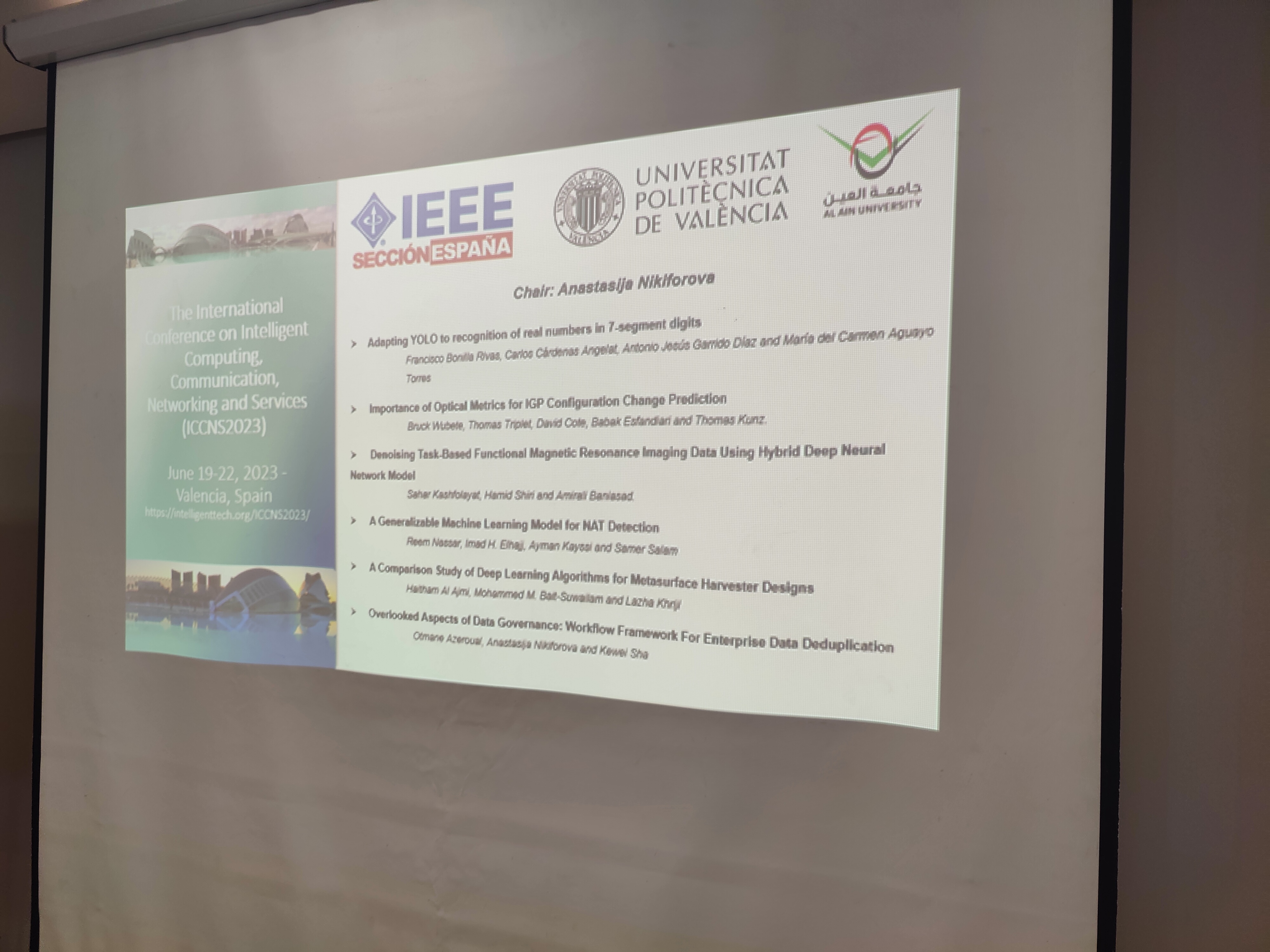
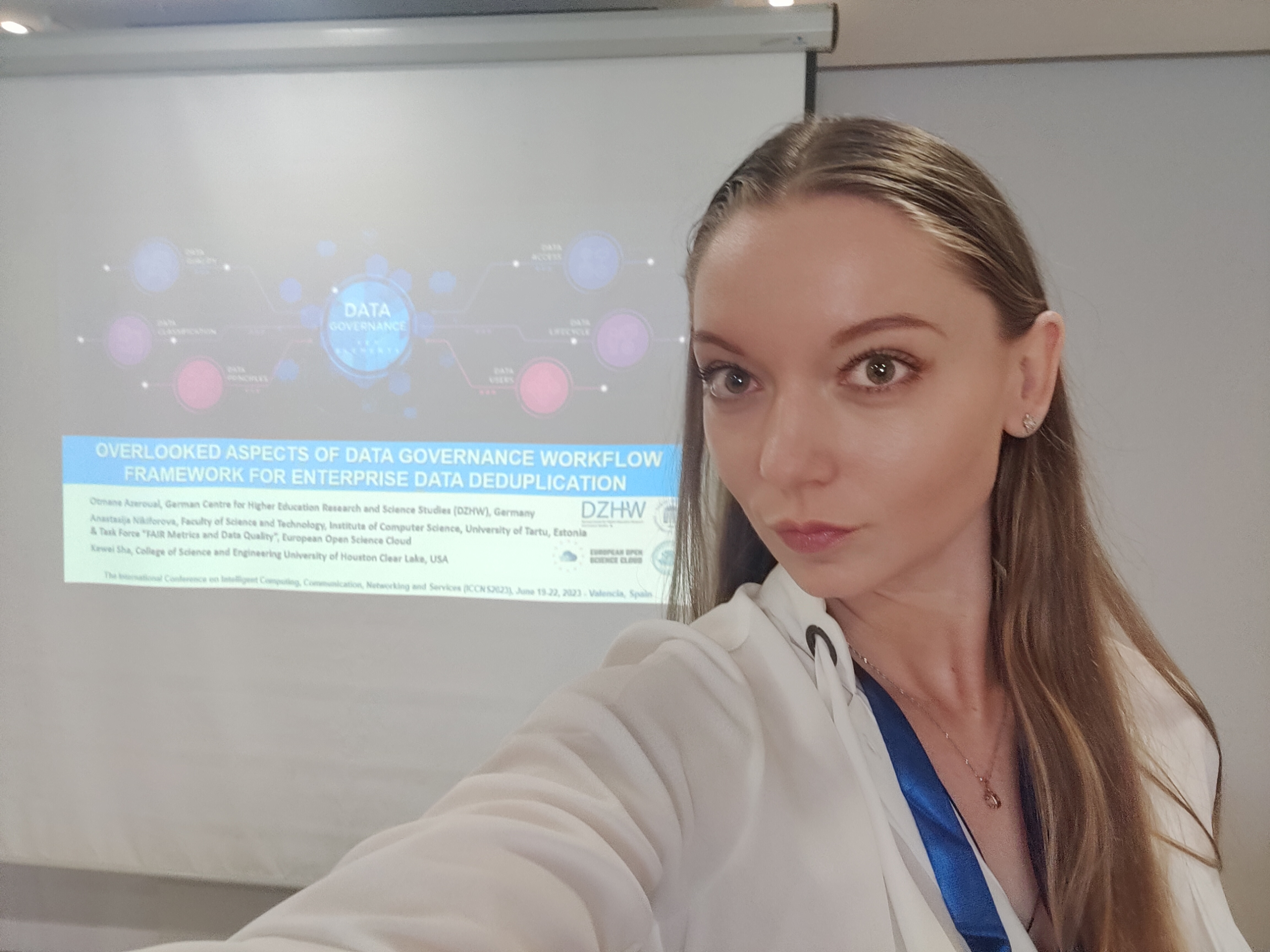
This time I would like to recommend for reading the new paper “Overlooked aspects of data governance: workflow framework for enterprise data deduplication” that has been just presented at the IEEE-sponsored International Conference on Intelligent Computing, Communication, Networking and Services (ICCNS2023). This “just”, btw, means June 19 – the day after my birthday, i.e. so I decided to start my new year with one more conference and paper & yes, this means that again, as many of those who congratulated me were wishing – to find the time for myself, reach work-life balance etc., is still something I have to try to achieve, but this time, I decided to give a preference to the career over my personal life (what a surprise, isn’t it?) 🙂 Moreover, this is the conference, where I am also considered to be part of Steering committee, Technical Program committee, as well as publicity chair. During the conference, I also acted as a session chair of its first session, what I consider to be a special honor – for me the session was very smooth, interactive and insightful, of course, beforehand its participants & authors and their studies, which allowed us to establish this fruitful discussion and get some insights for our further studies (yes, I also got one beforehand one very useful idea for further investigation). Thank you all contributors, with special thanks to Francisco Bonilla Rivas, Bruck Wubete, Reem Nassar, Haitham Al Ajmi.

And I am also proud with getting one of four keynotes for this conference – prof. Eirini Ntoutsi from the Bundeswehr University Munich (UniBw-M), Germany, who delivered a keynote “Bias and Discrimination in AI Systems: From Single-Identity Dimensions to Multi-Discrimination“, which I heard during one of previous conferences I attended and decided that it is “must” for our conference as well – super glad that Eirini accepted our invitation! Here, I will immediately mention that other keynotes were excellent as well – Giancarlo Fortino (University of Calabria, Italy), Dofe Jaya (Computer Engineering Department, California State University, Fullerton, California, USA), Sandra Sendra (Polytechnic University of Valencia, Spain).

The paper I presented is authored in a team of three – Otmane Azeroual, German Centre for Higher Education Research and Science Studies (DZHW), Germany, myself – Anastasija Nikiforova, Faculty of Science and Technology, Institute of Computer Science, University of Tartu, Estonia & Task Force “FAIR Metrics and Data Quality”, European Open Science Cloud & Kewei Sha, College of Science and Engineering University of Houston Clear Lake, USA – very international team. So, what is the paper about? It is (or should be) clear that data quality in companies is decisive and critical to the benefits their products and services can provide. However, in heterogeneous IT infrastructures where, e.g., different applications for Enterprise Resource Planning (ERP), Customer Relationship Management (CRM), product management, manufacturing, and marketing are used, duplicates, e.g., multiple entries for the same customer or product in a database or information system, occur. There can be several reasons for this (incl. but not limited due to the growing volume of data, incl. due to the adoption of cloud technologies, use of multiple different sources, the proliferation of connected personal and work devices in homes, stores, offices and supply chains), but the result of non-unique or duplicate records is a degraded data quality, which, in turn, ultimately leads to inaccurate analysis, poor, distorted or skewed decisions, distorted insights provided by Business Intelligence (BI) or machine learning (ML) algorithms, models, forecasts, and simulations, where the data form the input, and other data-driven activities such as service personalisation in terms of both their accuracy, trustworthiness and reliability, user acceptance / adoption and satisfaction, customer service, risk management, crisis management, as well as resource management (time, human, and fiscal), not to say about wasted resources, and employees, who are less likely trust the data and associated applications thereby affecting the company image. This, in turn, can lead to a failure of a project if not a business. At the same time, the amount of data that companies collect is growing exponentially, i.e., the volume of data is constantly increasing, making it difficult to effectively manage them. Thus, both ex-ante and ex-post deduplication mechanisms are critical in this context to ensure sufficient data quality and are usually integrated into a broader data governance approach. In this paper, we develop such a conceptual data governance framework for effective and efficient management of duplicate data, and improvement of data accuracy and consistency in medium to large data ecosystems. We present methods and recommendations for companies to deal with duplicate data in a meaningful way, while the presented framework is integrated into one of the most popular data quality tools – Data Cleaner.

In short, in this paper we:

  • first, present methods for how companies can deal meaningfully with duplicate data. Initially, we focus on data profiling using several analysis methods applicable to different types of datasets, incl. analysis of different types of errors, structuring, harmonizing, & merging of duplicate data;
  • second, we propose methods for reducing the number of comparisons and matching attribute values based on similarity (in medium to large databases). The focus is on easy integration and duplicate detection configuration so that the solution can be easily adapted to different users in companies without domain knowledge. These methods are domain-independent and can be transferred to other application contexts to evaluate the quality, structure, and content of duplicate / repetitive data;
  • finally, we integrate the chosen methods into the framework of Hildebrandt et al. [ref 2]. We also explore some of the most common data quality tools in practice, into which we integrate this framework.

After that, we test and validate the framework. The final refined solution provides the basis for subsequent use. It consists of detecting and visualizing duplicates, presenting the identified redundancies to the user in a user-friendly manner to enable and facilitate their further elimination.

With this paper we aim to support research in data management and data governance by identifying duplicate data at the enterprise level and meeting today’s demands for increased connectivity / interconnectedness, data ubiquity, and multi-data sourcing. In addition, the proposed conceptual data governance framework aims to provide an overview of data quality, accuracy and consistency to help practitioners approach data governance in a structured manner.

In general, not only technological solutions are needed that would identify / detect poor quality data and allow their examination and correction, or would ensure their prevention by integrating some controls into the system design, striving for “data quality by design” [ref3, ref4], but also cultural changes related to data management and governance within the organization. These two perspectives form the basis of the wealth business data ecosystem. Thus, the presented framework describes the hierarchy of people who are allowed to view and share data, rules for data collection, data privacy, data security standards, and channels through which data can be collected. Ultimately, this framework will help users be more consistent in data collection and data quality for reliable and accurate results of data-driven actions and activities.

Sounds interesting? Read the paper -> here (to be cited as: Azeroual, O., Nikiforova, A., Sha, K. (2023, June). Overlooked aspects of data governance: workflow framework for enterprise data deduplication. In 2023 International Conference on Intelligent Computing, Communication, Networking and Services (ICCNS2023). IEEE (in print))

International Conference on Intelligent Computing, Communication, Networking and Services (ICCNS2023) is collocated with The International Conference on Multimedia Computing, Networking and Applications (MCNA2023), which are sponsored by IEEE (IEEE Espana Seccion), Universitat Politecnica de Valencia, Al ain University. Great thanks to the organizers – Jaime Lloret, Universitat Politècnica de València, Spain & Yaser Jararweh, Jordan University of Science and Technology, Jordan & Marios C. Angelides, Brunel University London, UK & Muhannad Quwaider, Jordan University of Science and Technology, Jordan.

References:

Azeroual, O., Nikiforova, A., Sha, K. (2023, June). Overlooked aspects of data governance: workflow framework for enterprise data deduplication. In 2023 International Conference on Intelligent Computing, Communication, Networking and Services (ICCNS2023). IEEE (in print).

Hildebrandt, K., Panse, F., Wilcke, N., & Ritter, N. (2017). Large-scale data pollution with Apache Spark. IEEE Transactions on Big Data, 6(2), 396-411

Guerra-García, C., Nikiforova, A., Jiménez, S., Perez-Gonzalez, H. G., Ramírez-Torres, M., & Ontañon-García, L. (2023). ISO/IEC 25012-based methodology for managing data quality requirements in the development of information systems: Towards Data Quality by Design. Data & Knowledge Engineering, 145, 102152.

Corrales, D. C., Ledezma, A., & Corrales, J. C. (2016). A systematic review of data quality issues in knowledge discovery tasks. Revista Ingenierías Universidad de Medellín, 15(28), 125-150.