EGOV2025 – IFIP EGOV-CeDEM-EPART 2025 & our Emerging Issues and Innovations Track

Are you focusing on new topics emerging in the field of ICT and public sector, incl. public-private ecosystems? Then it is time to start preparing your submission for EGOV2025 – IFIP EGOV-CeDEM-EPART Emerging Issues and Innovations Track, which this time we chair in the updated form, welcoming A. Paula Rodriguez Müller on the board with us – Francesco Mureddu (The Lisbon Council, Belgium)and myself – Anastasija Nikiforova (Tartu University, Estonia)).

EGOV2025 – IFIP EGOV-CeDEM-EPART is one of the most recognized conference in e-Government, ICT and public administration and related topics, which this year will be hosted in Belgium, in the heart of Europe, by University for Continuing Education Krems, Austria. This year, IFIP EGOV 2025 is dedicated to the broader areas of e-Government and e-Democracy, which include facets like Digital Government, e-Participation, Open Government,  Smart Government, AI government, GovTech, Algoritmic Governance, and related topics to digitalization and government.

Innovation and application of emerging technologies are now more and more in the thinking of governments at all levels. While it would be easy to consider the public sector as being less flexible or slow in adoption, presentations at recent EGOV conferences proved that one should not come to such a conclusion too easily. Upcoming technologies, innovative organizational solutions, or new avenues of public sector involvement in the public sector are becoming more commonplace along with the potential challenges and issues these bring. Policymakers and public sector officials are now expected to embrace change, consider digital transformation, or improve governance practices. At the same time, public sector researchers are also influenced by new views, methods, tools, and techniques. The goal of this track is to provide a platform for the discussion of new ideas, issues, problems, and solutions entering the public sphere. Ideas that are emerging but might not fit other conference tracks are also welcome. Focus may include, but are not limited to:

  • Looking ahead into social innovation;
  • Future studies, the future of government, policy-making and democracy;
  • The future of digital governance;
  • Public values in transforming the government;
  • The role of government in smart cities (incl. smart sustainable cities) and sustainable living;
  • The role of the public sector in Human-Centered Society (Society 5.0);
  • New trends in public sector research such as Metaverse, Cityverse, Large Language Models (LLMs), generative AI and its implementations such as chatGPT, Claude, ChatSonic, Poe – benefits, risks, adoption and resistance to its adoption by the public sector and citizens;
  • Government in the Virtual Worlds and Web 4.0;
  • Decentralized Autonomous Organizations (DAOs), smart contracts and blockchain;
  • New technologies for automated decision-making and their policy implications;
  • Public sector use and regulation of AI, genAI, Industry 4.0, Industry 5.0, and the Internet of Things (IoT);
  • Digital Humanism (responsible and ethical integration of technology into society, ensuring that human values and dignity are prioritized in the development and use of digital tools and innovations);
  • The role of the public sector in competitiveness and tech sovereignty;
  • Global challenges that go beyond nation states (such as migration, climate change etc.) and which require international collaboration of individual governments;
  • Preparing for the policy challenges of future technologies;
  • Regulating misinformation;
  • Digital transformation in public sector contexts;
  • Self-Service Structures for Inclusion;
  • Public-private sector collaboration and integration;
  • GovTech initiatives and innovations;
  • Latest trends in co-creation and service delivery;
  • Online public community building;
  • Upcoming issues of eVoting / internet voting including application of digital signatures in the public sector;
  • Discussion of new research methods that have not been applied in this context;
  • Application of role theory in the analysis of public sector functions and processes;
  • Forward looking insights from case studies – let it be successful or failed experiments.
  • Utilization of digital billboards;
  • Public sector use and regulation of Fintech innovations;
  • Theoretical and practical approaches to experimentation and sandboxing in the public sector.Future studies, the future of government, policy-making and democracy

Stay tuned, more info to come!
The Estonian Open Data Forum – Celebrating Progress and Recognizing Achievements

This October, I had the distinct honor of participating in Estonia’s premier event on open data, the Open Data Forum (Avaandmete foorum), organized by the Ministry of Economic Affairs and Communications of Estonia, invited to talk about the role of academia and private sector in the open government data landscape. This annual gathering brings together industry experts, academic researchers, and government leaders to discuss key trends, achievements, and the future of open data in Estonia, along with highlighting the contributions coming from universities awarding the best dissertations developed by Estonian students. The latter made this event very special for me, as one of my students – Kevin Kliimask – was awarded for his outstanding bachelor’s thesis 🏆 🥇 🏅!

In his thesis –“Automated Tagging of Datasets to Improve Data Findability on Open Government Data Portals,” Kevin developed an LLM-powered interface to automate dataset tagging in both English and Estonian, thereby augmenting metadata preparation by data publishers and improving data findability on portals by users – as the practice shows their presence tend to be a challenge. E.g., our analysis conducted on the Estonian Open Data Portal, revealed that 11% datasets have no associated tags, while 26% had only one tag assigned to them, which underscores challenges in data findability and accessibility within the portal, which, according to the recent Open Data Maturity Report, is considered trend-setter. The developed solution was evaluated by users and their feedback was collected to define an agenda for future prototype improvements. The thesis has been already transformed into the scientific paper 👉 TAGIFY: LLM-powered Tagging Interface for Improved Data Findability on OGD portals presented at the IEEE international conference (I posted on this earlier 👉 here).

As for my talk titled Unlocking the Power of Open Data: The Role of Academia and the Private Sector in Building Inclusive and Sustainable Open Data Ecosystems, I emphasized the need for a holistic approach to open data that transcends merely opening/publishing data, rather requiring adopting a systemic view that considers an open data initiative as an Open Data Ecosystem (also confirmed by Open Data Charter 👉here), as we deal not only with open data (availability), portal, stakeholders, actors, but also processes surrounding them, emerging technologies & different forms of intelligence, going beyond just Artificial Intelligence, whose role, however, is crucial (see our paper on the eight-fold role of AI in OGD).

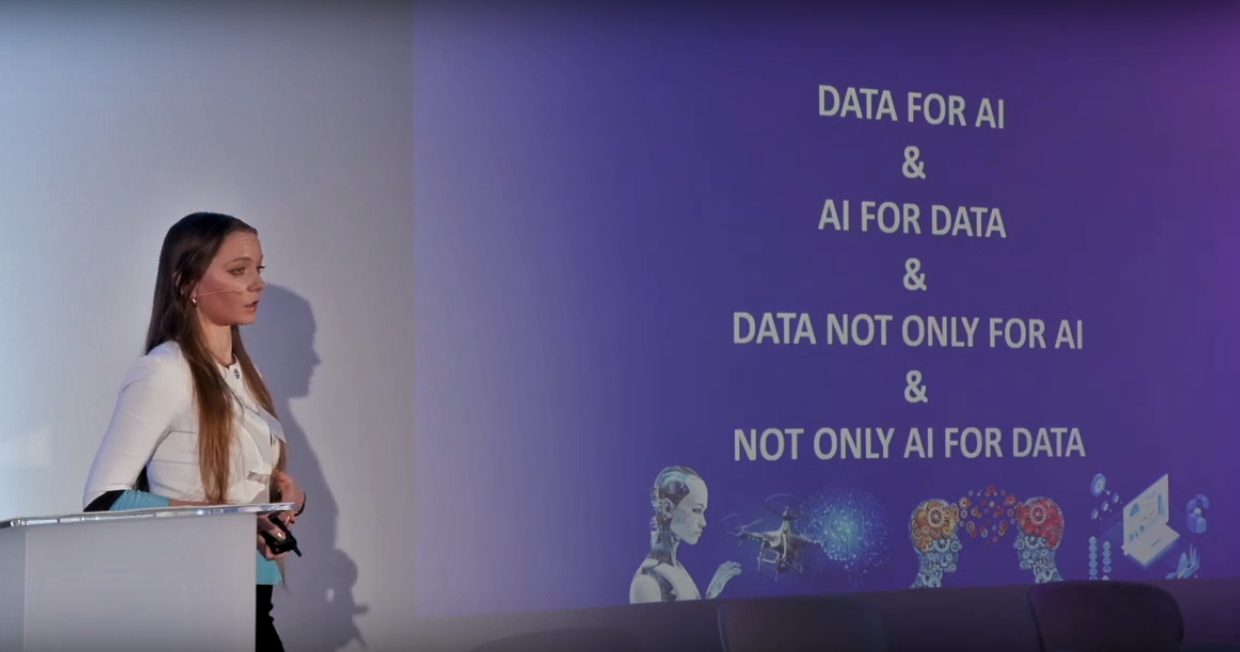
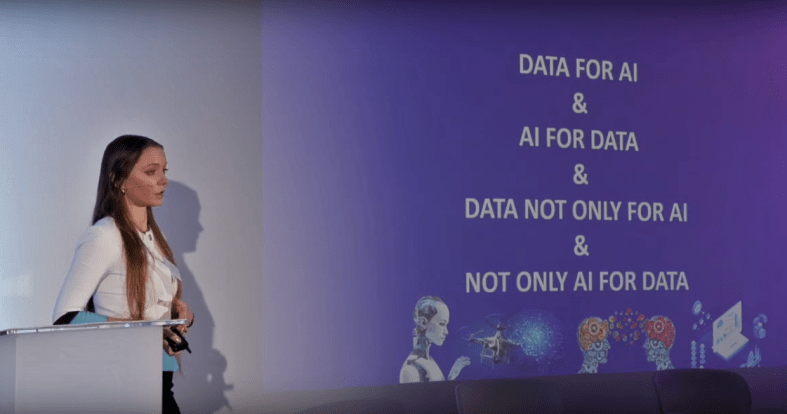
As such, while discussing the main idea of ​​the talk – the role of academia & the private sector in the ODE, which as per me is at least four-fold, namely – data consumers, data providers, contributors to ODE sustainability & myth busters on the global stage (assigning “Made in Estonia” tag to OGD in addition to the one we have for e-government), I also expanded the general mantra of “Data For AI” to “data for AI, AI for data, data not only for AI and not only AI for data”.


A big thank you to the organisers, who gathered so many speakers (Cybernetica, FinEst Centre for Smart Cities, Riigi Infosüsteemi Amet // Estonian Information System Authority (NCSC-EE), University of Tartu and many others) to discuss the highlights of today & tomorrow for Estonian Open Data and High-Value Datasets in particular as it was the main focus of the Forum – was happy to be part of these discussions!

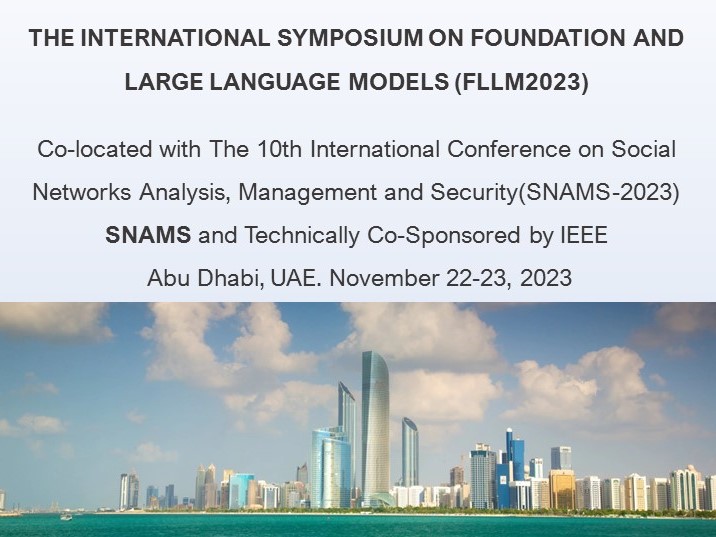
CFP for The International Symposium on Foundation and Large Language Models (FLLM2023)

On behalf of the organizers of the The International Symposium on Foundation and Large Language Models (FLLM2023) co-located with The 10th International Conference on Social Networks Analysis, Management and Security(SNAMS-2023), I am inviting everyone, who is conducting research in this area, to consider submitting the paper to it. Hurry up as the deadline for submitting the paper is October 28! 📢📢📢

Call for Papers:

With the emergence of foundation models (FMs) and and Large Language Models (LLMs) that are trained on large amounts of data at scale and adaptable to a wide range of downstream applications, Artificial intelligence is experiencing a paradigm revolution. BERT, T5, ChatGPT, GPT-4, Falcon 180B, Codex, DALL-E, Whisper, and CLIP are now the foundation for new applications ranging from computer vision to protein sequence study and from speech recognition to coding. Earlier models had a reputation of starting from scratch with each new challenge. The capacity to experiment with, examine, and comprehend the capabilities and potentials of next-generation FMs is critical to undertaking this research and guiding its path. Nevertheless, these models are currently inaccessible as the resources required to train these models are highly concentrated in industry, and even the assets (data, code) required to replicate their training are frequently not released due to their demand in the real-time industry. At the moment, mostly large tech companies such as OpenAI, Google, Facebook, and Baidu can afford to construct FMs and LLMS. Despite the expected widely publicized use of FMs and LLMS, we still lack a comprehensive knowledge of how they operate, why they underperform, and what they are even capable of because of their emerging global qualities. To deal with these problems, we believe that much critical research on FMs and LLMS would necessitate extensive multidisciplinary collaboration, given their essentially social and technical structure.The International Symposium on Foundation and Large Language Models (FLLM) addresses the architectures, applications, challenges, approaches, and future directions. We invite the submission of original papers on all topics related to FLLMs, with special interest in but not limited to:

💡Architectures and Systems

  • Transformers and Attention
  • Bidirectional Encoding
  • Autoregressive Models
  • Prompt Engineering
  • Fine-tuning

💡Challenges

  • Hallucination
  • Cost of Creation and Training
  • Energy and Sustainability Issues
  • integration
  • Safety and Trustworthiness
  • Interpretability
  • Fairness
  • Social Impact

💡Future Directions

  • Generative AI
  • Explainability
  • Federated Learning for FLLM
  • Data Augmentation

💡Natural Language Processing Applications

  • Generation
  • Summarization
  • Rewrite
  • Search
  • Question Answering
  • Language Comprehension and Complex Reasoning
  • Clustering and Classification

💡Applications

  • Natural Language Processing
  • Communication Systems
  • Security and Privacy
  • Image Processing and Computer Vision
  • Life Sciences
  • Financial Systems

Read more here and join our team in Abu Dhabi, UAE. November 22-23, 2023!