Celebrating Our Contribution to the 50th Anniversary of Government Information Quarterly

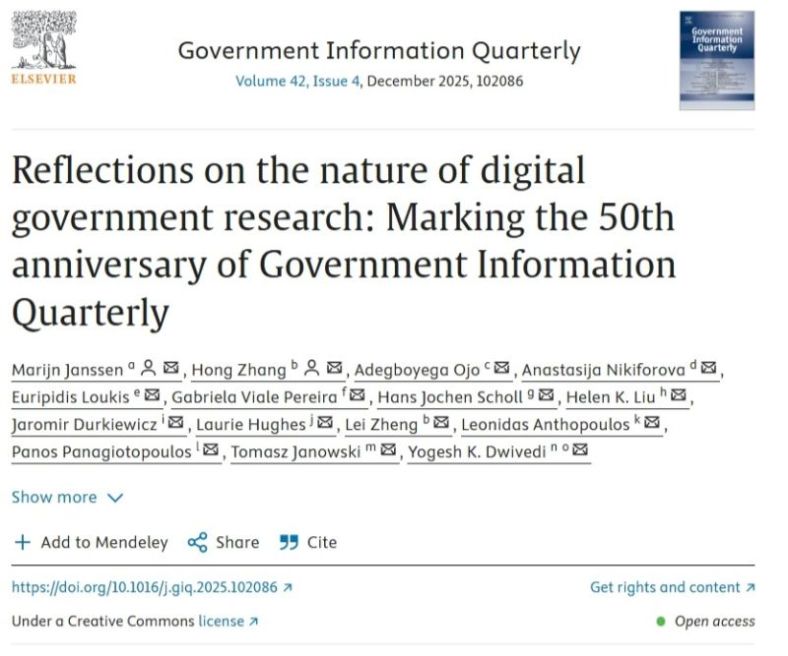
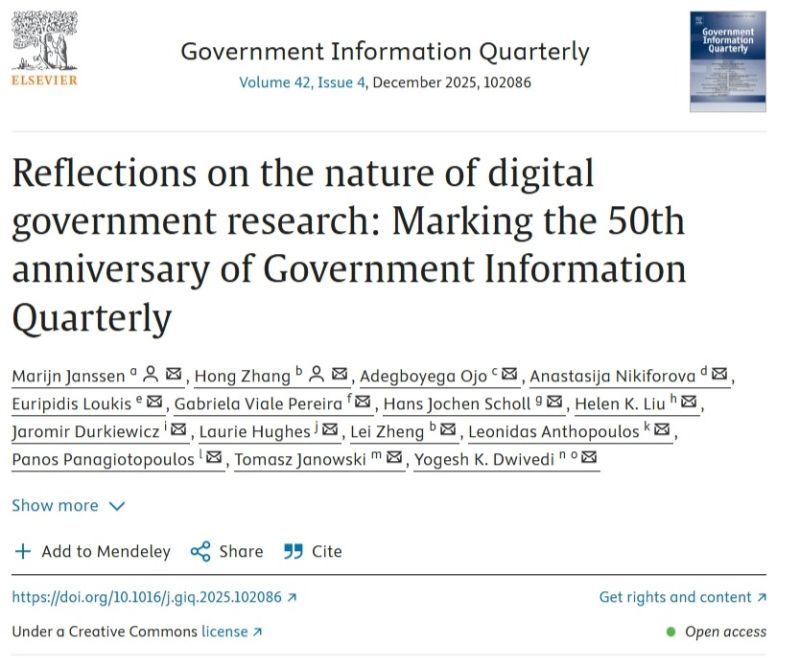
Marking a half-century of shaping the field, Government Information Quarterly (GIQ) celebrates 50 years as the leading journal in digital government research—and I am honored that our latest article, “Reflections on the Nature of Digital Government Research: Marking the 50th Anniversary of Government Information Quarterly,” forms part of this milestone issue constituting an editorial.

This collaborative piece brings together a group of scholars—Marijn Janssen, Hong Zhang, Adegboyega Ojo, Anastasija Nikiforova, Euripidis Loukis, Gabriela Viale Pereira, Hans J. Scholl, Helen Liu, Jaromir Durkiewicz, Laurie Hughes, Lei Zheng, Leonidas Anthopoulos, Panos Panagiotopoulos, Tomasz Janowski, and Yogesh K. Dwivedi—each offering a distinct perspective on how digital government research has evolved, diversified, and responded to societal and technological transformation.

A special thanks goes to Marijn Janssen, former Editor-in-Chief of GIQ, whose vision and coordination made this anniversary reflection possible.

Looking Back: Five Decades of Digital Government Research

Over 50 years, GIQ has chronicled—and often anticipated—the evolution of digital governance: from early computational systems to open government, data-driven innovation, smart cities, and the rise of AI.
Throughout these cycles, the journal has remained the field’s intellectual anchor, publishing research that tackles foundational public sector challenges while engaging with emerging technologies such as blockchain, quantum computing, IoT, AR/VR, and the Metaverse.

Several characteristics continue to define GIQ’s identity:

• Methodological and epistemological pluralism
GIQ’s hallmark is its openness to diverse paradigms, methods, and theoretical lenses. Rather than promoting a single theory of digital government, it invites multiple angles—qualitative, quantitative, mixed, conceptual, comparative—to analyze complex governance realities.

• “Blue-sky” thinking without hype
GIQ encourages forward-looking, innovative, and boundary-pushing ideas, while maintaining analytical discipline. This balance keeps the field visionary yet grounded.

• Impact rooted in both theory and practice
The journal has consistently insisted that strong methodology must lead to meaningful insights—advancing academic understanding while speaking directly to policymakers and practitioners.

• Clear communication to a broad audience
GIQ’s readership extends well beyond academia. With government, industry, and civil society looking to the journal for guidance, clarity and accessibility are essential. As Shakespeare famously said, “brevity is the soul of wit.”

What Our Anniversary Article Contributes

Our contribution synthesizes insights from leading experts to illuminate the nature, evolution, and future of digital government research.
Several overarching themes emerge:

  • epistemological pluralism and interdisciplinarity as fundamental characteristics of the field;
  • contextualized, value-driven, and practice-relevant research as the journal’s core strength;
  • digital transformation as a socio-technical phenomenon, where institutions, technology, data, governance models, and citizen expectations co-evolve;
  • the importance of studying both technology and context, avoiding the pitfalls of black-boxing either side of the equation;
  • GIQ’s role as a platform for blue-sky research, innovation, and rigorous theorization that remains relevant across countries and governance systems.

We dedicate this article to the late Professor Soon Ae Chun, former Co-Editor-in-Chief of GIQ.
Her leadership, scholarship, and unwavering commitment to quality and community have left an enduring mark on the field.

The 50-year anniversary of GIQ is more than a celebration. It is a reminder that the future of digital government research depends on openness: in methods, theories, communication, and imagination. As digital governance accelerates, the journal’s role as a bridge—between disciplines, between theory and practice, and between local realities and global insights—has never been more essential.
Call for Papers: Accountable and Inclusive Digital Ecosystems for Public Value Creation — dg.o 2026

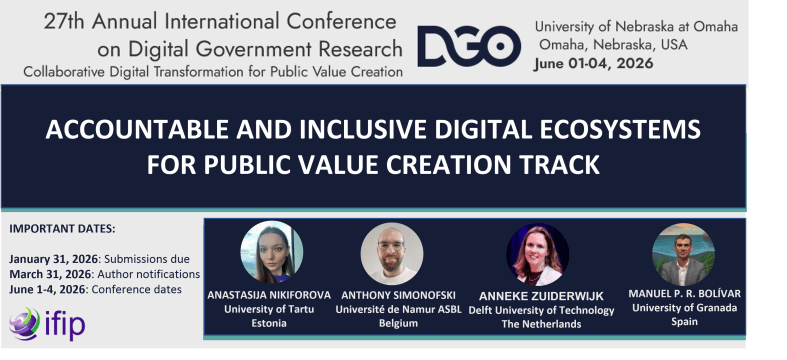
Call for Papers is now open for our track “Accountable and Inclusive Digital Ecosystems for Public Value Creation” at the 27th Annual International Conference on Digital Government Research (dg.o 2026). The conference will take place June 2–5, 2026, at the University of Nebraska at Omaha, USA.

This track continues and expands the work we initiated in 2024 and 2025 on public and open data ecosystems. Responding to new technological and societal realities, we broaden the focus this year toward AI-enabled, interoperable, sustainable, and human-centered digital ecosystems—their design, governance, and impact on public value creation.

Why this track? Why now?

Digital ecosystems are undergoing profound transformation. Emerging technologies—AI (including generative AI), interoperable data spaces, IoT, cloud–edge infrastructures, and new governance frameworks—now form the backbone of digital public action. These technologies unlock unprecedented opportunities for insight generation, collaboration, transparency, and service co-creation across sectors.

Yet they also introduce new challenges: ethics, accountability, trust, digital literacy, and inclusion. As governments and organizations navigate this shift, we need research that bridges technical innovation, institutional capacity, and societal expectations.

Our track provides a space for this conversation.

What the track explores

We invite contributions that examine the conceptual, technical, institutional, and societal dimensions of digital and data ecosystems, with an emphasis on accountability, sustainability, inclusivity, and public value.

Topics of interest include (but are not limited to):

  • Ethical and accountable AI, data governance, algorithmic transparency, privacy, security
  • Interoperability and trust frameworks, identity infrastructures, standards, reference architectures
  • AI, Generative AI, LLMs, NLP, IoT/cloud/edge integration, green computing, Metaverse applications
  • Human–AI interaction, explainability, accessibility, inclusion in digital public services
  • Stakeholder engagement, empowerment, co-creation, digital literacy, data sovereignty
  • Institutional and organizational mechanisms for ecosystem governance and sustainable management
  • Open, public, and cross-sector data ecosystems, including data spaces and platform ecosystems
  • Social, economic, and environmental sustainability and other public value dimensions
  • Case studies from cities, communities, public-sector organizations, and multi-stakeholder collaborations
  • Impact assessments of digital ecosystems on individuals, organizations, and society

Connection to the dg.o 2026 theme

The conference theme—Collaborative Digital Transformation for Public Value Creation—aligns perfectly with our track’s purpose.
Digital ecosystems represent socio-technical infrastructures where governance, technology, and societal needs intersect. Understanding how to make these ecosystems accountable, inclusive, and sustainable is essential for collaborative digital transformation and for delivering tangible societal outcomes.

Track chairs

  • Anastasija Nikiforova, University of Tartu (Estonia)
  • Anthony Simonofski, Université de Namur (Belgium)
  • Anneke Zuiderwijk – van Eijk, Delft University of Technology (Netherlands)
  • Manuel Pedro Rodríguez Bolívar, Universidad de Granada (Spain)

Together, we bring perspectives from digital government, data governance, public administration, information systems, and socio-technical ecosystem design.

Submission details

Full CFP and submission guidelines are available here:
🔗 https://dgsociety.org/dgo-2026/

We look forward to receiving your submissions and to advancing the conversation on how accountable, inclusive, and sustainable digital ecosystems can drive the next generation of public value creation.

If you have questions about fit or ideas you’d like to discuss, feel free to reach out.

EGOV2025 – IFIP EGOV-CeDEM-EPART 2025 & our Emerging Issues and Innovations Track

Are you focusing on new topics emerging in the field of ICT and public sector, incl. public-private ecosystems? Then it is time to start preparing your submission for EGOV2025 – IFIP EGOV-CeDEM-EPART Emerging Issues and Innovations Track, which this time we chair in the updated form, welcoming A. Paula Rodriguez Müller on the board with us – Francesco Mureddu (The Lisbon Council, Belgium)and myself – Anastasija Nikiforova (Tartu University, Estonia)).

EGOV2025 – IFIP EGOV-CeDEM-EPART is one of the most recognized conference in e-Government, ICT and public administration and related topics, which this year will be hosted in Belgium, in the heart of Europe, by University for Continuing Education Krems, Austria. This year, IFIP EGOV 2025 is dedicated to the broader areas of e-Government and e-Democracy, which include facets like Digital Government, e-Participation, Open Government,  Smart Government, AI government, GovTech, Algoritmic Governance, and related topics to digitalization and government.

Innovation and application of emerging technologies are now more and more in the thinking of governments at all levels. While it would be easy to consider the public sector as being less flexible or slow in adoption, presentations at recent EGOV conferences proved that one should not come to such a conclusion too easily. Upcoming technologies, innovative organizational solutions, or new avenues of public sector involvement in the public sector are becoming more commonplace along with the potential challenges and issues these bring. Policymakers and public sector officials are now expected to embrace change, consider digital transformation, or improve governance practices. At the same time, public sector researchers are also influenced by new views, methods, tools, and techniques. The goal of this track is to provide a platform for the discussion of new ideas, issues, problems, and solutions entering the public sphere. Ideas that are emerging but might not fit other conference tracks are also welcome. Focus may include, but are not limited to:

  • Looking ahead into social innovation;
  • Future studies, the future of government, policy-making and democracy;
  • The future of digital governance;
  • Public values in transforming the government;
  • The role of government in smart cities (incl. smart sustainable cities) and sustainable living;
  • The role of the public sector in Human-Centered Society (Society 5.0);
  • New trends in public sector research such as Metaverse, Cityverse, Large Language Models (LLMs), generative AI and its implementations such as chatGPT, Claude, ChatSonic, Poe – benefits, risks, adoption and resistance to its adoption by the public sector and citizens;
  • Government in the Virtual Worlds and Web 4.0;
  • Decentralized Autonomous Organizations (DAOs), smart contracts and blockchain;
  • New technologies for automated decision-making and their policy implications;
  • Public sector use and regulation of AI, genAI, Industry 4.0, Industry 5.0, and the Internet of Things (IoT);
  • Digital Humanism (responsible and ethical integration of technology into society, ensuring that human values and dignity are prioritized in the development and use of digital tools and innovations);
  • The role of the public sector in competitiveness and tech sovereignty;
  • Global challenges that go beyond nation states (such as migration, climate change etc.) and which require international collaboration of individual governments;
  • Preparing for the policy challenges of future technologies;
  • Regulating misinformation;
  • Digital transformation in public sector contexts;
  • Self-Service Structures for Inclusion;
  • Public-private sector collaboration and integration;
  • GovTech initiatives and innovations;
  • Latest trends in co-creation and service delivery;
  • Online public community building;
  • Upcoming issues of eVoting / internet voting including application of digital signatures in the public sector;
  • Discussion of new research methods that have not been applied in this context;
  • Application of role theory in the analysis of public sector functions and processes;
  • Forward looking insights from case studies – let it be successful or failed experiments.
  • Utilization of digital billboards;
  • Public sector use and regulation of Fintech innovations;
  • Theoretical and practical approaches to experimentation and sandboxing in the public sector.Future studies, the future of government, policy-making and democracy

Stay tuned, more info to come!

The 25th Annual International Conference on Digital Government Research (DGO2024): a brief summary on presenter, track chair, panel organizer, and moderator roles

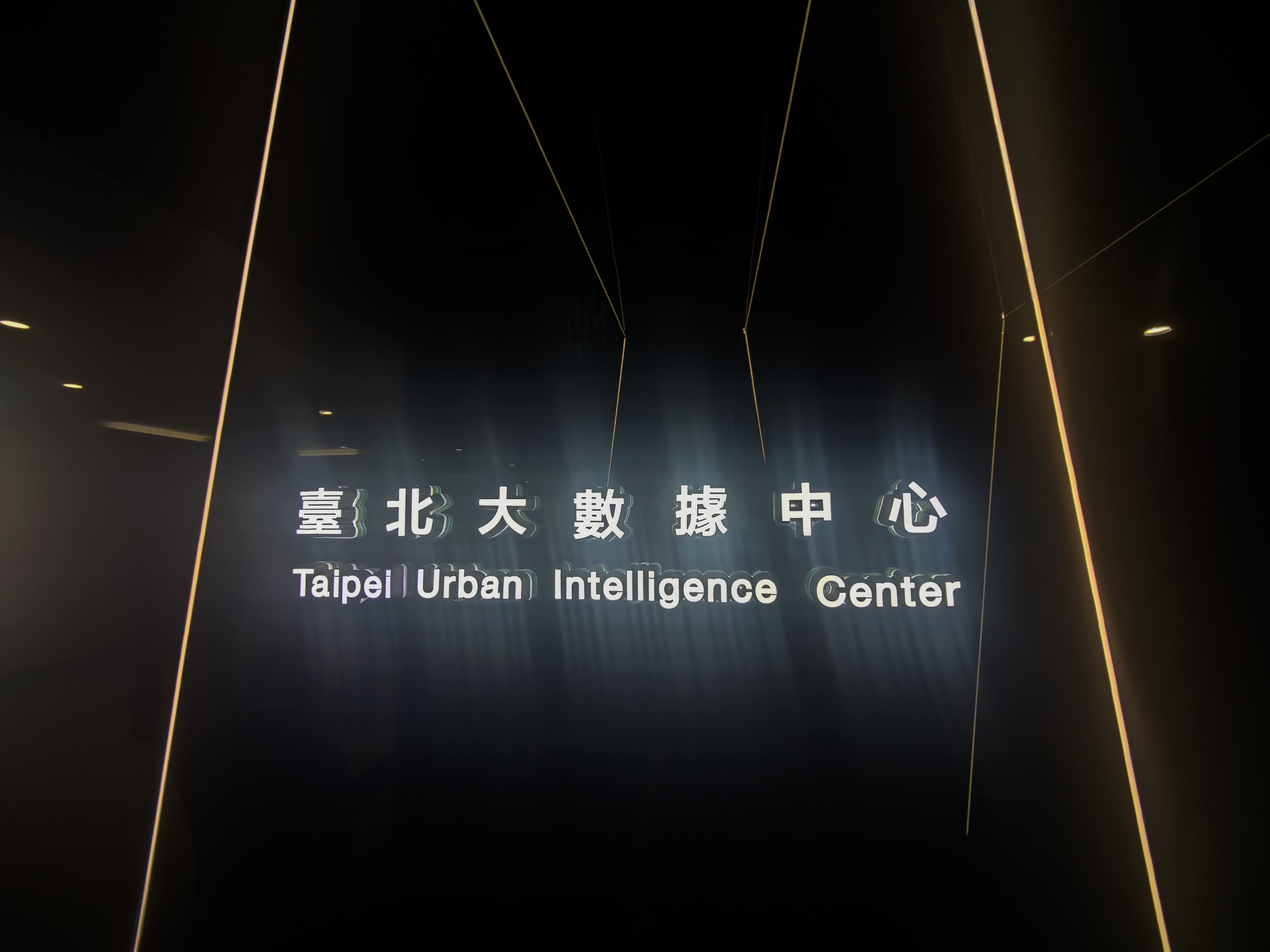
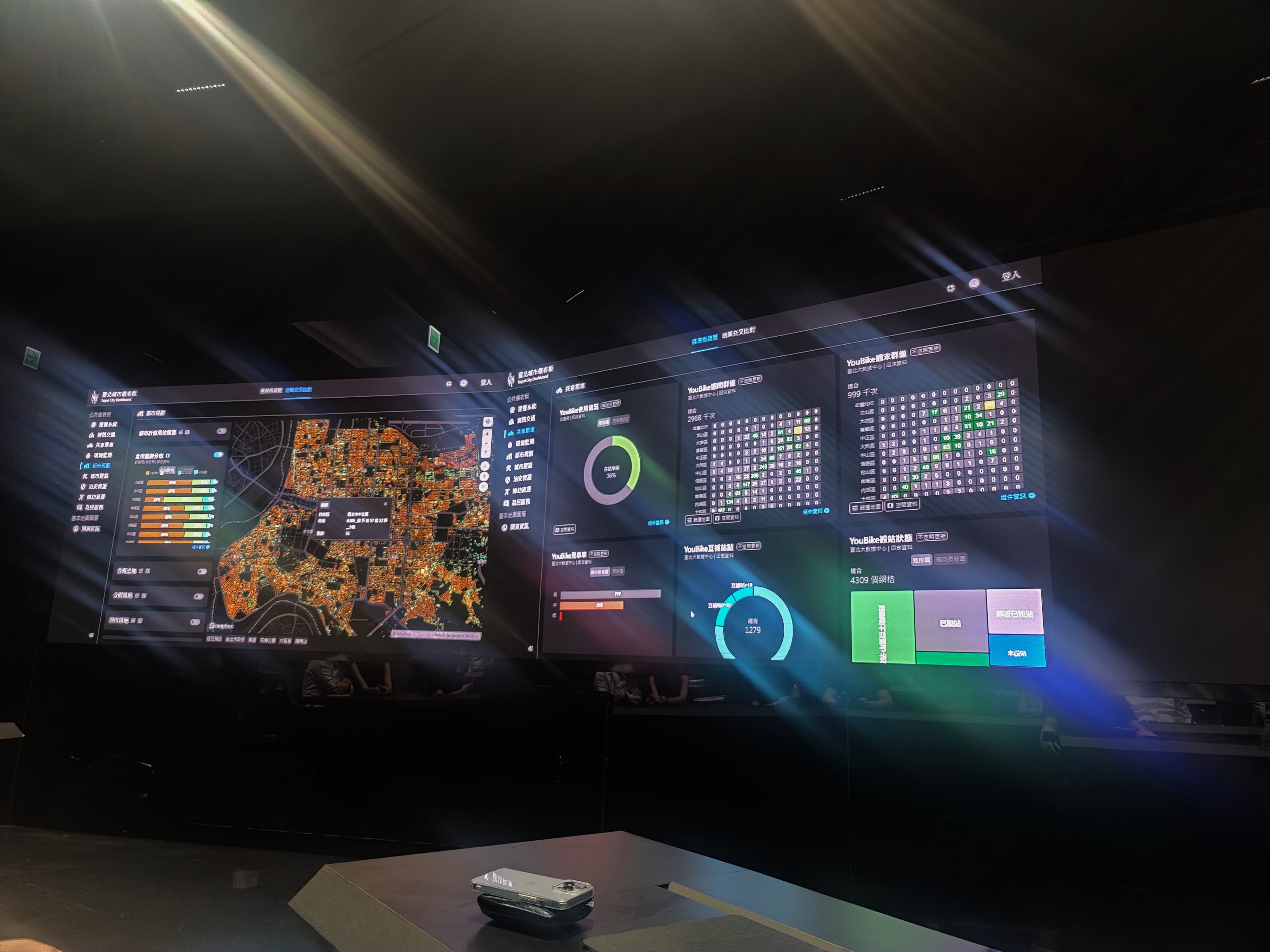
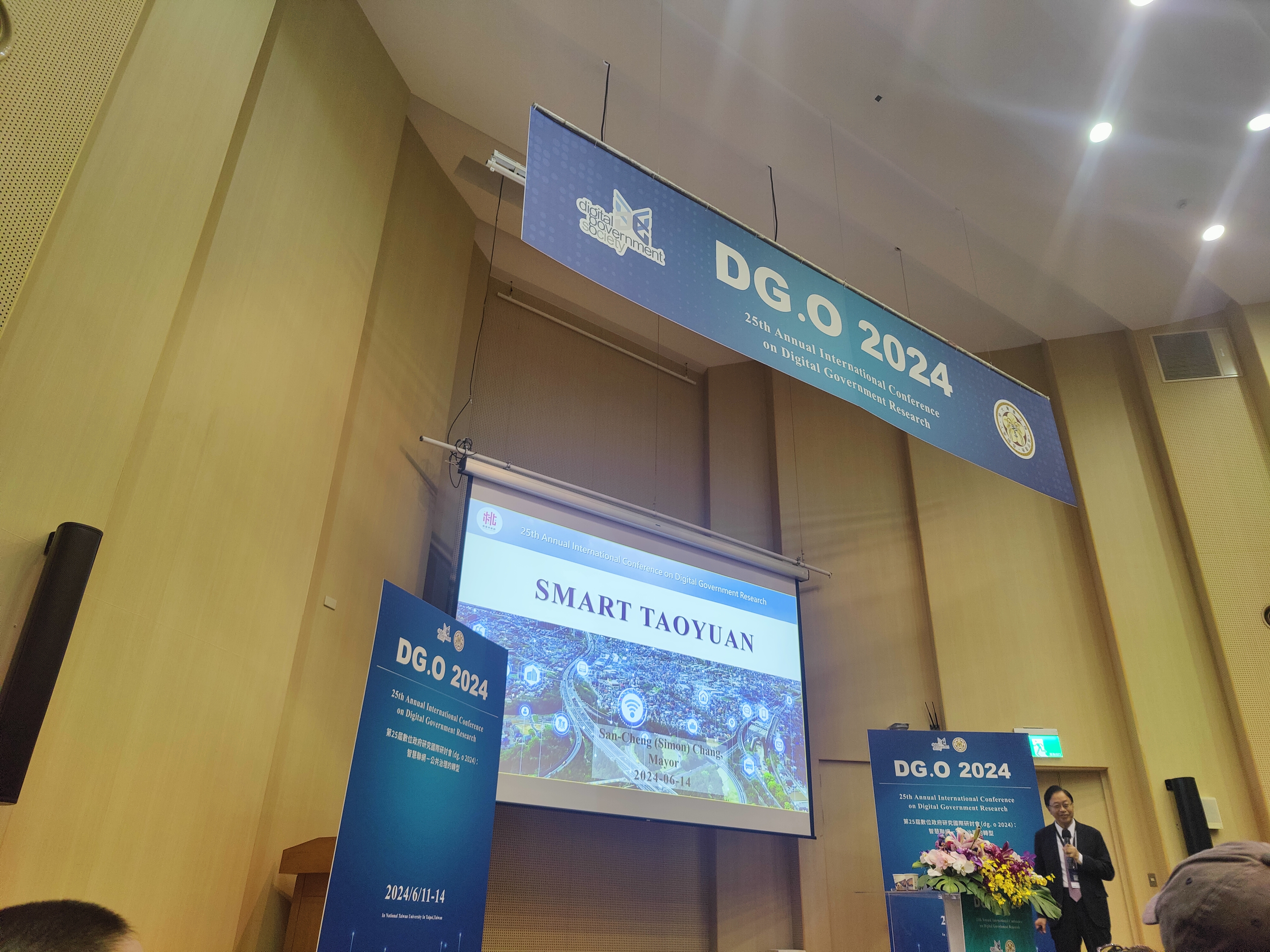
Last week, I had the pleasure of participating in the 25th Annual International Conference on Digital Government Research (DGO2024), organized by the Digital Government Society and hosted by National Taiwan University in the beautiful city of Taipei (Taiwan) under “Internet of Beings: Transforming Public Governance” theme. The conference offered an exceptional venue, warm hospitality from the local committee led by Helen Liu and her team, a rich social program, and an outstanding scientific program. The event featured well-selected keynotes and panels from prominent organizations such as Foxconn, the International Cooperation Center of TCA, Massachusetts Institute of Technology, Taipei Urban Intelligence Center, and the Ministry of Digital Affairs. Key topics included AI, Smart City initiatives, and Data Governance, which facilitated extensive networking and brainstorming sessions.

I was honored to contribute to this vibrant dialogue in multiple roles: presenter, track chair, panel organizer, and moderator. Together with my students and colleagues, we presented four papers, each reflecting our collaborative research efforts:

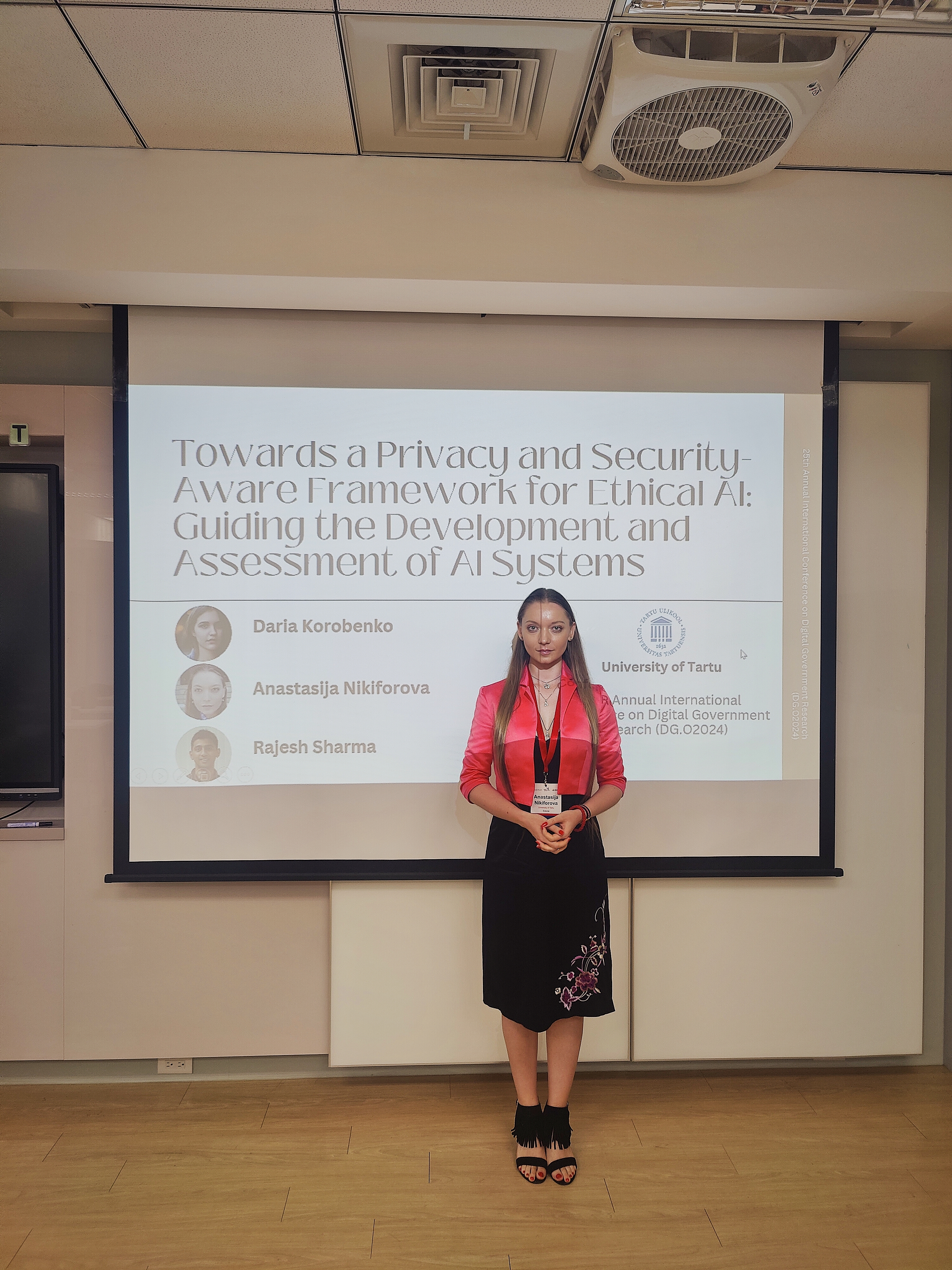
  1. Towards a Privacy and Security-Aware Framework for Ethical AI (Daria Korobenko, Anastasija NIkiforova, Rajesh Sharma). The proposed (conceptual at the moment) privacy and security-Aware Framework for ethical AI is centered around the Data, Technology, People, and Process dimensions, where each dimension is guided by a set of specific questions to encompass the overarching themes of privacy and security within AI systems, while the framework itself follows a risk-based approach (similar to the EU AI Act). As such, it is designed to assist diverse stakeholders, including organizations, academic institutions, and governmental bodies, in both the development and critical assessment of AI systems.
  2. Exploring Estonia’s Open Government Data Development as a Journey towards Excellence: Unveiling the Progress of Local Governments in Open Data Provision (Katrin Rajamae-Soosaar and Anastasija Nikiforova) that explores the evolution of Estonia’s 🇪🇪 OGD development at both national & local levels through analysis of indices, Estonian OGD portal, and a literature review. Findings reveal national progress due to portal improvements and legislative changes, while local governments lag in OGD provision, highlighting the need for future research on municipal OGD barriers and enablers.
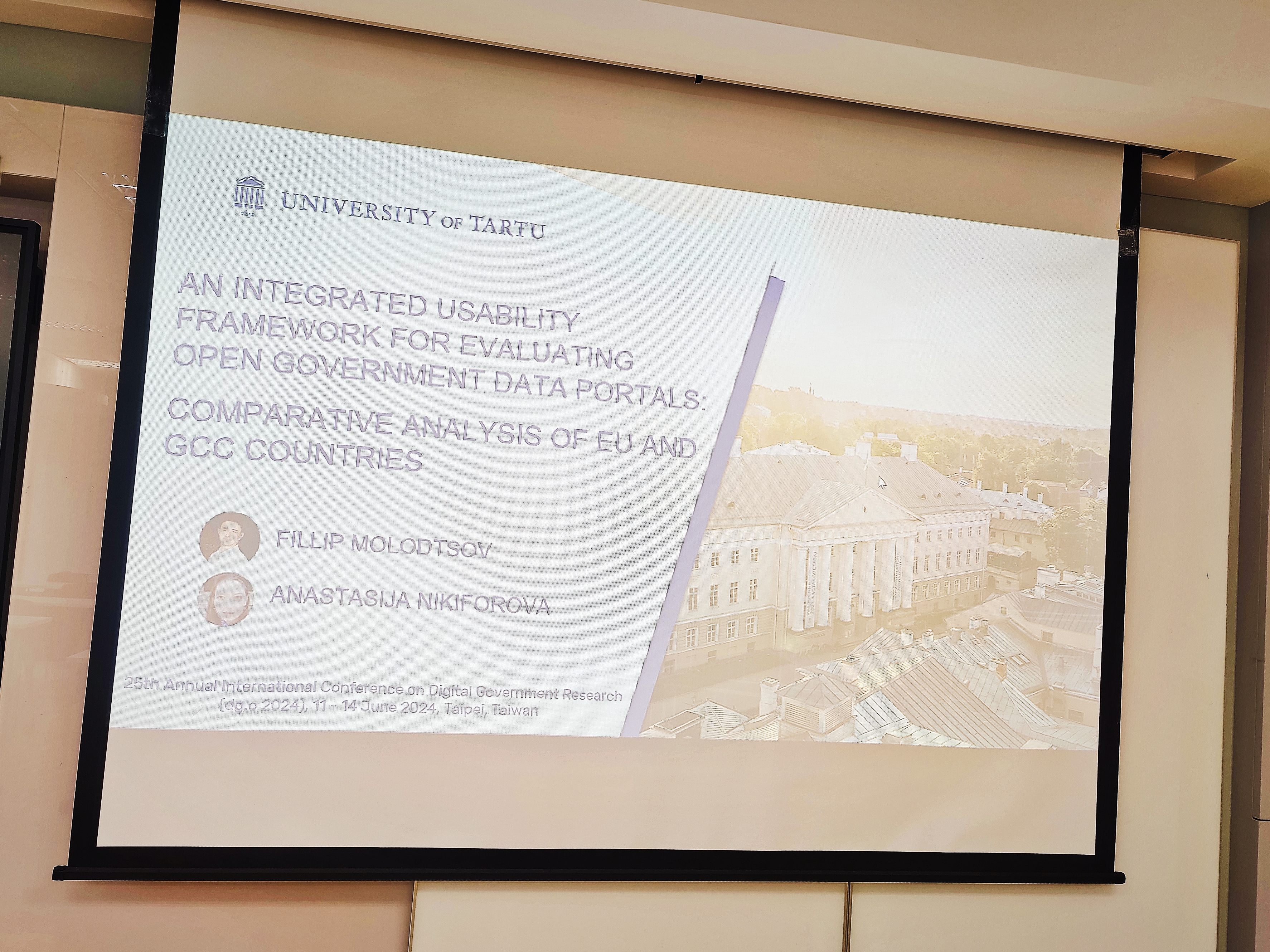
  3. An Integrated Usability Framework for Evaluating Open Government Data Portals: Comparative Analysis of EU and GCC Countries (Fillip Molodtsov and Anastasija Nikiforova) develops a framework to evaluate OGD portal usability, considering user diversity, collaboration, and data exploration capabilities, and applies it to 33 national portals in the EU and GCC 🇪🇺🇸🇦🇶🇦🇧🇭🇦🇪, highlighting good practices and common shortcomings, emphasizing competitiveness of GCC portals
  4. Unlocking the Potential of Open Government Data: Exploring the Strategic, Technical, and Application Perspectives of High-Value Datasets Opening in Taiwan (Hsien-Lee Tseng and Anastasija Nikiforova). In short, data has an unprecedented value. However, availability of data in an open data format creates a little added value, where the value of these data [to the real needs of the end user], is key. This is where the concept of high-value dataset (HVD) comes into play, which has become popular in recent years (predominantly beforehand OD Directive by European Commission). Defining and opening HVD, in turn, is a complex process consisting of a set of interrelated steps, the implementation of which may vary from one country or region to another. Therefore, there has recently been a call to conduct research in a country or region setting considered to be of greatest national value. So far, only a few studies have been conducted, most of which consider only one step of the process, such as identifying HVD or measuring their impact. With this study, we explore the entire lifecycle of HVD opening in case of one of the world’s leading producers of ICT products – Taiwan. To do this, we conduct a qualitative study with exploratory interviews with representatives from government agencies in Taiwan responsible for HVD opening, namely Ministry of Digital Affairs, Ministry of the Interior, Ministry of Transportation and Communications, and the Ministry of Environment. As part of these interviews, we examine strategic aspects associated with HVD determination, technical aspects related to the dataset preparation stage (incl. data quality, granularity, update frequency, integration methods, or data evaluation), and application aspects related to the further assessment of the impact generated by HVD, identifying some good practices and weaknesses to be further examined and fixed.

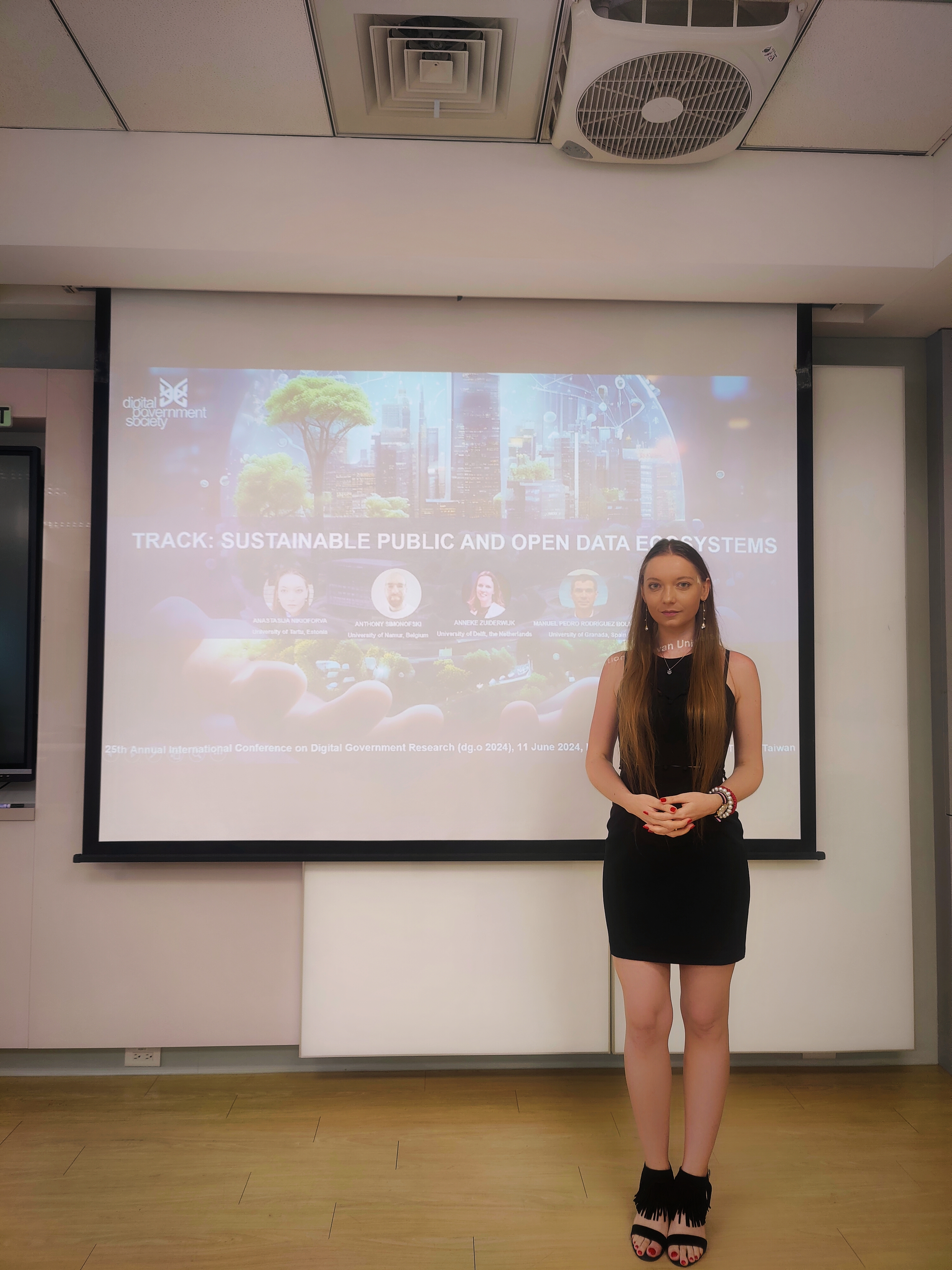
I also chaired the track “Sustainable Public and Open Data Ecosystems,” which we launched this year with colleagues, on which I posted before. Although this is the very new track, we received a good number of contributions as it appeared to be very timely and we hope to see it to have a continuation, serving as a stage for the dialogue by Digital Government Society around the public and open data ecosystem in and for our digital future. At least this session has demonstrated the interest in such an environment – many thanks to all, who actively participated in this discussion. BTW, should you be interested in difference between public vs open data ecosystem, I encourage you to read our conceptualization and typology in our “Understanding the development of public data ecosystems: from a conceptual model to a six-generation model of the evolution of public data ecosystems” paper. We also are optimistic that the best contributions from this track will soon be available in a special section of the Information Polity Journal that we have recently launched.

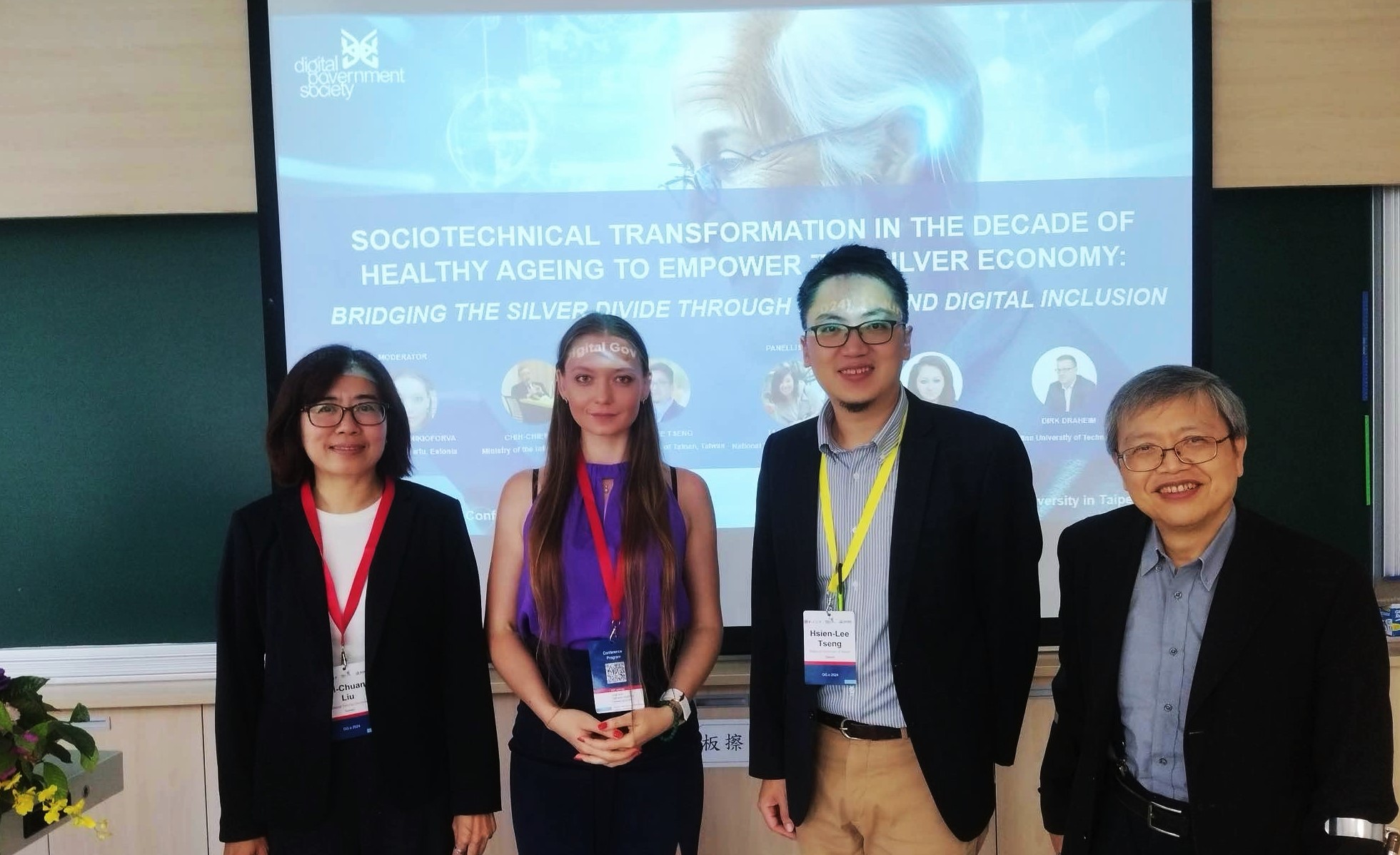
In addition, together with Hsien-Lee Tseng, we organized the panel “Sociotechnical Transformation in the Decade of Healthy Ageing to Empower the Silver Economy: Bridging the Silver Divide through Social and Digital Inclusion,” which addressed crucial issues related to the integration of aging populations into the digital economy and society. Our discussions focused on case studies from Taiwan and Estonia, two regions with significant aging populations and leaders in ICT and digital government. We explored several innovative initiatives:

  1. The Aged Dwelling Plan by the Ministry of Interior of Taiwan, which proactively delivers resources to those most in need through the Senior Living Needs Index Framework. It integrates cross-agency data such as household registration, building information, long-term care, low-income households, and open geospatial data.
  2. The Digital Silver Hub constituting the ecosystem fosters innovative solutions for the silver population, involving the public sector, private sector, academia, and end-users. It utilizes a collective intelligence model to address the challenges faced by older adults.
  3. Health Promotion, Technology Inclusion by National Taitung University aimed at achieving technological inclusion, this project focuses on non-discriminatory health promotion technology policies and activities for people with chronic diseases.

As such, our discussions highlighted the opportunities and challenges in supporting the Decade of Healthy Ageing, an initiative by the United Nations. Key themes included Data Management, Security, and Privacy, Digital Literacy and Regional Adoption, Human-Computer Interaction (HCI) and User-Centric Design, Interoperability. Our panel concluded that there is no one-size-fits-all solution to the challenges faced by the aging population. Instead, it is crucial to recognize and leverage the capacities and strengths of each region to develop tailored solutions, whether they be social, technical, or sociotechnical. By doing so, we can create effective and sustainable strategies to support healthy aging and bridge the silver divide.

The conference also featured a working meeting on the new Digital Government Society Chapter, “Artificial Intelligence & Government.” I contributed to the discussions and look forward to continued involvement and impact in this ambitious initiative led by Fadi Salem.

In summary, DGO2024 was an incredibly insightful and productive week.

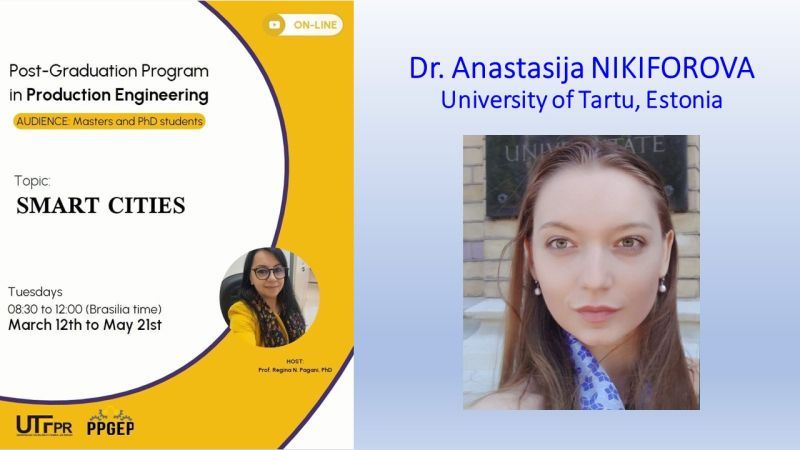
Guest Lecture for the Federal University of Technology – Paraná (UTFPR) on “Unlocking the symbiotic relationship of Artificial Intelligence, Data Intelligence, Collaborative Intelligence, and Embodied Intelligence for innovative urban planning and governance of Smart Cities”

This May, I had a pleasure to deliver one more guest lecture for master and doctoral students of the Federal University of Technology – Paraná (Universidade Tecnológica Federal do Paraná (UTFPR)) as part of Smart Cities course delivered by prof. Regina Negri Pagani. This time the topic of my lecture was “Unlocking the symbiotic relationship of Artificial Intelligence, Data Intelligence, Collaborative Intelligence, and Embodied Intelligence for innovative urban planning and governance of Smart Cities”.

In the pursuit of enhancing the efficiency and effectiveness of Artificial Intelligence, it is imperative to explore synergies with other form of intelligence, such Data Intelligence and Collaborative intelligence. These forms of intelligence (along with Embodied Intelligence) constitute a new transformative paradigm of intelligence proposed by Verhulst et al. (2021) that offers potential for increased added value when synergized. However, their synergy requires understanding and harnessing the symbiotic relationship between these intelligences. The reimagination of decision making and problem-solving processes, is essential to unlock this symbiotic potential fostering more meaningful, but at the very same time more sustainable AI utilization. In other words, AI itself brings a certain value that can be (and must be) increased through integration with other forms of Intelligence. This, in turn, has a list of preconditions / prerequisites that must be satisfied by the above – Artificial, Data, Collaborative, and Embodied Intelligence – components. These prerequisites are diverse in nature and span both the artifacts in question, such as AI, data (type, format, quality, value, availability, accessibility, incl. openness), stakeholders’ skills and literacies, but also management and organizational aspects. In other words, each form of Intelligence influences the others, making it crucial to explore their interconnections. This talk endeavoured to uncover this intricate web of relationships between the three forms of intelligence, taking a step towards a more meaningful and intelligent approach to decision making and problem solving.

As part of this talk we referred to the theory of multiple intelligences by Howard Gardner presented in his famous book “Frames of Mind: A Theory of Multiple Intelligences”. Then, we referred to the above mentioned intelligence paradigm proposed by Stefaan G. Verhulst, Peter Martey Addo, Dominik Baumann, Juliet Mcmurren, Andrew Young, Andrew J. Zahuranec in “Emerging Uses of Technology for Development: A New Intelligence Paradigm“. Then, we finally turned to the actual discussion on the symbiotic relationship of Artificial Intelligence, Data Intelligence, Embodied Intelligence, Collaborative Intelligence, and Generative AI uncovering this intricate web of relationships between these forms of intelligence, putting the above into several contexts with a focus on public & public and open data ecosystems. The later topics, in turn, covered some of my previous research (such as “Sustainable open data ecosystems in smart cities: A platform theory-based analysis of 19 European cities, ” “Identifying patterns and recommendations of and for sustainable open data initiatives: A benchmarking-driven analysis of open government data initiatives among European countries“, “Transparency of open data ecosystems in smart cities: Definition and assessment of the maturity of transparency in 22 smart cities etc.). As such, we tried to indicate future avenues in the light of changing paradigms (or need for such) for intelligences, data ecosystems, mechanisms for citizen engagement & processes (incl., but not limited to data governance & data quality management) accompanying these ecosystems


This followed up by the fruitful discussion with the participants of the course that I enjoyed very much. I can only hope that this lecture was just a little bit as interesting as my dear Regina characterized it! There is nothing better than hear an immediate invitation for the next editions of this course – will be glad to continue this tradition!