EGOV2024 – IFIP EGOV-CeDEM-EPART 2024 & our Emerging Issues and Innovations Track

Are you focusing on new topics emerging in the field of ICT and public sector, incl. public-private ecosystems? Then it is time to start preparing your submission for EGOV2023 – IFIP EGOV-CeDEM-EPART Emerging Issues and Innovations Track (chairs: Anastasija Nikiforova, Marijn Janssen, Francesco Mureddu).

EGOV2023 – IFIP EGOV-CeDEM-EPART is one of the most recognized conference in e-Government, ICT and public administration and related topics, which this year will be hosted in Belgium, in the heart of Europe, by Ghent University and KU Leuven – both top 100 universities.

 Innovation and application of emerging technologies is now more and more in the thinking of Governments at all levels. While it would be easy to consider the public sector as being less flexible or slow in adoption, presentations at recent EGOV-CeDEM-ePart conferences proved that one should not come to such a conclusion too easily. Upcoming technologies, innovative organizational solutions, or new avenues of involvement in public sector activities seem to be more commonplace – along with the potential issues and challenges that come with such endeavours. Policy-makers and public sector officials are now expected to embrace change, consider digital transformation, or improve governance practices. At the same time, public sector researchers are also influenced by new views, methods, tools and techniques.

🎯The goal of this track is to provide a platform for the discussion of new ideas, issues, problems, and solutions, that keep entering the public sphere. Ideas that are emerging but might not fit other conference tracks are also welcome. Focus may include but is not limited to:

  • 💡 Looking ahead into social innovation
  • 💡Future studies, the future of government, policy-making and democracy
  • 💡New trends in public sector research such as Metaverse, Large Language Models (LLMs), generative AI and its implementations such as chatGPT, Claude, ChatSonic, Poe – benefits, risks, adoption and resistance to its adoption by the public sector and citizens;
  • 💡Global challenges that go beyond nation states (such as migration, climate change etc.) and which require international collaboration of individual governments;
  • 💡Digital transformation in public sector context;
  • 💡The future of digital governance;
  • 💡Public values in transforming the government;
  • 💡The role of government in smart cities (incl. smart sustainable cities) and sustainable living;
  • 💡The role of the public sector in Human-Centered Society known as Society 5.0;
  • 💡Government in the metaverse;
  • 💡Self-Service Structures for Inclusion;
  • 💡Public-private sector collaboration and integration;
  • 💡Decentralized Autonomous Organizations (DAOs), smart contracts and blockchain;
  • 💡Preparing for the policy challenges of future technologies;
  • 💡Regulating misinformation;
  • 💡New technologies for automated decision-making;
  • 💡The future public sector use and regulation of latest AI or genAI solutions;
  • 💡Public use as well as regulations of industry 4.0 and Industry 5.0 and the Internet of Things (IoT);
  • 💡The relationships of governments and Fintech;
  • 💡Upcoming issues of eVoting / internet voting including application of digital signatures in the public sector;
  • 💡Online public community building;
  • 💡Utilization of digital billboards;
  • 💡Latest trends in co-creation and service delivery;
  • 💡Discussion of new research methods that have not been applied in this context;
  • 💡Application of role theory in the analysis of public sector functions and processes;
  • 💡Forward looking insights from case studies – let it be successful or failed experiments.

Track Chairs

  • Anastasija Nikiforova, Tartu University, Estonia
  • Marijn Janssen, Delft University of Technology, the Netherlands
  • Francesco Mureddu, The Lisbon Council, Belgium

This time International Federation for Information Processing (IFIP) EGOV-CeDEM-EPART will be hosted by KU Leuven and Ghent University, September 2024, while the deadline for submitting your paper is set to March, 2024.

Stay tuned, more info to come!

Rii Forum 2023 “Innovation 5.0: Navigating shocks and crises in uncertain times Technology-Business-Society” & a plenary debate “Advances in ICT & the Society”

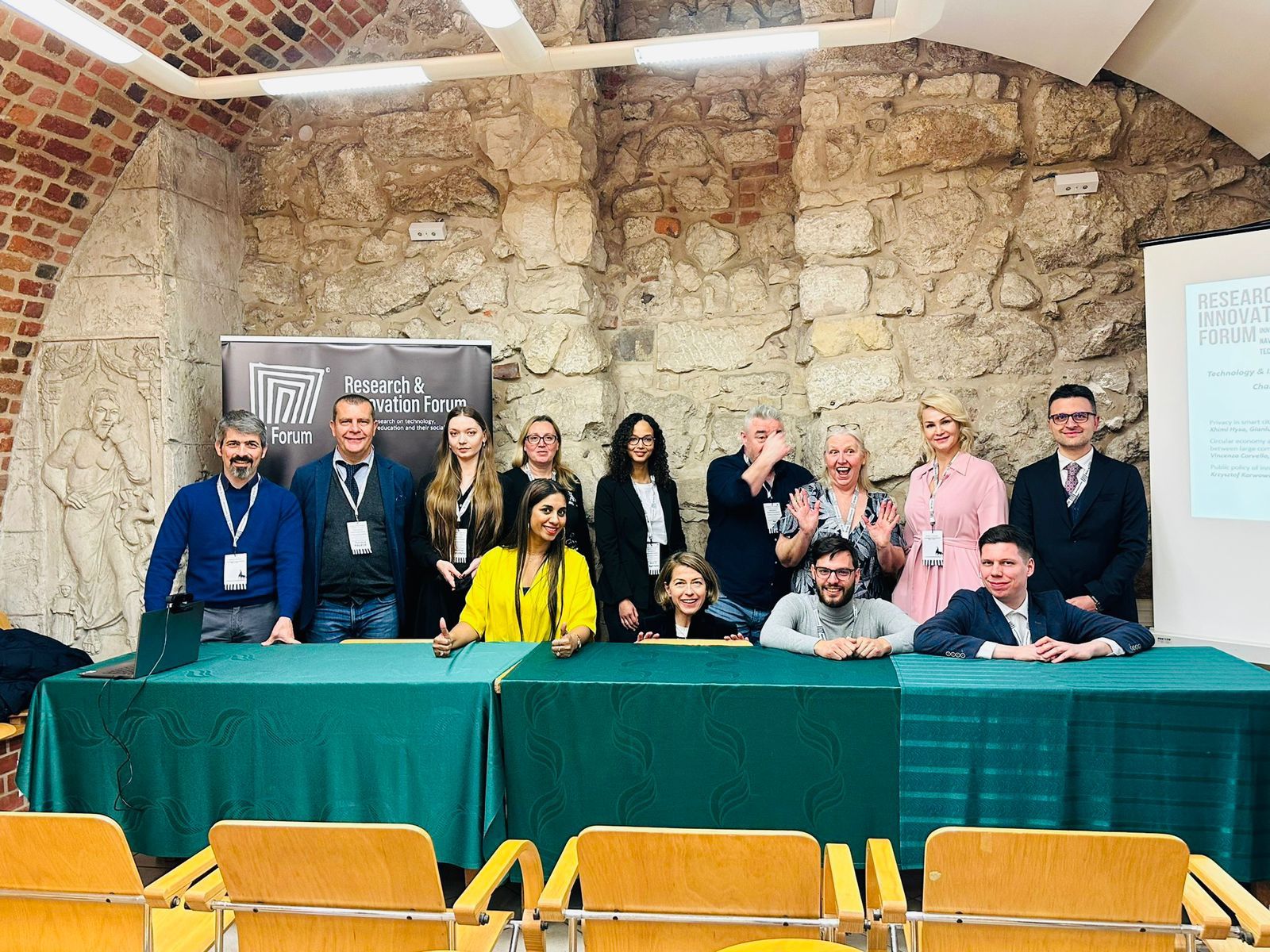
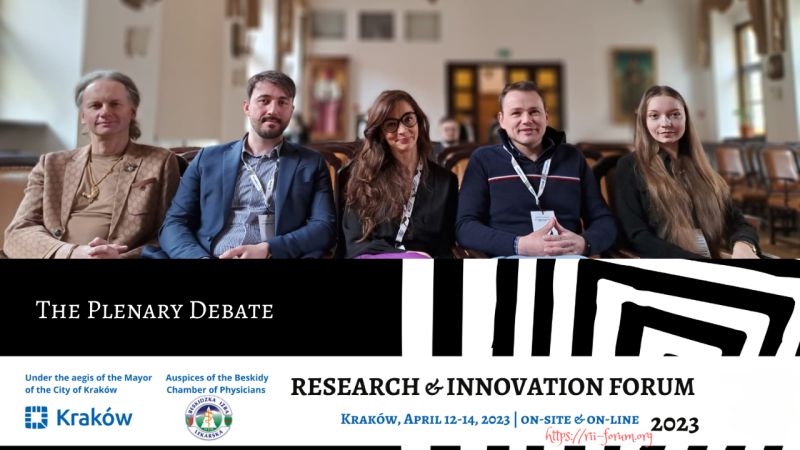
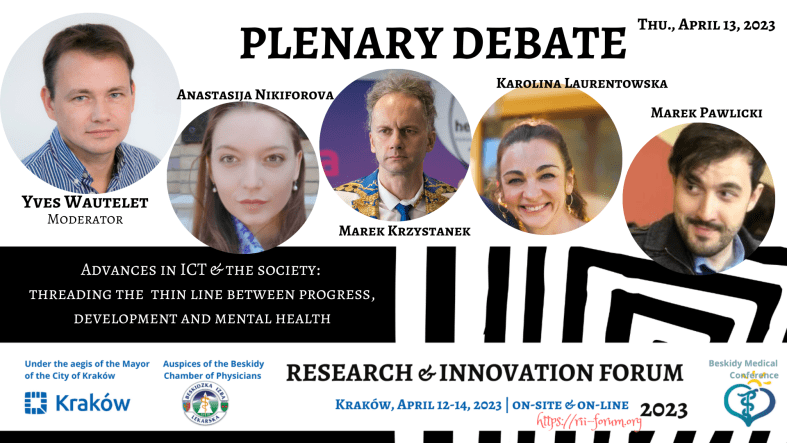
Last week, I had an unforgettable experience at the Research and Innovation Forum (RiiForum) on which I posted previously in Krakow, Poland, serving as plenary speaker and session chair. It was another great experience to have an absolutely amazing plenary session titled “Advances in ICT & the Society: threading the thin line between progress, development and mental health”, where we – Prof. Dr. Yves Wautelet, Prof. Dr. Marek Krzystanek, Karolina Laurentowska & Prof. Marek Pawlicki – discussed disruptive technologies in our professional lives in the past years, how they affected us and our colleagues, how they affect(ed) society and its specific groups, including their mental health, and general perception of technology, i.e. an enemy of humanity, or rather a friend and support, and how to make sure the second take place. And from this we have developed a discussion around AI, chatGPT, Metaverse, blockchain, even slightly touching on quantum computing. Of course, all this was placed in the context of democracy and freedoms / liberties. All in all, we approached the topic of governance and policy-making, which is too often reactive rather than proactive, which, in turn, leads to many negative consequences, as well as elaborated on the engineering practices. 

To sum up – emerging and disruptive technologies, Blockchain, AI, Metaverse, digital competencies, education, liberty, democracy, openness, engagement, metaverse, inclusivity, Industry 5.0, Society 5.0 – and it is not a list of buzzwords, but a list of topics we have managed to cover both plenary speakers and the audience and continued to talk about them during the whole conference. Rich enough, isn’t it?

And then the day did not end, continuing with several super insightful sessions, where, of course, one I enjoyed most is the one that I chaired. Three qualitative talks with further rich discussion after each thanks to an excellent audience, despite the fact this was the last session of the day (before the dinner), namely:

  • Privacy in smart cities using VOSviewer: a bibliometric analysis by Xhimi Hysa, Gianluca Maria Guazzo, Vilma Cekani, Pierangelo Rosati
  • Public policy of innovation in China by Krzysztof Karwowski, Anna Visvizi
  • How Human-Centric solutions and Artificial Intelligence meet smart cities in Industry 5.0 by Tamai Ramirez, Sandra Amador, Antonio Macia-Lillo, Higinio Mora
     

And the last, but not the least, Krakow surprised me lot (in a positive sense, of course) – it was my first time in Poland, and I am absolutely glad that it was on such a beautiful city as Krakow – the place with the rich history and culture! Thank you dear RiiForum2023 organizers – Anna Visvizi, Vincenzo Corvello, ORLANDO TROISI, Mara Grimaldi, Giovanni Baldi and everyone who was involved – it is always a pleasure to be a part of this community!

 

Rii Forum 2023 “Innovation 5.0: Navigating shocks and crises in uncertain times Technology-Business-Society” & a plenary debate “Advances in ICT & the Society”

This April the next edition of the Research and Innovation Forum (Rii Forum) on which I posted previously will take place. For those, who are not familiar with Rii Forum yet, it is an annual conference that brings together researchers, academics, and practitioners in conceptually sound inter- and multi-disciplinary, empirically driven debate on key issues influencing the dynamics of social interaction today. Such a wide scope makes it a great event for those who do not want to be limited to a particular area or research question and want to be aware of everything that happens in today’s dynamic and multidisciplinary world. This, in turn, allows you not only to see another perspectives and topics, but also reconsider your topic, revealing something new, i.e. taking a look on it from a different angle, which is exceptionally valuable!

Technology, innovation, and education, as well as issues and topics located at their intersection, define the key dimensions of all discussions held during the Rii Forum. In continuously fragile international and domestic contexts, characterized by shocks, crises, and uncertainty, the Rii Forum 2023 seeks to address the multifaceted question of how to navigate these shocks, crises and uncertainty and deliver value to our society. Thus, the topic of Rii Forum 2023 is “Innovation 5.0.: Navigating shocks and crises in uncertain times Technology – Business – Society” with seven tracks:

  • TRACK 1: Education in times of shocks, crises and uncertainty
  • TRACK 2: Smart cities and communities
  • TRACK 3: Big data, business and society: Managing the distributed risks and opportunities
  • TRACK 4: Management: Rethinking management in times of profound change
  • TRACK 5: Innovation, entrepreneurship, and innovation management in the era of Industry 5.0.
  • TRACK 6: ICT and the medicine and healthcare cluster
  • TRACK 7: Data-driven approaches & human resource management in the era of digitalization

As part of Rii Forum 2023 a plenary debate “Advances in ICT & the Society: threading the thin line between progress, development and mental health” will take place, where I was honored to be invited as one of four plenary speakers, particularly considering that according tot he invitation, the organizers see me as the person whose “expertise and your contribution to the academic debate make you one of the trendsetters in current debate on open data and data quality management”, as well as leading voice and influencer. The other three panel discussants are Prof. Dr. Marek Krzystanek, Karolina Laurentowska & Prof. Marek Pawlicki. Hope this will be an interactive, fruitful and productive discussion with further involvement of the audience!

Read more here and stay tuned for more information and reflections on the conference, in case you will not be able to attend it.