📢✍️🗞️New paper alert! “Sustainable open data ecosystems in smart cities: A platform theory-based analysis of 19 European cities”, Cities (Elsevier)

With this post I would like to introduce our new paper entitled “Sustainable open data ecosystems in smart cities: A platform theory-based analysis of 19 European cities” (authors: M. Lnenicka, A. Nikiforova, A. Clarinval, M. Luterek, D. Rudmark, S. Neumaier, K. Kević, M. P. R. Bolívar) that has been just published in Cities journal (Elsevier, Q1).

Smart cities aim to enhance citizens’ lives, urban services, and sustainability, with open data playing a crucial role in this development. Cities generate vast data that, if properly utilized within an open data ecosystem, can improve citizens’ lives and foster sustainability. Central to this ecosystem is the platform, which enables data collection, storage, processing, and sharing. Understanding modern Open Data Ecosystems is pivotal for sustainable urban development and governance, promoting collaboration and civic engagement. In this study, we aimed to identify key components shaping these efforts by conducting a platform theory-based multi-country comparative study of 19 🇪🇺 European cities across 8 countries – Austria 🇦🇹, Belgium 🇧🇪, Croatia 🇭🇷, Czech Republic 🇨🇿, Latvia 🇱🇻, Poland 🇵🇱, Sweden 🇸🇪. Considering both managerial and organizational, political and institutional, as well as information and technological contexts, drawing on both primary and secondary data, we:

  • 🔎🧐🔍identify 50 patterns that influence and shape sustainable Open Data Ecosystems and their platforms, i.e., Open Data Platform Ecosystems. We applied a cluster analysis to identify similarities between groups of patterns that influence and shape open (government) data efforts in smart cities.
  • 🔎🧐🔍explore the relationships between platforms and other Open Data Platform Ecosystems’ components by developing a respective model, and identifying internal platforms and other components that we classified into four categories, (a) data and information disclosure platforms such as open data portals, transparency portals, and official city websites, (b) thematic city development platforms focused on the subject of information such as smart city and smart projects platforms, participation platforms, citizen reporting or accountability platforms, crowdfunding platforms for local projects, startup platforms, etc., (c) specific data format disclosure platforms, and (d) content of information focused platforms, i.e., domain-specific platforms focused on data visualizations and storytelling, which include but are not limited to smart data portals, IoT and big data portals etc. In addition, we identify four OGD strategies used in the strategic planning of the city;
  • 🔎🧐🔍 empirically validate the conceptual findings of five types of Open Data Platform Ecosystems presented in the literature, redefining them from the conceptual to real-life implementation of the respective components in 19 cities with further description of how they contribute to the maturity concept of a sustainable ODE and respective platforms;
  • 🔎🧐🔍 considering the experience gained during the study and external pressures and environments that shape or influence Open Data Platform Ecosystems, based predominantly on best practices or pain points for Open Data Ecosystems in the sampled smart cities, we define 12 recommendations for policy planning and urban governance of more sustainable Open Data Ecosystems.

And this is just a short overview of our contributions. Sounds interesting? Read the article here!

In case of interest, cite this paper as:

Stanford University’s database of top-cited scientists for 2022 is published

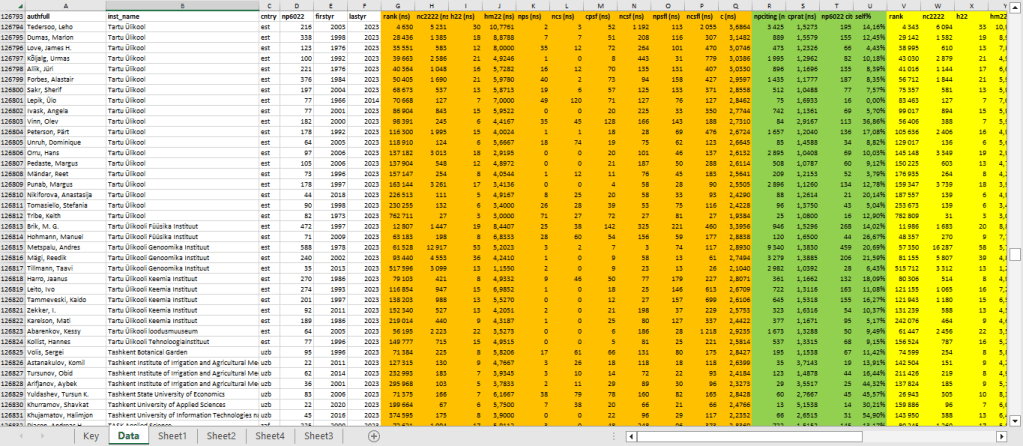
A few months ago, I celebrated 5 years since my first scientific publication – the time it took for me to get listed in the Stanford University‘s database of top 2% scientists! To be honest, I’ve missed this list, but given the growing number of LinkedIn posts on it, I decided to take a look at it and after browsing it for a while, decided – just out of curiosity – to check myself – can you imagine the level of my surprise? – all in all, quite surprised and honored, of course!

I recognize that this is just a single year category for 2022, it is about sub-fields (Artificial Intelligence – do not really get how Scopus knows this, given that although I am dealing with this topic, I do not much publish on it, Information Systems, Information & Communication Technologies) same as I realize that citation metrics-based evaluations is  not the best approach to assessing the impact and quality of research & researcher (although this database not only acknowledges, but also tries to tackle this issue to some extent), but for me it is still an achievement that makes this day special!

You might want to check out this list by Ioannidis and John (2023) and maybe it will make your day as well!

Ioannidis, John P.A. (2023), “October 2023 data-update for “Updated science-wide author databases of standardized citation indicators””, Elsevier Data Repository, V6, doi: 10.17632/btchxktzyw.6

Rii Forum 2023 “Innovation 5.0: Navigating shocks and crises in uncertain times Technology-Business-Society” & a plenary debate “Advances in ICT & the Society”

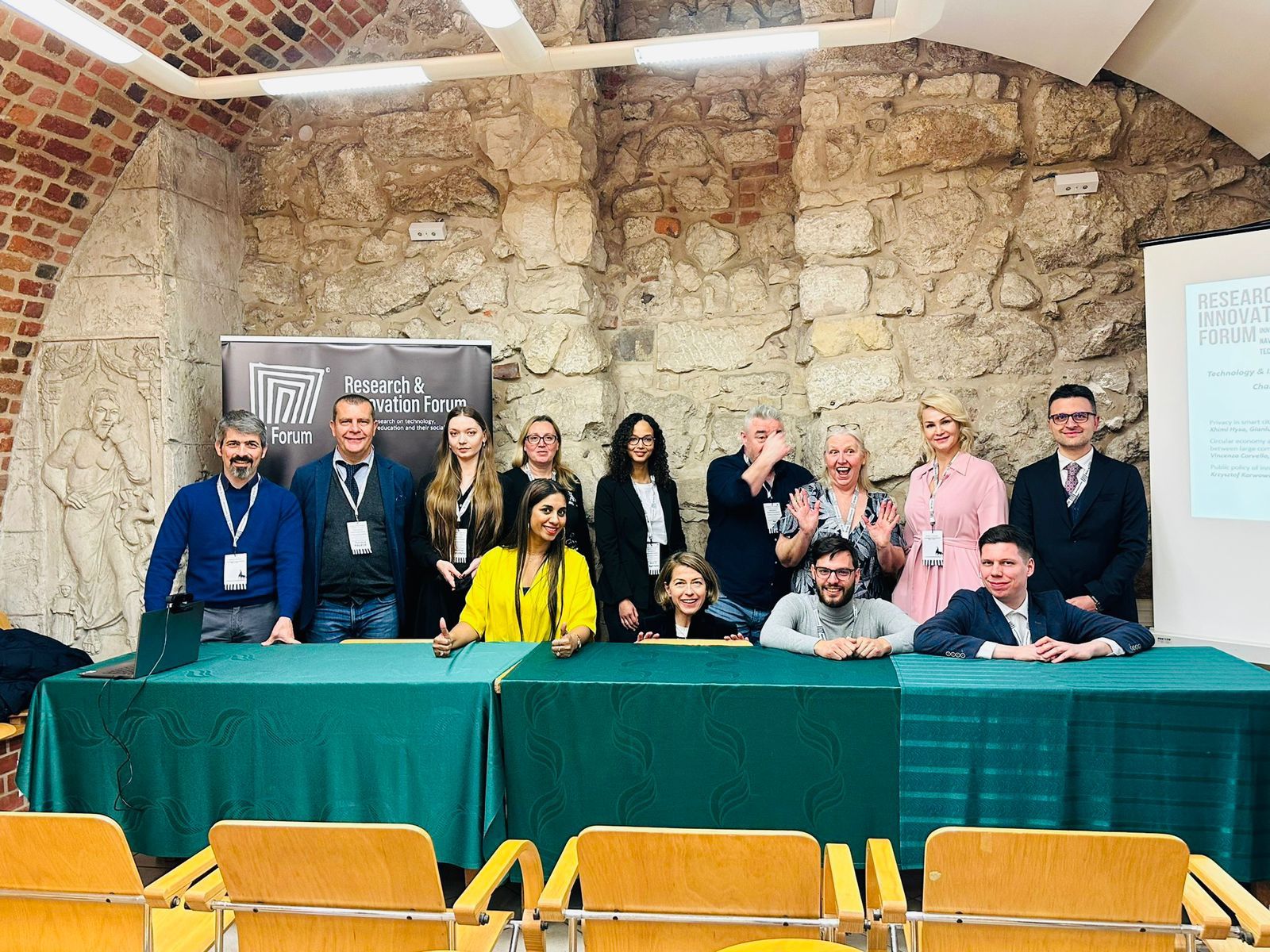
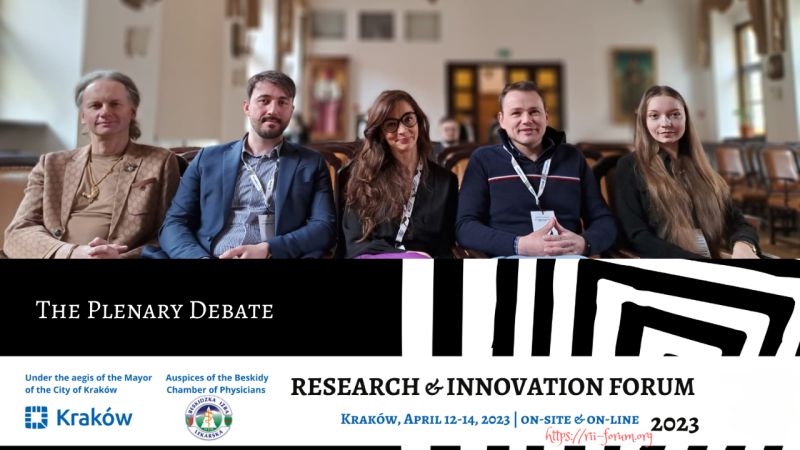
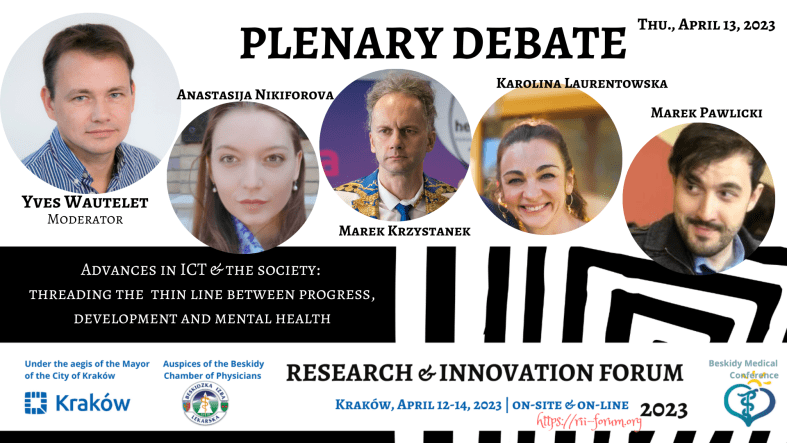
Last week, I had an unforgettable experience at the Research and Innovation Forum (RiiForum) on which I posted previously in Krakow, Poland, serving as plenary speaker and session chair. It was another great experience to have an absolutely amazing plenary session titled “Advances in ICT & the Society: threading the thin line between progress, development and mental health”, where we – Prof. Dr. Yves Wautelet, Prof. Dr. Marek Krzystanek, Karolina Laurentowska & Prof. Marek Pawlicki – discussed disruptive technologies in our professional lives in the past years, how they affected us and our colleagues, how they affect(ed) society and its specific groups, including their mental health, and general perception of technology, i.e. an enemy of humanity, or rather a friend and support, and how to make sure the second take place. And from this we have developed a discussion around AI, chatGPT, Metaverse, blockchain, even slightly touching on quantum computing. Of course, all this was placed in the context of democracy and freedoms / liberties. All in all, we approached the topic of governance and policy-making, which is too often reactive rather than proactive, which, in turn, leads to many negative consequences, as well as elaborated on the engineering practices. 

To sum up – emerging and disruptive technologies, Blockchain, AI, Metaverse, digital competencies, education, liberty, democracy, openness, engagement, metaverse, inclusivity, Industry 5.0, Society 5.0 – and it is not a list of buzzwords, but a list of topics we have managed to cover both plenary speakers and the audience and continued to talk about them during the whole conference. Rich enough, isn’t it?

And then the day did not end, continuing with several super insightful sessions, where, of course, one I enjoyed most is the one that I chaired. Three qualitative talks with further rich discussion after each thanks to an excellent audience, despite the fact this was the last session of the day (before the dinner), namely:

  • Privacy in smart cities using VOSviewer: a bibliometric analysis by Xhimi Hysa, Gianluca Maria Guazzo, Vilma Cekani, Pierangelo Rosati
  • Public policy of innovation in China by Krzysztof Karwowski, Anna Visvizi
  • How Human-Centric solutions and Artificial Intelligence meet smart cities in Industry 5.0 by Tamai Ramirez, Sandra Amador, Antonio Macia-Lillo, Higinio Mora
     

And the last, but not the least, Krakow surprised me lot (in a positive sense, of course) – it was my first time in Poland, and I am absolutely glad that it was on such a beautiful city as Krakow – the place with the rich history and culture! Thank you dear RiiForum2023 organizers – Anna Visvizi, Vincenzo Corvello, ORLANDO TROISI, Mara Grimaldi, Giovanni Baldi and everyone who was involved – it is always a pleasure to be a part of this community!


Rii Forum 2023 “Innovation 5.0: Navigating shocks and crises in uncertain times Technology-Business-Society” & a plenary debate “Advances in ICT & the Society”

This April the next edition of the Research and Innovation Forum (Rii Forum) on which I posted previously will take place. For those, who are not familiar with Rii Forum yet, it is an annual conference that brings together researchers, academics, and practitioners in conceptually sound inter- and multi-disciplinary, empirically driven debate on key issues influencing the dynamics of social interaction today. Such a wide scope makes it a great event for those who do not want to be limited to a particular area or research question and want to be aware of everything that happens in today’s dynamic and multidisciplinary world. This, in turn, allows you not only to see another perspectives and topics, but also reconsider your topic, revealing something new, i.e. taking a look on it from a different angle, which is exceptionally valuable!

Technology, innovation, and education, as well as issues and topics located at their intersection, define the key dimensions of all discussions held during the Rii Forum. In continuously fragile international and domestic contexts, characterized by shocks, crises, and uncertainty, the Rii Forum 2023 seeks to address the multifaceted question of how to navigate these shocks, crises and uncertainty and deliver value to our society. Thus, the topic of Rii Forum 2023 is “Innovation 5.0.: Navigating shocks and crises in uncertain times Technology – Business – Society” with seven tracks:

  • TRACK 1: Education in times of shocks, crises and uncertainty
  • TRACK 2: Smart cities and communities
  • TRACK 3: Big data, business and society: Managing the distributed risks and opportunities
  • TRACK 4: Management: Rethinking management in times of profound change
  • TRACK 5: Innovation, entrepreneurship, and innovation management in the era of Industry 5.0.
  • TRACK 6: ICT and the medicine and healthcare cluster
  • TRACK 7: Data-driven approaches & human resource management in the era of digitalization

As part of Rii Forum 2023 a plenary debate “Advances in ICT & the Society: threading the thin line between progress, development and mental health” will take place, where I was honored to be invited as one of four plenary speakers, particularly considering that according tot he invitation, the organizers see me as the person whose “expertise and your contribution to the academic debate make you one of the trendsetters in current debate on open data and data quality management”, as well as leading voice and influencer. The other three panel discussants are Prof. Dr. Marek Krzystanek, Karolina Laurentowska & Prof. Marek Pawlicki. Hope this will be an interactive, fruitful and productive discussion with further involvement of the audience!

Read more here and stay tuned for more information and reflections on the conference, in case you will not be able to attend it.

“Emerging issues and innovations” track as part of IFIP EGOV-CeDEM-EPART 2023 is open for submissions!

On behalf of the co-chair of “Emerging issues and innovations” track I sincerely invite everyone whose research focuses on new topics emerging in the field of ICT and public sector, including public-private ecosystems, to submit their work to this track, which is part of EGOV2023 – IFIP EGOV-CeDEM-EPART – one of the most recognized conference in e-Government, ICT and public administration and related topics!

The annual IFIP EGOV2023 will be hosted 5-7 September 2023 in Budapest by the Corvinus University of Budapest, Hungary. The conference focuses on e-Government, Digital Government, Open Government, Smart Government, GovTech, eParticipation and e-Democracy, and related topics like social media, digital transformation, Digital society, artificial intelligence, policy information, policy informatics, smart cities, and social innovation. Several types of submissions are possible, including completed research, ongoing research, reflections & viewpoints, posters, and workshops. The conference consists of 10 tracks:

  • General E-Government and E-Governance Track
  • General e-Democracy & e-Participation track
  • ICT and Sustainable Development Goals Track
  • Digital Society Track
  • AI, Data Analytics & Automated Decision Making Track
  • Smart Cities (Government, Districts, Communities & Regions) Track
  • Open data: social and technical aspects Track
  • Emerging Issues and Innovations Track
  • Digital and Social Media Track
  • Legal Informatics

And while the conference consists of 10 tracks you will definitely find relevant, my personal recommendation is “Emerging issues and innovations” track (chairs: Marijn Janssen, Anastasija Nikiforova, Dr. Csaba Csaki, Francesco Mureddu).


🎯🎯🎯 “Emerging issues and innovations” track focuses on new topics emerging in the field of ICT and public sector, including public-private ecosystems. Topics of interest include but are not limited to:
💡Looking ahead into Social innovation
💡The future of government, policy making and democracy
💡Global challenges that go beyond nation states (such as migration, climate change etc.) and require international collaboration of individual governments
💡Digital transformation in public sector context
💡The future of digital governance
💡Public values in transforming the government
💡The role of government in eCities and sustainable living
💡The role of the public sector in Human Centered Society
💡Self Service Structures for Inclusion
💡Public-private sector collaboration and integration;
💡Decentralized Autonomous Organizations (DAO), smart contracts and blockchain
💡Preparing for the policy challenges of future technologies;
💡Regulating misinformation
💡New technologies for automated decision-making
💡The future public sector use and regulation of latest AI solutions;
💡Public use as well as regulations of industry 4.0 and the internet of things
💡The relationships of governments and Fintech
💡Upcoming issues of eVoting including application of digital signatures in the public sector
💡Online public community building
💡Utilization of digital billboards
💡Latest trends in co-creation and service delivery
💡Forward looking insights from case studies – let it be successful or failed experiments.
 

🗓️🗓️🗓️ IMPORTANT DATES
Deadline for submissions: 31 March 2023
PhD Colloquium deadline for submissions: 1 May 2023
Poster submission deadline: 20 May 2023
PhD Colloquium: 4 September 2023
Conference: 5-7 September 2023

Do not miss 3 days of discussions around e-Government, Digital Government, Open Government, Smart Government, GovTech, eParticipation and e-Democracy, and related topics like social media, digital transformation, Digital society, artificial intelligence, policy information, policy informatics, smart cities, and social innovation. Mark your calendar – 31 March 2023 for submitting your paper, and 5-7 September 2023 for attending the conference!

The conference is organized by the IFIP 8.5 Working group (WG8.5) and the Digital Government Society (DGS). The aim of WG 8.5 is to improve the quality of e-government information systems at international, national, regional and local levels. The WG8.5 emphasis is on interdisciplinary approaches for information systems in public administration. DGS is a global, multi-disciplinary organization of scholars and practitioners interested in the development and impacts of digital government. Read more here.