Generative AI Role in Shaping the Future of Open Data Ecosystems: Synergies amidst Paradoxes

The role of Generative AI is the subject for debates in almost every domain today, and the open data (ecosystem) domain is no exception. Here’s my two cents on this with the blog post “Generative AI Role in Shaping the Future of Open Data Ecosystems: Synergies amidst Paradoxes”.
In this blog post, I present some personal observations and predictions on how Generative AI will stop open “data winter” or even give an impetus to the “data spring” the call for what has been made recently. While these steps may be many and different, one obvious element that could affect the current state of affairs is Artificial Intelligence, particularly in the form of Generative AI. Along with this “forecast” and high-level discussion that is expected to be made more in-depth and likely evidence-based (since, together with my colleagues and students, we are already working in this direction), some paradoxes are mentioned among this symbiotic relationship between Generative AI and open data (ecosystem)…

“Meet the publishers” or “Meet me with the Data & Policy” (Cambridge University Press) at CUDAN2023

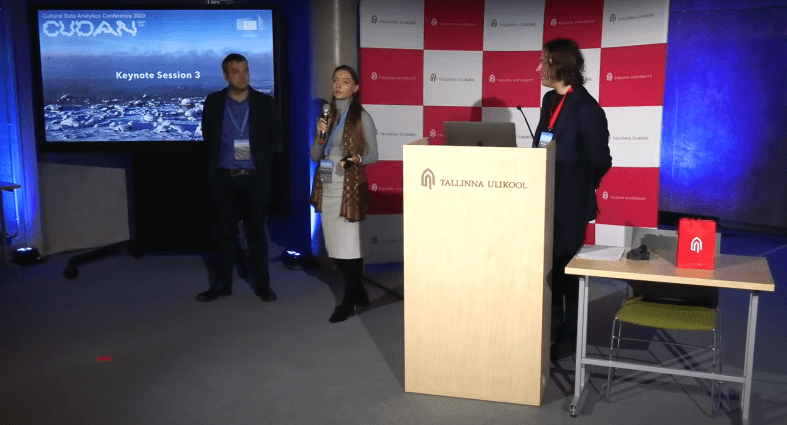
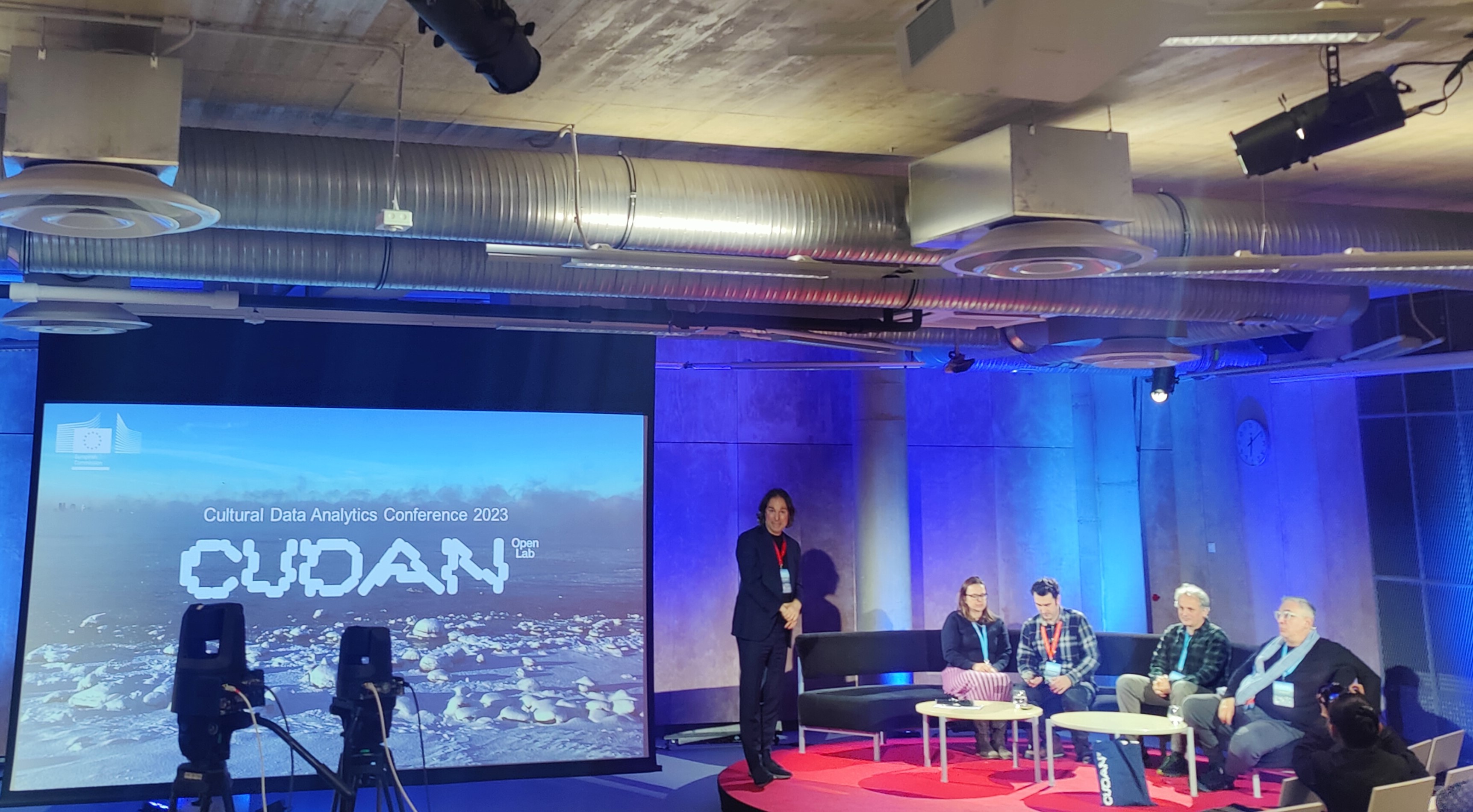
Cultural Data Analytics Conference 2023 (CUDAN 2023) took place this week at Tallinn University, where I was kindly invited by the organizers to take part in the Meet The Publishers session representing Data & Policy journal (Cambridge University Press), where I serve as editor for “Focus on Digital & Data-Driven Transformations in Governance” area.
Together with colleague – Innar Liiv, who kindly joined me in promoting our journal, Data & Policy was represented by researchers representing two leading universities in Estonia – University of Tartu and TalTech – Tallinn University of Technology. The conference was hosted by another large Estonian university – Tallinn University, which did a great job since, although I am not related to cultural data analytics, I enjoyed the sessions, keynotes – Mauro Martino from IBM Research, Anu Masso from TalTech – Tallinn University of Technology, Lev Manovich from The City University of New York, and AI Art exhibition as part of a social event. Thank you Maximilian Schich for this event and invitation!


Referring back to the “Meet the Data & Policy“, and delivering the main message of this post – I invite you all to do the same and consider this relatively new but increasingly popular journal with a very good reputation.


Do not forget also the Special Issues we have, one of which is co-edited by me (together with Jérôme Chenal, EPFL (École polytechnique fédérale de Lausanne), Cédric Stéphane Teakouabou Koumetio, UM6P – Mohammed VI Polytechnic University, El Arbi Abdellaoui Alaoui) and is devoted to Emerging Data- and Policy-driven Approaches for African Cities Challenges, with a submission deadline of January 8, 2024. Just to remind, this Special Issue aims to expand the reach and scope of urban data research, innovation and entrepreneurship activities and policies to address urban challenges in Africa through the digitisation of cities. It will compile recent expert work on the topic to advance and promote scientific advance / excellence, promote the digital transition and its benefits for creating, collecting, storing and using urban data to achieve sustainable development goals (SDG) in African cities.

You can read more about the call in my previous post.

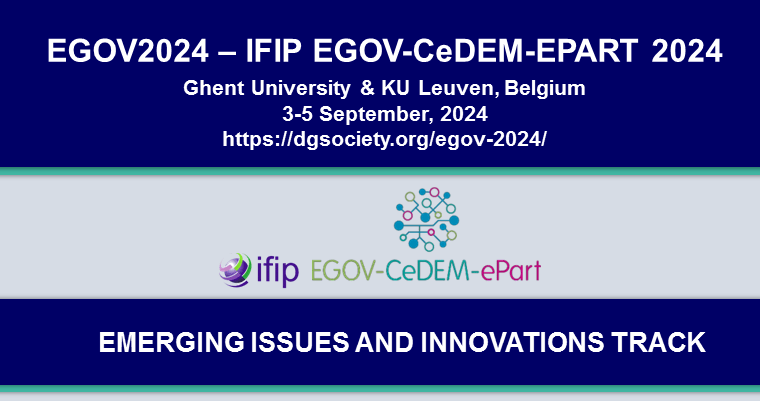
EGOV2024 – IFIP EGOV-CeDEM-EPART 2024 & our Emerging Issues and Innovations Track

Are you focusing on new topics emerging in the field of ICT and public sector, incl. public-private ecosystems? Then it is time to start preparing your submission for EGOV2023 – IFIP EGOV-CeDEM-EPART Emerging Issues and Innovations Track (chairs: Anastasija Nikiforova, Marijn Janssen, Francesco Mureddu).

EGOV2023 – IFIP EGOV-CeDEM-EPART is one of the most recognized conference in e-Government, ICT and public administration and related topics, which this year will be hosted in Belgium, in the heart of Europe, by Ghent University and KU Leuven – both top 100 universities.

 Innovation and application of emerging technologies is now more and more in the thinking of Governments at all levels. While it would be easy to consider the public sector as being less flexible or slow in adoption, presentations at recent EGOV-CeDEM-ePart conferences proved that one should not come to such a conclusion too easily. Upcoming technologies, innovative organizational solutions, or new avenues of involvement in public sector activities seem to be more commonplace – along with the potential issues and challenges that come with such endeavours. Policy-makers and public sector officials are now expected to embrace change, consider digital transformation, or improve governance practices. At the same time, public sector researchers are also influenced by new views, methods, tools and techniques.

🎯The goal of this track is to provide a platform for the discussion of new ideas, issues, problems, and solutions, that keep entering the public sphere. Ideas that are emerging but might not fit other conference tracks are also welcome. Focus may include but is not limited to:

  • 💡 Looking ahead into social innovation
  • 💡Future studies, the future of government, policy-making and democracy
  • 💡New trends in public sector research such as Metaverse, Large Language Models (LLMs), generative AI and its implementations such as chatGPT, Claude, ChatSonic, Poe – benefits, risks, adoption and resistance to its adoption by the public sector and citizens;
  • 💡Global challenges that go beyond nation states (such as migration, climate change etc.) and which require international collaboration of individual governments;
  • 💡Digital transformation in public sector context;
  • 💡The future of digital governance;
  • 💡Public values in transforming the government;
  • 💡The role of government in smart cities (incl. smart sustainable cities) and sustainable living;
  • 💡The role of the public sector in Human-Centered Society known as Society 5.0;
  • 💡Government in the metaverse;
  • 💡Self-Service Structures for Inclusion;
  • 💡Public-private sector collaboration and integration;
  • 💡Decentralized Autonomous Organizations (DAOs), smart contracts and blockchain;
  • 💡Preparing for the policy challenges of future technologies;
  • 💡Regulating misinformation;
  • 💡New technologies for automated decision-making;
  • 💡The future public sector use and regulation of latest AI or genAI solutions;
  • 💡Public use as well as regulations of industry 4.0 and Industry 5.0 and the Internet of Things (IoT);
  • 💡The relationships of governments and Fintech;
  • 💡Upcoming issues of eVoting / internet voting including application of digital signatures in the public sector;
  • 💡Online public community building;
  • 💡Utilization of digital billboards;
  • 💡Latest trends in co-creation and service delivery;
  • 💡Discussion of new research methods that have not been applied in this context;
  • 💡Application of role theory in the analysis of public sector functions and processes;
  • 💡Forward looking insights from case studies – let it be successful or failed experiments.

Track Chairs

  • Anastasija Nikiforova, Tartu University, Estonia
  • Marijn Janssen, Delft University of Technology, the Netherlands
  • Francesco Mureddu, The Lisbon Council, Belgium

This time International Federation for Information Processing (IFIP) EGOV-CeDEM-EPART will be hosted by KU Leuven and Ghent University, September 2024, while the deadline for submitting your paper is set to March, 2024.

Stay tuned, more info to come!

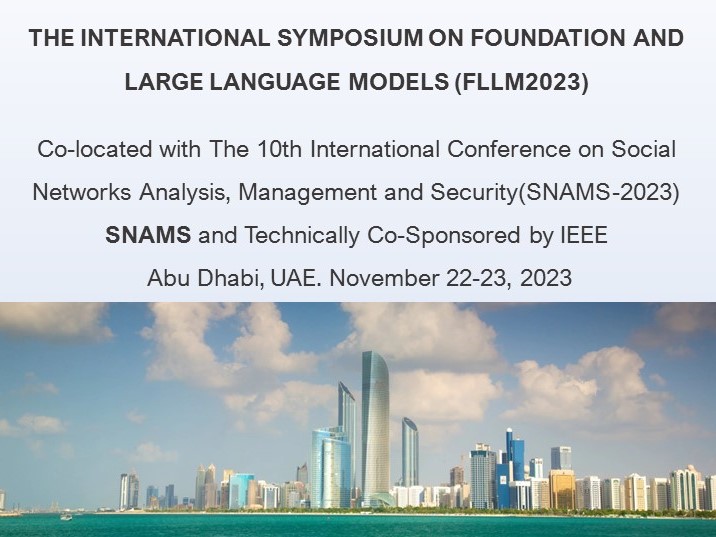
CFP for The International Symposium on Foundation and Large Language Models (FLLM2023)

On behalf of the organizers of the The International Symposium on Foundation and Large Language Models (FLLM2023) co-located with The 10th International Conference on Social Networks Analysis, Management and Security(SNAMS-2023), I am inviting everyone, who is conducting research in this area, to consider submitting the paper to it. Hurry up as the deadline for submitting the paper is October 28! 📢📢📢

Call for Papers:

With the emergence of foundation models (FMs) and and Large Language Models (LLMs) that are trained on large amounts of data at scale and adaptable to a wide range of downstream applications, Artificial intelligence is experiencing a paradigm revolution. BERT, T5, ChatGPT, GPT-4, Falcon 180B, Codex, DALL-E, Whisper, and CLIP are now the foundation for new applications ranging from computer vision to protein sequence study and from speech recognition to coding. Earlier models had a reputation of starting from scratch with each new challenge. The capacity to experiment with, examine, and comprehend the capabilities and potentials of next-generation FMs is critical to undertaking this research and guiding its path. Nevertheless, these models are currently inaccessible as the resources required to train these models are highly concentrated in industry, and even the assets (data, code) required to replicate their training are frequently not released due to their demand in the real-time industry. At the moment, mostly large tech companies such as OpenAI, Google, Facebook, and Baidu can afford to construct FMs and LLMS. Despite the expected widely publicized use of FMs and LLMS, we still lack a comprehensive knowledge of how they operate, why they underperform, and what they are even capable of because of their emerging global qualities. To deal with these problems, we believe that much critical research on FMs and LLMS would necessitate extensive multidisciplinary collaboration, given their essentially social and technical structure.The International Symposium on Foundation and Large Language Models (FLLM) addresses the architectures, applications, challenges, approaches, and future directions. We invite the submission of original papers on all topics related to FLLMs, with special interest in but not limited to:

💡Architectures and Systems

  • Transformers and Attention
  • Bidirectional Encoding
  • Autoregressive Models
  • Prompt Engineering
  • Fine-tuning

💡Challenges

  • Hallucination
  • Cost of Creation and Training
  • Energy and Sustainability Issues
  • integration
  • Safety and Trustworthiness
  • Interpretability
  • Fairness
  • Social Impact

💡Future Directions

  • Generative AI
  • Explainability
  • Federated Learning for FLLM
  • Data Augmentation

💡Natural Language Processing Applications

  • Generation
  • Summarization
  • Rewrite
  • Search
  • Question Answering
  • Language Comprehension and Complex Reasoning
  • Clustering and Classification

💡Applications

  • Natural Language Processing
  • Communication Systems
  • Security and Privacy
  • Image Processing and Computer Vision
  • Life Sciences
  • Financial Systems

Read more here and join our team in Abu Dhabi, UAE. November 22-23, 2023!