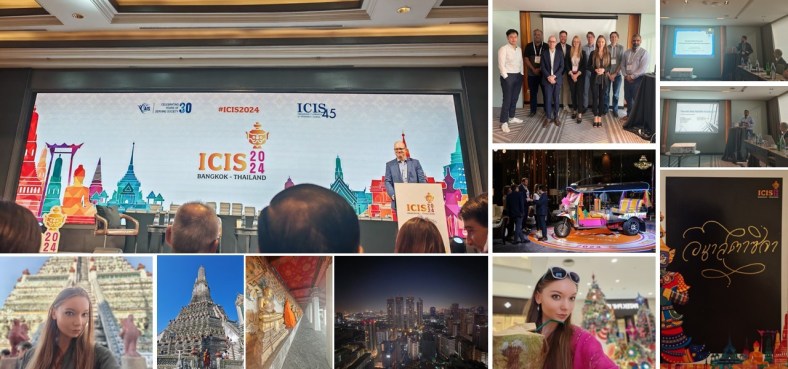
As the year comes to an end, so does the 45th edition of the International Conference on Information Systems (ICIS2024) —a conference filled with presentations, countless chats with old colleagues and friends and meeting new ones, and a tons of emotions coming from a warm Bangkok 🇹🇭
This year the conference held under theme “Digital Platforms for Emerging Societies” aimed at examining the expansive role of information technology in driving economic and societal transformation across the globe. Over 1.7K participants from 49 countries attended ICIS2024 this year, incl. Estonia 🇪🇪 – the only country of the Baltics – represented by both TalTech (Tallinn University of Technology) and finally University of Tartu (with me trying to bring the name of Latvia 🇱🇻 as well), in total accounting only three people – Mari-Klara Stein, myself and my PhD student – Dimitris Symeonidis, which is, however, a significant increase compared to previous editions, which is smth we – Mari-Klara and myself – are still not too happy about, as we still remain “rarities,” as I’ve been called several times, and will try to change that 👩🔬
The conference started for me with pre-ICIS Symposium SIGDSA (Special Interest Group on Decision Support and Analytics), which this year run under the “Emerging AI Platforms for Societal Good” theme, which was an action-packed day featuring a keynote by Apirak Kosayodhin (Former Governor of Bangkok), followed by a panel on the role of AI across society, business & academia, with Ofir T., discussing whether Artificial Intelligence, and GenAI in particular, is a “friend or foe” reflecting on our evolving attitudes toward it (through the lenses of other phenomenon, incl. dogs & how our attitudes towards them changed over centuries), Borworn Papasratorn addressing challenges of diffusing & adopting AI in Thai Higher Education Institutions, Kriengkrai Boonlert-U-Thai discussing the role of information technology in driving economic & societal transformation, moderated by Ramesh Sharda.
And as a follow-up to this, the paper of my former master student Jan-Erik Kalmus – “Generative AI adoption in higher education: exploring educator resistance in Estonian universities” was presented. In this study, Jan-Erik examined educator resistance to student use of GenAI in higher education focusing on Estonia, known as a “digital nation”, employing a theoretical model informed by the Innovation Resistance Theory (IRT) that we introduced in previous study presented at ECAI (on which I posted earlier).
It was continued with 7 hours of vibrant dialogue on digital government research as part of the pre-ICIS workshop on eGovernment, including: ✅the first ever study results of my 1st year PhD student – Dimitris Symeonidis – presented (“Reimagining Digital Government: a step towards Blockchain-Enabled Public Data Ecosystems”) ✅a concept of what we call Data Satellites introduced by Asif Gill as part of our “Towards a Data Satellite Architecture for Digital Government Ecosystems” study, in which we call for a data observability level missing in the current data ecosystems, thereby providing zero opportunities to get rid off or at least be informed about dark and toxic data (while the concept name might evolve based on community feedback, whereas happy that the concept itself found an acceptance with community, what we hoped for) ✅and 5 more super interesting studies by colleagues exploring digital transformation, AI in public administration (incl. framework to determine when AI is truly needed (i.e., smth close to the idea of automation as a default and the only in business process redesign – just don’t!), AI literacy, GenAI for citizen engagement), smart cities, and a methodological proposal for a soft digital ecosystem methodology for hybrid cities’ problem design 🎙️all of this masterfully moderated by Rony Medaglia – president of the current SIG-eGov, and tons of discussions around every study and the filed in general, incl. the future plans.
Finally, my first-year PhD student introduced himself to the IS community at probably the most prestigious IS conference, with yet another paper presented at the SIG SVC – AIS Special Interest Group for Services Workshop on Synergizing Service Ecosystems – “Integrating Generative AI with Public Data Ecosystems: Enhancing Decision Making and Efficiency in the Service Industry of the Private Sector”.
All in all, with four papers presented at three ICIS workshops & symposium, this was a very rich week, for which – a heartfelt thanks to the organizers!
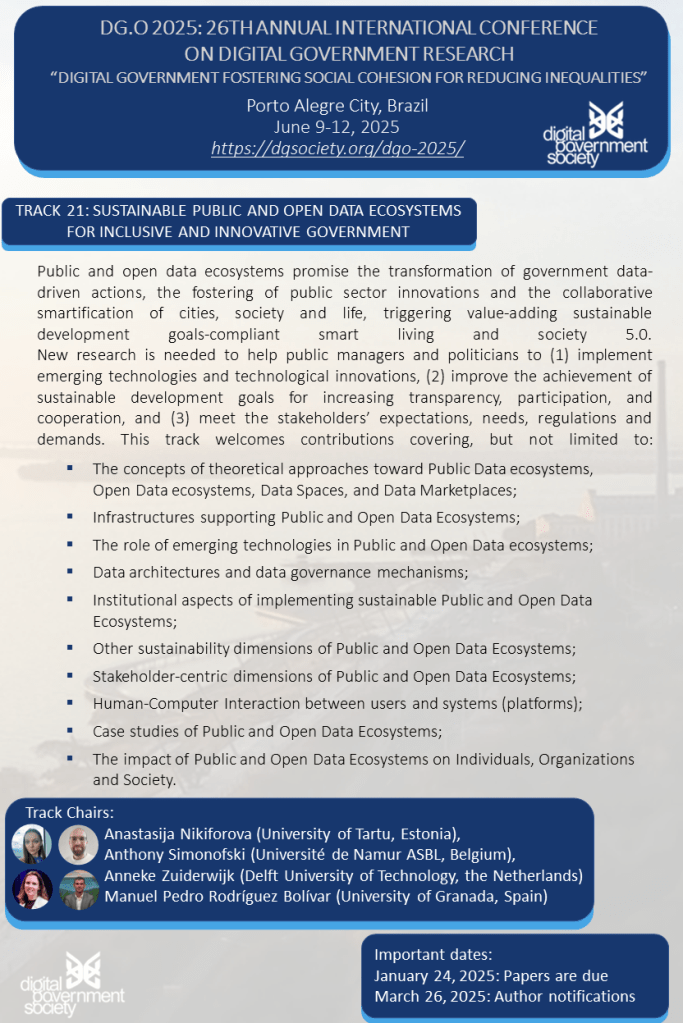
26th Annual International Conference on Digital Government Research (dg.o2025)is coming with continuation of the track we launched the last time – “Sustainable Public and Open Data Ecosystems for inclusive and innovative government” track (chairs: Anastasija Nikiforova (University of Tartu, Estonia), Anthony Simonofski (Université de Namur ASBL, Belgium), Anneke Zuiderwijk (Delft University of Technology, the Netherlands) & Manuel Pedro Rodríguez Bolívar (University of Granada, Spain)).
Briefly about the track… Today, the goal of an actor-centric public data ecosystem that would be sufficiently sustainable, resilient and fair, is defined as an approach capable of representing and keeping in balance the data interests of all actors[1], to bring expected value (both economic, social and environment) became central for public data ecosystems and other types of data infrastructures and data spaces[2] that are based on the concept of openness and data sharing among stakeholders. Public data and open (government) data ecosystems are seen as a political and socio-economic phenomenon that promise to benefit the economy, and increase transparency, efficiency, and quality of public services, including the transformation of government data-driven actions, stimulate public sector innovations in various areas of public life and promote civic engagement[3][4][5]. Having collaborative governance models in place is one of the prerequisites for a resilient and value-adding ecosystem, of which stakeholders are an inevitable element, making it necessary to ensure those ecosystems are stakeholder-oriented. These models are expected to support stakeholders/actors, who, however, may have different characteristics (incl. (open) data literacy and digital literacy), needs / demands and expectations (public sector, private sector, business, citizen) for public value creation and co-creation. Understanding, designing, and maintaining such an ecosystem is further complicated by the fact that both data, service and process quality must be ensured and kept maintained with a limited understanding of how the above are expected to be ensured even alone.
Recent research found that concepts affecting and shaping the ecosystem are: 1) stakeholders / actors and their roles, 2) phases of the data lifecycle, in which a stakeholder participates in the ecosystem, 3) technical and technological infrastructure, 4) generic services and platforms, 5) human capacities and skills of both providers and consumers, 6) smart city domains (thematic categories) as the targeted areas for data reuse, 7) externalities affecting goals, policy, and resources, 8) level of (de)centralization of data sources – development, restrictions, 9) perception of importance and support from public officials, and 10) user interface, user experience, and usability[6]. Moreover, these ecosystems same as its components are (co-)evolving over time[7] due to both internal and external factors. The latter – external factors – include technological developments. As such, the rapid development of emerging technologies such as big data, artificial intelligence (AI) is seen as a new trigger for public and open data development (AI for open data and open data for AI), machine learning (ML), federated learning (FL), internet of things (IoT), metaverse etc. provides new opportunities to improve these ecosystems in a disrupt way to be useful for collaborative governance models. Also, the link between Open Data Ecosystems and sustainable development goals (SDG) seems to be more relevant nowadays in their way to build more democratic cities based on government transparency, citizen participation, and citizen cooperation. Finally, higher expectations, needs and demands of businesses and citizens, derived from the implementation of B2G, C2G models, that influence and shape the design and development of these data environments, as well as expected to be affected, e.g., B2G in relation to which European Commission is taking regulatory action and is preparing the Data Act to set the rules and conditions, thereby changing the current voluntary model to a more mandatory data sharing. Current research suggests that these topics are of great importance to governments, as well as businesses and citizens, whose efforts should complement each other in order to enable effective data reuse and value co-creation
As such, as public and open data ecosystems promise the transformation of government data-driven actions, the fostering of public sector innovations and the collaborative smartification of cities, society and life, triggering value-adding sustainable development goals-compliant smart living and Society 5.0. New research is needed to help public managers and politicians for (1) implementing emerging technologies and technological innovations, (2) improving the achievement of sustainable development goals for increasing transparency, participation, and cooperation, and (3) meeting the stakeholders’ expectations, needs, regulations and demands.
As such, this track welcomes contributions covering, but not limited to:
The concepts of theoretical approaches toward Public Data ecosystems, Open Data ecosystems, Data Spaces, and Data Marketplaces;
Infrastructures supporting Public and Open Data Ecosystems;
The role of emerging technologies in Public and Open Data ecosystems (incl. but not limited to AI, Generative AI, LLM, NLP, cloud computing, green computing, Metaverse etc.);
Data architectures and data governance mechanisms;
Institutional aspects of implementing sustainable Public and Open Data Ecosystems;
Other sustainability dimensions of Public and Open Data Ecosystems;
Stakeholder-centric dimensions of Public and Open Data Ecosystems;
Human-Computer Interaction between users and systems (platforms);
Case studies of Public and Open Data Ecosystems, incl. but not limited to Local Government Level Data Ecosystems, e.g., Smart Cities Data Ecosystems;
The impact of Public and Open Data Ecosystems on Individuals, Organizations and Society.
The track welcomes both contributions covering the current state-of-the-art of public data ecosystems (what components constitute them, what are the relationships between these components, what makes an ecosystem resilient and sustainable), incl. individual case studies reflecting best or bad practices, as well as those addressing how these ecosystems can be transformed into more sustainable ecosystems that will “fuel” or “smartify” society (Information Society aka Society 4.0 to Super Smart Society aka Society 5.0 transition), cities and various areas of life.
The track is very aligned with the conference theme of DGO 2025, namely: Digital government fostering social cohesion for reducing inequalities. As mentioned in the theme description, “It focuses on strong social bonds in civic society, with responsive democracy and impartial law enforcement aiming at collaboratively addressing latent social conflicts. It involves building shared values in communities facing common challenges in an attempt to reduce disparities by increasing citizens’ feeling of belonging to a community and their engagement.” Public and open data ecosystems can be considered as environments that contribute to the above. Open data is aimed at reducing inequalities, open platforms constitute environments where data providers and data users find each other and collaborate and co-create to develop services and products useful for society, i.e., addressing their needs and tackling challenges society faces. While digital technologies enable the development of public and open data ecosystems, the adoption of such ecosystems has been fragmented. For instance, Van Loenen et al. (2021)[8] found that open data ecosystems “often do not balance open data supply and demand, exclude specific user groups and domains, are linear, and lack skill-training” (p. 2), which reduces their value-generation and sustainability.
Is your research related to any of the above topics? Then do not wait – submit!
🗓️🗓️🗓️Important Dates:
January 24, 2025: Papers, workshops, tutorials, and panels are due March 26, 2025: Author notifications (papers, workshops, tutorials, panels)
[1] Calzati, S., & van Loenen, B. (2023). A fourth way to the digital transformation: The data republic as a fair data ecosystem. Data & Policy, 5, e21.
[2] Lnenicka, M., Nikiforova, A., Luterek, M., Milic, P., Rudmark, D., Neumaier, S., … & Rodríguez Bolívar, M. P. (2023). Understanding the development of public data ecosystems: from a conceptual model to a six-generation model of the evolution of public data ecosystems. Available at SSRN 4831881.
[3] Nikiforova, A., Rizun, N., Ciesielska, M., Alexopoulos, C., Miletič, A.(2023). Towards High-Value Datasets determination for data-driven development: a systematic literature review. In: Lindgren,I., Csáki, C., Kalampokis, E., Janssen, M.,, Viale Pereira,G.,Virkar, S., Tambouris, E., Zuiderwijk, A.Electronic Government. EGOV 2023. Lecture Notes in Computer Science. Springer, Cham
[4] Kassen, M. (2020). Open data and its peers: understanding promising harbingers from Nordic Europe. Aslib Journal of Information Management, 72(5), 765-785.
[5] Santos-Hermosa, G., Quarati, A., Loría-Soriano, E., & Raffaghelli, J. E. (2023). Why Does Open Data Get Underused? A Focus on the Role of (Open) Data Literacy. In Data Cultures in Higher Education: Emergent Practices and the Challenge Ahead (pp. 145-177). Cham: Springer International Publishing.
[6] Lnenicka, M., Nikiforova, A., Luterek, M., Azeroual, O., Ukpabi, D., Valtenbergs, V., & Machova, R. (2022). Transparency of open data ecosystems in smart cities: Definition and assessment of the maturity of transparency in 22 smart cities. Sustainable Cities and Society, 82, 103906.
[7] Nikiforova, A., Lnenicka, M., Milić, P., Luterek, M., & Rodríguez Bolívar, M. P. (2024, August). From the evolution of public data ecosystems to the evolving horizons of the forward-looking intelligent public data ecosystem empowered by emerging technologies. In International Conference on Electronic Government (pp. 402-418). Cham: Springer Nature Switzerland.
[8] Loenen, B. van, Zuiderwijk, A., Vancauwenberghe, G., Lopez-Pellicer, F. J., Mulder, I., Alexopoulos, C., … & Flores, C. C. (2021). Towards value-creating and sustainable open data ecosystems: A comparative case study and a research agenda. JeDEM-eJournal of eDemocracy and Open Government, 13(2), 1-27.
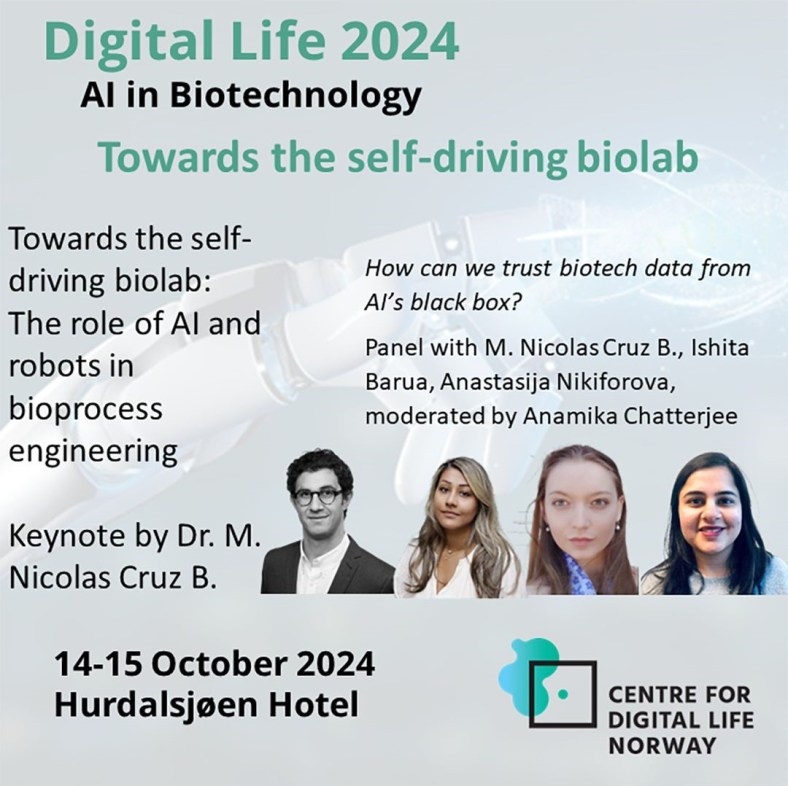
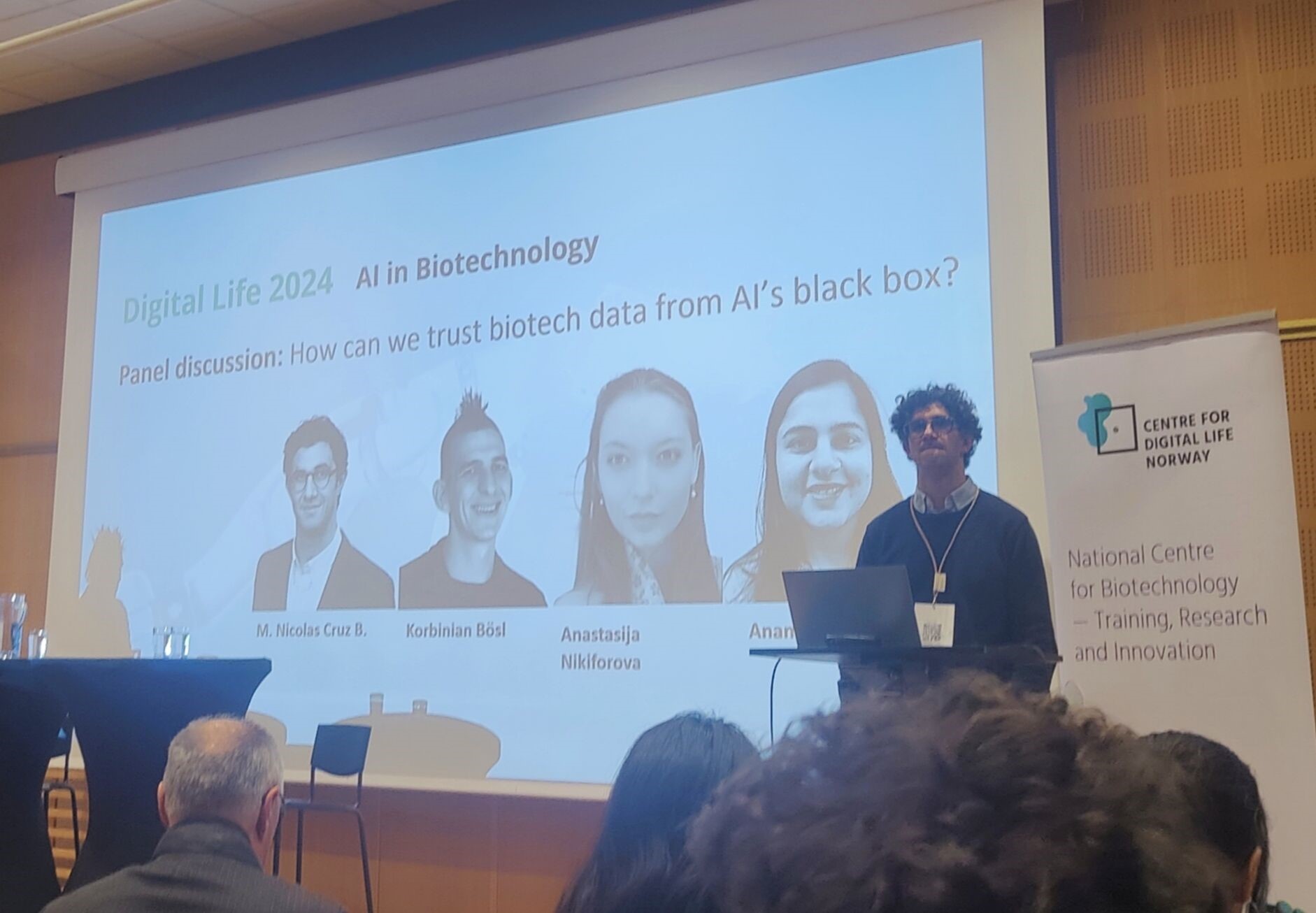
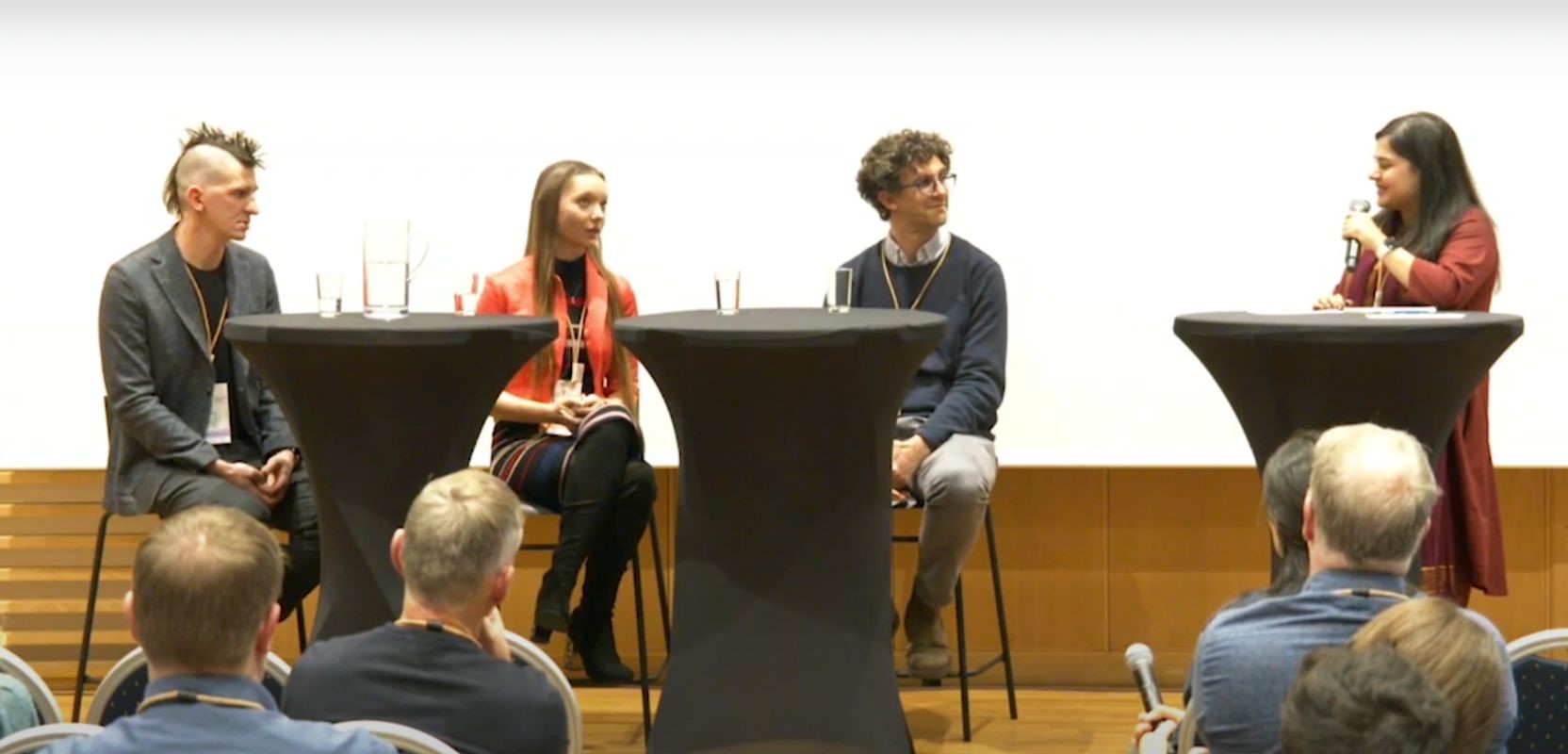
This October, I had an opportunity to participate in the panel on Trust in AI that took place as part of Digital Life Norway conference organized by Centre for Digital Life Norway (Norwegian University of Science and Technology (NTNU)) that took place in a very peaceful Hurdal (Norway) 🇳🇴🇳🇴🇳🇴.
As part of this panel, together with M. Nicolas Cruz B. (KIWI-biolab), Korbinian Bösl (ELIXIR, both of us being also part of EOSC Association)), and Anamika Chatterjee (Norwegian University of Science and Technology (NTNU)), who masterly chaired this discussion, we discussed trust in AI and data (as an integral part of it), emphasizing the need for transparency, reproducibility, and responsibility in managing them.
What made this discussion to be rather insightful – for ourselves, and, hopefully, for the audience as well – is that each of us represented a distinct stage in the data lifecycle debated upon the aspect of trust and where concerns arise as data moves from the lab to inform AI tools [in biotechnology]. As such we: ✅highlighted the interconnectedness of human actors involved in data production, governance, and application; ✅highlighted the importance of proper documentation to make data usable and trustworthy, along with the need for transparency – not only for data but also for AI in general, incl. explainable AI; ✅discussed how responsibility becomes blurred as AI-driven methodologies become more prevalent, agreeing that responsibility for AI systems must be shared across teams. Lastly, despite being openness advocate, I used this opportunity to touch on the risks of open data, including the potential for misuse and ethical concerns, esp. when it comes to medical- and biotechnologies-related topics.
All in all, although rather short discussion with some more things we would love to cover but were forced to omit this time, but very lively and insightful. Sounds interesting? Watch the video, incl. keynote by Nico Cruz 👇.
And not of least interest was a diverse set of other events – keynotes, panels, posters etc. – takeaways from which to take back home (not really to home, as from the DNL, I went to the Estonian Open Data Forum, from which to ECAI, and then, finally back home to digest all the insights), where “Storytelling: is controversy good? How to pitch your research to a non-academic audience” by Kam Sripada and panel on supervision are probably the main things I take with me.
Many thanks go organizers for having me and the hospitality, where the later also goes to Hurdal 🇳🇴 in general, as we were lucky enough to have a very sunny weather, which made this very first trip to Norway – and, hopefully, not the last one – very pleasant!
IEEE Transactions on Technology & Society launches the new Special Issue on the “Trustworthy Data Ecosystems for Digital Societies“, edited by Asif Gill, Anastasija Nikiforova, Ina M. Sebastian, Martin Lnenicka, Anushri Gupta. On behalf of the editors of this SI, I sincerely invite you to consider submitting your work to it.
Key topics surround intersection of data ecosystem and AI topics, i.e., AI in and for trustworthy data ecosystems, and include, but are not limited to:
Impact of trustworthy data ecosystem on digital societies at the local, national and global levels
Conceptualization of trustworthy data ecosystems domains and characteristics for digital societies
Data trust regulations, polices, strategies and standards
Trustworthy data ecosystem infrastructure as a social construct
Trustworthy data ecosystem architecture, interfaces, methodologies, orchestration, patterns, solutions, and technology platforms
System and data quality, governance, security, privacy, protection, and safety
Data linking, interoperability, sharing and observability
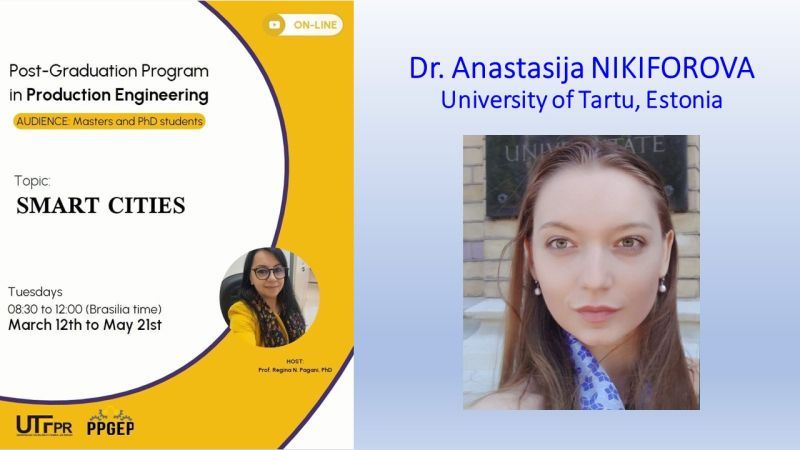
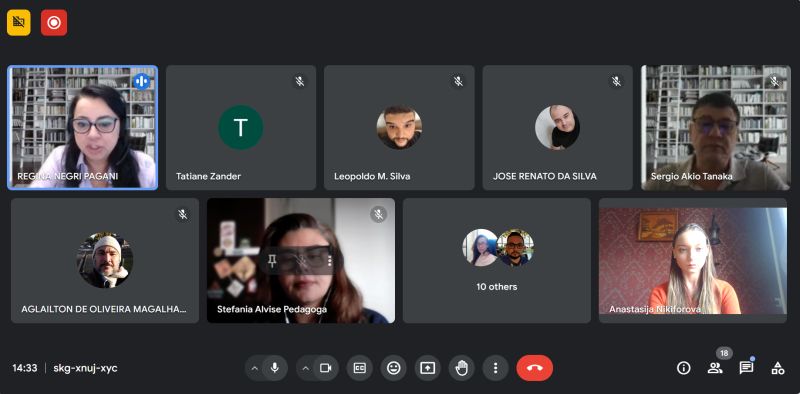
This May, I had a pleasure to deliver one more guest lecture for master and doctoral students of the Federal University of Technology – Paraná (Universidade Tecnológica Federal do Paraná (UTFPR))as part of Smart Cities course delivered by prof. Regina Negri Pagani. This time the topic of my lecture was “Unlocking the symbiotic relationship of Artificial Intelligence, Data Intelligence, Collaborative Intelligence, and Embodied Intelligence for innovative urban planning and governance of Smart Cities”.
In the pursuit of enhancing the efficiency and effectiveness of Artificial Intelligence, it is imperative to explore synergies with other form of intelligence, such Data Intelligence and Collaborative intelligence. These forms of intelligence (along with Embodied Intelligence) constitute a new transformative paradigm of intelligence proposed by Verhulst et al. (2021) that offers potential for increased added value when synergized. However, their synergy requires understanding and harnessing the symbiotic relationship between these intelligences. The reimagination of decision making and problem-solving processes, is essential to unlock this symbiotic potential fostering more meaningful, but at the very same time more sustainable AI utilization. In other words, AI itself brings a certain value that can be (and must be) increased through integration with other forms of Intelligence. This, in turn, has a list of preconditions / prerequisites that must be satisfied by the above – Artificial, Data, Collaborative, and Embodied Intelligence – components. These prerequisites are diverse in nature and span both the artifacts in question, such as AI, data (type, format, quality, value, availability, accessibility, incl. openness), stakeholders’ skills and literacies, but also management and organizational aspects. In other words, each form of Intelligence influences the others, making it crucial to explore their interconnections. This talk endeavoured to uncover this intricate web of relationships between the three forms of intelligence, taking a step towards a more meaningful and intelligent approach to decision making and problem solving.
This followed up by the fruitful discussion with the participants of the course that I enjoyed very much. I can only hope that this lecture was just a little bit as interesting as my dear Regina characterized it! There is nothing better than hear an immediate invitation for the next editions of this course – will be glad to continue this tradition!






 Anastasija Nikiforova, PhD