AI, Data, and Public Benefit: Reflections from Data for Policy CIC 2025

At Data for Policy CIC 2025 in The Hague, themed “Twin Transition in Data and Policy for a Sustainable and Inclusive Future,” we explored how emerging technologies—especially AI—and diverse data sources can support accountable, inclusive, and sustainable policymaking.

Across several full days of sessions, the event brought together transdisciplinary researchers, policy practitioners, and technology experts. Notable contributions included:

  1. Research presentations“Proactive-by-Design: The Future of Governance Beyond Bureaucracy?,” on the study we conduct with Paula Rodriguez Müller & Luca Tangi (European Commission JRC) and “The Data Agency Awakens: A New Era for Official Statistics” we prepared with Luca Di Gennaro Splendore
  2. Panel on National Data Strategies in Europe: Learning from and for the Dutch Data Strategy, which I joined the conversation as a panelists, along with Tim Faber (Ministry of Interior & Kingdom Relations), Anne Fleur van Veenstra, Iryna Susha, Adrianna Michałowicz (chaired by Devin Diran & Thijmen van Gend)
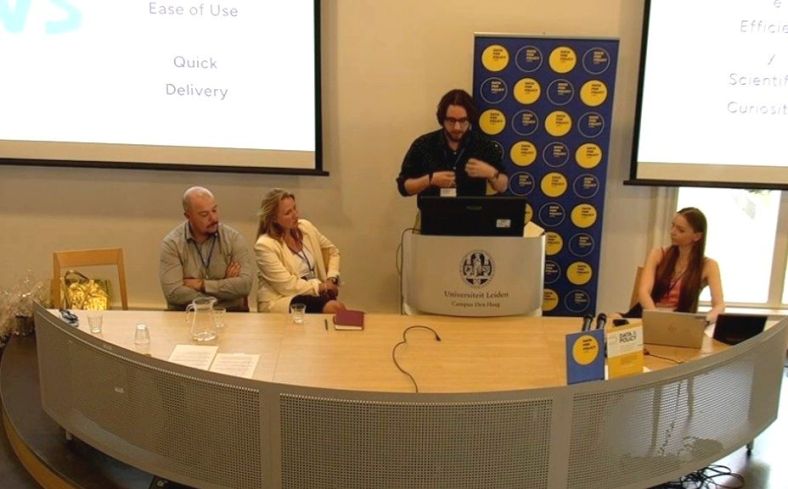
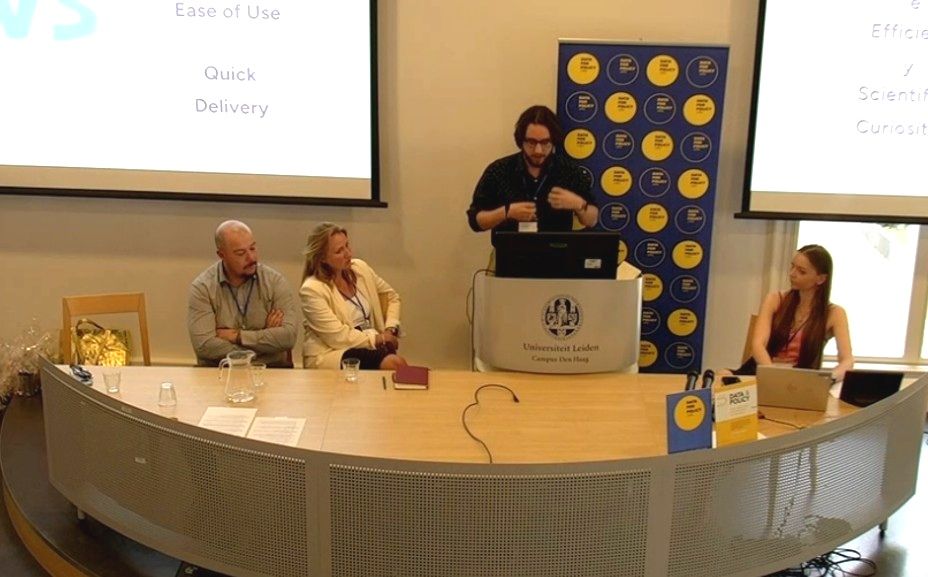
  3. finally, the paanel on Responsible AI and Data Science Revolutions: Implications for Public Benefit Research and Policy Making that I was honored to chair, with panelists representing Smart Data Foundry and the Joseph Rowntree Foundation (JRF), joined by Magdalena Getler, Oliver Berry, and Rosario Piazza.

Our discussion highlighted the immense potential of AI and data, but also the responsibilities that come with it. Key insights included:

  • Balancing optimism and realism: AI is transformative, but its adoption requires grounded, practical experience. It can support public benefit—if managed carefully;
  • Data quality over quantity: More data isn’t always better. Governance, documentation, bias mitigation, and transparency are essential for AI-readiness;
  • Embedding public trust: High-sensitivity contexts, such as health or finance, demand proportionality, oversight, and systems designed for inclusivity;
  • Human-in-the-loop mechanisms: Ensuring AI reflects human values and context is critical, even when those values are evolving;
  • Task-appropriate AI: Not every problem requires a large language model; careful alignment between technology and purpose is essential;
  • Data literacy for all: Understanding AI’s limitations and risks is as important as technical infrastructure;
  • Triangulating perspectives: Combining structured/unstructured and qualitative/quantitative data helps address bias, power imbalances, and complexity;
  • Sustainable and inclusive systems: Scalable infrastructure alone is insufficient; AI governance and operational design must prioritize long-term societal benefit.

As Amara’s Law reminds us: “We tend to overestimate the effect of a technology in the short run and underestimate it in the long run.” Our discussion echoed this sentiment: AI’s potential is enormous, but realizing it for public benefit requires careful design, governance, and collaboration.

The overarching theme through all days (beyond above) was clear: AI and data are not neutral tools. Their value for public policy depends on human-centered design, responsible governance, and active societal engagement. Tools alone won’t deliver public benefit—they must be operationalized thoughtfully, with attention to ethics, context, and inclusion.

Huge thanks to Sarah Giest, Bram Klievink, Zeynep Engin, and all participating institutions—Leiden University, TNO Vector, Cambridge University Press & Assessment, and The Hague Centre for Digital Governance—for creating the space for meaningful dialogue in such a rich, collaborative environment.

The CIC 2025 conversations reminded us: building a truly responsible, inclusive, resilient, and sustainable AI ecosystem is not just a technical challenge—it is a societal mission and each and every of us is part of it.

CFP for Data For Policy 2024 is open!

And CFP for Data For Policy 2024 scheduled for 9-11 July, 2024 is open! All submissions are welcome with the deadline of 27 November, 2023.

This year Data For Policy conference, which is organized in collaboration with Imperial College London and Cambridge University Press will take place in London, UK, and will be running under the title “Decoding the Future: Trustworthy Governance with AI” – trendy, isn’t it? In this edition the conference “[we] are focusing on the future of governance and decision making with AI. Firstly, what are the emerging capabilities, use cases, and best practices enabling innovation that could contribute to improved governance with AI? Secondly, what concerns are being raised regarding these advancements in areas such as data, algorithms, privacy, security, fairness, and potential risks? For both discussions, we invite proposals that delve into the role and capacity of governance in preventing AI-related harms and explore the potential for governance to generate added value through responsible AI deployment. For a more thorough consideration of the conference theme, please read this informative blog, by Zeynep Engin and conference co-chairs.

Data for Policy is looking forward to your submission to one of six areas of the respective Data & Policy journal, which are transformed into the tracks for this conference. In addition, this list is complemented with a rich list of 11 special tracks.

Of course, my personal recommendation is to consider Area 1 “Digital & Data-driven Transformations in Governance” (chairs: Sarah Giest, Sharique Manazir, Francesco Mureddu, Keegan McBride, Anastasija Nikiforova, Sujit Sikder). More specifically, the track seeks for contributions on topics that include but are not necessarily limited to:

  • From data to decisions: knowledge generation and evidence formation;
  • Process, psychology and behaviour of decision-making in digital era;
  • Government operations and services;
  • Government-citizen interactions; and open government;
  • Democracy, public deliberation, public infrastructure, justice, media;
  • Public, private and voluntary sector governance and policy-making.


Of course, do not ignore other tracks since each and every track definitely deserves your attention:

  • Area 1: Digital & Data-Driven Transformations in Governance – the one I just suggested;
  • Area 2: Data Technologies & Analytics for Governance;
  • Area 3: Policy & Literacy for Data;
  • Area 4: Ethics, Equity & Trustworthiness;
  • Area 5: Algorithmic Governance;
  • Area 6: Global Challenges & Dynamic Threats;
  • Special Track 1: Establishing an Allied by Design AI ecosystem
  • Special Track 2: Anticipating Migration for Policymaking: Data-Based Approaches to Forecasting and Foresight
  • Special Track 3: AI, Ethics and Policy Governance in Africa
  • Special Track 4: Social Media and Government
  • Special Track 5: Data and AI: critical global perspectives on the governance of datasets used for artificial intelligence
  • Special Track 6: Generative AI for Sound Decision-making: Challenges and Opportunities
  • Special Track 7: Governance of Health Data for AI Innovation
  • Special Track 8: Accelerating collective decision intelligence
  • Special Track 9: Artificial Intelligence, Bureaucracy, and Organizations
  • Special Track 10: AI and data science to strengthen official statistics
  • Special Track 11: Data-driven environmental policy-making

To sum up:

🗓️ WHEN? 9-11 July, 2024 -> deadline for papers and abstracts – 27 November, 2023

WHERE? London, UK

WHY? To understand what are the emerging capabilities, use cases, and best practices enabling innovation that could contribute to improved governance with AI? what concerns are being raised regarding these advancements in areas such as data, algorithms, privacy, security, fairness, and potential risks? For a more thorough consideration of the conference theme, please read this.

Find your favorite among tracks and submit! See detail on the official website.

IFIP EGOV-CeDEM-EPART 2023 – retrospective on how it was? From Metaverse to wine tasting

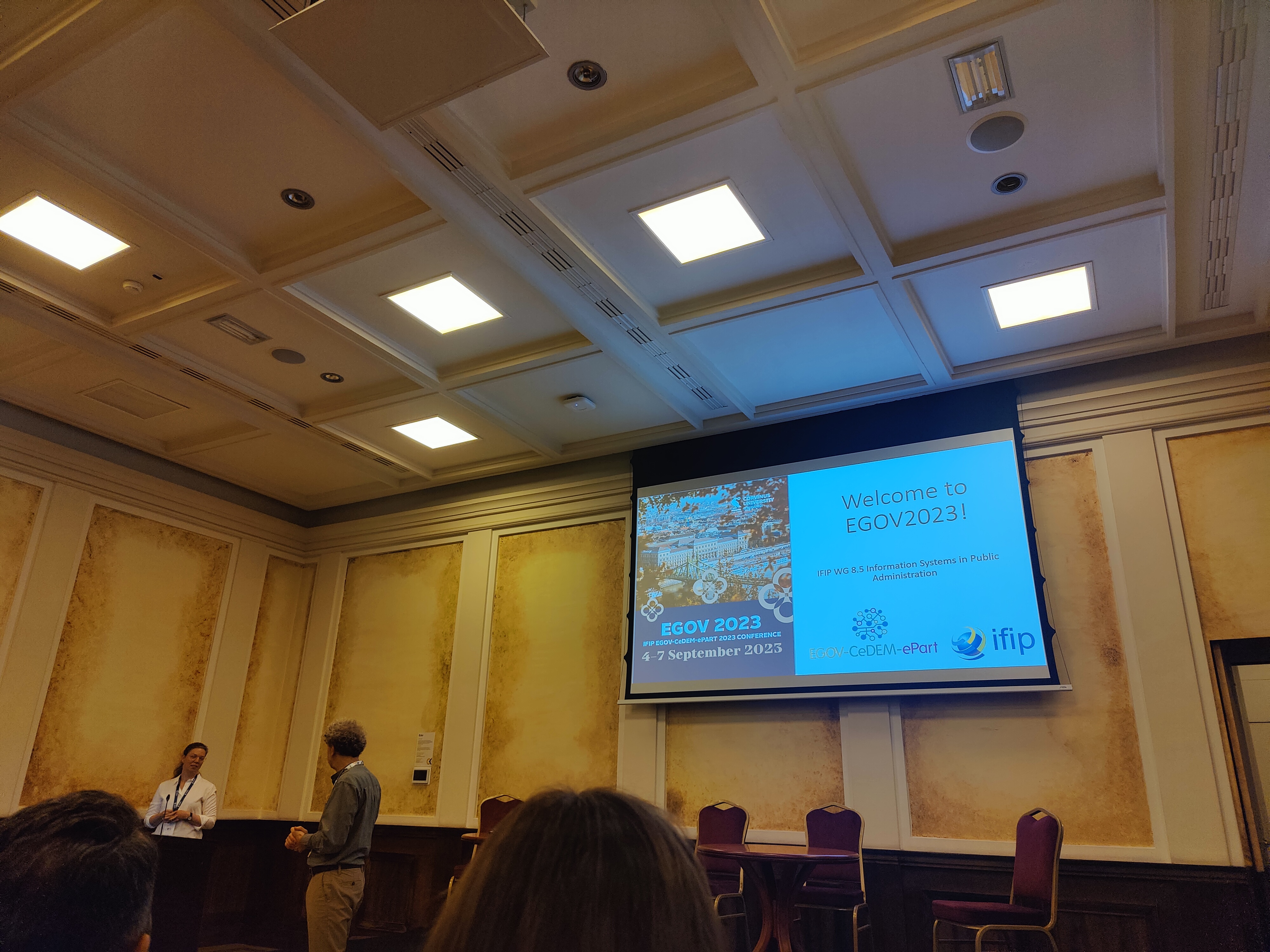
It finally took place! EGOV2023 – IFIP EGOV-CeDEM-EPART – one of the most recognized conference in e-Government, ICT and public administration and related topics (incl., Smart Cities, Sustainability, Innovation and many more) that lasted 3 days in charming city of Budapest (Hungary) is over, and I am here to reflect on it (just in a few words), since although these were just 3 days, they were very busy and full of insights, as well as activities, since every day I took another role, i.e., day#1 – presenter of the paper, day#2 – workshop organizer, day#3 – chair of two out of three sessions of “Emerging Issues and Innovations” track I co-chaired together with Marijn Janssen, Csaba Csaki and Francesco Mureddu. Not to forget, in this conference I am also a program committee of Open Data track.

Let me now provide a few insights on all these days, including my roles.

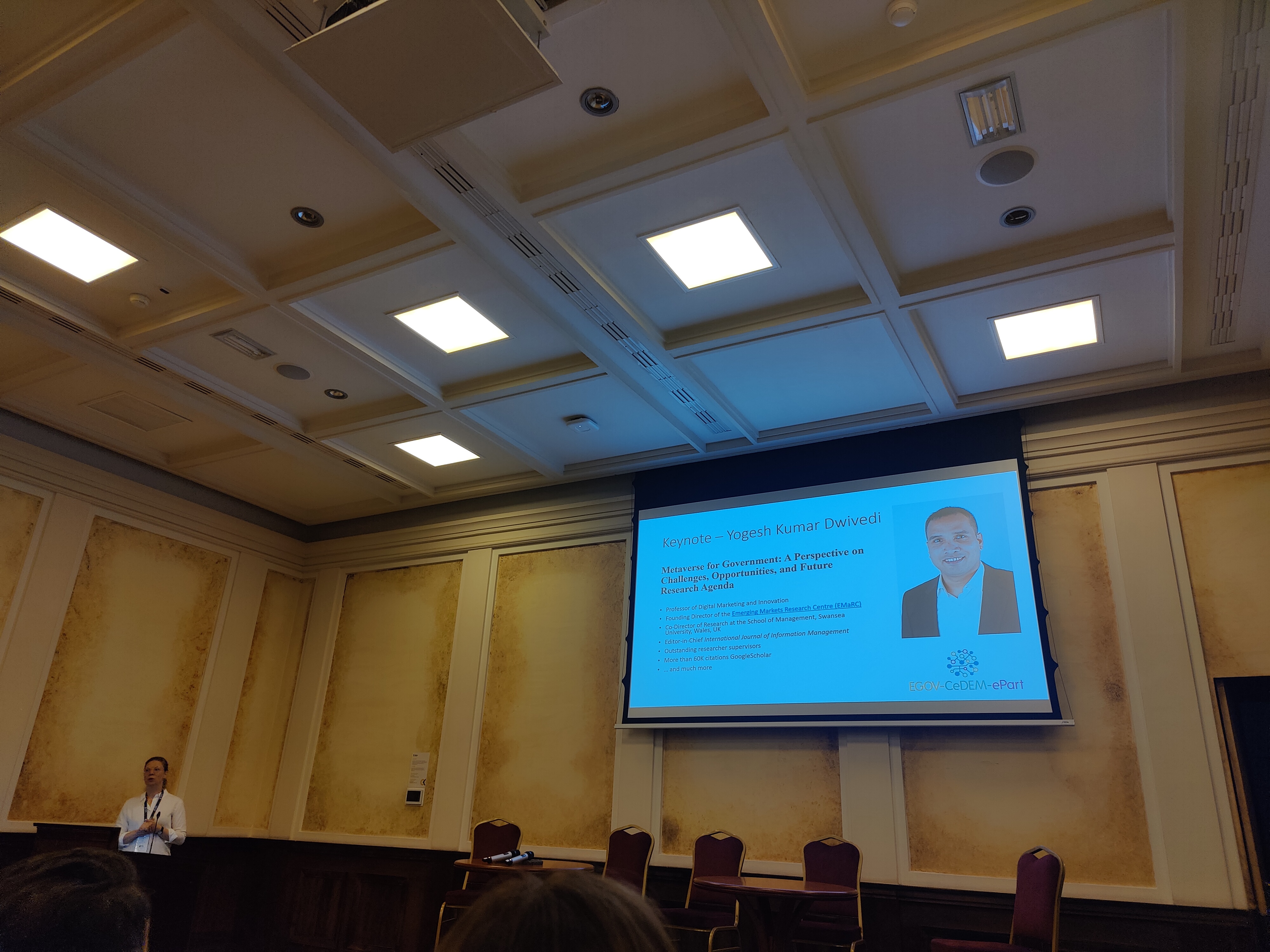
Let’s start with day#1… After conference opening by Ida Lindgren and Csaba Csaki – our local host, who did a great job – organized a very unique conference with exceptionally rich social programme, a brilliant keynote talk was delivered by Professor Yogesh K Dwivedi (possibly the most impactful researcher in the area) on Metaverse for Government and associated Challenges, Opportunities, as well as Future Research Agenda, as part of which the claim of a lack of studies on this topic was made. Luckily, our track “Emerging Issues and Innovations” has accepted one paper on Metaverse in digital government, which was the only at the conference, however, unfortunately, the discussion had not happened due to earlier departure of Yogesh and late arrival of authors. Anyway, almost immediately after the keynote the session, where I delivered a talk on HVD determination “Towards High-Value Datasets determination for data-driven development: a systematic literature review” (authors: Nikiforova, Rizun, Ciesielska, Alexopoulos, Miletić) took place. Just to remind you, I posted on this paper before – this is that paper, which has been already named “signal in the noise“, in which we asked ourselves and the current body of the knowledge (this is a systematic literature review-driven study):
❓how is the value of the open government data perceived / defined? Are local efforts being made at the country levels to identify dataset that provide the most value to stakeholders of the local open data ecosystem?
❓What datasets are considered to be of higher value in terms of data nature, data type, data format, data dynamism?
❓What indicators are used to determine HVD?
❓Whether there is a framework for determining country-specific HVD? I.e., is it possible to determine what datasets are of value and interest for their reuse & value creation, taking into account the specificities of the country, e.g., culture, geography, ethnicity, likelihood of crises and/or catastrophes.
Although neither OGD, nor the importance of data value are new topics, scholarly publications dedicated to HVD are very limited that makes study unique and constituting a call for action – probably this is also why it it is recommended for reading not only by us but also by The Living Library (by New York University, NYU Tandon School of Engineering, govlab). All in all, we have established some knowledge based, incl. several definitions of HVD, data-related aspects, stakeholders, some indicators and approaches that can now be used as a basis for establishing a discussion of what a framework for determining HVD should look like, which, along with the input we received from a series of international workshops as part of ICEGOV2022, ICOD2022 and DGO2023 with open data experts could enrich the common understanding of the goal, thereby contributing to the next open data wave.
👉Read the paper here
👉See slides here
👉Find supplementary data in open access at Zenodo here
Here I am very grateful to session attendees for raising a discussion around the topic, where some of those comments confirmed once more the correctness of both the problem statement and our future plans – thanks a lot!

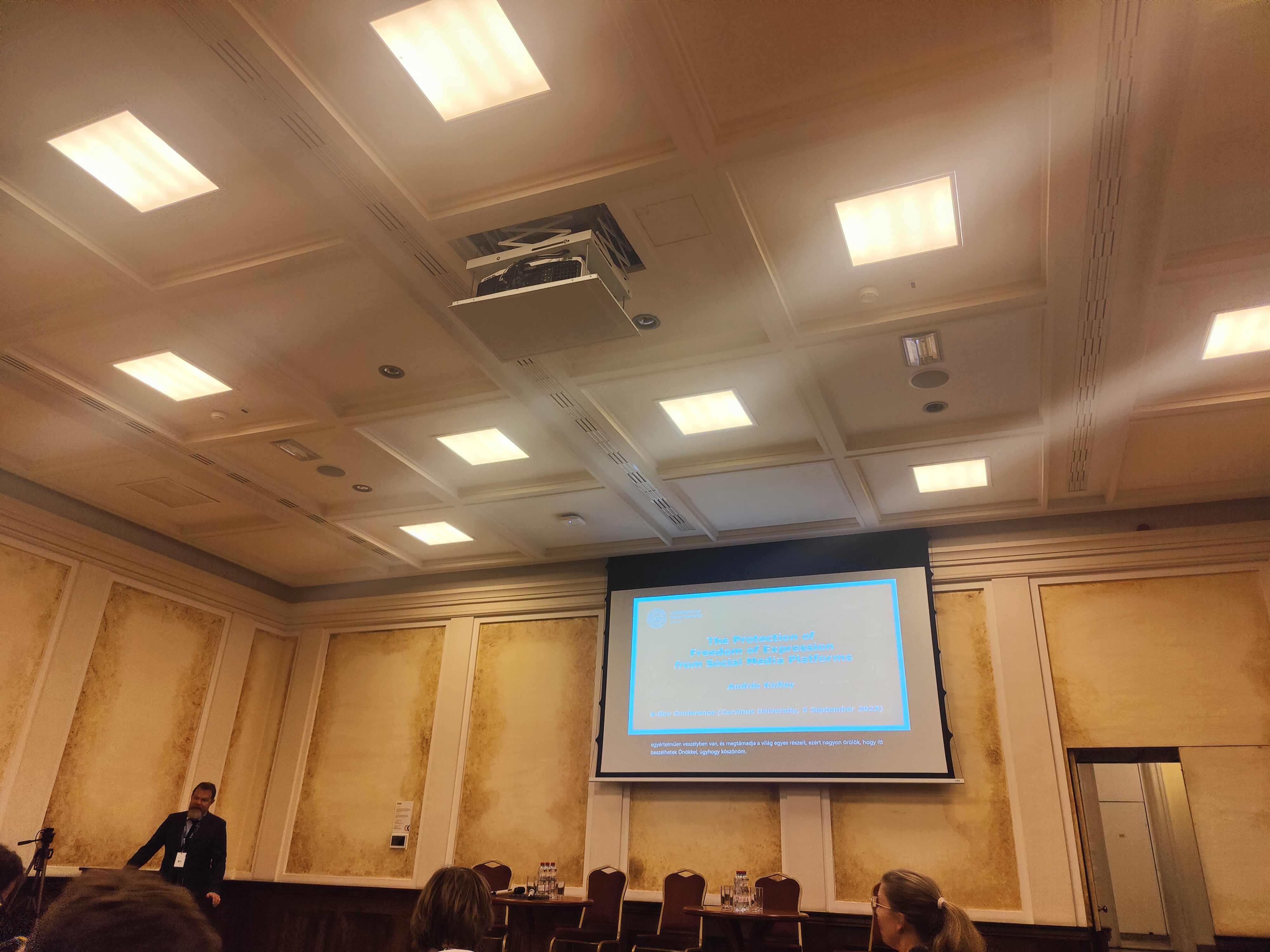
Day#2 of started with another keynote talk, whcih this time delivered by Andras Koltay (President of the National Media and Infocommunications Authority and the Media Council of Hungary) on the protection of freedom of expression from social media platforms – very different but yet very insightful talk. Then, my second role of the workshop organizer and chair followed. As part of our workshop “PPPS’2023 – Proactive and Personalised Public Services: Searching for Meaningful Human Control in Algorithmic Government” (chairs: Anastasija Nikiforova, Nitesh Bharosa, Dirk Draheim, Kuldar Taveter). As part of this workshop, which took place in a hybrid mode (not an easy task), we initiated a discussion about personalised and Proactive Public Services, i.e.:
🎯talked about the concepts of public services, reactive and proactive models of public services, and models of their personalization;
🎯asked participants to share their views on public services and the levels of proactivity and personalisation of these services in their countries aiming to develop concepts for holistic proactive and personalised public service delivery;
🎯tried to establish a clearer vision of the “as-is” model and the necessary transition to the “to-be” model, their underlying factors, as well as pitfalls of which governments should be aware when designing, developing, and setting up proactive and personalised public services, trying to understand what are those emerging technologies that will likely have greater effect on public services in terms of both driving them or creating obstacles / barriers for their development and maintenance.
Read a bit more 👉 here
Special thanks to all participants, who attended and were very active (and survived)!

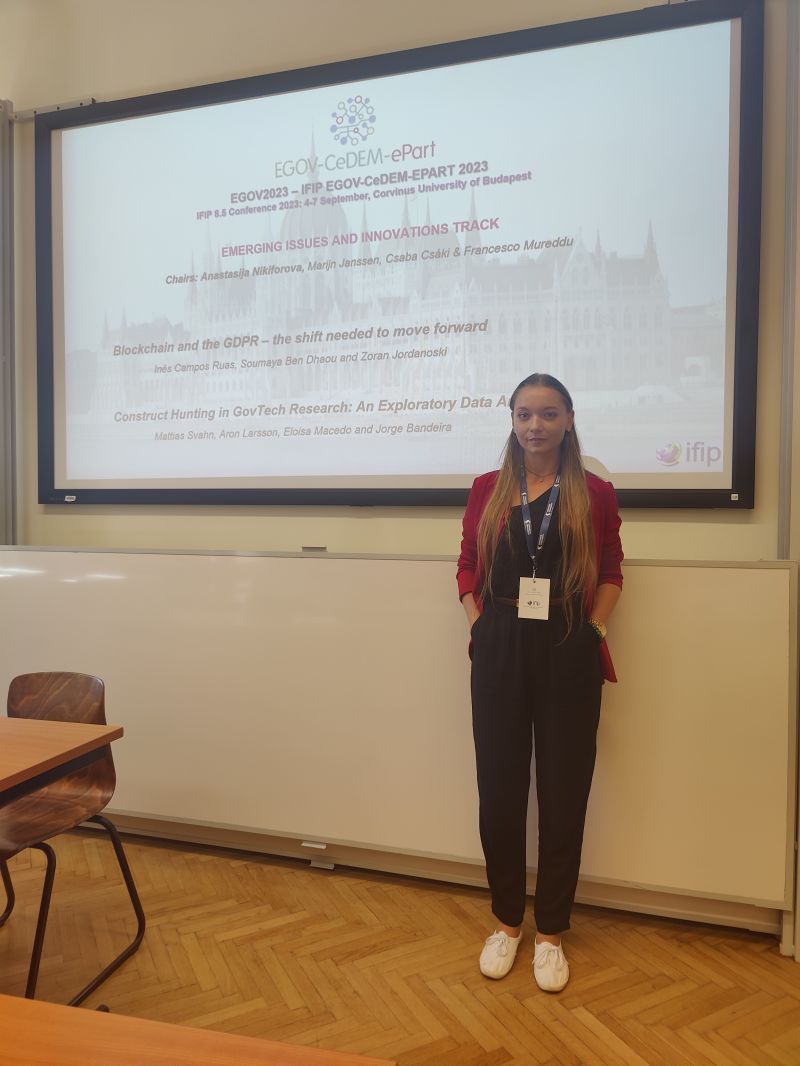
And now a few insights from day#3, when three sessions of our Emerging Issues and Innovations track (chairs: Marijn Janssen, Anastasija Nikiforova, Dr. Csaba Csaki, Francesco Mureddu) finally took place, where I was delighted to chair two of these sessions. Within these three sessions, 8 very diverse, but at the same time super interesting and insightful talks were delivered (predominantly from the United Nations University and Sweden), namely:
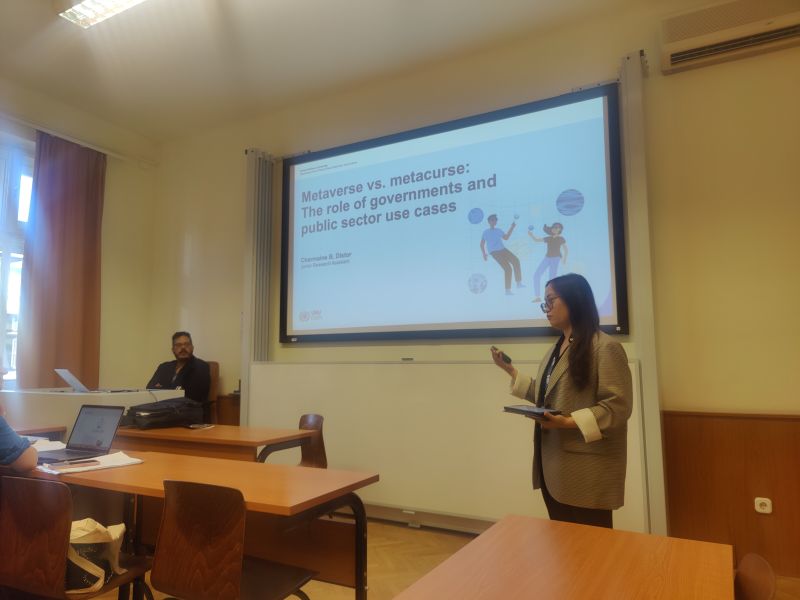
✍Metaverse vs. metacurse: The role of governments and public sector use cases by Charmaine Distor, Soumaya Ben Dhaou, & Morten Meyerhoff Nielsen that can be seen as a continuation of the keynote talk by Prof. Yogesh Dwivedi delivered at the 1st day;
✍Dynamic Capabilities and Digital Transformation in Public sector: Evidence from Brazilian case study by Larissa Magalhães;
✍Affording and constraining digital transformation: The enactment of structural change in three Swedish government agencies by Malin Tinjan, Robert Åhlén, Susanna Hammelev Jörgensen & Johan Magnusson
✍The Vicious Cycle of Magical Thinking: How IT Governance Counteracts Digital Transformation by Susanna H. Jörgensen, Tomas Lindroth, Johan Magnusson, Malin Tinjan, Jacob Torell & Robert Åhlen
✍Buridan’s Ass: Encapsulation as a Possible Solution to the Prioritization Dilemma of Digital Transformation by Johan Magnusson, Per Persson, Jacob Torell & Ingo Paas
✍Measuring digital transformation at the local level: assessing the current state of Flemish municipalities by Lieselot Danneels & Sarah Van Impe
✍Blockchain and the GDPR – the shift needed to move forward by Inês Campos Ruas, Soumaya Ben Dhaou & Zoran Jordanoski
✍Construct Hunting in GovTech Research: An Exploratory Data Analysis by Mattias Svahn, Aron Larsson, Eloisa Macedo and Jorge Bandeira
Read papers 👉 here, here & here
Big thanks go to both authors and presenters, as well as the audience, who was very active (even despite the fact that it was the very last day of the conference) and made these sessions a success!
And right after these two sessions, the third keynote by Laszlo Trautmann “The ethics of expertise – the political economy implications of AI”.


And the last but not the least, yet another social event – wine tasting at Etyeki Kúria Borászat / Winery, which was the perfect happy end of the EGOV2023!

Exceptional organization by Corvinus University of Budapest, Csaba Csaki and his team, International Federation for Information Processing (IFIP), Digital Government Society – cheers!🍷🍷🍷
Editorial Board Member of Data & Policy (Cambridge University Press)

Since July 2022, I am elected by Syndicate of Cambridge University Press as an Editorial Board Member of the Cambridge University Journal Data & Policy. Data & Policy is a peer-reviewed, open access venue dedicated to the potential of data science to address important policy challenges. For more information about the goal and vision of the journal, read the Editorial Data & Policy: A new venue to study and explore policy–data interaction by Stefaan G. Verhulst, Zeynep Engin, and Jon Crowcroft. More precisely, I act as an Area Editor of “Focus on Data-driven Transformations in Policy and Governance” area (with a proud short name “Area 1“). This Area focuses on the high-level vision for philosophy, ideation, formulation and implementation of new approaches leading to paradigm shifts, innovation and efficiency gains in collective decision making processes. Topics include, but are not limited to:

  • Data-driven innovation in public, private and voluntary sector governance and policy-making at all levels (international; national and local): applications for real-time management, future planning, and rethinking/reframing governance and policy-making in the digital era;
  • Data and evidence-based policy-making;
  • Government-private sector-citizen interactions: data and digital power dynamics, asymmetry of information; democracy, public opinion and deliberation; citizen services;
  • Interactions between human, institutional and algorithmic decision-making processes, psychology and behaviour of decision-making;
  • Global policy-making: global existential debates on utilizing data-driven innovation with impact beyond individual institutions and states;
  • Socio-technical and cyber-physical systems, and their policy and governance implications.

The remaining areas represent more specifically the current applications, methodologies, strategies which underpin the broad aims of Data & Policy‘s vision: Area 2 “Data Technologies and Analytics for Policy and Governance“, Area 3 “Policy Frameworks, Governance and Management of Data-driven Innovations“, Area 4 “Ethics, Equity and Trust in Policy Data Interactions“, Area 5 “Algorithmic Governance“, Area 6 “Data to Tackle Global Issues and Dynamic Societal Threats“.

Editorial committees of Data & Policy (Area 1)

For the types of submission we are interested in, they are four:

  • Research articles that use rigorous methods that investigate how data science can inform or impact policy by, for example, improving situation analysis, predictions, public service design, and/or the legitimacy and/or effectiveness of policy making. Published research articles are typically reviewed by three peer reviewers: two assessing the academic or methodological rigour of the paper; and one providing an interdisciplinary or policy-specific perspective. (Approx 8,000 words in length).
  • Commentaries are shorter articles that discuss and/or problematize an issue relevant to the Data & Policy scope. Commentaries are typically reviewed by two peer reviewers. (Approx 4,000 words in length).
  • Translational articles are focused on the transfer of knowledge from research to practice and from practice to research. See our guide to writing translational papers. (Approx 6,000 words in length).
  • Replication studies examine previously published research, whether in Data & Policy or elsewhere, and report on an attempt to replicate findings.

Read more about Data & Policy and consider submitting your contribution!

Moreover, as a part of this journal, we (Data & Policy community) organize a hybrid physical-virtual format, with one-day, in-person conferences held in three regions: Asia (Hong Kong), America (Seattle) and Europe (Brussels). “Data for Policy: Ecosystems of innovation and virtual-physical interactions” conference I sincerely recommend you to consider and preferably to attend! While this is already the seventh edition of the conference, I take part in its organization for the first year, thus am especially excited and interested in its success!

Data for policy, Area Editors

In addition to its six established Standard Tracks, and reflecting its three-regions model this year, the Data for Policy 2022 conference highlights “Ecosystems of innovation and virtual-physical interactions” as its theme. Distinct geopolitical and virtual-physical ecosystems are emerging as everyday operations and important socio-economic decisions are increasingly outsourced to digital systems. For example, the US’s open market approach empowering multinational digital corporations contrasts with greater central government control in the Chinese digital ecosystem, and radically differs from Europe’s priority on individual rights, personal privacy and digital sovereignty. Other localised ecosystems are emerging around national priorities: India focuses on the domestic economy, and Russia prioritises public and national security. The Global South remains underrepresented in the global debate. The developmental trajectory for the different ecosystems will shape future governance models, democratic values, and the provision of citizen services. In an envisioned ‘metaverse’ future, boundaries between physical and virtual spaces will become even more blurred, further underlining the need to scrutinise and challenge the various systems of governance.

The Data for Policy conference series is the premier global forum for multiple disciplinary and cross-sector discussions around the theories, applications and implications of data science innovation in governance and the public sector. Its associated journal, Data & Policy, published by Cambridge University Press has quickly established itself as a major venue for publishing research in the field of data-policy interactions. Data for Policy is a non-profit initiative, registered as a community interest company in the UK, supported by sustainer partners Cambridge University Press, the Alan Turing Institute and the Office for National Statistics.

Read more about Data for Policy and become a part of it!