💬💬💬 Contributed talk for QWorld Quantum Science Days 2023 (QSD 2023)

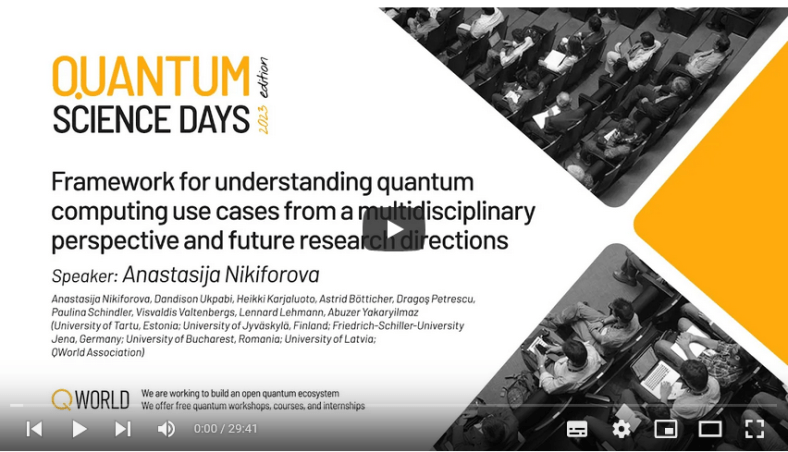
In the very last days of May 2023, I had yet another experience – I delivered a contributed talk at QWorld Quantum Science Days 2023 (QSD 2023) titled “Framework for understanding quantum computing use cases from a multidisciplinary perspective and future research directions” (Ukpabi, D.C., Karjaluoto, H., Botticher, A., Nikiforova, A., Petrescu, D.I., Schindler, P., Valtenbergs, V., Lehmann, L., & Yakaryılmaz, A), which, in fact, is based on the paper we made publicly available some time ago and developed it even earlier when together with Germany, Spain, Finland, Romania, and Latvia we built a consortia and submitted a project proposal to CHANSE call “Transformations: Social and Cultural Dynamics in the Digital Age”. We went there much far beyond my expectations, i.e. in fact, we were notified that this time we will not be granted the funding for the project at the very last stage, having gone through all those intermediate evaluation rounds, which were already fascinating news (at least for me). While working on the proposal and building our network, we conducted a preliminary analysis of the area, which then, regardless of the output of the application, we decided to continue and bring to at least some logical end. We like our result so decided to make it publicly available. And now, a few years from that, we submitted our work to QWorld Quantum Science Days 2023 (QSD 2023) and were accepted. It was a big surprise, and I, as the person delegated by our team to present our study, delivered this talk, where I finally familiarized the audience with our findings. What was my surprise when my talk, which followed immediately after the keynote “Let’s talk about Quantum; Societal readiness through science communication research” delivered on behalf of Quantum DELTA NL by Julia Cramer, was in the very similar direction? It is also worth mentioning a very interesting coincidence that while the keynote elaborated on the DELTA that stands for five major quantum hubs, namely Delft, Eindhoven, Leiden, Twente, Amsterdam, I was preparing the last things for my presentation located in the Delta building – it is the name of the building my office is located in. In both cases, no connection with COVID-19 😀

🤔 What is the paper about?

There has been increasing awareness of the tremendous opportunities inherent in quantum computing. It is expected that the speed and efficiency of quantum computing will significantly impact the Internet of Things, cryptography, finance, and marketing. Accordingly, there has been increased quantum computing research funding from national and regional governments and private firms. However, ❗❗❗ critical concerns regarding legal, political, and business-related policies germane to quantum computing adoption exist ❗❗❗

Since this is an emerging and highly technical domain, most of the existing studies focus heavily on the technical aspects of quantum computing. In contrast, our study highlights its practical and social uses cases, which are needed for the increased interest of governments. More specifically, our study offers a multidisciplinary review of quantum computing, drawing on the expertise of scholars from a wide range of disciplines whose insights coalesce into a framework that simplifies the understanding of quantum computing, identifies possible areas of market disruption and offer empirically based recommendations that are critical for forecasting, planning, and strategically positioning QCs for accelerated diffusion.

"Framework for understanding quantum computing use cases from a multidisciplinary perspective and future research directions" (Ukpabi, D.C., Karjaluoto, H., Botticher, A., Nikiforova, A., Petrescu, D.I., Schindler, P., Valtenbergs, V., Lehmann, L., & Yakaryılmaz, A)

To this end, we conducted a gray literature research, whose outputs were then structured in accordance with Dwivedi et al., 2021 (Dwivedi et al. (2021). Setting the future of digital and social media marketing research: Perspectives and research propositions. International Journal of Information Management, 59, 102168), which embodies three broad areas—environment, users, and application areas—and the dominant sub-themes presented in figure below. We found that for application areas, business and finance, renewable energy, medicine & pharmaceuticals, and manufacturing are now the hottest. While for environment, we found subdomains such as ecosystem, security, jurisprudence, institutional change & geopolitics. And for the users, nothing surprising – as typically, customers, firms, countries. We then dive into each of those areas, as well as later come up with the most popular topics, the most promising, and overlooked.

Sounds interesting? Read the paper here, find slides here, watch video here.

Quantum Science Days is an annual, international, and virtual scientific conference organized by QWorld (Association) to provide opportunities to the quantum community to present and discuss their research results at all levels (from short projects to thesis work to research publications), and to get to know each other. The third edition (QSD2023) included 7 invited speakers, 10 thematic talks on “Building an Open Quantum Ecosystem”, 31 contributed talks, an industrial demo session by Classiq, and a career talk on quantum. QSD2023 was sponsored by Unitary Fund & Classiq and supported by Latvian Quantum Initiative.

Qworld

Rii Forum 2023 “Innovation 5.0: Navigating shocks and crises in uncertain times Technology-Business-Society” & a plenary debate “Advances in ICT & the Society”

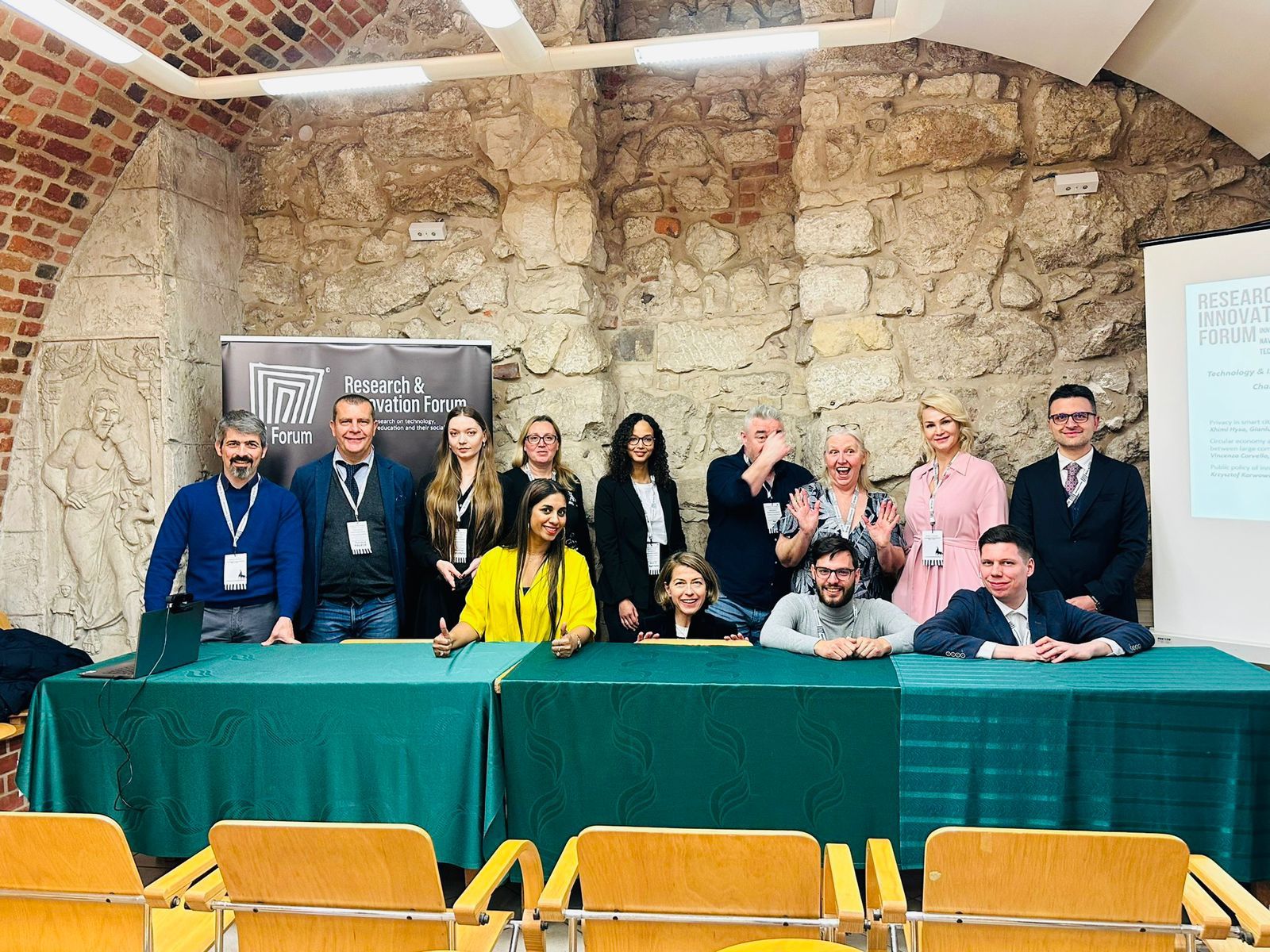
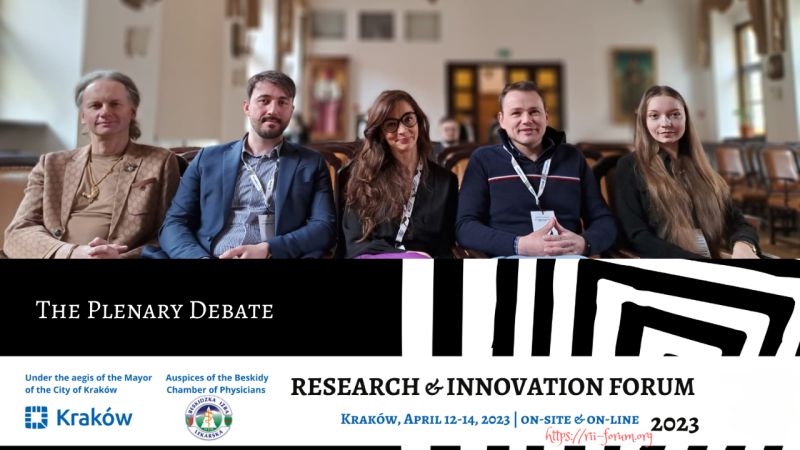
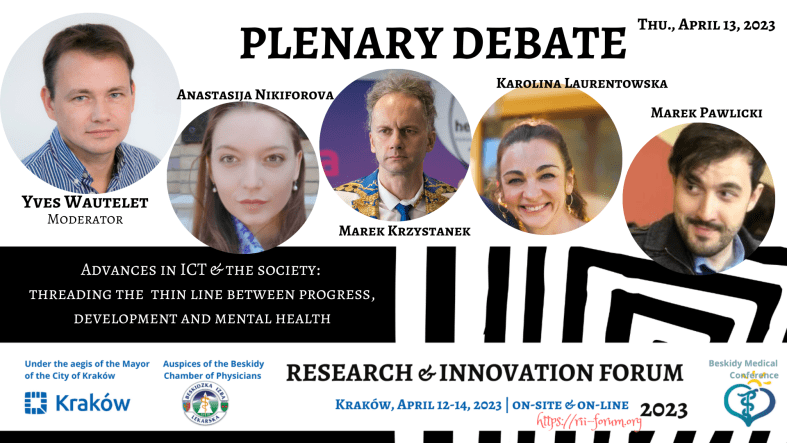
Last week, I had an unforgettable experience at the Research and Innovation Forum (RiiForum) on which I posted previously in Krakow, Poland, serving as plenary speaker and session chair. It was another great experience to have an absolutely amazing plenary session titled “Advances in ICT & the Society: threading the thin line between progress, development and mental health”, where we – Prof. Dr. Yves Wautelet, Prof. Dr. Marek Krzystanek, Karolina Laurentowska & Prof. Marek Pawlicki – discussed disruptive technologies in our professional lives in the past years, how they affected us and our colleagues, how they affect(ed) society and its specific groups, including their mental health, and general perception of technology, i.e. an enemy of humanity, or rather a friend and support, and how to make sure the second take place. And from this we have developed a discussion around AI, chatGPT, Metaverse, blockchain, even slightly touching on quantum computing. Of course, all this was placed in the context of democracy and freedoms / liberties. All in all, we approached the topic of governance and policy-making, which is too often reactive rather than proactive, which, in turn, leads to many negative consequences, as well as elaborated on the engineering practices. 

To sum up – emerging and disruptive technologies, Blockchain, AI, Metaverse, digital competencies, education, liberty, democracy, openness, engagement, metaverse, inclusivity, Industry 5.0, Society 5.0 – and it is not a list of buzzwords, but a list of topics we have managed to cover both plenary speakers and the audience and continued to talk about them during the whole conference. Rich enough, isn’t it?

And then the day did not end, continuing with several super insightful sessions, where, of course, one I enjoyed most is the one that I chaired. Three qualitative talks with further rich discussion after each thanks to an excellent audience, despite the fact this was the last session of the day (before the dinner), namely:

  • Privacy in smart cities using VOSviewer: a bibliometric analysis by Xhimi Hysa, Gianluca Maria Guazzo, Vilma Cekani, Pierangelo Rosati
  • Public policy of innovation in China by Krzysztof Karwowski, Anna Visvizi
  • How Human-Centric solutions and Artificial Intelligence meet smart cities in Industry 5.0 by Tamai Ramirez, Sandra Amador, Antonio Macia-Lillo, Higinio Mora
     

And the last, but not the least, Krakow surprised me lot (in a positive sense, of course) – it was my first time in Poland, and I am absolutely glad that it was on such a beautiful city as Krakow – the place with the rich history and culture! Thank you dear RiiForum2023 organizers – Anna Visvizi, Vincenzo Corvello, ORLANDO TROISI, Mara Grimaldi, Giovanni Baldi and everyone who was involved – it is always a pleasure to be a part of this community!


Rii Forum 2023 “Innovation 5.0: Navigating shocks and crises in uncertain times Technology-Business-Society” & a plenary debate “Advances in ICT & the Society”

This April the next edition of the Research and Innovation Forum (Rii Forum) on which I posted previously will take place. For those, who are not familiar with Rii Forum yet, it is an annual conference that brings together researchers, academics, and practitioners in conceptually sound inter- and multi-disciplinary, empirically driven debate on key issues influencing the dynamics of social interaction today. Such a wide scope makes it a great event for those who do not want to be limited to a particular area or research question and want to be aware of everything that happens in today’s dynamic and multidisciplinary world. This, in turn, allows you not only to see another perspectives and topics, but also reconsider your topic, revealing something new, i.e. taking a look on it from a different angle, which is exceptionally valuable!

Technology, innovation, and education, as well as issues and topics located at their intersection, define the key dimensions of all discussions held during the Rii Forum. In continuously fragile international and domestic contexts, characterized by shocks, crises, and uncertainty, the Rii Forum 2023 seeks to address the multifaceted question of how to navigate these shocks, crises and uncertainty and deliver value to our society. Thus, the topic of Rii Forum 2023 is “Innovation 5.0.: Navigating shocks and crises in uncertain times Technology – Business – Society” with seven tracks:

  • TRACK 1: Education in times of shocks, crises and uncertainty
  • TRACK 2: Smart cities and communities
  • TRACK 3: Big data, business and society: Managing the distributed risks and opportunities
  • TRACK 4: Management: Rethinking management in times of profound change
  • TRACK 5: Innovation, entrepreneurship, and innovation management in the era of Industry 5.0.
  • TRACK 6: ICT and the medicine and healthcare cluster
  • TRACK 7: Data-driven approaches & human resource management in the era of digitalization

As part of Rii Forum 2023 a plenary debate “Advances in ICT & the Society: threading the thin line between progress, development and mental health” will take place, where I was honored to be invited as one of four plenary speakers, particularly considering that according tot he invitation, the organizers see me as the person whose “expertise and your contribution to the academic debate make you one of the trendsetters in current debate on open data and data quality management”, as well as leading voice and influencer. The other three panel discussants are Prof. Dr. Marek Krzystanek, Karolina Laurentowska & Prof. Marek Pawlicki. Hope this will be an interactive, fruitful and productive discussion with further involvement of the audience!

Read more here and stay tuned for more information and reflections on the conference, in case you will not be able to attend it.

First International Electronic Governance with Emerging Technologies Conference (EGETC)

As the general co-chair of the First International Conference in Electronic Governance with Emerging Technologies (EGETC-2022), I sincerely invite you to consider your participation as authors and presenters or the attendees in this event.

First International Electronic Governance with Emerging Technologies Conference

Over the last decade, the importance of emerging technologies in government and public administrations has grown significantly. The growing demand for services that better meet changing user expectations for responsiveness and personalization, coupled with higher expectations of the role of government in the digital age, calls for a technologically mature public sector. There are many new emerging technologies serving as enablers to new forms of governance and novel applications in traditional governance functions, which role has been witnessed across various domains, including healthcare, medicine, education, tourism, and industry etc.. 

The aim of the First International Conference in Electronic Governance with Emerging Technologies (EGETC-2022) is to provide a forum for academics, scholars, and practitioners from academia and industry to share and exchange the recent developments in the domain of eGovernment and governance of digital organizations to shed light on the emerging research trends and their applications. 

Topics of interest include, but not limited to:

  • Intelligent systems for coordination in crisis emergency management
  • Distributed ledgers and Blockchains: governance, decentralized autonomous organizations (DAO)
  • Machine Learning (ML), Artificial Intelligence (AI) and Big Data management for Public Sector
  • Privacy, security and legal Informatics – AI and Law
  • Open Data, Open Government Data: transparency, trust, public participation, co-creation and Open Innovation
  • Digital transformation and Society 5.0
  • Linked Data, Linked Open Data (LOD)
  • Semantic E-government applications
  • Public Sector Knowledge Representation
  • Decision Support Systems (DSS) in Digital Governance
  • Natural Language Processing (NLP)
  • Cloud Computing
  • Bots, Automation agents, Self-learning systems 
  • Cryptocurrencies and incentive mechanism design
  • Multimedia and multilingual systems

It is particularly important that, in order to ensure the widest possible participation of communities, despite the availability of funding, the conference does not foresee any charges. I.e. both authors and presenters, and attendees/ listeners are welcome without registration fees.

First International Electronic Governance with Emerging Technologies  Conference (author: Anastasija Nikiforova)

In addition to the great team of organizers and members of the program committee, which has a rich list of outstanding experts, participants of this event will have an opportunity to enjoy the keynote speeches by Prof. Marijn Janssen – Full Professor in ICT & Governance at TU Delft, Netherlands, Dr. B K Murthy, CEO – Innovation and Technology Foundation, IIT Bhilai, Prof. Luis Martinez – Full Professor, University of Jaén, Jaén Spain. More information on their talk will follow…

Accepted papers presented at the EGETC2022 will be published in the proceeding published by Springer in Lecture Notes in Computer Science series (approval pending…). A short list of best papers will be invited for a post-conference publication in Government Information Quarterly (GIQ), Elsevier, Q1, Cite Score: 11.6, Impact Factor: 7.279 and Technological Forecasting and Social Change, An International Journal, Elsevier, Q1, Cite Score: 12.1, Impact Factor: 8.593.

If you are interested in submitting your paper, add to your calendar the submission date – May 30, while the event will take place during September 12-14, 2022.

Due to the unpredictability of the current situation in the light of pandemic, we expect to have a hybrid event, i.e. both online and on-site participation will be possible. For the later mode, we will be very glad to meet participants, who will be able to attend the event physically, in peaceful and spectacular city of Tamaulipas, Mexico in mid-September, 2022. Hope to meet you there!!!