📢✍️🗞️New paper alert! “Identifying patterns and recommendations of and for sustainable open data initiatives: A benchmarking-driven analysis of open government data initiatives among European countries”, GIQ

With this post I would like to introduce our new paper entitled “Identifying patterns and recommendations of and for sustainable open data initiatives: A benchmarking-driven analysis of open government data initiatives among European countries” (authors: Martin Lnenicka, Anastasija Nikiforova, Mariusz Luterek, Petar Milic, Daniel Rudmark, Sebastian Neumaier, Caterina Santoro, Cesar Casiano Flores, Marijn Janssen, and Manuel Pedro Rodríguez Bolívar) that has been just published in Government Information Quarterly journal (Elsevier) – the leading journal in the world for articles on e-governemnt, public administration, and, in fact, many other topics.

This paper focuses on benchmarking of open data initiatives over the years and attempts to identify patterns observed among European countries that could lead to disparities in the development, growth, and sustainability of open data ecosystems, considering different potentially relevant contexts such as e-government, open government data, open data indices and rankings, and others relevant for the country under consideration. Specifically, this study conducts a comparative analysis of different patterns of open (government) data initiatives and their effects in the eight European countries – Austria, Belgium, Czech Republic, Italy, Latvia, Poland, Serbia, Sweden, using six open data benchmarks Global Open Data Index (GODI), Open Data Maturity Report (ODMR), Open Data Inventory (ODIN), Open Data Barometer (ODB), Open, Useful and Re-usable data (OURdata) Index, Open Government Development Index (OGDI), two e-government reports (57 editions in total), and other relevant resources, covering the period of 2013–2022. In other words, to attain the objective of the study, we developed the composite benchmarks-driven analytical protocol.

Using the developed composite benchmarks-driven analytical protocol and a Delphi method, we reached a consensus within a panel of experts and validated a final list of 94 patterns, including their frequency of occurrence among studied countries and their effects on the respective countries. Finally, we took a closer look at the developments in identified contexts over the years and defined 21 recommendations for more resilient and sustainable open government data initiatives and ecosystems and future steps in this area.

We then performed the cluster analysis to find similarities between patterns based on their occurrence and effects (impacts). Both these analyses suggest a close link between approaches to benchmarking of open data initiatives and the development of e-government over the years. We found that e-government services, their interoperability, availability, transparency, efficiency, etc., have a positive influence here, i.e., to what extent OGD and related concepts will merge with e-government and can use its infrastructure and related services for their growth. Finally, we were also able to extract from the 25 patterns six high-level recommendations that are considered the key to success, i.e., for a sustainable and resilient OGD initiative. The discussion, in turn, allowed us to formulate 15 more recommendations for public administration, those who use/interpret indices, benchmarks, and reports, and academia, indicating some research agenda.

These are expected to lead to improved performance in applied indices and rankings and, more importantly, will facilitate the achievement of the benefits with which open (government) data are associated. While this is expected to be primarily important in instructing ODEs’ stakeholders (mainly policymakers), the findings identified the current research gaps to be further explored by researchers. As future research, we will expand the study to other countries, focusing our attention in specific areas of the OGD ecosystems to get valuable insights concerning OGD strategies used and in identifying development stages in OGD.

Sounds interesting? Read the article here!

In case of interest, cite this paper as:

  • Lnenicka, M., Nikiforova, A., Luterek, M., Milic, P., Rudmark, D., Neumaier, S., Santoro, C., Casiano Flores, C., Janssen, M., & Rodríguez Bolívar, M. P. (2024). Identifying patterns and recommendations of and for sustainable open data initiatives: A benchmarking-driven analysis of open government data initiatives among European countries. Government Information Quarterly, 41(1): 101898. https://doi.org/10.1016/j.giq.2023.101898
EGOV2024 – IFIP EGOV-CeDEM-EPART 2024 & our Emerging Issues and Innovations Track

Are you focusing on new topics emerging in the field of ICT and public sector, incl. public-private ecosystems? Then it is time to start preparing your submission for EGOV2023 – IFIP EGOV-CeDEM-EPART Emerging Issues and Innovations Track (chairs: Anastasija Nikiforova, Marijn Janssen, Francesco Mureddu).

EGOV2023 – IFIP EGOV-CeDEM-EPART is one of the most recognized conference in e-Government, ICT and public administration and related topics, which this year will be hosted in Belgium, in the heart of Europe, by Ghent University and KU Leuven – both top 100 universities.

 Innovation and application of emerging technologies is now more and more in the thinking of Governments at all levels. While it would be easy to consider the public sector as being less flexible or slow in adoption, presentations at recent EGOV-CeDEM-ePart conferences proved that one should not come to such a conclusion too easily. Upcoming technologies, innovative organizational solutions, or new avenues of involvement in public sector activities seem to be more commonplace – along with the potential issues and challenges that come with such endeavours. Policy-makers and public sector officials are now expected to embrace change, consider digital transformation, or improve governance practices. At the same time, public sector researchers are also influenced by new views, methods, tools and techniques.

🎯The goal of this track is to provide a platform for the discussion of new ideas, issues, problems, and solutions, that keep entering the public sphere. Ideas that are emerging but might not fit other conference tracks are also welcome. Focus may include but is not limited to:

  • 💡 Looking ahead into social innovation
  • 💡Future studies, the future of government, policy-making and democracy
  • 💡New trends in public sector research such as Metaverse, Large Language Models (LLMs), generative AI and its implementations such as chatGPT, Claude, ChatSonic, Poe – benefits, risks, adoption and resistance to its adoption by the public sector and citizens;
  • 💡Global challenges that go beyond nation states (such as migration, climate change etc.) and which require international collaboration of individual governments;
  • 💡Digital transformation in public sector context;
  • 💡The future of digital governance;
  • 💡Public values in transforming the government;
  • 💡The role of government in smart cities (incl. smart sustainable cities) and sustainable living;
  • 💡The role of the public sector in Human-Centered Society known as Society 5.0;
  • 💡Government in the metaverse;
  • 💡Self-Service Structures for Inclusion;
  • 💡Public-private sector collaboration and integration;
  • 💡Decentralized Autonomous Organizations (DAOs), smart contracts and blockchain;
  • 💡Preparing for the policy challenges of future technologies;
  • 💡Regulating misinformation;
  • 💡New technologies for automated decision-making;
  • 💡The future public sector use and regulation of latest AI or genAI solutions;
  • 💡Public use as well as regulations of industry 4.0 and Industry 5.0 and the Internet of Things (IoT);
  • 💡The relationships of governments and Fintech;
  • 💡Upcoming issues of eVoting / internet voting including application of digital signatures in the public sector;
  • 💡Online public community building;
  • 💡Utilization of digital billboards;
  • 💡Latest trends in co-creation and service delivery;
  • 💡Discussion of new research methods that have not been applied in this context;
  • 💡Application of role theory in the analysis of public sector functions and processes;
  • 💡Forward looking insights from case studies – let it be successful or failed experiments.

Track Chairs

  • Anastasija Nikiforova, Tartu University, Estonia
  • Marijn Janssen, Delft University of Technology, the Netherlands
  • Francesco Mureddu, The Lisbon Council, Belgium

This time International Federation for Information Processing (IFIP) EGOV-CeDEM-EPART will be hosted by KU Leuven and Ghent University, September 2024, while the deadline for submitting your paper is set to March, 2024.

Stay tuned, more info to come!

IFIP EGOV-CeDEM-EPART 2023 – retrospective on how it was? From Metaverse to wine tasting

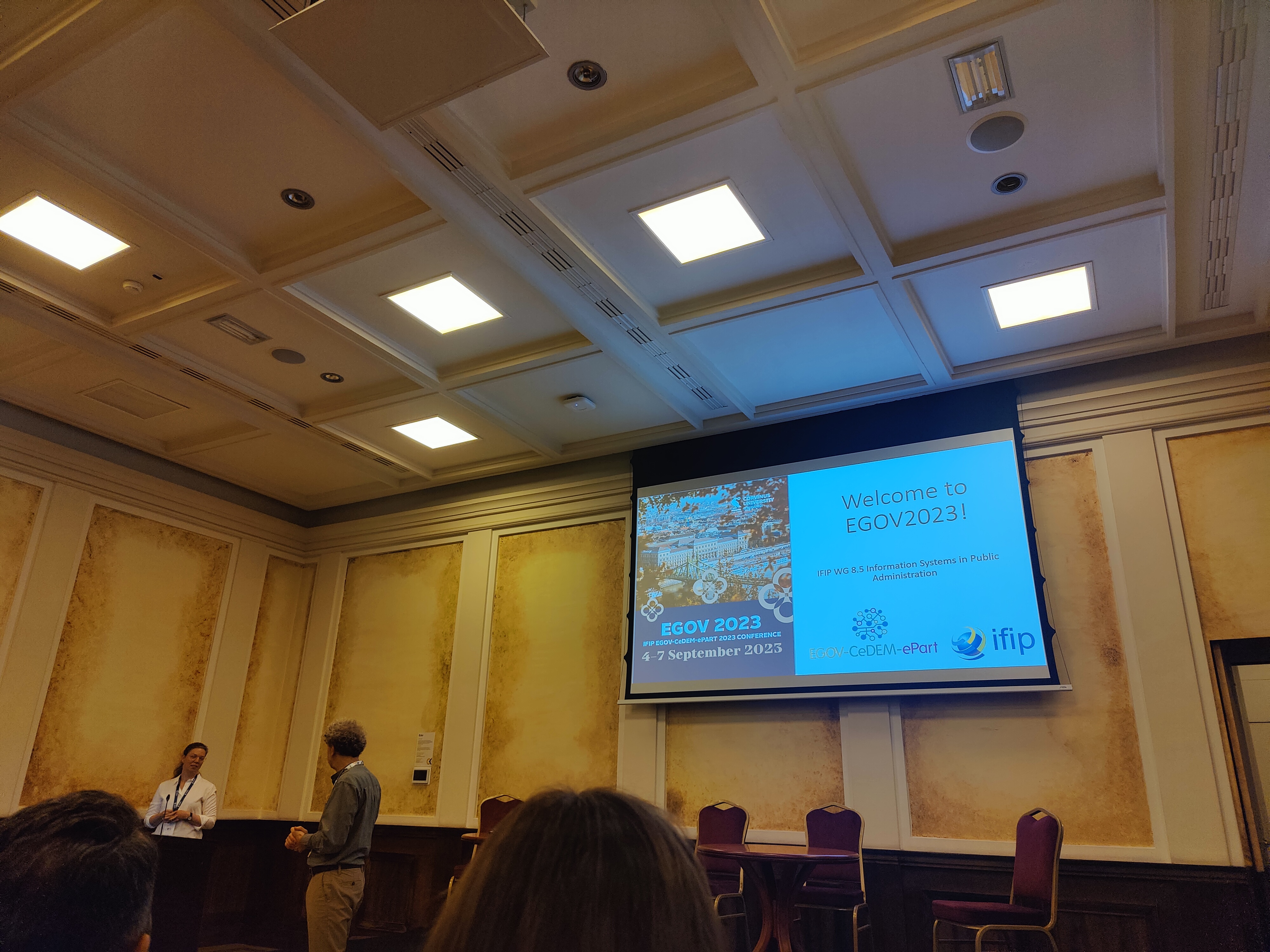
It finally took place! EGOV2023 – IFIP EGOV-CeDEM-EPART – one of the most recognized conference in e-Government, ICT and public administration and related topics (incl., Smart Cities, Sustainability, Innovation and many more) that lasted 3 days in charming city of Budapest (Hungary) is over, and I am here to reflect on it (just in a few words), since although these were just 3 days, they were very busy and full of insights, as well as activities, since every day I took another role, i.e., day#1 – presenter of the paper, day#2 – workshop organizer, day#3 – chair of two out of three sessions of “Emerging Issues and Innovations” track I co-chaired together with Marijn Janssen, Csaba Csaki and Francesco Mureddu. Not to forget, in this conference I am also a program committee of Open Data track.

Let me now provide a few insights on all these days, including my roles.

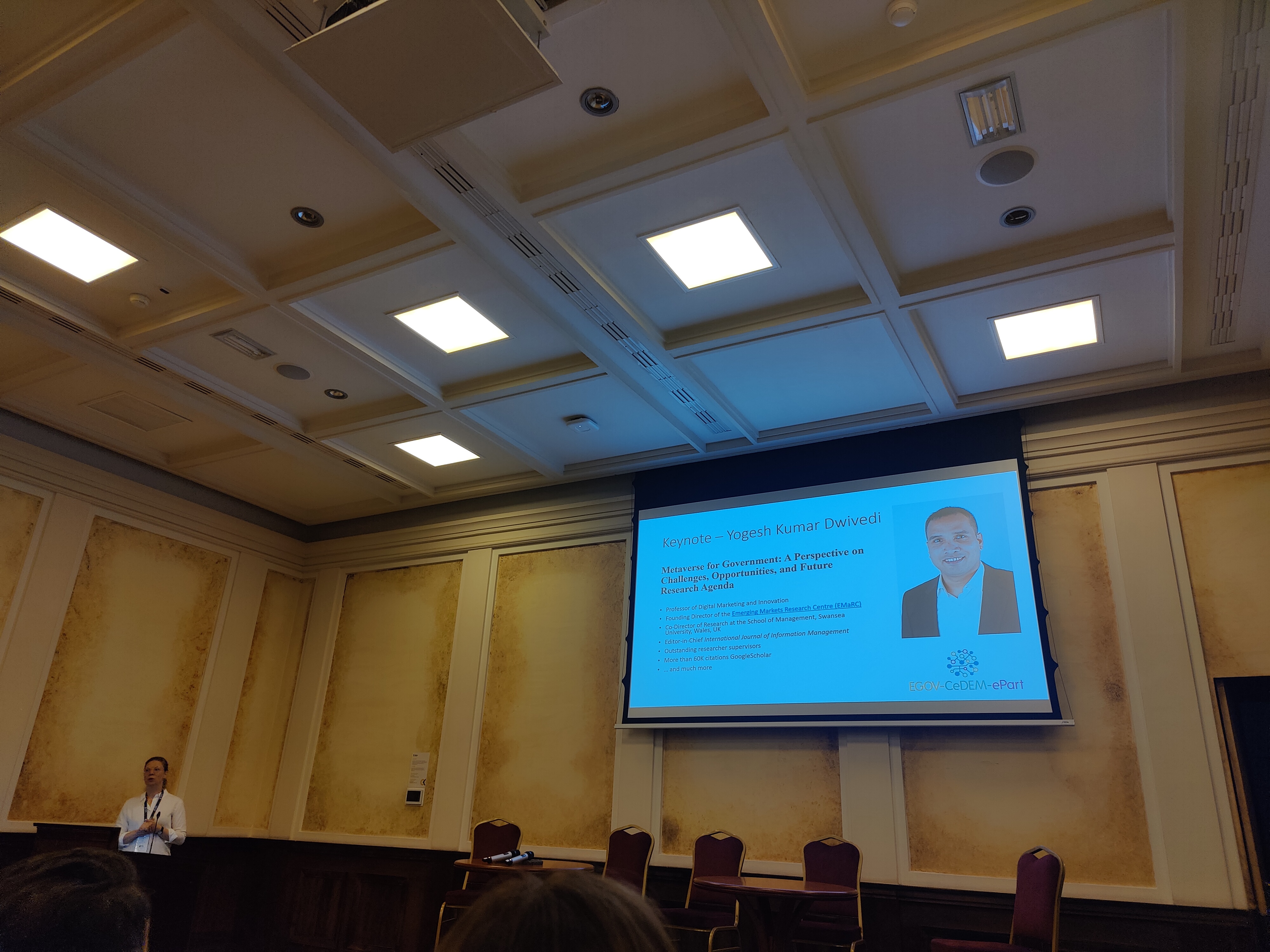
Let’s start with day#1… After conference opening by Ida Lindgren and Csaba Csaki – our local host, who did a great job – organized a very unique conference with exceptionally rich social programme, a brilliant keynote talk was delivered by Professor Yogesh K Dwivedi (possibly the most impactful researcher in the area) on Metaverse for Government and associated Challenges, Opportunities, as well as Future Research Agenda, as part of which the claim of a lack of studies on this topic was made. Luckily, our track “Emerging Issues and Innovations” has accepted one paper on Metaverse in digital government, which was the only at the conference, however, unfortunately, the discussion had not happened due to earlier departure of Yogesh and late arrival of authors. Anyway, almost immediately after the keynote the session, where I delivered a talk on HVD determination “Towards High-Value Datasets determination for data-driven development: a systematic literature review” (authors: Nikiforova, Rizun, Ciesielska, Alexopoulos, Miletić) took place. Just to remind you, I posted on this paper before – this is that paper, which has been already named “signal in the noise“, in which we asked ourselves and the current body of the knowledge (this is a systematic literature review-driven study):
❓how is the value of the open government data perceived / defined? Are local efforts being made at the country levels to identify dataset that provide the most value to stakeholders of the local open data ecosystem?
❓What datasets are considered to be of higher value in terms of data nature, data type, data format, data dynamism?
❓What indicators are used to determine HVD?
❓Whether there is a framework for determining country-specific HVD? I.e., is it possible to determine what datasets are of value and interest for their reuse & value creation, taking into account the specificities of the country, e.g., culture, geography, ethnicity, likelihood of crises and/or catastrophes.
Although neither OGD, nor the importance of data value are new topics, scholarly publications dedicated to HVD are very limited that makes study unique and constituting a call for action – probably this is also why it it is recommended for reading not only by us but also by The Living Library (by New York University, NYU Tandon School of Engineering, govlab). All in all, we have established some knowledge based, incl. several definitions of HVD, data-related aspects, stakeholders, some indicators and approaches that can now be used as a basis for establishing a discussion of what a framework for determining HVD should look like, which, along with the input we received from a series of international workshops as part of ICEGOV2022, ICOD2022 and DGO2023 with open data experts could enrich the common understanding of the goal, thereby contributing to the next open data wave.
👉Read the paper here
👉See slides here
👉Find supplementary data in open access at Zenodo here
Here I am very grateful to session attendees for raising a discussion around the topic, where some of those comments confirmed once more the correctness of both the problem statement and our future plans – thanks a lot!

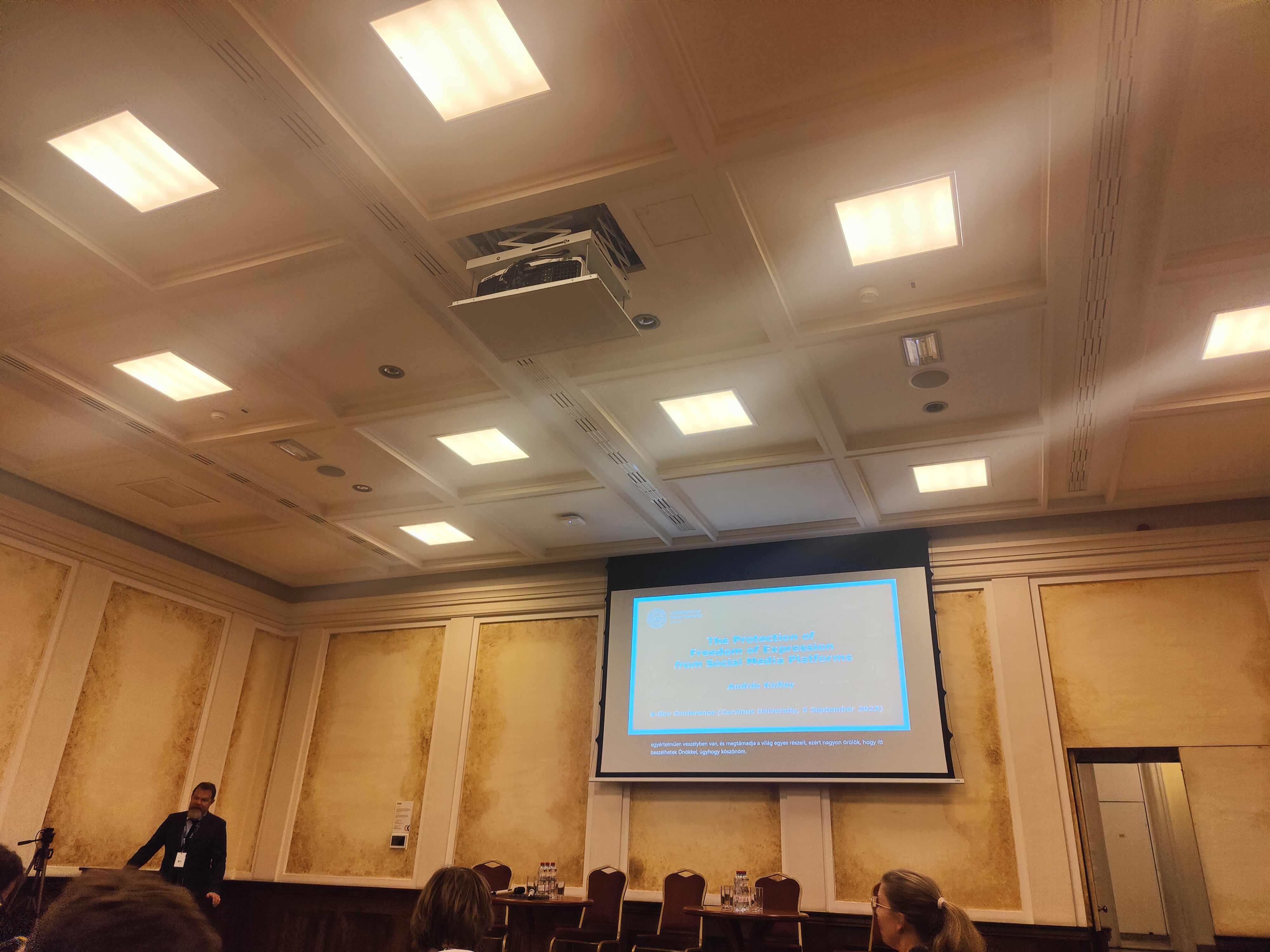
Day#2 of started with another keynote talk, whcih this time delivered by Andras Koltay (President of the National Media and Infocommunications Authority and the Media Council of Hungary) on the protection of freedom of expression from social media platforms – very different but yet very insightful talk. Then, my second role of the workshop organizer and chair followed. As part of our workshop “PPPS’2023 – Proactive and Personalised Public Services: Searching for Meaningful Human Control in Algorithmic Government” (chairs: Anastasija Nikiforova, Nitesh Bharosa, Dirk Draheim, Kuldar Taveter). As part of this workshop, which took place in a hybrid mode (not an easy task), we initiated a discussion about personalised and Proactive Public Services, i.e.:
🎯talked about the concepts of public services, reactive and proactive models of public services, and models of their personalization;
🎯asked participants to share their views on public services and the levels of proactivity and personalisation of these services in their countries aiming to develop concepts for holistic proactive and personalised public service delivery;
🎯tried to establish a clearer vision of the “as-is” model and the necessary transition to the “to-be” model, their underlying factors, as well as pitfalls of which governments should be aware when designing, developing, and setting up proactive and personalised public services, trying to understand what are those emerging technologies that will likely have greater effect on public services in terms of both driving them or creating obstacles / barriers for their development and maintenance.
Read a bit more 👉 here
Special thanks to all participants, who attended and were very active (and survived)!

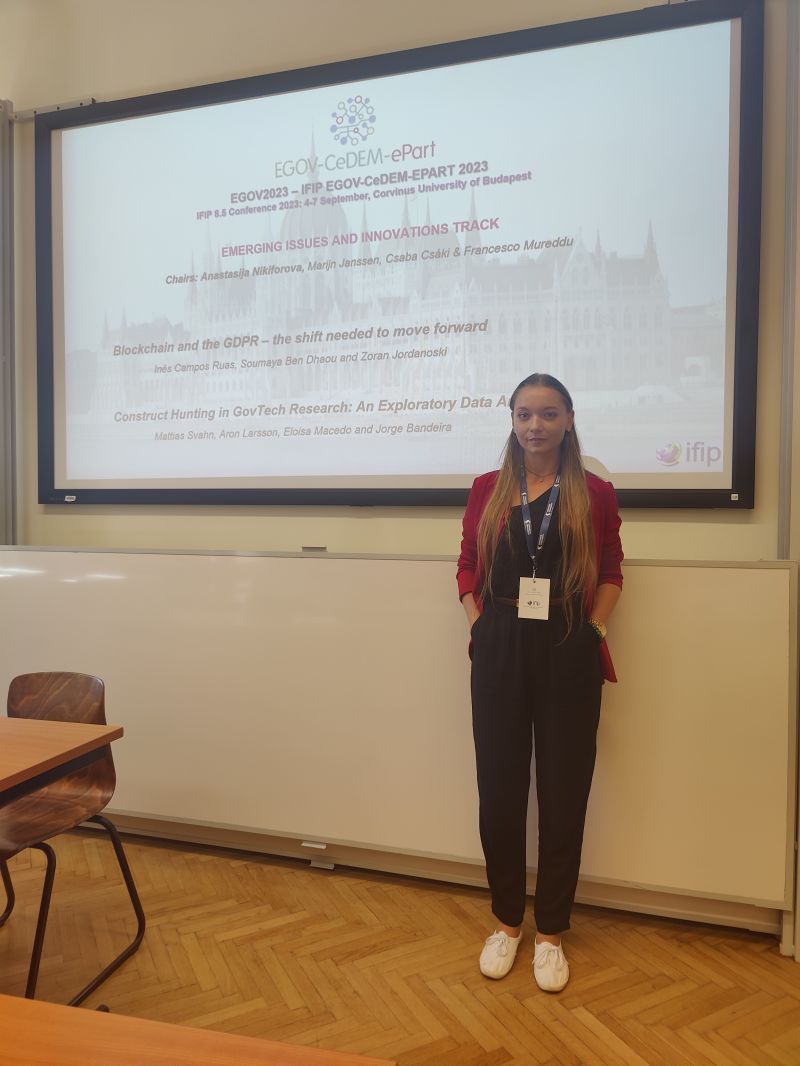
And now a few insights from day#3, when three sessions of our Emerging Issues and Innovations track (chairs: Marijn Janssen, Anastasija Nikiforova, Dr. Csaba Csaki, Francesco Mureddu) finally took place, where I was delighted to chair two of these sessions. Within these three sessions, 8 very diverse, but at the same time super interesting and insightful talks were delivered (predominantly from the United Nations University and Sweden), namely:
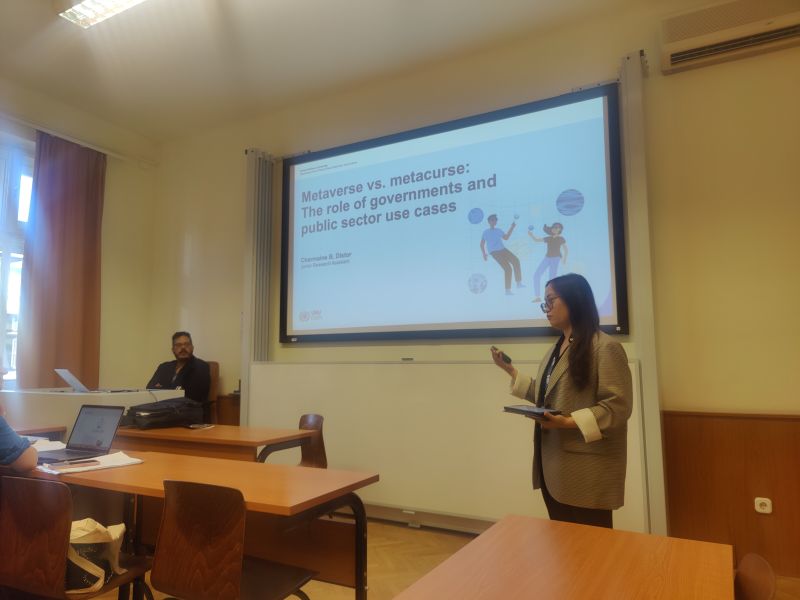
✍Metaverse vs. metacurse: The role of governments and public sector use cases by Charmaine Distor, Soumaya Ben Dhaou, & Morten Meyerhoff Nielsen that can be seen as a continuation of the keynote talk by Prof. Yogesh Dwivedi delivered at the 1st day;
✍Dynamic Capabilities and Digital Transformation in Public sector: Evidence from Brazilian case study by Larissa Magalhães;
✍Affording and constraining digital transformation: The enactment of structural change in three Swedish government agencies by Malin Tinjan, Robert Åhlén, Susanna Hammelev Jörgensen & Johan Magnusson
✍The Vicious Cycle of Magical Thinking: How IT Governance Counteracts Digital Transformation by Susanna H. Jörgensen, Tomas Lindroth, Johan Magnusson, Malin Tinjan, Jacob Torell & Robert Åhlen
✍Buridan’s Ass: Encapsulation as a Possible Solution to the Prioritization Dilemma of Digital Transformation by Johan Magnusson, Per Persson, Jacob Torell & Ingo Paas
✍Measuring digital transformation at the local level: assessing the current state of Flemish municipalities by Lieselot Danneels & Sarah Van Impe
✍Blockchain and the GDPR – the shift needed to move forward by Inês Campos Ruas, Soumaya Ben Dhaou & Zoran Jordanoski
✍Construct Hunting in GovTech Research: An Exploratory Data Analysis by Mattias Svahn, Aron Larsson, Eloisa Macedo and Jorge Bandeira
Read papers 👉 here, here & here
Big thanks go to both authors and presenters, as well as the audience, who was very active (even despite the fact that it was the very last day of the conference) and made these sessions a success!
And right after these two sessions, the third keynote by Laszlo Trautmann “The ethics of expertise – the political economy implications of AI”.


And the last but not the least, yet another social event – wine tasting at Etyeki Kúria Borászat / Winery, which was the perfect happy end of the EGOV2023!

Exceptional organization by Corvinus University of Budapest, Csaba Csaki and his team, International Federation for Information Processing (IFIP), Digital Government Society – cheers!🍷🍷🍷

🗓️🗓️🗓️ Save the date for “PPPS’2023 – Proactive and Personalised Public Services: Searching for Meaningful Human Control in Algorithmic Government” workshop

🗓️ 🗓️🗓️ Save the date – September 6th – for PPPS’2023 – Proactive and Personalised Public Services: Searching for Meaningful Human Control in Algorithmic Government workshop as part of International Federation for Information Processing (IFIP) EGOV-CEDEM-EPART2023 organized in cooperation with Digital Government Society, where we – Anastasija Nikiforova (University of Tartu (Faculty of Science and Technology, Institute of Computer Science, Chair of Software Engineering) & European Open Science Cloud Task Force “FAIR Metrics and Data Quality”), Nitesh Bharosa (Delft University of Technology, Faculty of Technology, Policy and Management & GovTech), Dirk Draheim (TalTech University), Kuldar Taveter (University of Tartu (Faculty of Science and Technology, Institute of Computer Science, Chair of Computer-Human Interactions)) – will initiate a discussion about personalised and proactive public services, discussing them and learning from the EGOV community about the practice of applying proactive and personalised services in different countries 🎯🎯🎯

As part of this workshop:
💡 we will talk about the concepts of public services, reactive and proactive models of public services, and models of their personalization;
💡considering the regulatory frameworks of two countries with forward-looking digital governments – 🇪🇪 Estonia and 🇳🇱 the Netherlands – we will compare design choices across key variables for proactive public services and reflect on the outcomes for citizens. Good and bad public service delivery practices from 🇪🇪 and 🇳🇱 will be presented with a focus on lessons learned from both kinds of experiences;
💡we will ask participants to share their views on public services and the levels of proactivity and personalisation of these services aiming to develop concepts for holistic proactive and personalised public service delivery
💡will try to jointly identify novel innovative and best practices for designing and setting up proactive and personalised public services.
It is expected that this will lead to a clearer vision of the “as-is” model and the necessary transition to the “to-be” model, their underlying factors, as well as pitfalls of which governments should be aware when designing, developing, and setting up proactive and personalised public services.

The purpose of this workshop is to explore and discuss the challenges and conditions for proactive and personalized public service delivery. The long-term objective is to come up with the framework of proactive and personalized public services expected to be applicable (1) to evaluate proactive public services already in use, thus identifying their gaps (if any), and identifying an agenda for the improvements, (2) to develop public services, ensuring they are qualitative and best practices-compliant by design.

Sounds interesting? Register for EGOV and join us – 6th September, 2023, Budapest, Hungary.


👉 Read a bit more -> here & here.
👉 Register for EGOV2023 here -> https://dgsociety.org/egov-2023/

The International Open Data Day and my role of Keynote Speaker for the 5th International Conference on Advanced Research Methods and Analytics (CARMA 2023) 🎤🎤🎤

This post is dedicated to two very pleasant events for me, namely the international Open Data Day 🎉🍾🥂, and the announcement of the keynote talk that I was kindly invited to deliver at the 5th International Conference on Advanced Research Methods and Analytics (CARMA) organized and sponsored by Universidad de Sevilla, Cátedra Metropol Parasol, Cátedra Digitalización Empresarial, IBM, Universitat Politècnica de València, Joint Research Center – European Commission and 🥁 🥁 🥁 Coca-Cola – what a delicious conference!🍸🍸🍸

CARMA is a forum for researchers and practitioners to exchange ideas and advances on how emerging research methods and sources are applied to different fields of social sciences as well as to discuss current and future challenges with main focus on the topics such as Internet and Big Data sources in economics and social sciences including Social media and public opinion mining, Web scraping, Google Trends and Search Engine data, Geospatial and mobile phone data, Open data and public data, Big Data methods in economics and social sciences such as Sentiment analysis, Internet econometrics, AI and Machine learning applications, Statistical learning, Information quality and assessment, Crowdsourcing, Natural Language processing, Explainability and interpretability, the applications of the above including but not limited to Politics and social media, Sustainability and development, Finance applications, Official statistics, Forecasting and nowcasting, Bibliometrics and sciencetometrics, Social and consumer behaviour, mobility patterns, eWOM and social media marketing, Labor market, Business analytics with social media, Advances in travel, tourism and leisure, Digital management, Marketing Intelligence analytics, Data governance, and Digital transition and global society, which, in turn, expects contributions in relation to Privacy and legal aspects, Electronic Government, Data Economy, Smart Cities, Industry adoption.

And as almost each and every conference, CARMA expects to have keynotes, which are two – Patrick Mikalef, who will talk about Responsible AI and Big Data Analytics, and me, whose keynote talk will be devoted to the topics I studied in recent years titled “Public data ecosystems in and for smart cities: how to make open / Big / smart / geo data ecosystems value-adding for SDG-compliant Smart Living and Society 5.0?” Sounds interesting? (I hope so) Stay tuned to know more! And return back, since I plan to reflect on the content of both talks and the conference in general.

The CARMA 2023 conference will be held on 28 June – 30 June 2023 in the University of Seville.