Recent technical advances in machine learning, natural language processing, and multi-agent systems have greatly expanded the use of artificial intelligence (AI) applications in our daily lives. AI-driven systems are transforming the way we process, monitor, and manage data and services, offering innovative solutions for evidence-based policy planning and decision management. AI offers enormous potential to boost efficiency and improve decision-making by processing large amounts of data. For example, AI-assisted conversational chatbots can help strengthen democratic processes by delivering better public services, customizing services for citizens, facilitating engagement with large groups, connecting their ideas and fostering social participation. However, alongside these benefits, AI may pose risks to individuals, organizations, and society as a whole. One significant concern is that machines lack accountability while generating information and can make decisions that fundamentally affect the lives of ordinary citizens by generating (mis)information. The focus of this workshop will be on both the current and potential uses of AI in society.
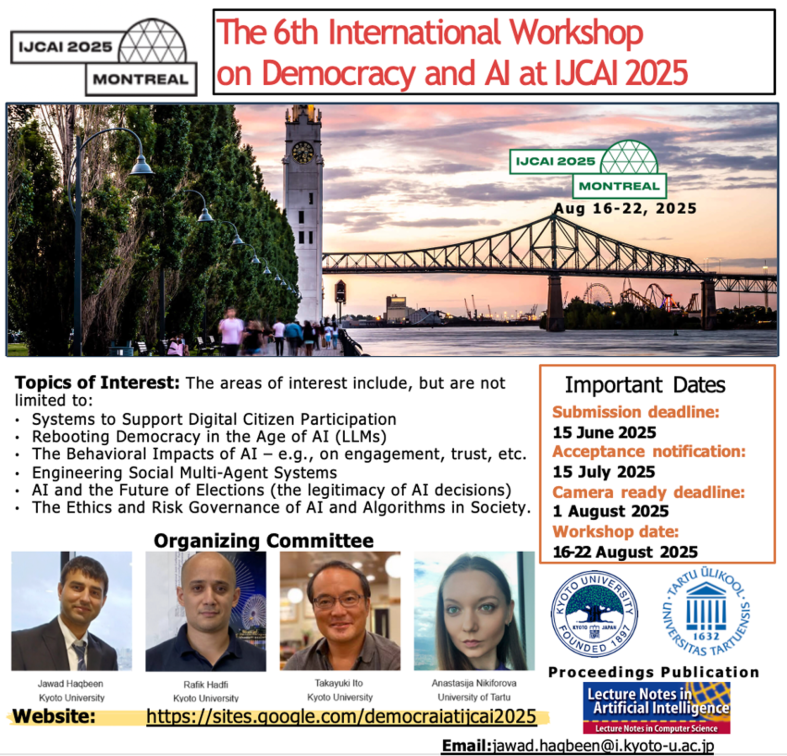
This workshop welcomes research on the intersection of AI and democracy, focusing on, but are not limited to:
Systems to Support Digital Citizen Participation
Tools to Support Decision-Making Process
The behavioral impacts of AI – e.g., on civic motivation & engagement, trust, etc.
The impact of AI on planning & policy development
The role of Societal factors in the implementation of AI
Rebooting Democracy in the Age of AI
AI and the Future of Wellbeing
AI in governance and public participation
AI and the Future of Elections (the legitimacy of algorithmic decisions)
The ethics and risk governance of AI and algorithms in society
Transparency, Accountability, and Ethical Issues in Artificial Intelligence
Important dates:
Paper submission deadline: June 15, 2025
Notification of acceptance: July 15, 2025
Camera ready submission: August 1, 2025
Workshop Date: August 16-22, 2025
Join us at IJCAI 2025 to help shape the future of AI for democratic governance.
Are you focusing on new topics emerging in the field of ICT and public sector, incl. public-private ecosystems? Then it is time to start preparing your submission for EGOV2023 – IFIP EGOV-CeDEM-EPARTEmerging Issues and Innovations Track (chairs: Anastasija Nikiforova, Marijn Janssen, Francesco Mureddu).
EGOV2023 – IFIP EGOV-CeDEM-EPART is one of the most recognized conference in e-Government, ICT and public administration and related topics, which this year will be hosted in Belgium, in the heart of Europe, by Ghent University and KU Leuven – both top 100 universities.
Innovation and application of emerging technologies is now more and more in the thinking of Governments at all levels. While it would be easy to consider the public sector as being less flexible or slow in adoption, presentations at recent EGOV-CeDEM-ePart conferences proved that one should not come to such a conclusion too easily. Upcoming technologies, innovative organizational solutions, or new avenues of involvement in public sector activities seem to be more commonplace – along with the potential issues and challenges that come with such endeavours. Policy-makers and public sector officials are now expected to embrace change, consider digital transformation, or improve governance practices. At the same time, public sector researchers are also influenced by new views, methods, tools and techniques.
🎯The goal of this track is to provide a platform for the discussion of new ideas, issues, problems, and solutions, that keep entering the public sphere. Ideas that are emerging but might not fit other conference tracks are also welcome. Focus may include but is not limited to:
💡 Looking ahead into social innovation
💡Future studies, the future of government, policy-making and democracy
💡New trends in public sector research such as Metaverse, Large Language Models (LLMs), generative AI and its implementations such as chatGPT, Claude, ChatSonic, Poe – benefits, risks, adoption and resistance to its adoption by the public sector and citizens;
💡Global challenges that go beyond nation states (such as migration, climate change etc.) and which require international collaboration of individual governments;
💡Digital transformation in public sector context;
💡The future of digital governance;
💡Public values in transforming the government;
💡The role of government in smart cities (incl. smart sustainable cities) and sustainable living;
💡The role of the public sector in Human-Centered Society known as Society 5.0;
💡Government in the metaverse;
💡Self-Service Structures for Inclusion;
💡Public-private sector collaboration and integration;
💡Decentralized Autonomous Organizations (DAOs), smart contracts and blockchain;
💡Preparing for the policy challenges of future technologies;
💡Regulating misinformation;
💡New technologies for automated decision-making;
💡The future public sector use and regulation of latest AI or genAI solutions;
💡Public use as well as regulations of industry 4.0 and Industry 5.0 and the Internet of Things (IoT);
💡The relationships of governments and Fintech;
💡Upcoming issues of eVoting / internet voting including application of digital signatures in the public sector;
💡Online public community building;
💡Utilization of digital billboards;
💡Latest trends in co-creation and service delivery;
💡Discussion of new research methods that have not been applied in this context;
💡Application of role theory in the analysis of public sector functions and processes;
💡Forward looking insights from case studies – let it be successful or failed experiments.
Track Chairs
Anastasija Nikiforova, Tartu University, Estonia
Marijn Janssen, Delft University of Technology, the Netherlands
Francesco Mureddu, The Lisbon Council, Belgium
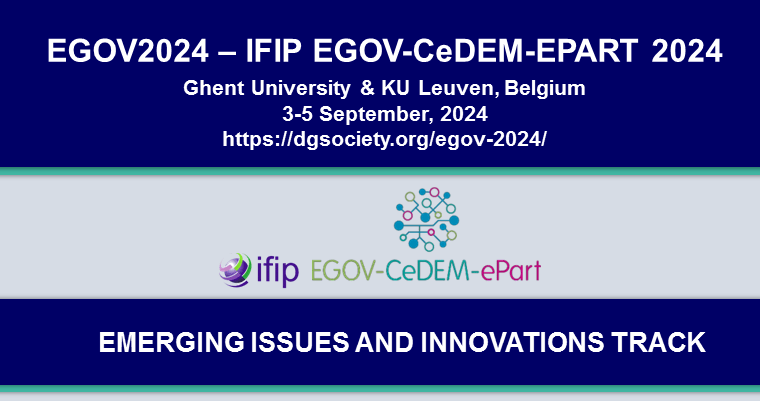
This time International Federation for Information Processing (IFIP) EGOV-CeDEM-EPART will be hosted by KU Leuven and Ghent University, September 2024, while the deadline for submitting your paper is set to March, 2024.
And CFP for Data For Policy 2024 scheduled for 9-11 July, 2024 is open! All submissions are welcome with the deadline of 27 November, 2023.
This year Data For Policy conference, which is organized in collaboration with Imperial College London and Cambridge University Press will take place in London, UK, and will be running under the title “Decoding the Future: Trustworthy Governance with AI” – trendy, isn’t it? In this edition the conference “[we] are focusing on the future of governance and decision making with AI. Firstly, what are the emerging capabilities, use cases, and best practices enabling innovation that could contribute to improved governance with AI? Secondly, what concerns are being raised regarding these advancements in areas such as data, algorithms, privacy, security, fairness, and potential risks? For both discussions, we invite proposals that delve into the role and capacity of governance in preventing AI-related harms and explore the potential for governance to generate added value through responsible AI deployment. For a more thorough consideration of the conference theme, please read this informative blog, by Zeynep Engin and conference co-chairs.“
Data for Policy is looking forward to your submission to one of six areas of the respective Data & Policy journal, which are transformed into the tracks for this conference. In addition, this list is complemented with a rich list of 11 special tracks.
Of course, my personal recommendation is to consider Area 1 “Digital & Data-driven Transformations in Governance” (chairs: Sarah Giest, Sharique Manazir, Francesco Mureddu, Keegan McBride, Anastasija Nikiforova, Sujit Sikder). More specifically, the track seeks for contributions on topics that include but are not necessarily limited to:
From data to decisions: knowledge generation and evidence formation;
Process, psychology and behaviour of decision-making in digital era;
Government operations and services;
Government-citizen interactions; and open government;
Democracy, public deliberation, public infrastructure, justice, media;
Public, private and voluntary sector governance and policy-making.
Of course, do not ignore other tracks since each and every track definitely deserves your attention:
Area 1: Digital & Data-Driven Transformations in Governance – the one I just suggested;
Area 2: Data Technologies & Analytics for Governance;
Area 3: Policy & Literacy for Data;
Area 4: Ethics, Equity & Trustworthiness;
Area 5: Algorithmic Governance;
Area 6: Global Challenges & Dynamic Threats;
Special Track 1: Establishing an Allied by Design AI ecosystem
Special Track 2: Anticipating Migration for Policymaking: Data-Based Approaches to Forecasting and Foresight
Special Track 3: AI, Ethics and Policy Governance in Africa
Special Track 4: Social Media and Government
Special Track 5: Data and AI: critical global perspectives on the governance of datasets used for artificial intelligence
Special Track 6: Generative AI for Sound Decision-making: Challenges and Opportunities
Special Track 7: Governance of Health Data for AI Innovation
Special Track 8: Accelerating collective decision intelligence
Special Track 9: Artificial Intelligence, Bureaucracy, and Organizations
Special Track 10: AI and data science to strengthen official statistics
Special Track 11: Data-driven environmental policy-making
To sum up:
🗓️ WHEN? 9-11 July, 2024 -> deadline for papers and abstracts – 27 November, 2023
WHERE? London, UK
WHY? To understand what are the emerging capabilities, use cases, and best practices enabling innovation that could contribute to improved governance with AI? what concerns are being raised regarding these advancements in areas such as data, algorithms, privacy, security, fairness, and potential risks? For a more thorough consideration of the conference theme, please read this.
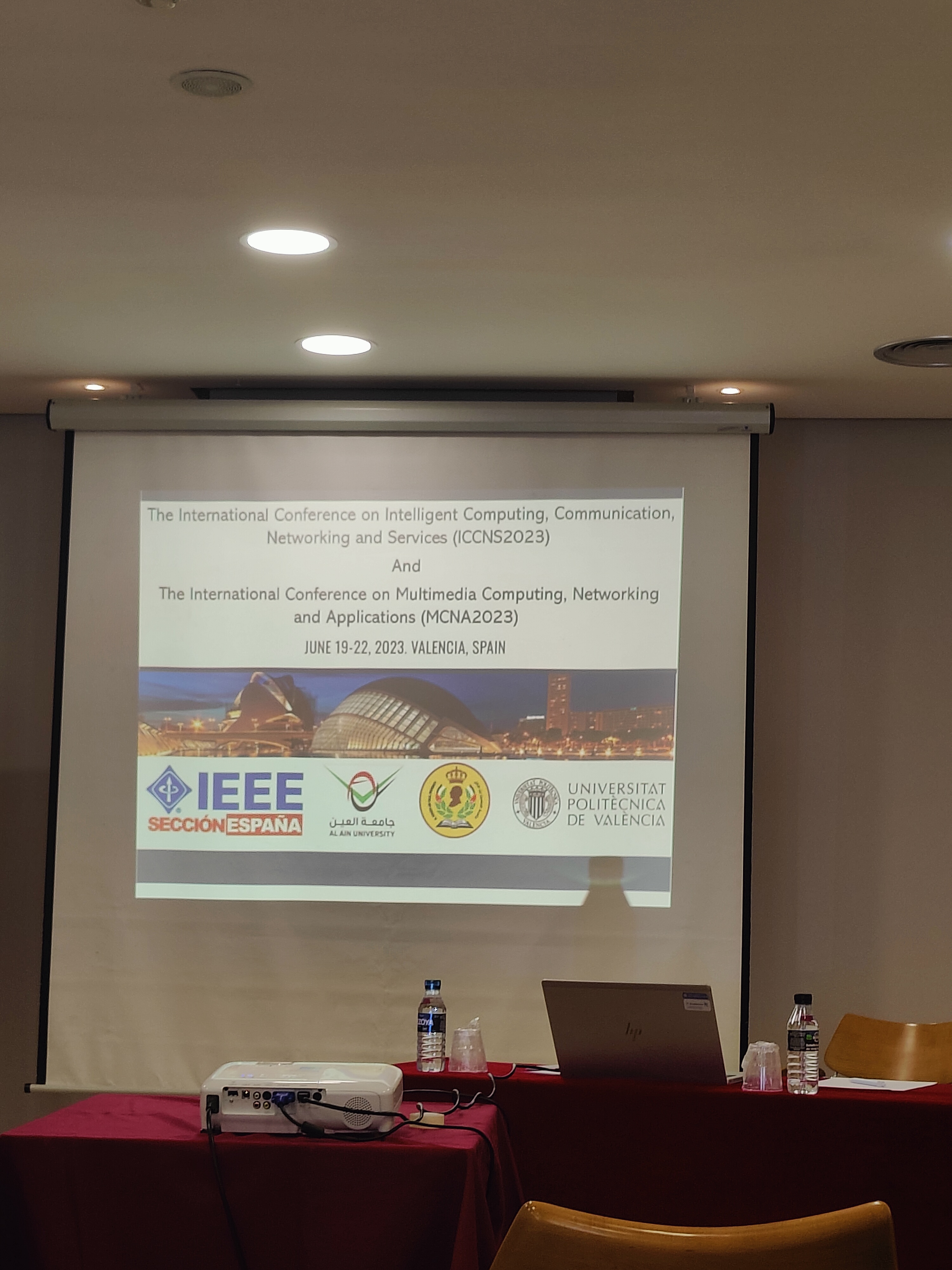
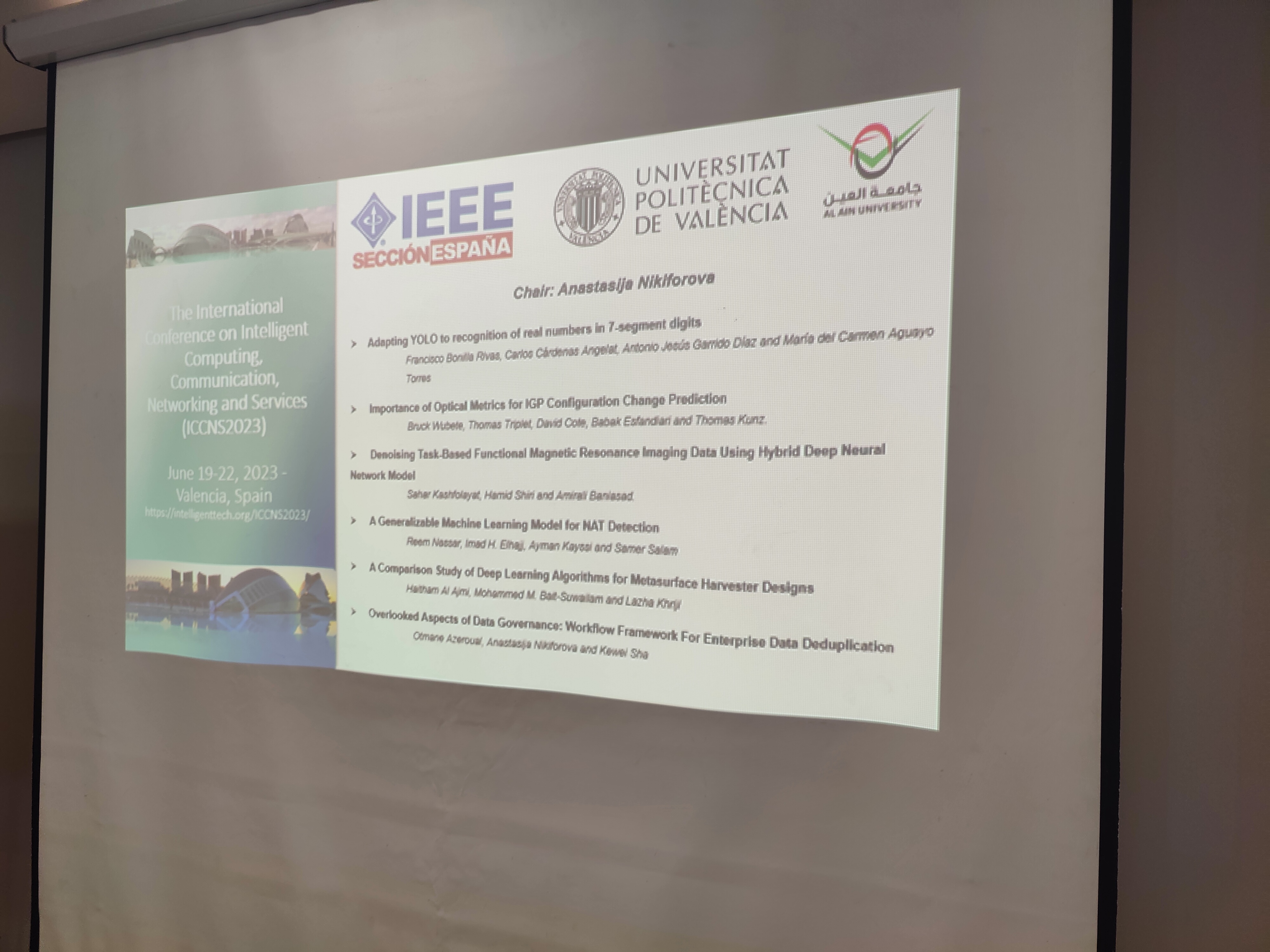
This time I would like to recommend for reading the new paper “Overlooked aspects of data governance: workflow framework for enterprise data deduplication” that has been just presented at the IEEE-sponsored International Conference on Intelligent Computing, Communication, Networking and Services (ICCNS2023). This “just”, btw, means June 19 – the day after my birthday, i.e. so I decided to start my new year with one more conference and paper & yes, this means that again, as many of those who congratulated me were wishing – to find the time for myself, reach work-life balance etc., is still something I have to try to achieve, but this time, I decided to give a preference to the career over my personal life (what a surprise, isn’t it?) 🙂 Moreover, this is the conference, where I am also considered to be part of Steering committee, Technical Program committee, as well as publicity chair. During the conference, I also acted as a session chair of its first session, what I consider to be a special honor – for me the session was very smooth, interactive and insightful, of course, beforehand its participants & authors and their studies, which allowed us to establish this fruitful discussion and get some insights for our further studies (yes, I also got one beforehand one very useful idea for further investigation). Thank you all contributors, with special thanks to Francisco Bonilla Rivas, Bruck Wubete, Reem Nassar, Haitham Al Ajmi.
And I am also proud with getting one of four keynotes for this conference – prof. Eirini Ntoutsi from the Bundeswehr University Munich (UniBw-M), Germany, who delivered a keynote “Bias and Discrimination in AI Systems: From Single-Identity Dimensions to Multi-Discrimination“, which I heard during one of previous conferences I attended and decided that it is “must” for our conference as well – super glad that Eirini accepted our invitation! Here, I will immediately mention that other keynotes were excellent as well – Giancarlo Fortino (University of Calabria, Italy), Dofe Jaya (Computer Engineering Department, California State University, Fullerton, California, USA), Sandra Sendra (Polytechnic University of Valencia, Spain).
The paper I presented is authored in a team of three – Otmane Azeroual, German Centre for Higher Education Research and Science Studies (DZHW), Germany, myself – Anastasija Nikiforova, Faculty of Science and Technology, Institute of Computer Science, University of Tartu, Estonia & Task Force “FAIR Metrics and Data Quality”, European Open Science Cloud & Kewei Sha, College of Science and Engineering University of Houston Clear Lake, USA – very international team. So, what is the paper about? It is (or should be) clear that data quality in companies is decisive and critical to the benefits their products and services can provide. However, in heterogeneous IT infrastructures where, e.g., different applications for Enterprise Resource Planning (ERP), Customer Relationship Management (CRM), product management, manufacturing, and marketing are used, duplicates, e.g., multiple entries for the same customer or product in a database or information system, occur. There can be several reasons for this (incl. but not limited due to the growing volume of data, incl. due to the adoption of cloud technologies, use of multiple different sources, the proliferation of connected personal and work devices in homes, stores, offices and supply chains), but the result of non-unique or duplicate records is a degraded data quality, which, in turn, ultimately leads to inaccurate analysis, poor, distorted or skewed decisions, distorted insights provided by Business Intelligence (BI) or machine learning (ML) algorithms, models, forecasts, and simulations, where the data form the input, and other data-driven activities such as service personalisation in terms of both their accuracy, trustworthiness and reliability, user acceptance / adoption and satisfaction, customer service, risk management, crisis management, as well as resource management (time, human, and fiscal), not to say about wasted resources, and employees, who are less likely trust the data and associated applications thereby affecting the company image. This, in turn, can lead to a failure of a project if not a business. At the same time, the amount of data that companies collect is growing exponentially, i.e., the volume of data is constantly increasing, making it difficult to effectively manage them. Thus, both ex-ante and ex-post deduplication mechanisms are critical in this context to ensure sufficient data quality and are usually integrated into a broader data governance approach. In this paper, we develop such a conceptual data governance framework for effective and efficient management of duplicate data, and improvement of data accuracy and consistency in medium to large data ecosystems. We present methods and recommendations for companies to deal with duplicate data in a meaningful way, while the presented framework is integrated into one of the most popular data quality tools – Data Cleaner.
In short, in this paper we:
first, present methods for how companies can deal meaningfully with duplicate data. Initially, we focus on data profiling using several analysis methods applicable to different types of datasets, incl. analysis of different types of errors, structuring, harmonizing, & merging of duplicate data;
second, we propose methods for reducing the number of comparisons and matching attribute values based on similarity (in medium to large databases). The focus is on easy integration and duplicate detection configuration so that the solution can be easily adapted to different users in companies without domain knowledge. These methods are domain-independent and can be transferred to other application contexts to evaluate the quality, structure, and content of duplicate / repetitive data;
finally, we integrate the chosen methods into the framework of Hildebrandt et al. [ref 2]. We also explore some of the most common data quality tools in practice, into which we integrate this framework.
After that, we test and validate the framework. The final refined solution provides the basis for subsequent use. It consists of detecting and visualizing duplicates, presenting the identified redundancies to the user in a user-friendly manner to enable and facilitate their further elimination.
With this paper we aim to support research in data management and data governance by identifying duplicate data at the enterprise level and meeting today’s demands for increased connectivity / interconnectedness, data ubiquity, and multi-data sourcing. In addition, the proposed conceptual data governance framework aims to provide an overview of data quality, accuracy and consistency to help practitioners approach data governance in a structured manner.
In general, not only technological solutions are needed that would identify / detect poor quality data and allow their examination and correction, or would ensure their prevention by integrating some controls into the system design, striving for “data quality by design” [ref3, ref4], but also cultural changes related to data management and governance within the organization. These two perspectives form the basis of the wealth business data ecosystem. Thus, the presented framework describes the hierarchy of people who are allowed to view and share data, rules for data collection, data privacy, data security standards, and channels through which data can be collected. Ultimately, this framework will help users be more consistent in data collection and data quality for reliable and accurate results of data-driven actions and activities.
Sounds interesting? Read the paper -> here (to be cited as: Azeroual, O., Nikiforova, A., Sha, K. (2023, June). Overlooked aspects of data governance: workflow framework for enterprise data deduplication. In 2023 International Conference on Intelligent Computing, Communication, Networking and Services (ICCNS2023). IEEE (in print))
International Conference on Intelligent Computing, Communication, Networking and Services (ICCNS2023) is collocated with The International Conference on Multimedia Computing, Networking and Applications (MCNA2023), which are sponsored by IEEE (IEEE Espana Seccion), Universitat Politecnica de Valencia, Al ain University. Great thanks to the organizers – Jaime Lloret, Universitat Politècnica de València, Spain & Yaser Jararweh, Jordan University of Science and Technology, Jordan & Marios C. Angelides, Brunel University London, UK & Muhannad Quwaider, Jordan University of Science and Technology, Jordan.
References:
Azeroual, O., Nikiforova, A., Sha, K. (2023, June). Overlooked aspects of data governance: workflow framework for enterprise data deduplication. In 2023 International Conference on Intelligent Computing, Communication, Networking and Services (ICCNS2023). IEEE (in print).
Hildebrandt, K., Panse, F., Wilcke, N., & Ritter, N. (2017). Large-scale data pollution with Apache Spark. IEEE Transactions on Big Data, 6(2), 396-411
Guerra-García, C., Nikiforova, A., Jiménez, S., Perez-Gonzalez, H. G., Ramírez-Torres, M., & Ontañon-García, L. (2023). ISO/IEC 25012-based methodology for managing data quality requirements in the development of information systems: Towards Data Quality by Design. Data & Knowledge Engineering, 145, 102152.
Corrales, D. C., Ledezma, A., & Corrales, J. C. (2016). A systematic review of data quality issues in knowledge discovery tasks. Revista Ingenierías Universidad de Medellín, 15(28), 125-150.
On behalf of the co-chair of “Emerging issues and innovations” track I sincerely invite everyone whose research focuses on new topics emerging in the field of ICT and public sector, including public-private ecosystems, to submit their work to this track, which is part of EGOV2023 – IFIP EGOV-CeDEM-EPART – one of the most recognized conference in e-Government, ICT and public administration and related topics!
The annual IFIP EGOV2023 will be hosted 5-7 September 2023 in Budapest by the Corvinus University of Budapest, Hungary. The conference focuses on e-Government, Digital Government, Open Government, Smart Government, GovTech, eParticipation and e-Democracy, and related topics like social media, digital transformation, Digital society, artificial intelligence, policy information, policy informatics, smart cities, and social innovation. Several types of submissions are possible, including completed research, ongoing research, reflections & viewpoints, posters, and workshops. The conference consists of 10 tracks:
General E-Government and E-Governance Track
General e-Democracy & e-Participation track
ICT and Sustainable Development Goals Track
Digital Society Track
AI, Data Analytics & Automated Decision Making Track
And while the conference consists of 10 tracks you will definitely find relevant, my personal recommendation is “Emerging issues and innovations” track (chairs: Marijn Janssen, Anastasija Nikiforova, Dr. Csaba Csaki, Francesco Mureddu).
🎯🎯🎯 “Emerging issues and innovations” track focuses on new topics emerging in the field of ICT and public sector, including public-private ecosystems. Topics of interest include but are not limited to: 💡Looking ahead into Social innovation 💡The future of government, policy making and democracy 💡Global challenges that go beyond nation states (such as migration, climate change etc.) and require international collaboration of individual governments 💡Digital transformation in public sector context 💡The future of digital governance 💡Public values in transforming the government 💡The role of government in eCities and sustainable living 💡The role of the public sector in Human Centered Society 💡Self Service Structures for Inclusion 💡Public-private sector collaboration and integration; 💡Decentralized Autonomous Organizations (DAO), smart contracts and blockchain 💡Preparing for the policy challenges of future technologies; 💡Regulating misinformation 💡New technologies for automated decision-making 💡The future public sector use and regulation of latest AI solutions; 💡Public use as well as regulations of industry 4.0 and the internet of things 💡The relationships of governments and Fintech 💡Upcoming issues of eVoting including application of digital signatures in the public sector 💡Online public community building 💡Utilization of digital billboards 💡Latest trends in co-creation and service delivery 💡Forward looking insights from case studies – let it be successful or failed experiments.
🗓️🗓️🗓️ IMPORTANT DATES Deadline for submissions: 31 March 2023 PhD Colloquium deadline for submissions: 1 May 2023 Poster submission deadline: 20 May 2023 PhD Colloquium: 4 September 2023 Conference: 5-7 September 2023
Do not miss 3 days of discussions around e-Government, Digital Government, Open Government, Smart Government, GovTech, eParticipation and e-Democracy, and related topics like social media, digital transformation, Digital society, artificial intelligence, policy information, policy informatics, smart cities, and social innovation. Mark your calendar – 31 March 2023 for submitting your paper, and 5-7 September 2023 for attending the conference!
The conference is organized by the IFIP 8.5 Working group (WG8.5) and the Digital Government Society (DGS). The aim of WG 8.5 is to improve the quality of e-government information systems at international, national, regional and local levels. The WG8.5 emphasis is on interdisciplinary approaches for information systems in public administration. DGS is a global, multi-disciplinary organization of scholars and practitioners interested in the development and impacts of digital government. Read more here.









 Anastasija Nikiforova, PhD