Several summer activities – African Smart Cities Lab, One Conference 2022, EFSA & EBTC joint project, Guest Lecture, “Virtual Brown Bag Lunch”

Considering that in last weeks I was pretty active in delivering very many talks, let me use this post to summarize some of them thereby remaining them in my memory as well as allowing you, my dear reader, to pick up some ideas or navigate to some projects (both projects, initiatives, postgraduate programs, joint workshops or “lunchs” for business and academia) of your interest. So this post is less about self-advertisement and my role in the below discussed events as both panelist, keynote, guest lecturer, invited speaker and expert, but more about very interesting projects, initiatives and labs currently running in different countries and at different scales – local, national, regional and international. And as “thank you” for the organizers of each of them, I would like to shed a light on them in this post, drawing your attention to them!

All in all, this post is about participating as a panelist for One Conference 2022, keynote for African Smart Cities Lab projects’ workshop (Morocco, Ghana, Tunisia, South Africa, Rwanda, Benin, Switzerland), Guest Lecture for master and doctoral students of the Federal University of Technology – Paraná (UTFPR, Postgraduate Program in Production Engineering, Brasil), and invited speaker / expert for monthly “Virtual Brown Bag Lunch” (Mexico), and EFSA & EBTC joint project (Italy) on the creation of a standard for data exchange in support of automation of Systematic Review.

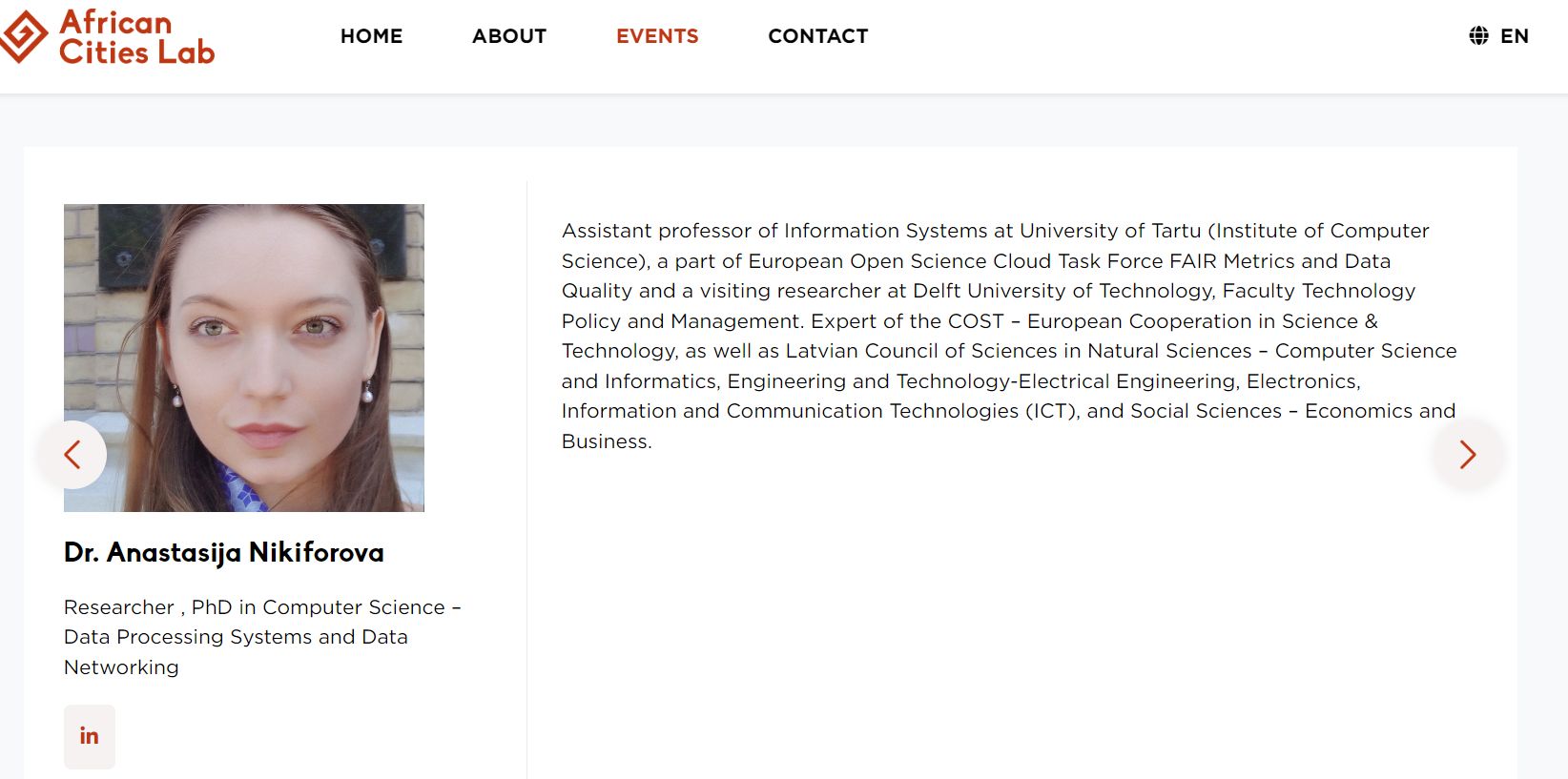
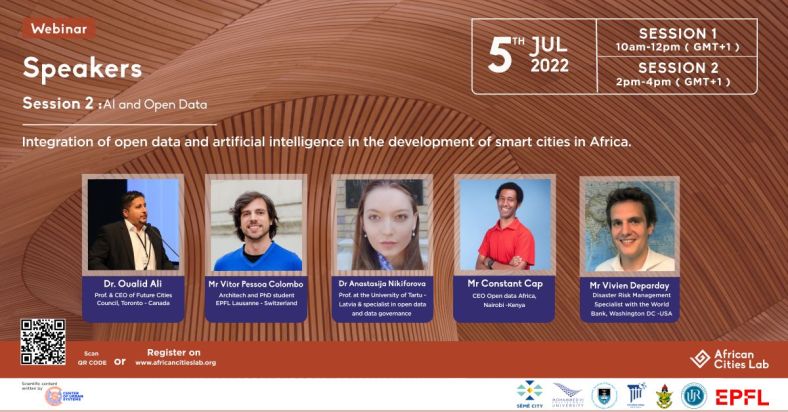
So, let’s start with the most spontaneous, namely “Integration of open data and artificial intelligence in the development of smart cities in Africa” workshop organized as part of the African Cities Lab Project, where I was invited as a keynote speaker. Actually, African Smart Cities Lab project is a very interesting initiative I recently was glad to get familiar with. It is a joint initiative led by École polytechnique fédérale de Lausanne (Switzerland), the Kwame Nkrumah’​ University of Science and Technology, Kumasi (Ghana), the UM6P – Mohammed VI Polytechnic University (Maroc), Sèmè City campus (Benin), the Faculty of Sciences of Bizerta – University of Carthage (Tunisia), the University of Cape Town (South Africa), and the University of Rwanda that aims to create a digital education platform on urban development in Africa, offering quality MOOC and online, continuing education training for professionals. It is also expected to act as a forum for the exchange of digital educational resources and the management and governance of African cities to foster sustainable urban development. The very first workshop took place July 5 in an online mode, where 9 speakers were invited to share their experience on this topic and allow setting the scene for the development of African Smart Cities, considering their potential, but also some bottlenecks.

All in all, two very fruitful sessions with presentations delivered by me, Vitor Pessoa Colombo, Constant Cap, Oualid Ali, Jérôme Chenal, Nesrine Chehata, AKDIM Tariq, Christelle Gracia Gbado, Willy Franck Sob took place and raised a lot of questions, finding the answers for many of them. My talk was titled “Open data and crowdsourced data as enablers and drivers for smart African cities” (see slides below…)

Here, let me immediately mention another activity – a Guest LectureThe role of open data in the development of sustainable smart cities and smart society“, I delivered to students of the Federal University of Technology – Parana (UTFPR, Brazil) and, more precisely so-called PPGEP program – Postgraduate Program in Production Engineering (port. Programa de Pós-Graduação em Engenharia de Produção), in scope of which I was pleasured to raise a discussion on three topics of particular interest – open data, Smart City, and Society 5.0, which are actually very interrelated. This also allowed me to refer to one of our recent studies – Transparency of open data ecosystems in smart cities: definition and assessment of the maturity of transparency in 22 smart cities – published together with my colleagues – Martin Lnenicka, Mariusz Luterek, Otmane Azeroual, Dandison Ukpabi, Visvadis Valtenbergs, and Renata Machova in Sustainable Cities and Society (Q1, Impact Factor: 7.587, SNIP: 2.347, CiteScore: 10.7).

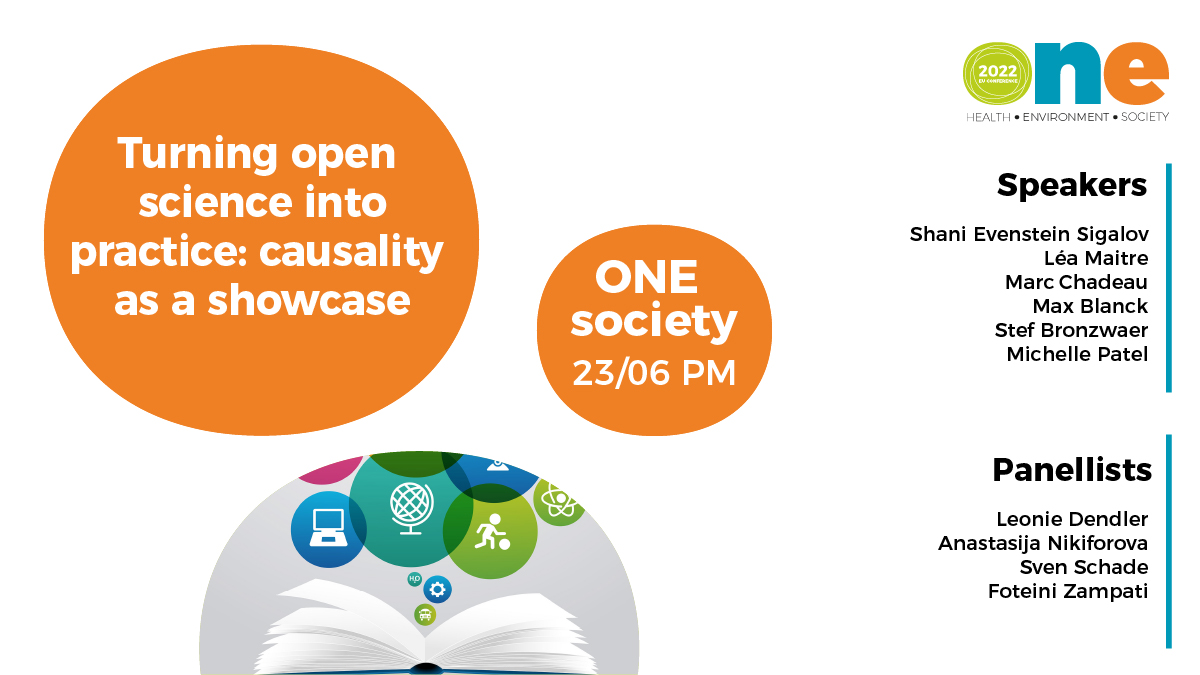
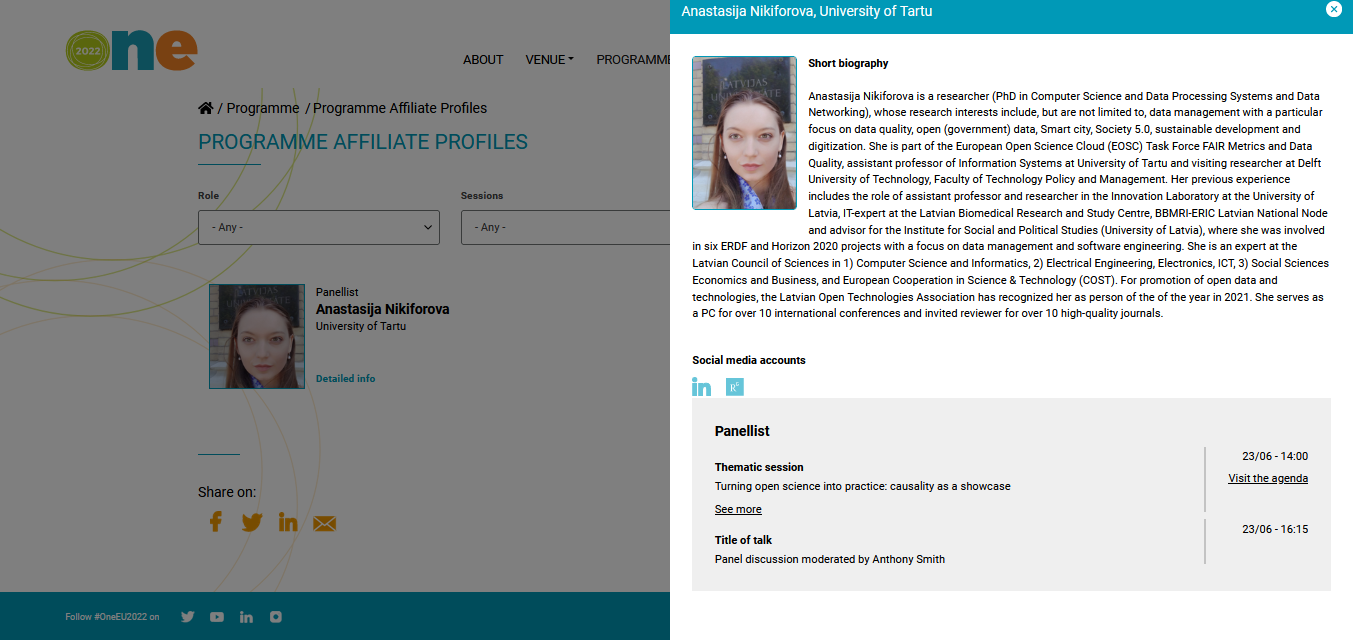
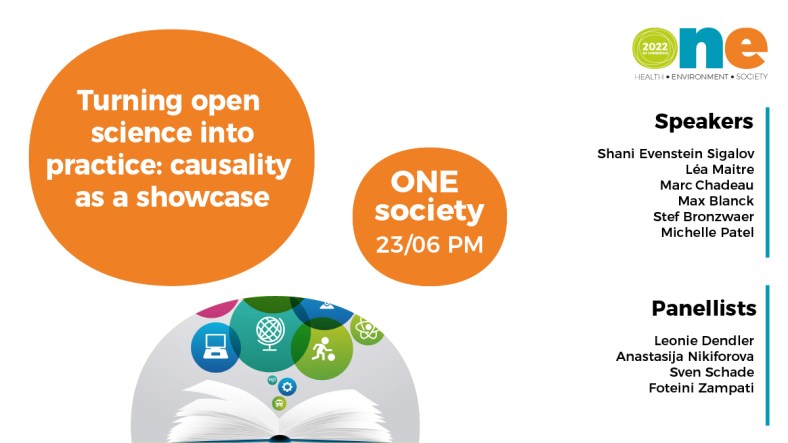
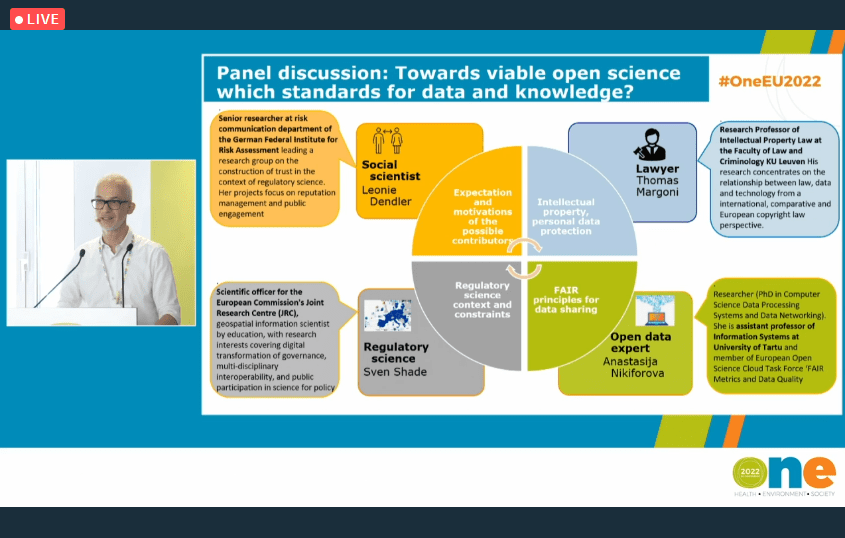
And now, it’s time to turn to two events organized by European Food Safety Authority (EFSA). The first and probably the most “crowded” due to a very high rate of the attendance was the ONE Conference 2022 (Health, Environment, Society), which took place between June 21 and 24, Brussels, Belgium. It was co-organised by European Food Safety Authority (EFSA) and its European sister agencies European Environment Agency, European Medicines Agency, European Chemicals Agency, European Centre for Disease Prevention and Control (ECDC), but if you are an active follower of my blog, you know this already, same as probably remember that I posted about this event previously inviting you to join us in Belgium or online. Since I have elaborated on the course of the event, its main objectives and tracks, I will not repeat this information. Instead, let me briefly summarize key takeaways with a particular focus on the panel for which I served as a panelist – the “ONE society” thematic track, panel discussion “Turning open science into practice: causality as a showcase”. It was a very nice experience and opportunity for sharing our experience on obstacles, benefits and the feasibility of adopting open science approaches, and elaborate on the following questions (although they were more but these one are my favorites):
💡Can the use of open science increase trust to regulatory science? Or does it increase the risk to lose focus, introduce conflicting interests and, thus, threaten reputation? What are the barriers to make open science viable in support to the scientific assessment process carried out by public organizations?
💡What are the tools/ methods available enabling, supporting and sustaining long term open science initiatives today and what could be envisaged for the future?
💡Do we need a governance to handle open data in support to scientific assessment processes carried out by regulatory science bodies?
💡How the data coming from different sources can be harmonized making it appropriate for further use and combination?
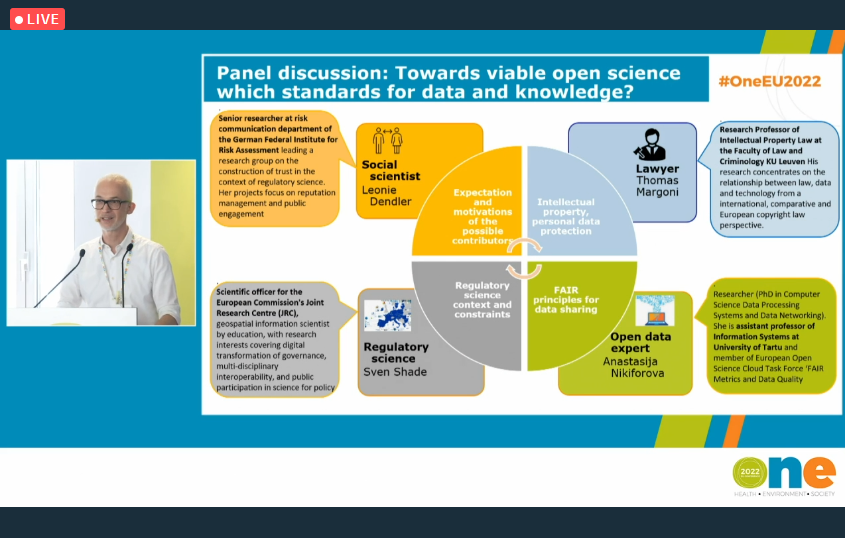
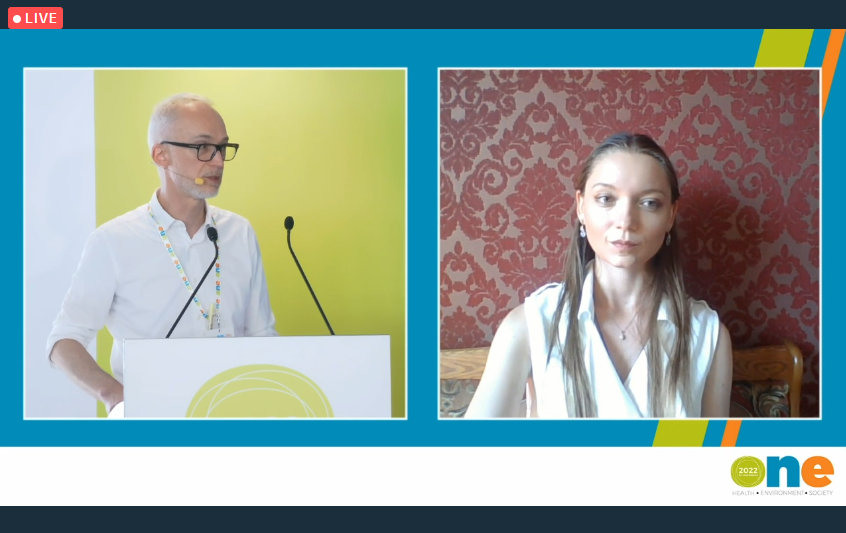
These and many more questions were discussed by panelists with different background and expertise, which were nicely presented by European Food Safety Authority (EFSA) breaking down our experience in four categories – social science (Leonie Dendler, German Federal Institute for Risk Assessment BfR), open data expert (Anastasija Nikiforova,) EOSC Association, University of Tartu, Institute of Computer Science, lawyer (Thomas Margoni, KU Leuven ), regulatory science (Sven Schade, Joint Research Centre, EU Science, Research and Innovation). Many thanks Laura Martino, Federica Barrucci, Claudia Cascio, Laura Ciccolallo, Marios Georgiadis, Giovanni Iacono, Yannick Spill (European Food Safety Authority (EFSA)), and of course to Tony Smith and Jean-François Dechamp (European Commission). For more information, refer to this page.

And as a follow-up for this event, I was kindly invited by EFSA to contribute to setting the scene on the concept of ‘standards for data exchange’, ‘standards for data content’ and ‘standards for data generation’ as part of European Food Safety Authority (EFSA) and Evidence-Based Toxicology Collaboration (EBTC) ongoing project on the creation of a standard for data exchange in support of automation of Systematic Review (as the answer to the call made in “Roadmap for actions on artificial intelligence for evidence management in risk assessment”). It was really nice to know that what we are doing in EOSC Association (Task Force “FAIR metrics and data quality”) is of interest for our colleagues from EFSA and EBTC.
Also, it was super nice to listen other points of view and get involved in the discussion with other speakers and organisers – Elisa Aiassa, Angelo Cafaro, Fulvio Barizzone, Ermanno Cavalli, Marios Georgiadis, Irene Pilar, Irene Muñoz Guajardo, Federica Barrucci, Daniela Tomcikova, Carsten Behring, Irene Da Costa, Raquel Costa, Maeve Cushen, Laura Martino, Yannick Spill, Davide Arcella, Valeria Ercolano, Vittoria Flamini, Kim Wever, Gunn Vist, Annette Bitsch, Daniele Wikoff, Carlijn Hooijmans, Sebastian Hoffmann, Seneca Fitch, Paul Whaley, Katya Tsaioun, Alexandra Bannach-Brown, Ashley Elizabeth Muller, Anne Thessen, Julie McMurray, Brian Alper, Khalid Shahin, Bryn Rhodes, Kaitlyn Hair. The next workshop is expected to take place in September with the first draft ready by the end of this year and presented during one of the upcoming events. More info on this will follow 🙂

In addition, I was asked by my Mexican colleagues to deliver an invited talk for monthly “Virtual Brown Bag Lunch Talks” intended for the Information Technologies, Manufacturing, and Engineering Employees in Companies associated with Index Manufacturing Association (Mexico, web-based). After discussing several topics with the organizers of this event, we decided that this time the most relevant talk for the audience would be “Data Security as a top priority or what Internet of Things (IoT) Search engines know about you“. Again, if you are an active follower, you will probably realize quickly that it is based on a list of my previous studies – study#1, study#2, study#3 and book chapter.
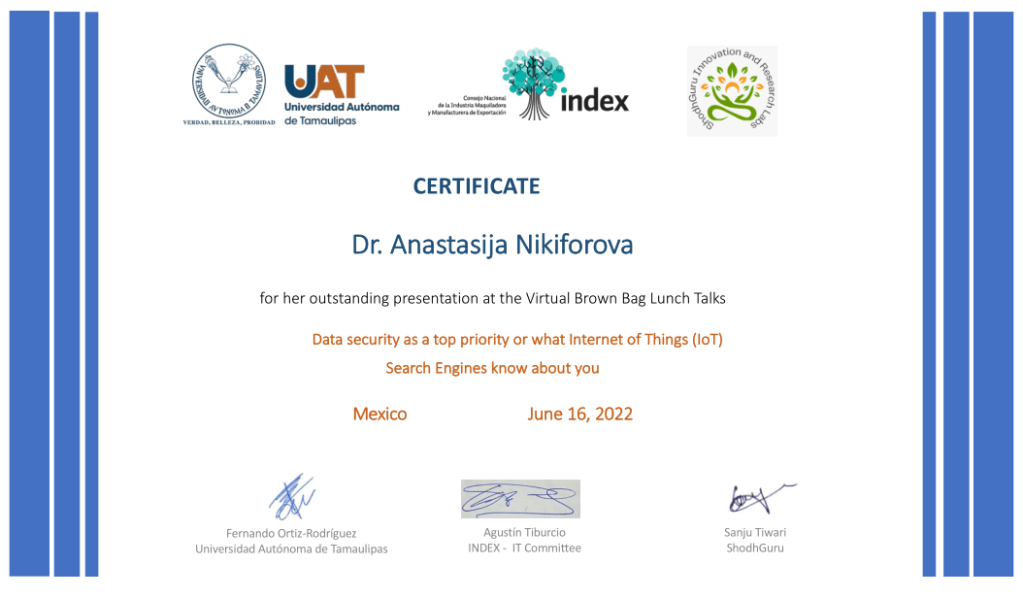
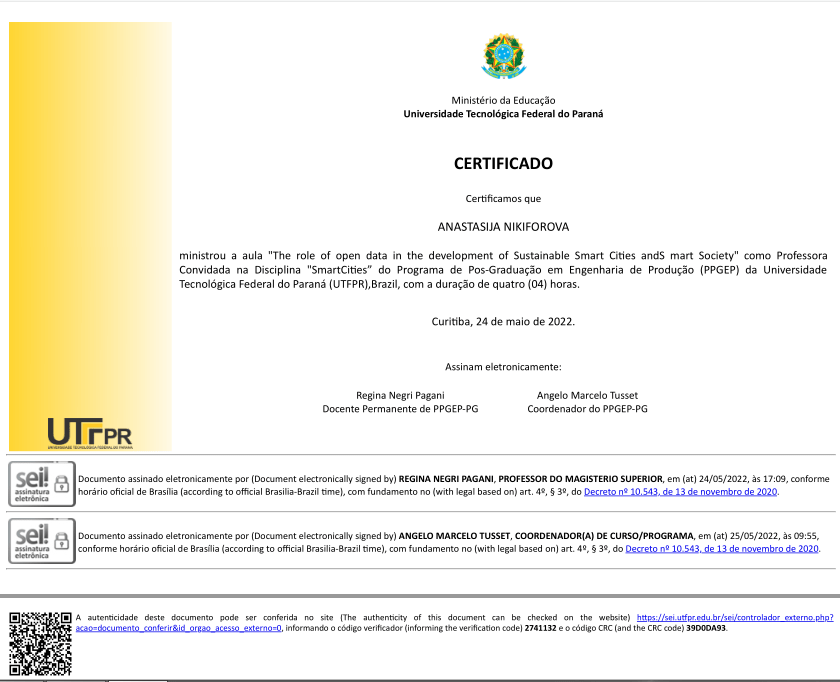
All in all, while these were just a few activities I was busy with during the last weeks and, these weeks were indeed very busy but extreeeemely interesting with so many different events! I am grateful to all those people, who invited me to take part in them and believe that this is just one of the opportunities we had to collaborate and there are many more in the future!

ICEGOV2022 workshop: Identification of high-value dataset determinants: is there a silver bullet?

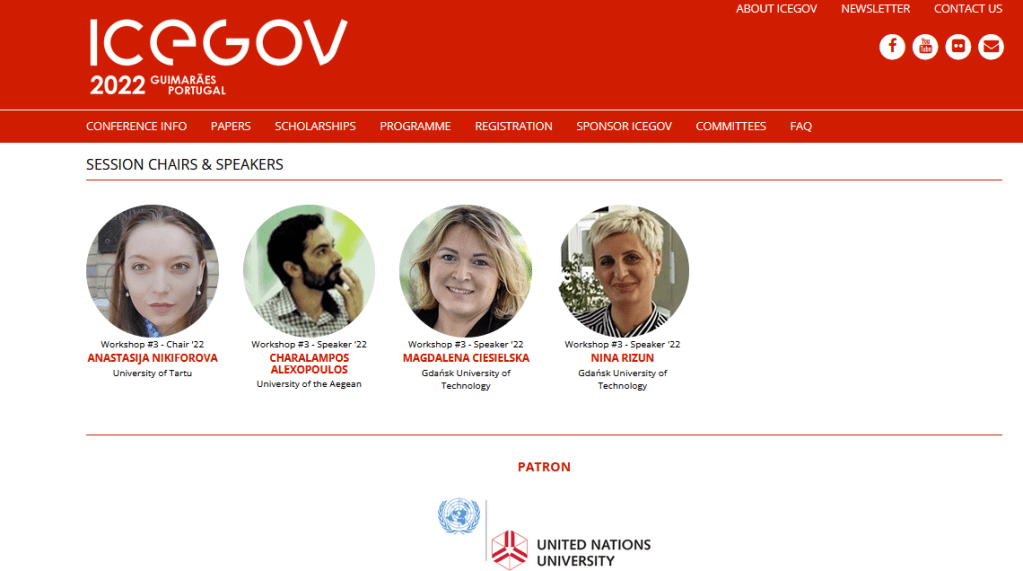
This year the 15th International Conference on Theory and Practice of Electronic Governance known as ICEGOV2022 will be focused on “Digital Governance for Social, Economic, and Environmental Prosperity“. And we – me, Charalampos Alexopoulos, Nina Rizun and Magdalena Ciesielska are glad to announce our own a community-based, participatory, interactive workshop aimed at identifying High-Value Dataset (HVD) determinants towards efficient sustainability-oriented data-driven development.

Briefly about the workshop, our motivation, our objective and why we want to make you a part of it…

Today, Open Government Data (OGD) are seen as one of the trends that can potentially benefit the economy, improve the quality, efficiency, and transparency of public services, as well as transform our lives contributing to efficient sustainability-oriented data-driven development. Their scope, as well as actors who can work with them, do not meet any restrictions. In addition to “classical” benefits such as improving the quality, efficiency, and transparency of public services, they are considered drivers and promoters of Industry 4.0 and Society 5.0 [1,2], including Smart cities trends. OGD is also a driver of economic growth, and, according to [3], the open data market size in 2020 was estimated at €184 billion and it is expected to grow in the coming years reaching €199.51 and €334.21 billion in 2025. However, the achievement of these benefits is closely linked to the “value” of the data, i.e. the extent to which the data provided by public agencies are interesting, useful and valuable for their reuse, creating value for society and the economy. High data availability however can disorient users when deciding which sources are best suited to their needs [4]. The practice demonstrates that the majority of data sets available on the OGD portals are not used, where only a few datasets create value for users [5], [6]. This is also in line with Quarati and Martino [4], who provided a snapshot on the use of 15 OGD portals, based on usage indicators available. This also applies to Latvia [7,8]. In other words, in order to gain benefit from the OGD, countries should open data cleverly, where not quantity, but quality and data value must be more important, since all benefits of the OGD can only be obtained if the data are re-used and transformed to value.

Here, the concept of “high-value datasets” comes, pointing to data that would create highest value to society and economy. The concept of “high-value data” comes into force here. High-value data are defined as the data “the re-use of which is associated with important benefits for society, the environment and the economy, in particular because of their suitability for the creation of value-added services, applications and new, high-quality and decent jobs, and of the number of potential beneficiaries of the value-added services and applications based on those datasets” [9]. Although the PSI directive is a step in this direction by announcing six categories [9], they appear to be generic and do not take into account the national perspective, i.e. the nature of these data sets will depend to a large extent on the country concerned [10,11].
It is therefore important to support the identification of high-value datasets, which would enhance the interest of users of the OGD by transforming data in innovative solutions and services. The research suggests that different perspectives appear in the literature to identify “high-value datasets” and there is no consensus on the most comprehensive, so a number of activities will be taken covering these perspectives but prior identified within the workshop.

This workshop expects to raise a discussion on the identification of high-value data sets for a common understanding of how this could be done in general terms, i.e. what possible activities will lead to better understanding and clearer vision of what are the most valuable data sets for the society and economics of a particular country and how they can be identified (how? who? etc.). The topic under consideration is very important these days, given that the opening up of data sets with high potential for their use and re-use is expected to facilitate creation of new products or services with positive economic and social impact [12]. However, identifying these data is a complicated task, particularly where country-specific data sets should be identified.

This workshop is a step in this direction and is a continuation of the paper presented at ICEGOV2021 [13], where a first step in this direction was taken by conducting a survey of individual users and SME of Latvia aimed at clarifying their level of awareness about the existence of the OGD, their usage habits, as well as the overall level of satisfaction with the value of the OGD and their potential. This time we aim to develop the framework for identification of high-value datasets (and their determinants) as a result of comprehensive study conducted jointly with participants of ICEGOV. All in all, the objective of the workshop is to raise awareness of and establish a network of the major stakeholders around the HVD issue, allow each participant to think about how and whether the determination of HVD is taking place in their country and how this can be improved with the help of portal owners, data publishers, data owners and citizens. Our main motivation is that, as members of the ICEGOV community, we could jointly answer the following questions representing the objectives of the workshop:

  1. How can the “value” of open data be defined?
  2. What are the current indicators  for determining the value of data? Can they be used to identify valuable datasets to be opened? What are the country-specific high-value determinants (aspects) participants can think of?
  3. How high-value datasets can be identified? What mechanisms and/ or methods should be put in place to allow their determination? Could it be there an automated way to gather information for HVD? Can they be identified by third parties, e.g. researchers, enthusiasts AND potential data publishers, i.e. data owners?
  4. What should be the scope of the framework, i.e. who should be the target audience who should be made aware of the HVD applying this framework? public officials / servants? data owners? Intermediaries? (discussion with participants OR direction for our discussion depending on the participants and their profile).

More precisely, the following “procedure” is expected to be followed:

  • STEP 0 (conducted by participants (not mandatory)): participants are invited to get familiar with open data portals of their country (higher coverage, i.e. of more than their own country, is welcome) by inspecting the current state-of-the-art in terms of both the content – data available, functionality with particular interest of HVD determination-related features (if any) including citizen-engagement-oriented features, features allowing to track the current interest of users etc.
  • STEP 1: A brief introduction to the current state-of-the art [approximately 45 minutes]: How HVD are seen by the PSI Directive and what tasks are set for countries regarding determination and opening HVD, how countries are coping with this (both from grey literature and from personal experience on Latvia), what approaches and methods for determining HVDs are known and why is there no uniform method / framework? A brief overview of the results of a survey of individual users and small and medium-sized businesses (SME) of Latvia on their view regarding the current state of the data, i.e. in which extent they meet their needs, and what data might be useful for them, and how their availability would affect their willingness to use these data. Overview of Deloitte report on HVD. What is the methodology used? What are the indicators used? What are the results of the study?
  • STEP 2: Considering the diversity of perceptions of the term “value” (depending on the domain, actor etc.), the discussion in the form of brainstorming (idea generation) is expected to be held providing as many definitions as possible, which are then used to provide a more comprehensive definition(s) considering different perspectives (domain- and actor-related) [approximately 30-45 minutes]
  • STEP 3: Discussion on current methods / mechanisms to determine the current value of the data and determining HVD in the form of brainstorming [approximately 20-30 minutes]
  • STEP 4: Idea generation on potential methods / mechanisms to determine the current value of the data and determining HVD in the form of brainstorming [approximately 20-30 minutes]
  • STEP 5: Iterative filtering of features, methods, approaches that could constitute the framework for determination of high value datasets in the form of DELPHI-like analysis [approximately 45 minutes]
  • STEP 6: Agenda for future research, networking [approximately 30 minutes]

This is a community-based, participatory, interactive workshop aimed at engaging participants – instead of asking participants to write a paper to be later presented during the workshop in the form of sit-and-listen, we expect to establish a lively and interesting discussion of novel ideas, answering existing questions and raising new ones. The audience of the workshop is ICEGOV participants without restriction on the domain they represent, affiliation, interests, knowledge and experience. Both OGD experts and those who are not familiar with OGD are welcome.

Join us this October (4 – 7 October 2022)!

References:

  1. Bargiotti, L., De Keyzer, M., Goedertier, S., & Loutas, N. (2014). Value based prioritisation of Open Government Data investments. European Public Sector Information Platform.
  2. Bertot, J. C., McDermott, P., & Smith, T. (2012, January). Measurement of open government: Metrics and process. In 2012 45th Hawaii International Conference on System Sciences (pp. 2491-2499). IEEE.
  3. Directive (EU) 2019/1024 of the European Parliament and of the Council of 20 June 2019 on open data and the re-use of public sector information
  4. European Comission, The Digital Economy and Society Index (DESI), online, https://ec.europa.eu/digital-single-market/en/digital-economy-and-society-index-desi, last accessed: 7.04.2021
  5. Gagliardi, D., Schina, L., Sarcinella, M. L., Mangialardi, G., Niglia, F., & Corallo, A. (2017). Information and communication technologies and public participation: interactive maps and value added for citizens. Government Information Quarterly, 34(1), 153-166.
  6. Huyer, E., Blank, M. (2020). Analytical Report 15: High-value datasets: understanding the perspective of data providers. Luxembourg: Publications Office of the European Union, 2020 doi:10.2830/363773
  7. Kampars, J., Zdravkovic, J., Stirna, J., & Grabis, J. (2020). Extending organizational capabilities with Open Data to support sustainable and dynamic business ecosystems. Software and Systems Modeling, 19(2), 371-398.
  8. Kotsev, A., Cetl, V., Dusart, J., & Mavridis, D. (2018). Data-driven Economies in Central and Eastern Europe
  9. Kucera, J., Chlapek, D., Klímek, J., & Necaský, M. (2015). Methodologies and Best Practices for Open Data Publication. In DATESO (pp. 52-64).
  10. McBride, K., Toots, M., Kalvet, T., & Krimmer, R. (2019). Turning Open Government Data into Public Value: Testing the COPS Framework for the Co-creation of OGD-Driven Public Services. In Governance Models for Creating Public Value in Open Data Initiatives (pp. 3-31). Springer, Cham.
  11. Nikiforova, A., & Lnenicka, M. (2021). A multi-perspective knowledge-driven approach for analysis of the demand side of the Open Government Data portal. Government Information Quarterly, 101622
  12. Ruijer, E., Détienne, F., Baker, M., Groff, J., & Meijer, A. J. (2020). The politics of open government data: Understanding organizational responses to pressure for more transparency. The American review of public administration, 50(3), 260-274
  13. Nikiforova, A. (2021, October). Towards enrichment of the open government data: a stakeholder-centered determination of High-Value Data sets for Latvia. In 14th International Conference on Theory and Practice of Electronic Governance (pp. 367-372).


Editorial Board Member of Data & Policy (Cambridge University Press)

Since July 2022, I am elected by Syndicate of Cambridge University Press as an Editorial Board Member of the Cambridge University Journal Data & Policy. Data & Policy is a peer-reviewed, open access venue dedicated to the potential of data science to address important policy challenges. For more information about the goal and vision of the journal, read the Editorial Data & Policy: A new venue to study and explore policy–data interaction by Stefaan G. Verhulst, Zeynep Engin, and Jon Crowcroft. More precisely, I act as an Area Editor of “Focus on Data-driven Transformations in Policy and Governance” area (with a proud short name “Area 1“). This Area focuses on the high-level vision for philosophy, ideation, formulation and implementation of new approaches leading to paradigm shifts, innovation and efficiency gains in collective decision making processes. Topics include, but are not limited to:

  • Data-driven innovation in public, private and voluntary sector governance and policy-making at all levels (international; national and local): applications for real-time management, future planning, and rethinking/reframing governance and policy-making in the digital era;
  • Data and evidence-based policy-making;
  • Government-private sector-citizen interactions: data and digital power dynamics, asymmetry of information; democracy, public opinion and deliberation; citizen services;
  • Interactions between human, institutional and algorithmic decision-making processes, psychology and behaviour of decision-making;
  • Global policy-making: global existential debates on utilizing data-driven innovation with impact beyond individual institutions and states;
  • Socio-technical and cyber-physical systems, and their policy and governance implications.

The remaining areas represent more specifically the current applications, methodologies, strategies which underpin the broad aims of Data & Policy‘s vision: Area 2 “Data Technologies and Analytics for Policy and Governance“, Area 3 “Policy Frameworks, Governance and Management of Data-driven Innovations“, Area 4 “Ethics, Equity and Trust in Policy Data Interactions“, Area 5 “Algorithmic Governance“, Area 6 “Data to Tackle Global Issues and Dynamic Societal Threats“.

Editorial committees of Data & Policy (Area 1)

For the types of submission we are interested in, they are four:

  • Research articles that use rigorous methods that investigate how data science can inform or impact policy by, for example, improving situation analysis, predictions, public service design, and/or the legitimacy and/or effectiveness of policy making. Published research articles are typically reviewed by three peer reviewers: two assessing the academic or methodological rigour of the paper; and one providing an interdisciplinary or policy-specific perspective. (Approx 8,000 words in length).
  • Commentaries are shorter articles that discuss and/or problematize an issue relevant to the Data & Policy scope. Commentaries are typically reviewed by two peer reviewers. (Approx 4,000 words in length).
  • Translational articles are focused on the transfer of knowledge from research to practice and from practice to research. See our guide to writing translational papers. (Approx 6,000 words in length).
  • Replication studies examine previously published research, whether in Data & Policy or elsewhere, and report on an attempt to replicate findings.

Read more about Data & Policy and consider submitting your contribution!

Moreover, as a part of this journal, we (Data & Policy community) organize a hybrid physical-virtual format, with one-day, in-person conferences held in three regions: Asia (Hong Kong), America (Seattle) and Europe (Brussels). “Data for Policy: Ecosystems of innovation and virtual-physical interactions” conference I sincerely recommend you to consider and preferably to attend! While this is already the seventh edition of the conference, I take part in its organization for the first year, thus am especially excited and interested in its success!

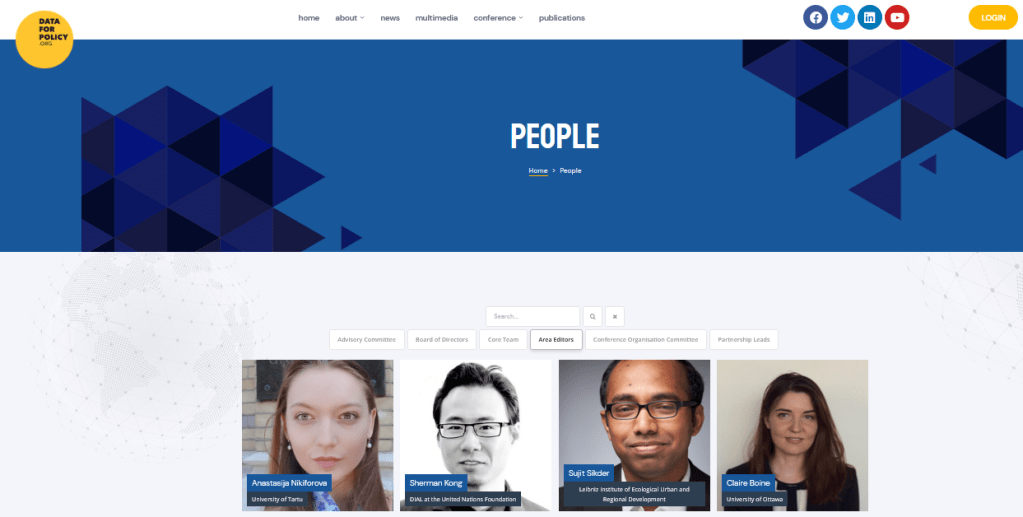
Data for policy, Area Editors

In addition to its six established Standard Tracks, and reflecting its three-regions model this year, the Data for Policy 2022 conference highlights “Ecosystems of innovation and virtual-physical interactions” as its theme. Distinct geopolitical and virtual-physical ecosystems are emerging as everyday operations and important socio-economic decisions are increasingly outsourced to digital systems. For example, the US’s open market approach empowering multinational digital corporations contrasts with greater central government control in the Chinese digital ecosystem, and radically differs from Europe’s priority on individual rights, personal privacy and digital sovereignty. Other localised ecosystems are emerging around national priorities: India focuses on the domestic economy, and Russia prioritises public and national security. The Global South remains underrepresented in the global debate. The developmental trajectory for the different ecosystems will shape future governance models, democratic values, and the provision of citizen services. In an envisioned ‘metaverse’ future, boundaries between physical and virtual spaces will become even more blurred, further underlining the need to scrutinise and challenge the various systems of governance.

The Data for Policy conference series is the premier global forum for multiple disciplinary and cross-sector discussions around the theories, applications and implications of data science innovation in governance and the public sector. Its associated journal, Data & Policy, published by Cambridge University Press has quickly established itself as a major venue for publishing research in the field of data-policy interactions. Data for Policy is a non-profit initiative, registered as a community interest company in the UK, supported by sustainer partners Cambridge University Press, the Alan Turing Institute and the Office for National Statistics.

Read more about Data for Policy and become a part of it!

ONE Conference 2022: why to attend and how to meet me there?

The ONE Conference 2022 (Health, Environment, Society) – a four-day event happening in Brussels and online, is coming! Register and meet me there ️(Brussels & online, 21-24 June) as one of panelists of the “Turning open science into practice: causality as a showcase” thematic session as part of “ONE society” thematic track.

ONE Conference 2022 provides its attendees with a series of break-out sessions grouped in four thematic tracks – ONE Life, ONE Planet, ONE Society and MANY Ways. The sessions are complemented by side events and networking opportunities for both in-person and online participants, where some side events, in the form of workshops, will take place before the formal start of the conference.

The ONE Conference 2022 is co-organised by EFSA and its European sister agencies – the European Centre for Disease Prevention and Control [ECDC], the European Chemicals Agency [ECHA], the European Environment Agency [EEA] and the European Medicines Agency [EMA] and the European Commission’s Joint Research Centre (JRC), with the ambition of embracing a ONE Health and ONE Society approaches.

Briefly about the above mentioned thematic tracks:

  • the ONE Society sessions will put the societal dimension of food safety and its ecosystem in the spotlight: from the role of society in policy making, to collaboration and partnerships right through to bringing research closer to policy. Dolors Montserrat from the European Parliament’s ENVI Committee will speak on the panel addressing citizens’ participation in EU decision-making, while former Dutch Minister Gerda Verburg from the Scaling up Nutrition (SUN) Movement features in the session on collaboration among actors in the food safety field. Michael Catchpole, Chief Scientist of the European Centre for Disease Prevention and Control (ECDC), will moderate the discussion on how ENVI agencies can work together to support research and bridge the gap between research and policy. Meanwhile, Shani Evenstein Sigalov, member of the Wikimedia Foundation and lecturer at the University of Tel Aviv, will share her views on opening up regulatory science.
  • the ONE Life sessions will focus on the questions on how to ensure safe, healthy and sustainable food, where Francesco Branca (Director of the Department of Nutrition and Food Safety of the World Health Organization (WHO)) will share his views on how to define healthy diets within sustainability boundaries as part of a session on sustainability and food security. Matias Zurbrigen (Head of the Institute of Synthetic Biology of the University of Dusseldorf) will consider safety aspects relating to new food production approaches such as synthetic biology as part of a session on innovative foods. Meanwhile, Ilaria Capua from the University of Florida, will focus on the post-pandemic environment and the concept of Circular Health as part of a discussion on improving our understanding of infectious diseases. How to ensure safety assessments keep pace with the emergence of new diseases will also be discussed. Luisa Peixe, professor at the University of Porto and member of EFSA’s Panel on Biological Hazards, will discuss the growing challenge of antimicrobial resistance (AMR) focussing on the link to food-producing environments.
  • the ONE Planet sessions will focus on the environmental dimension of food safety and sustainability, where Serenella Sala from the Joint Research Centre (JRC) of the European Commission is among the experts who will share their views on how to develop a framework for sustainability assessments to measure progress made towards environmental goals. Annette Aldrich from the Swiss Federal Office for the Environment (FOEN), an expert in ecotoxicology and member of EFSA’s Panel on Plant Protection Products and their Residues, will explain why a paradigm shift is needed in the environmental risk assessment of pesticides. Helen Elizabeth Roy from the UK Centre for Ecology & Hydrology will feature in discussions on plant protection in the face of globalisation, particularly how global trade and climate change will affect plant pests, invasive species and diseases. Meanwhile, Linda Keeling, professor of Animal Welfare at the Swedish University of Agricultural Sciences (SLU), will speak about the links between animal welfare and the UN Sustainable Development Goals (SDGs) in a session dedicated to improving animal welfare and reducing environmental impacts in relation to animal-sourced food.
  • the MANY WAYS sessions will cover topics ranging from Artificial Intelligence (AI) to new approach methodologies (NAMs), where Raluca Crisan, founder and CTO of the testing platform ETIQ AI, will speak in the session related to integrating AI technology and big data in food safety. Chris Gennings, professor at the Icahn School of Medicine at Mount Sinai, will discuss how the risk assessment of combined exposure to multiple chemicals can be developed. The session on new approach methodologies (NAMs) moderated by Maurice Whelan, head of the EU Reference Laboratory for alternatives to animal testing at the Joint Research Centre (JRC), will explore opportunities for moving beyond animal testing to in vitro and in silico approaches. The session on Endocrine Disruptors (EDs) will feature Andreas Kortenkamp, professor at Brunel University, who will deliver a talk on the science behind the identification of endocrine disruptors for humans and non-target organisms. The session will also look at benefits of shifting to a more integrated assessment for chemicals as a whole. Sangeeta Khare from the National Center for Toxicological Research of the US Food and Drug Administration will address risk assessment criteria for gastrointestinal toxicity induced by xenobiotics as part of a session on the microbiome. The session will examine the evidence base connecting the microbiome, chemicals and human health.
  • the closing plenary to wrap up the four-day programme will reflect on the outcomes of the thematic (break-out) sessions. The discussion will also address how the One Health principles could help advance food safety assessments, and how more integrated, cross-sectoral and collaborative health assessments could inform policies shaping the transition towards more sustainable food systems. Sandra Gallina, the European Commission’s Director-General for Health and Food Safety, will outline the EU’s policy vision for the transition towards more sustainable and resilient food systems. Bernhard Url, EFSA’s Executive Director, will bring the conference to a close with some concluding remarks.

But let’s take a step back to the session “ONE society” thematic track I emphasized before and Turning open science into practice: causality as a showcase thematic session, in which I am involved as one of four panelists, invited to share my experience on the data quality, open science and open data questions in both academia and industry with the reference to the European Open Science Cloud I represent (Task Force “FAIR metrics and data quality”) and my previous experience working as IT-expert at the Latvian Biomedical Research and Study Centre, BBMRI-ERIC Latvian National Node. This session is devoted to the open science movement resulted in the demand for transparent and accessible-to-all scientific processes. Open science promotes and supports research collaboration and co-creation, including public participation in the scientific process via crowdsourcing data, methods, computational capacity and scientific knowledge. The adoption of a more participatory approach offers new opportunities to regulatory science organizations. It helps them extend the pool of data, expertise and knowledge from which to draw, thus accelerating their preparedness to address complex questions. It can also help in enhancing the public understanding of science, and in finally reducing citizens’ scepticism. An open science approach also poses challenges, including the need to monitor the accuracy and reliability of open data as well as their possible misuse. The session will offer an opportunity for sharing experiences on obstacles, benefits and the feasibility of adopting open science approaches in the context of regulatory science. The showcase example will focus on causality, i.e. the relationship between a cause and an effect. With larger availability of open access data, including those gathered using high-throughput techniques, unprecedented options for deeper insights into causality have emerged. Using causality as an illustrative example, the session intends to advance the discussion on how the principles of open science can be routinely implemented in the scientific activities performed by the European institutions. The guiding questions are: Can institutions benefit from open data and the open science movement, and if so, how? can participatory science accelerate finding solutions to quantitatively integrate heterogeneous sources to address causality? In other words, Whether and how open data currently available can be used to address the assessment of causal association between an agent and an effect in the regulatory domain? What are possible benefits and challenges from their use? How to guarantee that data and knowledge generated by an open science approach are accurate and reliable enough for use by regulatory science organisations? Which concrete actions need to be put in place to implement open science principles in the context of regulatory science? How to revise the legal framework to address new challenges related to personal data protection and intellectual property right? Although I am sure we will define many more questions to be asked and answered – hopefully answered 🙂

To sum up, this thematic session intends to advance the discussion on how the principles of open science can be routinely implemented in the scientific activities performed by the European Agencies/Institutions. Causality will be discussed as a case study topic, which, in fact, is among the most challenging questions which EU institutions are required to answer. 

All in all, it seems that the session should be incredibly interesting with many perspectives covered by its participants, with the coordinator of this session – Laura Martino, session contributors – Federica Barrucci, Claudia Cascio, Laura Ciccolallo, Marios Georgiadis, Giovanni Iacono, Yannick Spill both representing European Food Safety Authority (EFSA), and panelists – me – Anastasija Nikiforova representing both the EOSC European Open Science Cloud Task Force ‘FAIR metrics and data quality’ and University of Tartu, Institute of Computer Science, Leonie Dendler from the German Federal Institute for Risk Assessment (BfR), Sven Schade representing Joint Research Centre (JRC), Foteini Zampati.


Read more about the event here.

Looking forward this event, fruitful discussions, great talks and decisions on how to make this world better!!!