CFP for AMCIS2025 “Sustainable Digital and Data Ecosystems – Navigating the Age of AI” mini-track

The Association for Information Systems (AIS) organized America’s Conference on Information Systems is coming! This year it will be held in Montreal (Canada), running under the general theme of “Intelligent technologies for a better future” and the revised list of (mini-)tracks, where the special attention I invite you to draw to is a new “Sustainable Digital and Data Ecosystems – Navigating the Age of AI” mini-track (chairs: Anastasija Nikiforova, Daniel Staegemann, George Marakas, Martin Lnenicka).

In an increasingly data-driven world, well-designed and managed digital and data ecosystems are critical to strategic innovation and competitive advantage. With the rise of new data architectures, the shift from centralized to decentralized systems, and the integration of artificial intelligence (AI) in data management, these ecosystems are becoming more dynamic, interconnected, and complex.

The growing importance of emerging data architectures such as data lakehouses and data meshes coupled with the emerging technologies of AI, blockchain, cloud computing to name a few, requires us to rethink how we manage, govern, and secure data across these ecosystems. Moreover, AI is no longer a mere component but an active agent/actor in these ecosystems, transforming processes such as data governance, data quality management, and security. Simultaneously, there is a pressing need to address how these systems can remain resilient and sustainable in the face of technological disruption and societal challenges, and how interdisciplinary approaches can provide new insights into managing these digital environments.

This mini-track seeks to explore the evolving nature of these ecosystems and their role in fostering sustainable, resilient, and innovative digital environments.

We encourage research from an ecosystem perspective (grounded in systems theory) that takes a holistic view, as well as more focused studies on specific components such as policies, strategies, interfaces, methodologies, or technologies. Special attention will be paid to the ongoing evolution of these ecosystems, especially their capacity to remain trustworthy, sustainable, and resilient over time.

Potential topics include but are not limited to:

  • data management and governance in emerging data architectures (data lakehouse, data mesh, etc.), including data governance, data quality management, and security;
  • the role of AI in data management, including AI-augmented governance, data quality management, and security;
  • AI-driven resilience and sustainability in digital and data ecosystems, incl. AI-augmentation of data lifecycle- and business- processes;
  • conceptualization and evolution of digital and data ecosystem components and their interrelationships;
  • emerging technologies, such as blockchain, cloud computing, sensors etc., shaping the strategic development of digital and data ecosystems;
  • case studies on the transition from centralized (data warehouse, data lake, data lakehouse) to decentralized data architectures (e.g., data mesh);
  • human/user factors in digital and data ecosystems (acceptance, interactions, participation etc.);
  • empirical studies on the sustainability, trustworthiness, and resilience of digital ecosystems;
  • methodologies and strategies for managing evolving digital ecosystems in different sectors (e.g., finance, healthcare, government / public sector, education).
  • interdisciplinary approaches to building, managing, and sustaining digital and data ecosystems.

The research and innovation in digital and data ecosystems requires an interdisciplinary approach. Therefore, this track invites papers from various disciplines such as information systems, computer science, management science, data science, decision science, organizational design, policy making, complexity, and behavioral economics, and social science to continue the problematization exploration of concepts, theories, models, and tools for building, managing and sustaining ecosystems. These can be conceptual, design science research, empirical studies, industry and government case studies, and theoretical papers, including literature reviews.

As such, this mini-track will serve as a platform for interdisciplinary dialogue on the critical role of sustainable digital and data ecosystems in driving strategic innovation and competitive advantage. We invite researchers and practitioners alike to share their insights, theoretical perspectives, and empirical findings in this rapidly evolving domain.

This mini-track is part of “Strategic & Competitive Uses of Information and Digital Technologies (SCUIDT)” track (chairs: Jack Becker, Russell Torres, Parisa Aasi, Vess Johnson).

For more information, see AMCIS2025 website (for this (min-)track, navigate to “Strategic & Competitive Uses of Information and Digital Technologies (SCUIDT)” track).

Is your research related to any of the above topics? Then do not wait – submit! 📅📅📅Submissions are due February 28, 2025.

CFP for Special Issue in IEEE Transactions on Technology & Society: Trustworthy Data Ecosystems for Digital Societies

IEEE Transactions on Technology & Society launches the new Special Issue on the “Trustworthy Data Ecosystems for Digital Societies“, edited by Asif Gill, Anastasija Nikiforova, Ina M. Sebastian, Martin Lnenicka, Anushri Gupta. On behalf of the editors of this SI, I sincerely invite you to consider submitting your work to it.

Key topics surround intersection of data ecosystem and AI topics, i.e., AI in and for trustworthy data ecosystems, and include, but are not limited to:

  • Impact of trustworthy data ecosystem on digital societies at the local, national and global levels
  • Conceptualization of trustworthy data ecosystems domains and characteristics for digital societies
  • Data trust regulations, polices, strategies and standards
  • Trustworthy data ecosystem infrastructure as a social construct
  • Trustworthy data ecosystem architecture, interfaces, methodologies, orchestration, patterns, solutions, and technology platforms
  • System and data quality, governance, security, privacy, protection, and safety
  • Data linking, interoperability, sharing and observability

Read more in the below CFP or here.

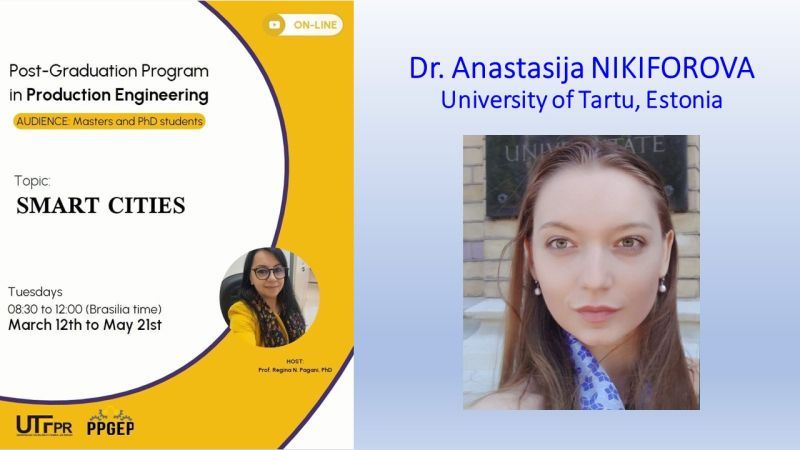
Guest Lecture for the Federal University of Technology – Paraná (UTFPR) on “Unlocking the symbiotic relationship of Artificial Intelligence, Data Intelligence, Collaborative Intelligence, and Embodied Intelligence for innovative urban planning and governance of Smart Cities”

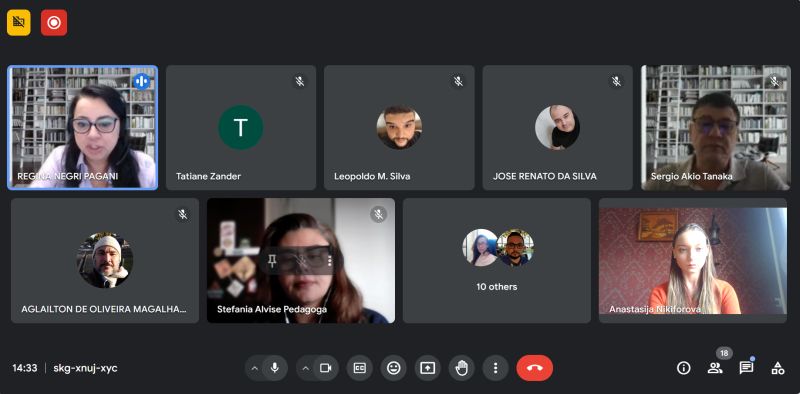
This May, I had a pleasure to deliver one more guest lecture for master and doctoral students of the Federal University of Technology – Paraná (Universidade Tecnológica Federal do Paraná (UTFPR)) as part of Smart Cities course delivered by prof. Regina Negri Pagani. This time the topic of my lecture was “Unlocking the symbiotic relationship of Artificial Intelligence, Data Intelligence, Collaborative Intelligence, and Embodied Intelligence for innovative urban planning and governance of Smart Cities”.

In the pursuit of enhancing the efficiency and effectiveness of Artificial Intelligence, it is imperative to explore synergies with other form of intelligence, such Data Intelligence and Collaborative intelligence. These forms of intelligence (along with Embodied Intelligence) constitute a new transformative paradigm of intelligence proposed by Verhulst et al. (2021) that offers potential for increased added value when synergized. However, their synergy requires understanding and harnessing the symbiotic relationship between these intelligences. The reimagination of decision making and problem-solving processes, is essential to unlock this symbiotic potential fostering more meaningful, but at the very same time more sustainable AI utilization. In other words, AI itself brings a certain value that can be (and must be) increased through integration with other forms of Intelligence. This, in turn, has a list of preconditions / prerequisites that must be satisfied by the above – Artificial, Data, Collaborative, and Embodied Intelligence – components. These prerequisites are diverse in nature and span both the artifacts in question, such as AI, data (type, format, quality, value, availability, accessibility, incl. openness), stakeholders’ skills and literacies, but also management and organizational aspects. In other words, each form of Intelligence influences the others, making it crucial to explore their interconnections. This talk endeavoured to uncover this intricate web of relationships between the three forms of intelligence, taking a step towards a more meaningful and intelligent approach to decision making and problem solving.

As part of this talk we referred to the theory of multiple intelligences by Howard Gardner presented in his famous book “Frames of Mind: A Theory of Multiple Intelligences”. Then, we referred to the above mentioned intelligence paradigm proposed by Stefaan G. Verhulst, Peter Martey Addo, Dominik Baumann, Juliet Mcmurren, Andrew Young, Andrew J. Zahuranec in “Emerging Uses of Technology for Development: A New Intelligence Paradigm“. Then, we finally turned to the actual discussion on the symbiotic relationship of Artificial Intelligence, Data Intelligence, Embodied Intelligence, Collaborative Intelligence, and Generative AI uncovering this intricate web of relationships between these forms of intelligence, putting the above into several contexts with a focus on public & public and open data ecosystems. The later topics, in turn, covered some of my previous research (such as “Sustainable open data ecosystems in smart cities: A platform theory-based analysis of 19 European cities, ” “Identifying patterns and recommendations of and for sustainable open data initiatives: A benchmarking-driven analysis of open government data initiatives among European countries“, “Transparency of open data ecosystems in smart cities: Definition and assessment of the maturity of transparency in 22 smart cities etc.). As such, we tried to indicate future avenues in the light of changing paradigms (or need for such) for intelligences, data ecosystems, mechanisms for citizen engagement & processes (incl., but not limited to data governance & data quality management) accompanying these ecosystems


This followed up by the fruitful discussion with the participants of the course that I enjoyed very much. I can only hope that this lecture was just a little bit as interesting as my dear Regina characterized it! There is nothing better than hear an immediate invitation for the next editions of this course – will be glad to continue this tradition!

📢✍️🗞️New paper alert! “Sustainable open data ecosystems in smart cities: A platform theory-based analysis of 19 European cities”, Cities (Elsevier)

With this post I would like to introduce our new paper entitled “Sustainable open data ecosystems in smart cities: A platform theory-based analysis of 19 European cities” (authors: M. Lnenicka, A. Nikiforova, A. Clarinval, M. Luterek, D. Rudmark, S. Neumaier, K. Kević, M. P. R. Bolívar) that has been just published in Cities journal (Elsevier, Q1).

Smart cities aim to enhance citizens’ lives, urban services, and sustainability, with open data playing a crucial role in this development. Cities generate vast data that, if properly utilized within an open data ecosystem, can improve citizens’ lives and foster sustainability. Central to this ecosystem is the platform, which enables data collection, storage, processing, and sharing. Understanding modern Open Data Ecosystems is pivotal for sustainable urban development and governance, promoting collaboration and civic engagement. In this study, we aimed to identify key components shaping these efforts by conducting a platform theory-based multi-country comparative study of 19 🇪🇺 European cities across 8 countries – Austria 🇦🇹, Belgium 🇧🇪, Croatia 🇭🇷, Czech Republic 🇨🇿, Latvia 🇱🇻, Poland 🇵🇱, Sweden 🇸🇪. Considering both managerial and organizational, political and institutional, as well as information and technological contexts, drawing on both primary and secondary data, we:

  • 🔎🧐🔍identify 50 patterns that influence and shape sustainable Open Data Ecosystems and their platforms, i.e., Open Data Platform Ecosystems. We applied a cluster analysis to identify similarities between groups of patterns that influence and shape open (government) data efforts in smart cities.
  • 🔎🧐🔍explore the relationships between platforms and other Open Data Platform Ecosystems’ components by developing a respective model, and identifying internal platforms and other components that we classified into four categories, (a) data and information disclosure platforms such as open data portals, transparency portals, and official city websites, (b) thematic city development platforms focused on the subject of information such as smart city and smart projects platforms, participation platforms, citizen reporting or accountability platforms, crowdfunding platforms for local projects, startup platforms, etc., (c) specific data format disclosure platforms, and (d) content of information focused platforms, i.e., domain-specific platforms focused on data visualizations and storytelling, which include but are not limited to smart data portals, IoT and big data portals etc. In addition, we identify four OGD strategies used in the strategic planning of the city;
  • 🔎🧐🔍 empirically validate the conceptual findings of five types of Open Data Platform Ecosystems presented in the literature, redefining them from the conceptual to real-life implementation of the respective components in 19 cities with further description of how they contribute to the maturity concept of a sustainable ODE and respective platforms;
  • 🔎🧐🔍 considering the experience gained during the study and external pressures and environments that shape or influence Open Data Platform Ecosystems, based predominantly on best practices or pain points for Open Data Ecosystems in the sampled smart cities, we define 12 recommendations for policy planning and urban governance of more sustainable Open Data Ecosystems.

And this is just a short overview of our contributions. Sounds interesting? Read the article here!

In case of interest, cite this paper as:

On my keynote “Unlocking the symbiotic relationship of Artificial Intelligence, Data Intelligence, and Collaborative Intelligence for Innovative Decision-Making and Problem Solving” (DemocrAI / PRICAI)

This November I was glad to deliver a keynote at The 3rd International Workshop on Democracy and AI (DemocrAI2023) held in conjunction with the 20th Pacific Rim International Conference on Artificial Intelligence (PRICAI2023), which I entitled “Unlocking the symbiotic relationship of Artificial Intelligence, Data Intelligence, and Collaborative Intelligence for Innovative Decision-Making and Problem Solving”.

In the pursuit of enhancing the efficiency and effectiveness of Artificial Intelligence, it is imperative to explore synergies with other form of intelligence, such Data Intelligence and Collaborative intelligence. These forms of intelligence (along with Embodied Intelligence) constitute a new transformative paradigm of intelligence proposed by Verhulst et al. (2021) that offers potential for increased added value when synergized. However, their synergy requires understanding and harnessing the symbiotic relationship between these intelligences. The reimagination of decision making and problem-solving processes, is essential to unlock this symbiotic potential fostering more meaningful, but at the very same time more sustainable AI utilization. In other words, AI itself brings a certain value that can be (and must be) increased through integration with other forms of Intelligence. This, in turn, has a list of preconditions / prerequisites that must be satisfied by the above – Artificial, Data and Collaborative Intelligence – components. These prerequisites are diverse in nature and span both the artifacts in question, such as AI, data (type, format, quality, value, availability, accessibility, incl. openness), stakeholders’ skills and literacies, but also management and organizational aspects. In other words, each form of Intelligence influences the others, making it crucial to explore their interconnections. This talk endeavoured to uncover this intricate web of relationships between the three forms of intelligence, taking a step towards a more meaningful and intelligent approach to decision making and problem solving.

As part of this talk we referred to the theory of multiple intelligences by Howard Gardner presented in his famous book “Frames of Mind: A Theory of Multiple Intelligences”. Then. we referred to the above mentioned intelligence paradigm proposed by Stefaan G. Verhulst, Peter Martey Addo, Dominik Baumann, Juliet Mcmurren, Andrew Young, Andrew J. Zahuranec in “Emerging Uses of Technology for Development: A New Intelligence Paradigm” To put it into the context of the workshop devoted to the role of AI to solving challenging problems by current-day communities and promoting conversational democracy, including but not limited to AI tools in social platforms, we reflected on democratic process, their variety – monitorial, deliberative and participatory democratic processes, and Democratic Activity Model of Open Data Use (DAMODU) proposed by Ruijer, E., Grimmelikhuijsen, S. and Meijer. Then, we finally turned to the discussion on the symbiotic relationship of Artificial Intelligence, Data Intelligence, and Collaborative Intelligence in several contexts with a focus on public and open data ecosystems, which included a brief reflections and outcomes on previous research jointly conducted with my colleagues (such as our paper on open data ecosystems, their calssification, transparency etc.) and indicating future avenues in the light of changing paradigms (or need for such) of both, intelligences, public and open data ecosystems, mechanisms for users (and citizens) engagement and processes accompanying these ecosystems.

This followed up by the fruitful discussion with the participants of the conference that I enjoyed very much (regardless of the fact it was 4AM my time 🙂 since the conference took place in Jakarta). Great thanks to the organizers of The 3rd International Workshop on Democracy and AI (DemocrAI2023) and 20th Pacific Rim International Conference on Artificial Intelligence (PRICAI2023) for having me!