Green AI: ENFIELD Challenge & ECAI2025 Workshop

🔴🟢 Red or Green Pill? Which path will AI take?

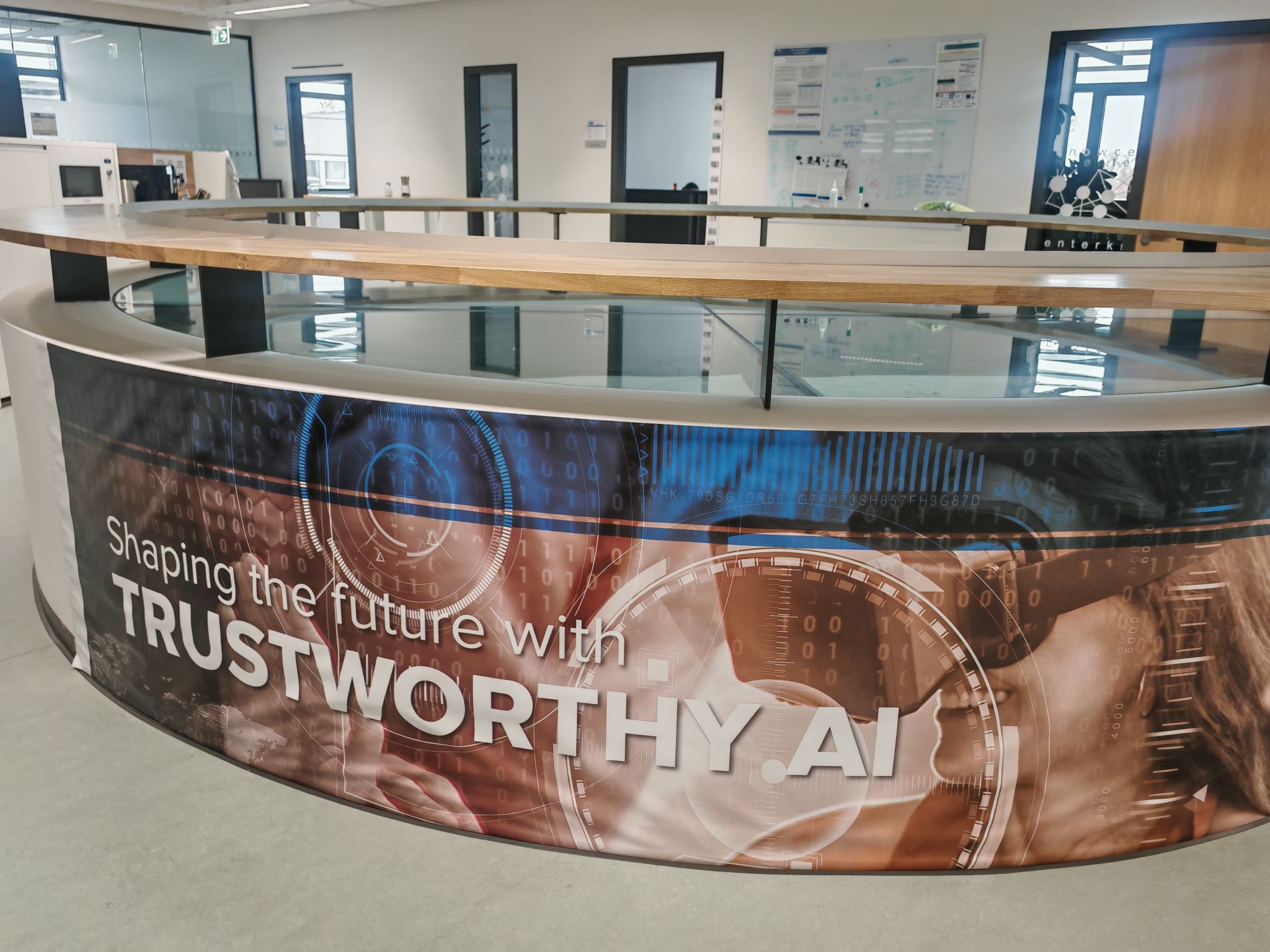
Last month, we officially launched the Green AI Challenge, part of the Horizon Europe ENFIELD – AI Network of Excellence, and October saw a major step forward during an intensive research visit to the Know Center in Graz (Austria) —a hub of AI research and cross-sector collaboration. Working alongside Nicki Lisa Cole we advanced the conceptual and methodological foundations of our Green AI initiative, merging complementary perspectives into a promising framework for sustainable AI.

Why Green AI matters

AI is accelerating rapidly, but so are its environmental and societal side-effects – rising compute demands, energy-intensive models, and the broader ecological footprint of scaling AI. Policies, incentives, and institutional capacity are often lagging behind, creating a gap between AI adoption and responsible, sustainable practice.

The Green AI Challenge aims to understand how organizations across Europe approach Green AI, identifying struggles, gaps, and opportunities, and ultimately co-creating a validated framework for adoption that informs both policy and governance.

Community Call

We need insights from anyone working in AI, sustainability, digital transformation, public policy, or tech governance:

  • What perspectives on Green AI feel most critical today?
  • Where are the biggest gaps, risks, or untapped opportunities?
  • Examples of Green AI in practice (good or bad)?
  • Recommendations for interviews, readings, or collaborators?
  • Frameworks, metrics, or research to guide our work?

Your input will directly shape policy recommendations and adoption frameworks for a more sustainable, trustworthy AI future. Comment below or message us to contribute. Let’s choose the Green Pill together, as we also did with those who joined us earlier in October as part of ECAI2025 Green AI workshop.

Earlier last month, as part of the 28th European Conference on Artificial Intelligence (ECAI2025) in Bologna, together with Riccardo Cantini, Luca Ferragina, Davide Mario Longo, Simona Nisticò, Francesco Scarcello, Reza Shahbazian, Dipanwita Thakur, Irina Trubitsyna, and Giovanna Varricchio, we organized a workshop on environmentally responsible AI, where across three thematic tracks of Sustainability, Green AI, and Applications, 17 talks exploring pathways toward sustainable AI practice were delivered, with the special highlight of keynote talk delivered by Thomas Eiter on “The Bilateral AI approach for Green and Sustainable AI,” introducing a framework that integrates symbolic and subsymbolic methods to advance more efficient and Ecologically Responsible AI.

🌱 All in all, the path forward is ours to shape. By working together—researchers, policymakers, and practitioners—we can turn Green AI from a vision into practice. Let’s continue this journey being committed to sustainable, responsible AI. Let’s choose the Green Pill, together. 🟢
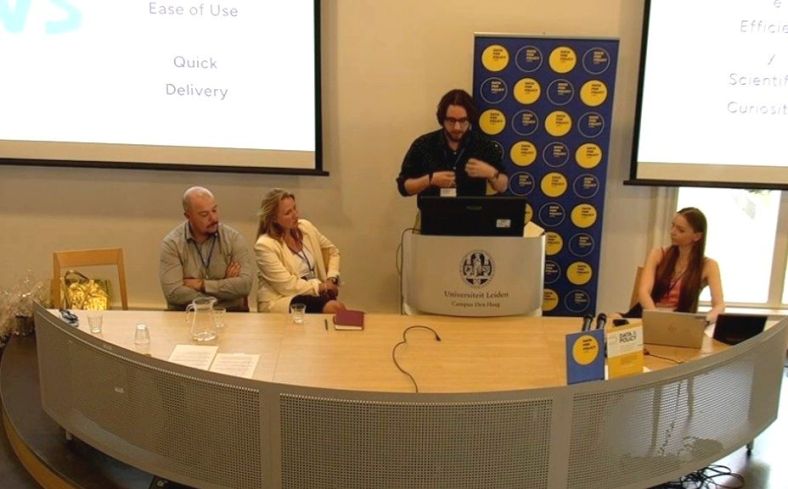
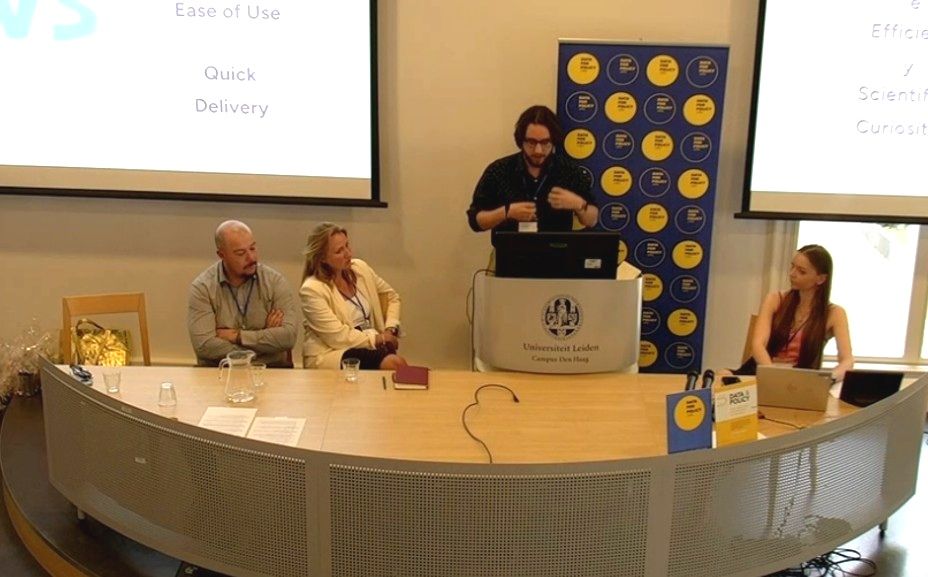
AI, Data, and Public Benefit: Reflections from Data for Policy CIC 2025

At Data for Policy CIC 2025 in The Hague, themed “Twin Transition in Data and Policy for a Sustainable and Inclusive Future,” we explored how emerging technologies—especially AI—and diverse data sources can support accountable, inclusive, and sustainable policymaking.

Across several full days of sessions, the event brought together transdisciplinary researchers, policy practitioners, and technology experts. Notable contributions included:

  1. Research presentations“Proactive-by-Design: The Future of Governance Beyond Bureaucracy?,” on the study we conduct with Paula Rodriguez Müller & Luca Tangi (European Commission JRC) and “The Data Agency Awakens: A New Era for Official Statistics” we prepared with Luca Di Gennaro Splendore
  2. Panel on National Data Strategies in Europe: Learning from and for the Dutch Data Strategy, which I joined the conversation as a panelists, along with Tim Faber (Ministry of Interior & Kingdom Relations), Anne Fleur van Veenstra, Iryna Susha, Adrianna Michałowicz (chaired by Devin Diran & Thijmen van Gend)
  3. finally, the paanel on Responsible AI and Data Science Revolutions: Implications for Public Benefit Research and Policy Making that I was honored to chair, with panelists representing Smart Data Foundry and the Joseph Rowntree Foundation (JRF), joined by Magdalena Getler, Oliver Berry, and Rosario Piazza.

Our discussion highlighted the immense potential of AI and data, but also the responsibilities that come with it. Key insights included:

  • Balancing optimism and realism: AI is transformative, but its adoption requires grounded, practical experience. It can support public benefit—if managed carefully;
  • Data quality over quantity: More data isn’t always better. Governance, documentation, bias mitigation, and transparency are essential for AI-readiness;
  • Embedding public trust: High-sensitivity contexts, such as health or finance, demand proportionality, oversight, and systems designed for inclusivity;
  • Human-in-the-loop mechanisms: Ensuring AI reflects human values and context is critical, even when those values are evolving;
  • Task-appropriate AI: Not every problem requires a large language model; careful alignment between technology and purpose is essential;
  • Data literacy for all: Understanding AI’s limitations and risks is as important as technical infrastructure;
  • Triangulating perspectives: Combining structured/unstructured and qualitative/quantitative data helps address bias, power imbalances, and complexity;
  • Sustainable and inclusive systems: Scalable infrastructure alone is insufficient; AI governance and operational design must prioritize long-term societal benefit.

As Amara’s Law reminds us: “We tend to overestimate the effect of a technology in the short run and underestimate it in the long run.” Our discussion echoed this sentiment: AI’s potential is enormous, but realizing it for public benefit requires careful design, governance, and collaboration.

The overarching theme through all days (beyond above) was clear: AI and data are not neutral tools. Their value for public policy depends on human-centered design, responsible governance, and active societal engagement. Tools alone won’t deliver public benefit—they must be operationalized thoughtfully, with attention to ethics, context, and inclusion.

Huge thanks to Sarah Giest, Bram Klievink, Zeynep Engin, and all participating institutions—Leiden University, TNO Vector, Cambridge University Press & Assessment, and The Hague Centre for Digital Governance—for creating the space for meaningful dialogue in such a rich, collaborative environment.

The CIC 2025 conversations reminded us: building a truly responsible, inclusive, resilient, and sustainable AI ecosystem is not just a technical challenge—it is a societal mission and each and every of us is part of it.

Advancing Democracy & AI: Reflections from IJCAI, PRICAI, and ICA 2025 Workshops

Artificial intelligence is rapidly reshaping how societies govern, deliberate, and make collective decisions. Over the past year, our Democracy & AI workshop series—held across IJCAI, PRICAI, and ICA—has become a global forum for examining both the promise and the perils of AI in democratic contexts. From Montréal to Wellington to Wuhan, our community continues to grow, connecting researchers across AI, political science, HCI, law, design, ethics, and public administration.

DemocrAI at IJCAI 2025: AI at the Service of Society

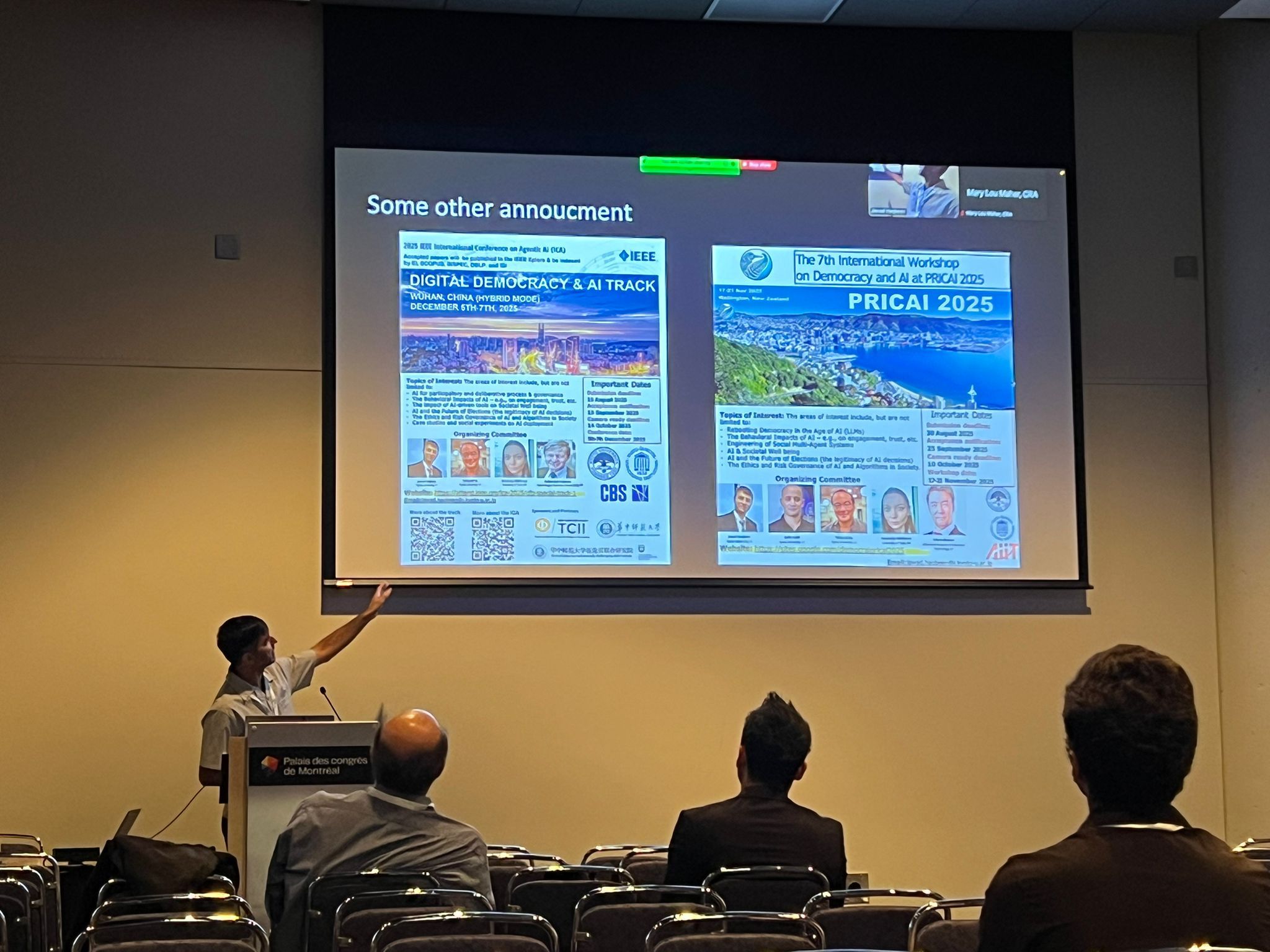
As part of the IJCAI International Joint Conferences on Artificial Intelligence in Montréal, themed “AI at the service of society,” we (Jawad Haqbeen, Takayuki Ito, Rafik Hadfi, and myself) convened the 6th International Workshop on Democracy & AI (DemocrAI25).
Although I could not attend in person, I am deeply grateful to my co-organizers for leading the workshop and for representing our team—as well as for the chance to meet Yoshua Bengio, one of the pioneers of modern deep learning and the one who recently became the very first researcher who while still being active in research achieved the milestone of 1 million citations!

The workshop opened with two outstanding keynote talks:

  • Mary Lou Maher (UNC Charlotte) — “The Imperative for AI Literacy”
  • Michael Inzlicht (University of Toronto) — “In Praise of Empathic AI”

Across 13 diverse presentations, contributors explored: AI’s impact on trust, civic engagement, and deliberation, risks and governance of LLMs in judicial settings and policymaking, collective intelligence and value aggregation for democratic processes, AI applications in education, law, and policy design, governance, fairness, inclusion, and global research equity.

We were delighted to recognize several exceptional contributions:

  • Best Paper Award“LLMs in Court: Risks and Governance of LLMs in Judicial Decision-Making” (Djalel Bouneffouf & Sara Migliorini)
  • Best Student Paper Award“Finding Our Moral Values: Guidelines for Value System Aggregation” (Víctor Abia Alonso, Marc Serramia & Eduardo Alonso Sánchez)
  • Best Extended Abstract Award“Group Discussions Are More Positive with AI Facilitation” (Sofia Sahab, Jawad Haqbeen & Takayuki Ito)
  • Best Presentation Award“Democracy as a Scaled Collective Intelligence Process” (Marc-Antoine Parent)

A key message echoed throughout the day: AI can enhance social cohesion, participation, and equity—but only through responsible design and robust governance frameworks.

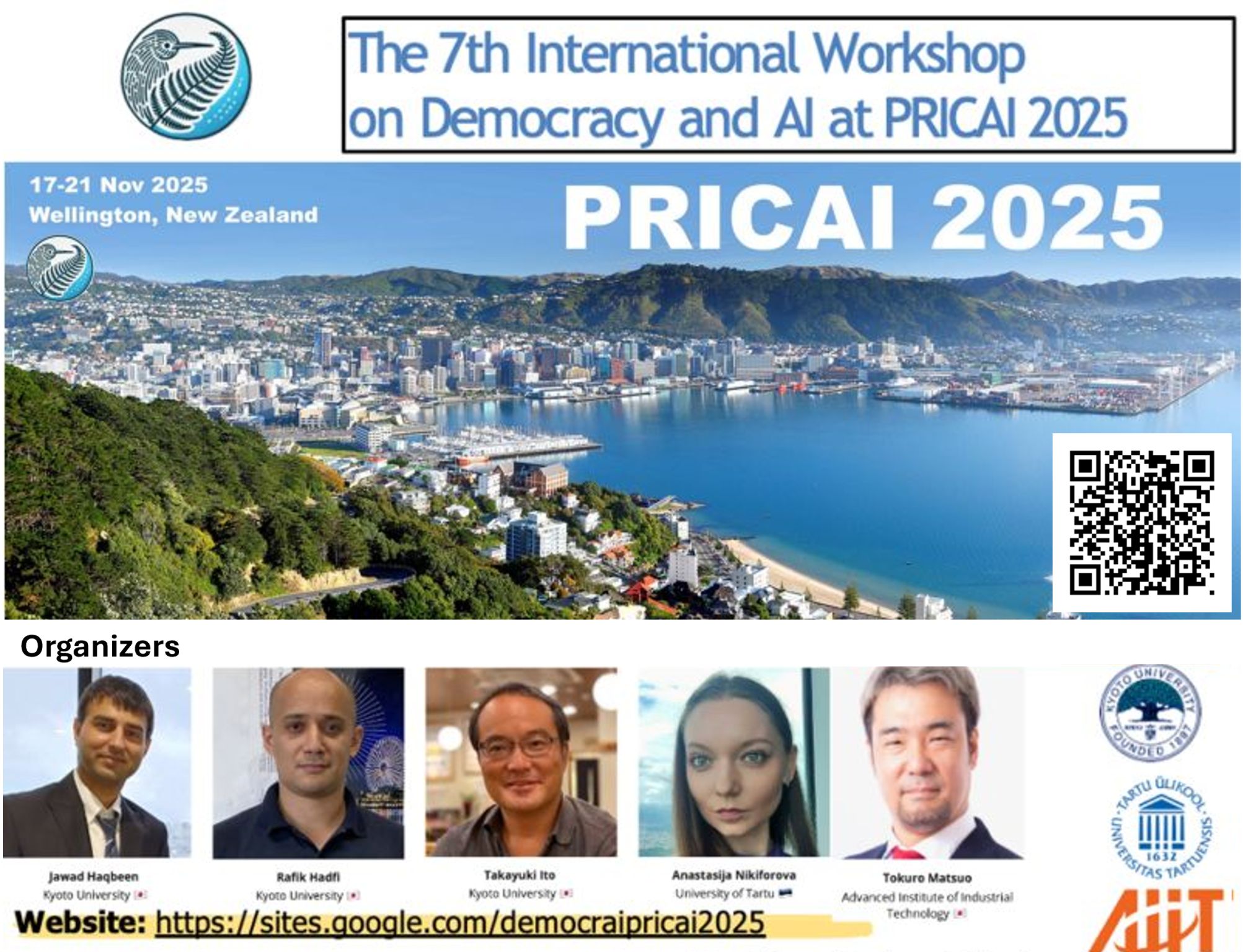
DemocrAI at PRICAI 2025: Participation, Values, and Governance

Following IJCAI, I joined the organizing committee for the 7th Democracy & AI Workshop at PRICAI 2025, held in Wellington, New Zealand. Two years ago, I had the privilege of giving a keynote at PRICAI DemocrAI on symbiotic relationship of Artificial Intelligence, Data Intelligence, and Collaborative Intelligence for Innovative Decision-Making and Problem Solving. This year, I am excited to help shape the conversation from the organizing side.

The workshop explored the expanding role of AI in democratic life, including AI-assisted policy design and decision-making, AI in governance, elections, and public administration, citizen participation and deliberative democracy tools, behavioral impacts of AI on trust, engagement, and polarization, transparency, accountability, and legitimacy of algorithmic decisions, ethics, socio-technical risks, and AI’s impact on societal wellbeing, and reimagining democracy in the LLM era.

Special Track at ICA 2025: AI in e-Government & Public Administration

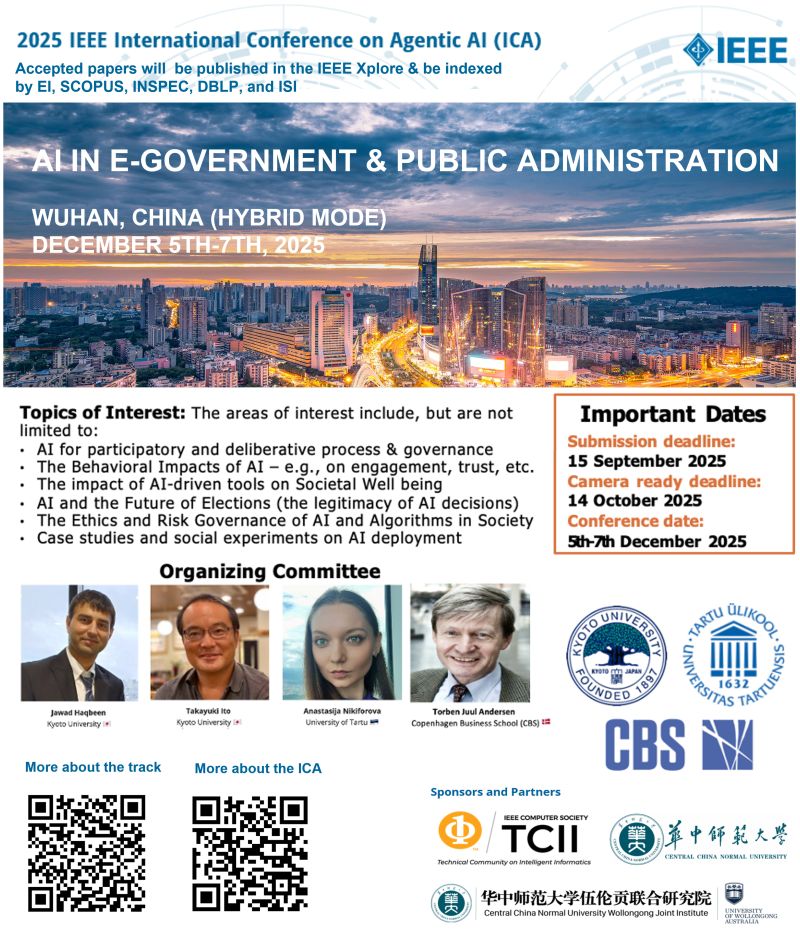
Our workshop series expands further with a dedicated Special Track on AI in e-Government & Public Administration at the IEEE International Conference on Agentic AI (ICA 2025), held in Wuhan, China.

Co-organized with Jawad Haqbeen, Takayuki Ito, and Torben Juul Andersen, this track examines how AI-driven tools are transforming public governance—from policy co-creation and civic engagement to service delivery and institutional decision-making.

Topics include:

  • AI for participatory and deliberative governance
  • AI’s impact on societal wellbeing
  • AI in public service delivery and policy design
  • Ethics and risk governance in public-sector AI
  • Case studies and experiments with deployed systems
  • Transparency, accountability, and responsible administration

Across IJCAI, PRICAI, and ICA, one theme is clear: AI’s role in democracy is neither predetermined nor neutral. It can support inclusion, transparency, and collective intelligence—or undermine trust, equity, and participation. The outcome depends on the choices we make now: the values we embed, the governance we build, and the communities we bring together.

Our Democracy & AI workshop series exists to advance this work—uniting technologists, policymakers, social scientists, designers, and ethicists in a shared mission: to ensure AI serves democracy, rather than the other way around.

Huge thanks to all speakers, awardees, participants, and co-organizers.
Onward to DemocrAI at PRICAI and ICA 2025!

From Krems to Linz: Reflections from EGOV 2025 and a Research Visit to Austria

September brought a truly inspiring and intense sequence of events: the EGOV 2025 from Doctoral Colloquium to Junior Faculty School, and the main IFIP EGOV 2025 conference in Krems, followed by a research stay at Johannes Kepler University Linz. Five days of discussion, mentoring, presenting, and connecting in Krems with several more in Linz where the intensive research stay was enriched by a memorable dive into the Ars Electronica Festival and its conversations on technology, fear, and democratic futures.

What follows is a reflection on an academically dense but deeply rewarding journey across two Austrian cities.

EGOV2025: Doctoral Colloquium & Junior Faculty School

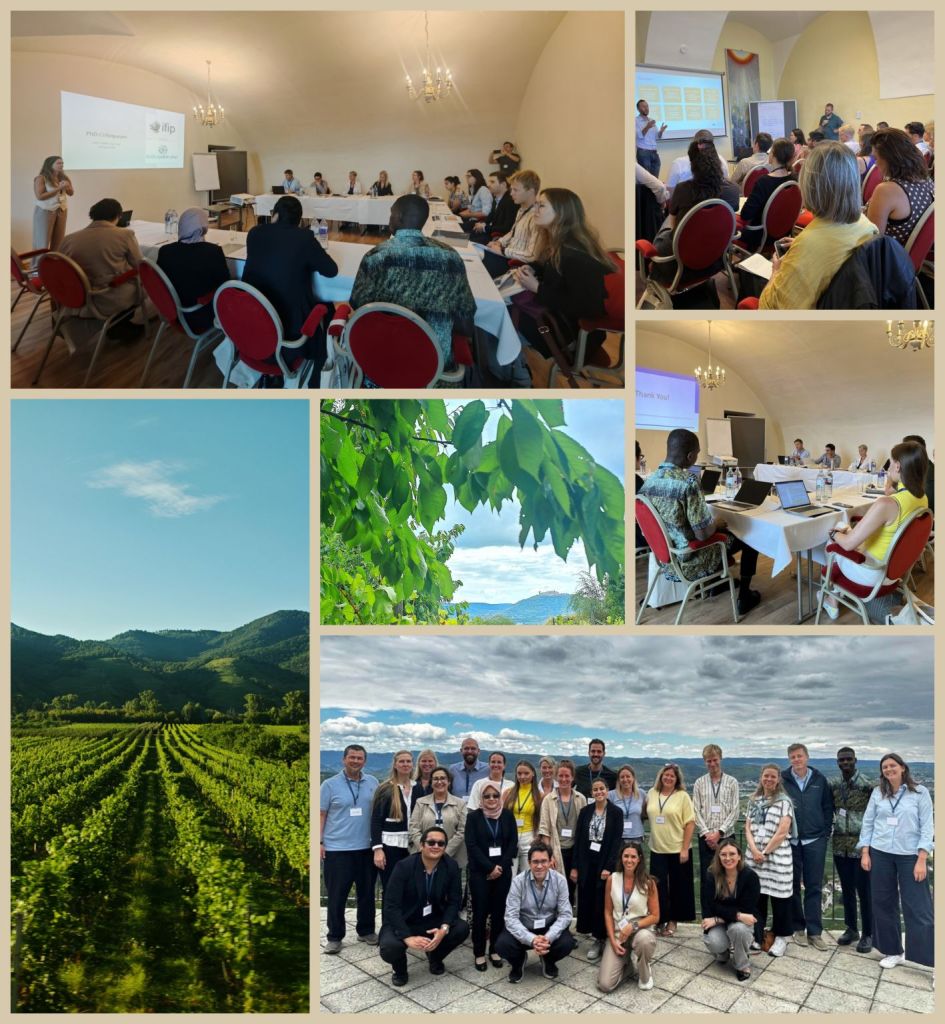
We began in the breathtaking setting of Göttweig Abbey with the EGOV 2025 Doctoral Colloquium, where 13 PhD students presented their research, shared challenges of the doctoral journey, and engaged in open discussions with mentors.

The following day, the Junior Faculty School expanded these conversations to early career researchers (up to five years post-PhD). Together with a wonderfully engaged group, we explored questions about career trajectories, researcher identity, publishing strategies, gender inequalities in academia, and the importance of being in a workplace that supports—not drains—well-being.

A recurring theme across both days was impact. We examined it from multiple perspectives:

  • during the Colloquium’s mentor panel
  • in Tomasz Janowski’s keynote
  • through the “from research to policy” workshop by Paula Rodriguez Müller, Sven Schade, and Luca Tangi
  • in the panel on publishing in top journals with Panos Panagiotopoulos and Manuel Pedro Rodríguez Bolívar
  • and in roundtable discussions on career development

Sincere thanks to the organizers—Gabriela Viale Pereira, Ida Lindgren, Lieselot Danneels, J. Ramon Gil-Garcia, and Michael Koddebusch—for making these events equally enriching for participants and mentors.

EGOV 2025 conference

With the main conference underway, we launched the Emerging Technologies and Innovations track, which I co-chaired with Francesco Mureddu and Paula Rodriguez Müller. This year, we welcomed Paula (European Commission JRC) to the team and continued pushing the track beyond academic silos, aiming to strengthen the bridge between research, policy, and practice.

We were delighted to see a record number of submissions—double compared to last year. A growing Information Systems community joined us, fulfilling the long-term ambition that Marijn Janssen and I have shared for the track.

Across three sessions, we explored topics that shape the future of governance:

  • the potential of generative AI and LLMs for administrative literacy and public sector transformation
  • trust frameworks and platform governance
  • GovTech incubators and the gap between prototypes and long-term implementation
  • self-assessment tools for climate adaptation
  • digital transformation patterns in smart city strategies

These studies together illustrated how emerging technologies and governance innovation are reshaping public institutions.

A special highlight was the Best Paper Award in the category “Most Innovative Research Contribution or Case Study”, received by Lukas Daßler for “GovTech Incubators: Bridging the Gap Between Prototypes and Long-Term Implementation” (co-authored with Andreas Hein and Helmut Krcmar). Congratulations once again!

I was happy to present two papers at the conference:

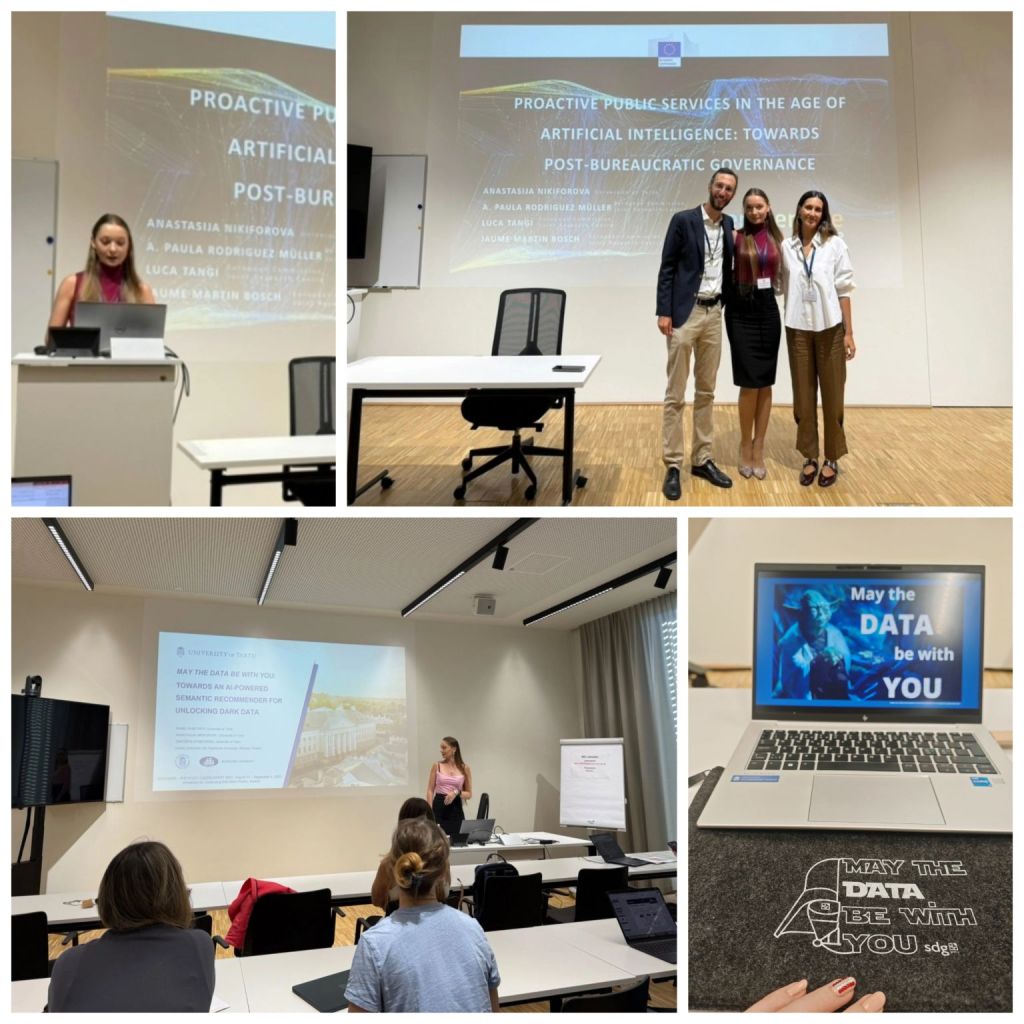
  1. “Proactive Public Services in the Age of Artificial Intelligence: Towards Post-Bureaucratic Governance” with Paula Rodriguez Müller, Luca Tangi, and Jaume Martin Bosch – the first (or “step 0”) output of our ongoing research on AI-enabled proactive service provision.
  2. “May the Data Be with You: Towards an AI-Powered Semantic Recommender for Unlocking Dark Data” based on the master thesis of my former student, now at Microsoft, Ramil Huseynov; co-authored with Dimitris Simeonidis and David Duenas-Cid – a project that combines technical exploration with a generous dose of nerdiness and fun.

Research Visit to Linz

Right after EGOV, I travelled to JKU Linz, hosted by Christoph Schuetz at the Institute of Business Informatics – Data & Knowledge Engineering. During the visit, I delivered an invited talk titled “Responsible Data Ecosystems: From Data Governance to AI Adoption.”
We discussed how to establish trustworthy, effective data practices while responsibly integrating AI, and explored opportunities for future collaboration.

Beyond the academic exchange, Linz offered its own inspiration: diverse, vibrant, and beautifully intertwined with nature and art such as..

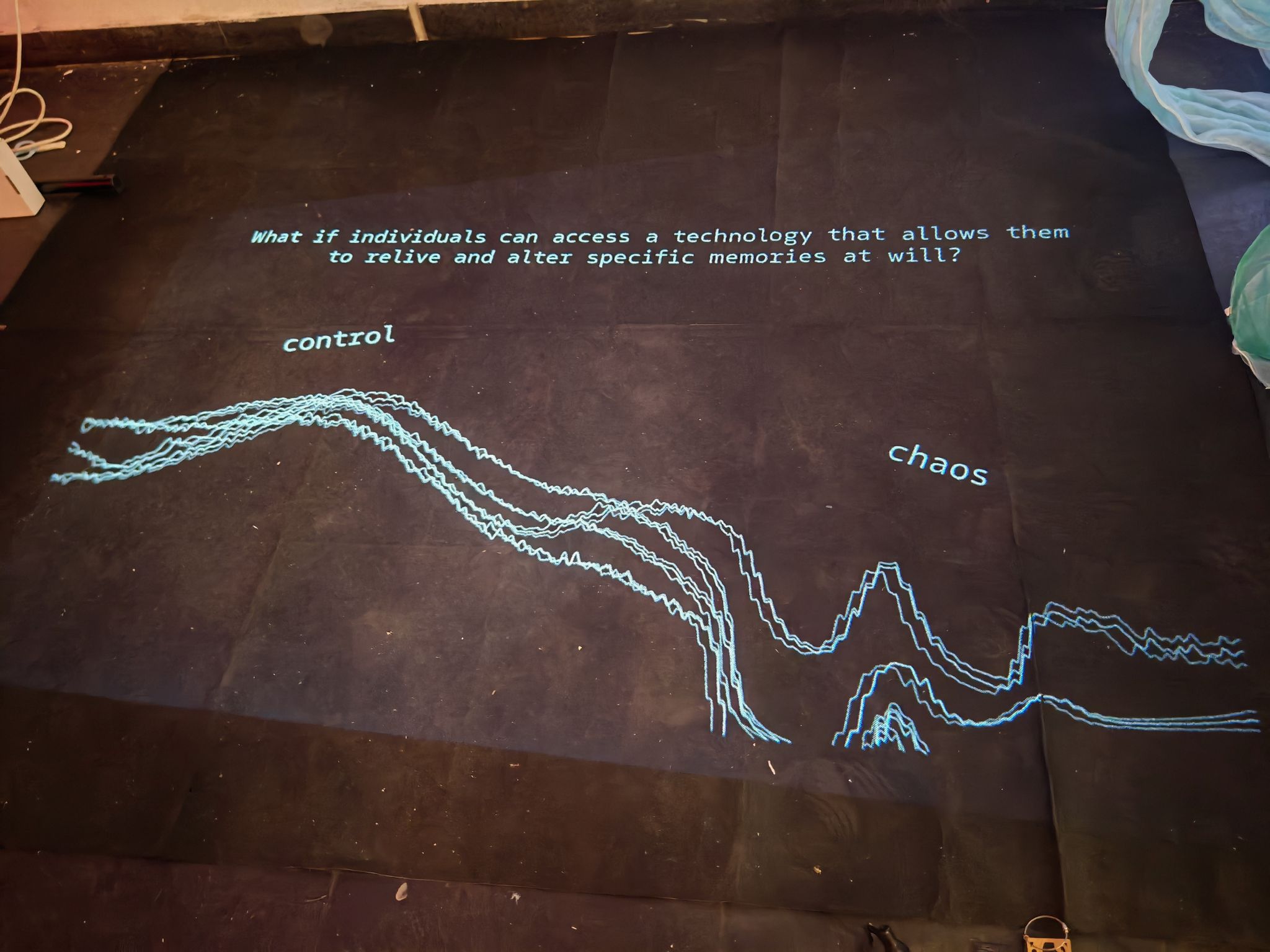
Ars Electronica 2025: Panic – Yes/No?

One of the standout experiences was the Ars Electronica Festival, which this year examined the theme “Panic – Yes/No?”. The exhibitions brought together over 1,400 contributors—artists, scientists, developers, entrepreneurs, and activists—questioning our collective sense of alarm and exploring whether “collective panic” is a rational response or a product of sensationalism.

AI and its societal implications stood at the heart of many installations: Who designs these systems? For whom? According to which values? These questions resonate strongly with the core of my own research and offered a refreshing, interdisciplinary lens on technology and democratic futures.

From mentoring early-stage researchers and running a dynamic track, to presenting new work, reconnecting with colleagues, expanding the Information Systems presence within EGOV, and diving into Linz’s research and cultural landscape—it was an intense but profoundly rewarding start of the semester. Weeks like these is a food reminder of why mentoring, connecting, and building research communities matter so much—and why an early Sunday alarm can indeed be worth it.

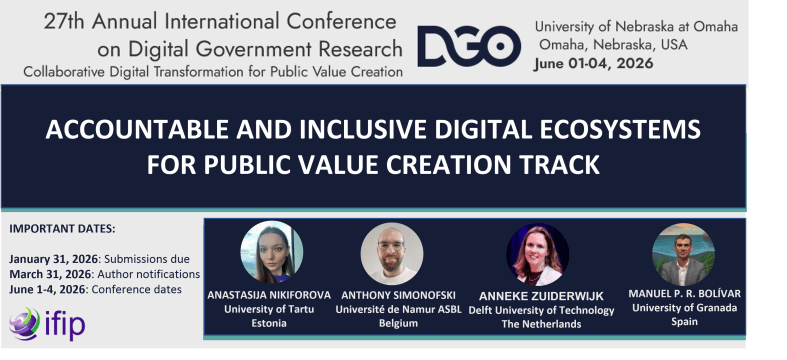
Call for Papers: Accountable and Inclusive Digital Ecosystems for Public Value Creation — dg.o 2026

Call for Papers is now open for our track “Accountable and Inclusive Digital Ecosystems for Public Value Creation” at the 27th Annual International Conference on Digital Government Research (dg.o 2026). The conference will take place June 2–5, 2026, at the University of Nebraska at Omaha, USA.

This track continues and expands the work we initiated in 2024 and 2025 on public and open data ecosystems. Responding to new technological and societal realities, we broaden the focus this year toward AI-enabled, interoperable, sustainable, and human-centered digital ecosystems—their design, governance, and impact on public value creation.

Why this track? Why now?

Digital ecosystems are undergoing profound transformation. Emerging technologies—AI (including generative AI), interoperable data spaces, IoT, cloud–edge infrastructures, and new governance frameworks—now form the backbone of digital public action. These technologies unlock unprecedented opportunities for insight generation, collaboration, transparency, and service co-creation across sectors.

Yet they also introduce new challenges: ethics, accountability, trust, digital literacy, and inclusion. As governments and organizations navigate this shift, we need research that bridges technical innovation, institutional capacity, and societal expectations.

Our track provides a space for this conversation.

What the track explores

We invite contributions that examine the conceptual, technical, institutional, and societal dimensions of digital and data ecosystems, with an emphasis on accountability, sustainability, inclusivity, and public value.

Topics of interest include (but are not limited to):

  • Ethical and accountable AI, data governance, algorithmic transparency, privacy, security
  • Interoperability and trust frameworks, identity infrastructures, standards, reference architectures
  • AI, Generative AI, LLMs, NLP, IoT/cloud/edge integration, green computing, Metaverse applications
  • Human–AI interaction, explainability, accessibility, inclusion in digital public services
  • Stakeholder engagement, empowerment, co-creation, digital literacy, data sovereignty
  • Institutional and organizational mechanisms for ecosystem governance and sustainable management
  • Open, public, and cross-sector data ecosystems, including data spaces and platform ecosystems
  • Social, economic, and environmental sustainability and other public value dimensions
  • Case studies from cities, communities, public-sector organizations, and multi-stakeholder collaborations
  • Impact assessments of digital ecosystems on individuals, organizations, and society

Connection to the dg.o 2026 theme

The conference theme—Collaborative Digital Transformation for Public Value Creation—aligns perfectly with our track’s purpose.
Digital ecosystems represent socio-technical infrastructures where governance, technology, and societal needs intersect. Understanding how to make these ecosystems accountable, inclusive, and sustainable is essential for collaborative digital transformation and for delivering tangible societal outcomes.

Track chairs

  • Anastasija Nikiforova, University of Tartu (Estonia)
  • Anthony Simonofski, Université de Namur (Belgium)
  • Anneke Zuiderwijk – van Eijk, Delft University of Technology (Netherlands)
  • Manuel Pedro Rodríguez Bolívar, Universidad de Granada (Spain)

Together, we bring perspectives from digital government, data governance, public administration, information systems, and socio-technical ecosystem design.

Submission details

Full CFP and submission guidelines are available here:
🔗 https://dgsociety.org/dgo-2026/

We look forward to receiving your submissions and to advancing the conversation on how accountable, inclusive, and sustainable digital ecosystems can drive the next generation of public value creation.

If you have questions about fit or ideas you’d like to discuss, feel free to reach out.