Advancing Democracy & AI: Reflections from IJCAI, PRICAI, and ICA 2025 Workshops

Artificial intelligence is rapidly reshaping how societies govern, deliberate, and make collective decisions. Over the past year, our Democracy & AI workshop series—held across IJCAI, PRICAI, and ICA—has become a global forum for examining both the promise and the perils of AI in democratic contexts. From Montréal to Wellington to Wuhan, our community continues to grow, connecting researchers across AI, political science, HCI, law, design, ethics, and public administration.

DemocrAI at IJCAI 2025: AI at the Service of Society

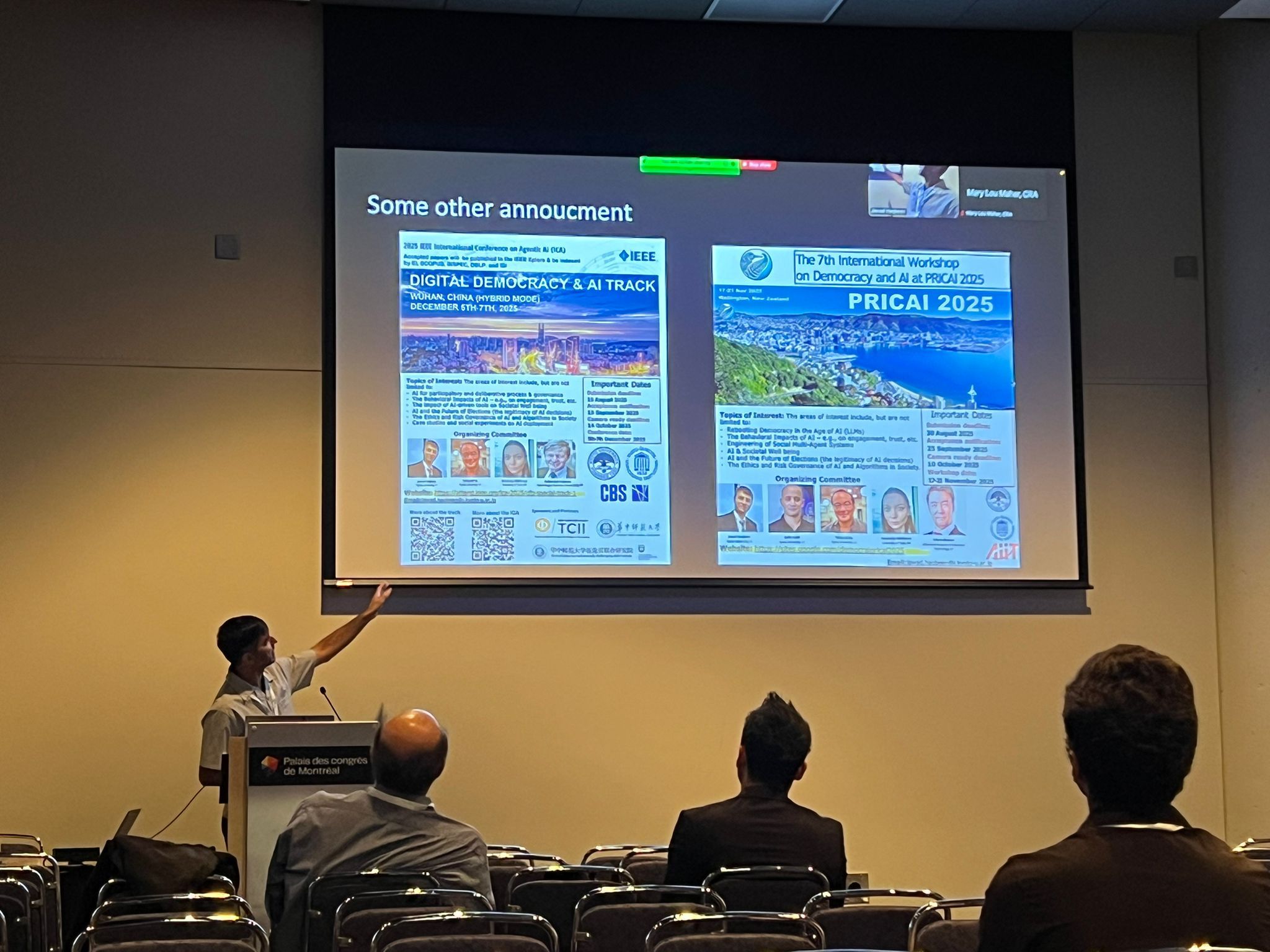
As part of the IJCAI International Joint Conferences on Artificial Intelligence in Montréal, themed “AI at the service of society,” we (Jawad Haqbeen, Takayuki Ito, Rafik Hadfi, and myself) convened the 6th International Workshop on Democracy & AI (DemocrAI25).
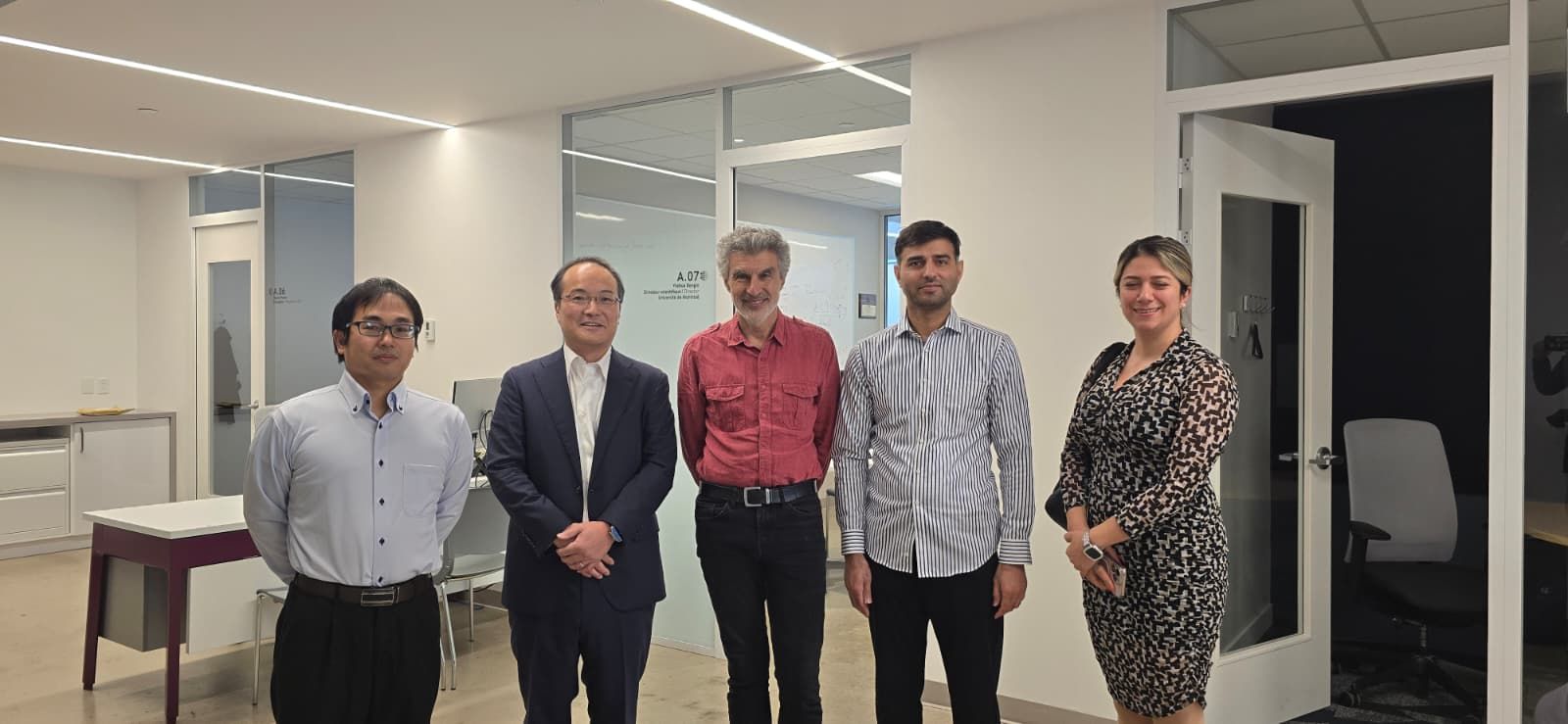
Although I could not attend in person, I am deeply grateful to my co-organizers for leading the workshop and for representing our team—as well as for the chance to meet Yoshua Bengio, one of the pioneers of modern deep learning and the one who recently became the very first researcher who while still being active in research achieved the milestone of 1 million citations!

The workshop opened with two outstanding keynote talks:

  • Mary Lou Maher (UNC Charlotte) — “The Imperative for AI Literacy”
  • Michael Inzlicht (University of Toronto) — “In Praise of Empathic AI”

Across 13 diverse presentations, contributors explored: AI’s impact on trust, civic engagement, and deliberation, risks and governance of LLMs in judicial settings and policymaking, collective intelligence and value aggregation for democratic processes, AI applications in education, law, and policy design, governance, fairness, inclusion, and global research equity.

We were delighted to recognize several exceptional contributions:

  • Best Paper Award — “LLMs in Court: Risks and Governance of LLMs in Judicial Decision-Making” (Djalel Bouneffouf & Sara Migliorini)
  • Best Student Paper Award — “Finding Our Moral Values: Guidelines for Value System Aggregation” (VĂ­ctor Abia Alonso, Marc Serramia & Eduardo Alonso Sánchez)
  • Best Extended Abstract Award — “Group Discussions Are More Positive with AI Facilitation” (Sofia Sahab, Jawad Haqbeen & Takayuki Ito)
  • Best Presentation Award — “Democracy as a Scaled Collective Intelligence Process” (Marc-Antoine Parent)

A key message echoed throughout the day: AI can enhance social cohesion, participation, and equity—but only through responsible design and robust governance frameworks.

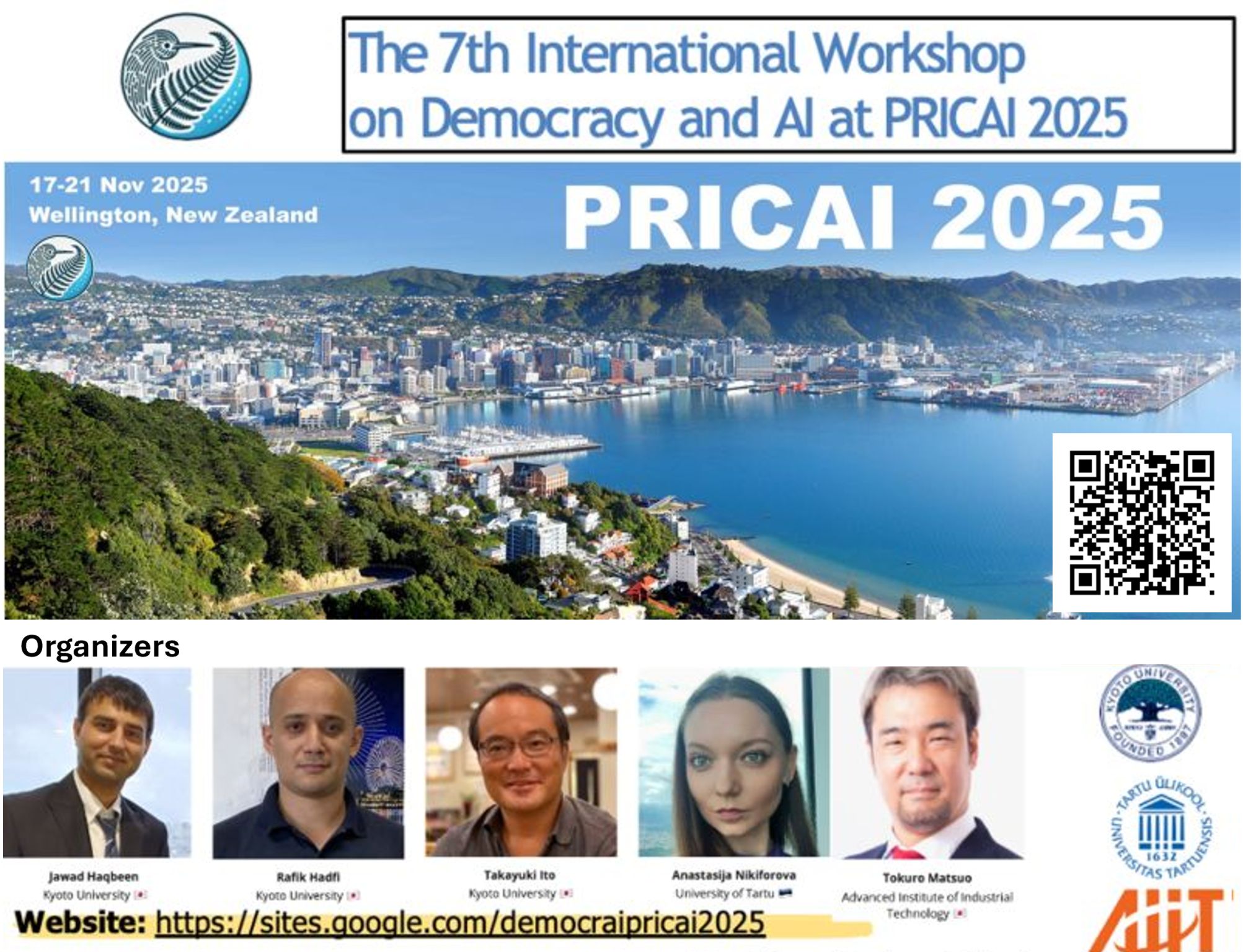
DemocrAI at PRICAI 2025: Participation, Values, and Governance

Following IJCAI, I joined the organizing committee for the 7th Democracy & AI Workshop at PRICAI 2025, held in Wellington, New Zealand. Two years ago, I had the privilege of giving a keynote at PRICAI DemocrAI on symbiotic relationship of Artificial Intelligence, Data Intelligence, and Collaborative Intelligence for Innovative Decision-Making and Problem Solving. This year, I am excited to help shape the conversation from the organizing side.

The workshop explored the expanding role of AI in democratic life, including AI-assisted policy design and decision-making, AI in governance, elections, and public administration, citizen participation and deliberative democracy tools, behavioral impacts of AI on trust, engagement, and polarization, transparency, accountability, and legitimacy of algorithmic decisions, ethics, socio-technical risks, and AI’s impact on societal wellbeing, and reimagining democracy in the LLM era.
Special Track at ICA 2025: AI in e-Government & Public Administration

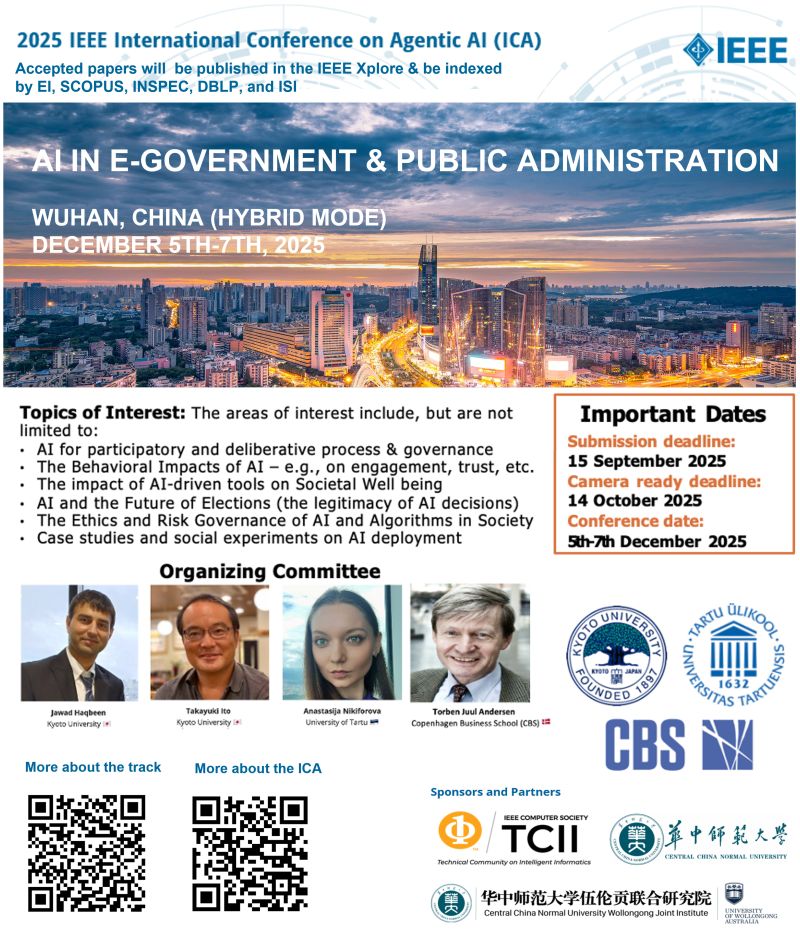
Our workshop series expands further with a dedicated Special Track on AI in e-Government & Public Administration at the IEEE International Conference on Agentic AI (ICA 2025), held in Wuhan, China.

Co-organized with Jawad Haqbeen, Takayuki Ito, and Torben Juul Andersen, this track examines how AI-driven tools are transforming public governance—from policy co-creation and civic engagement to service delivery and institutional decision-making.

Topics include:

  • AI for participatory and deliberative governance
  • AI’s impact on societal wellbeing
  • AI in public service delivery and policy design
  • Ethics and risk governance in public-sector AI
  • Case studies and experiments with deployed systems
  • Transparency, accountability, and responsible administration
Across IJCAI, PRICAI, and ICA, one theme is clear: AI’s role in democracy is neither predetermined nor neutral. It can support inclusion, transparency, and collective intelligence—or undermine trust, equity, and participation. The outcome depends on the choices we make now: the values we embed, the governance we build, and the communities we bring together.

Our Democracy & AI workshop series exists to advance this work—uniting technologists, policymakers, social scientists, designers, and ethicists in a shared mission: to ensure AI serves democracy, rather than the other way around.

Huge thanks to all speakers, awardees, participants, and co-organizers.
Onward to DemocrAI at PRICAI and ICA 2025!
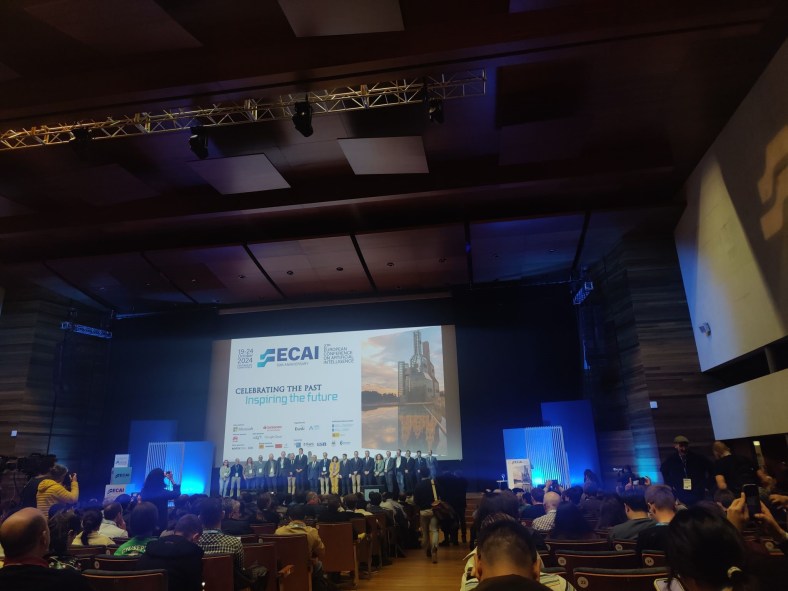
27th European Conference on Artificial Intelligence (ECAI 2024): Celebrating the past, inspiring the future

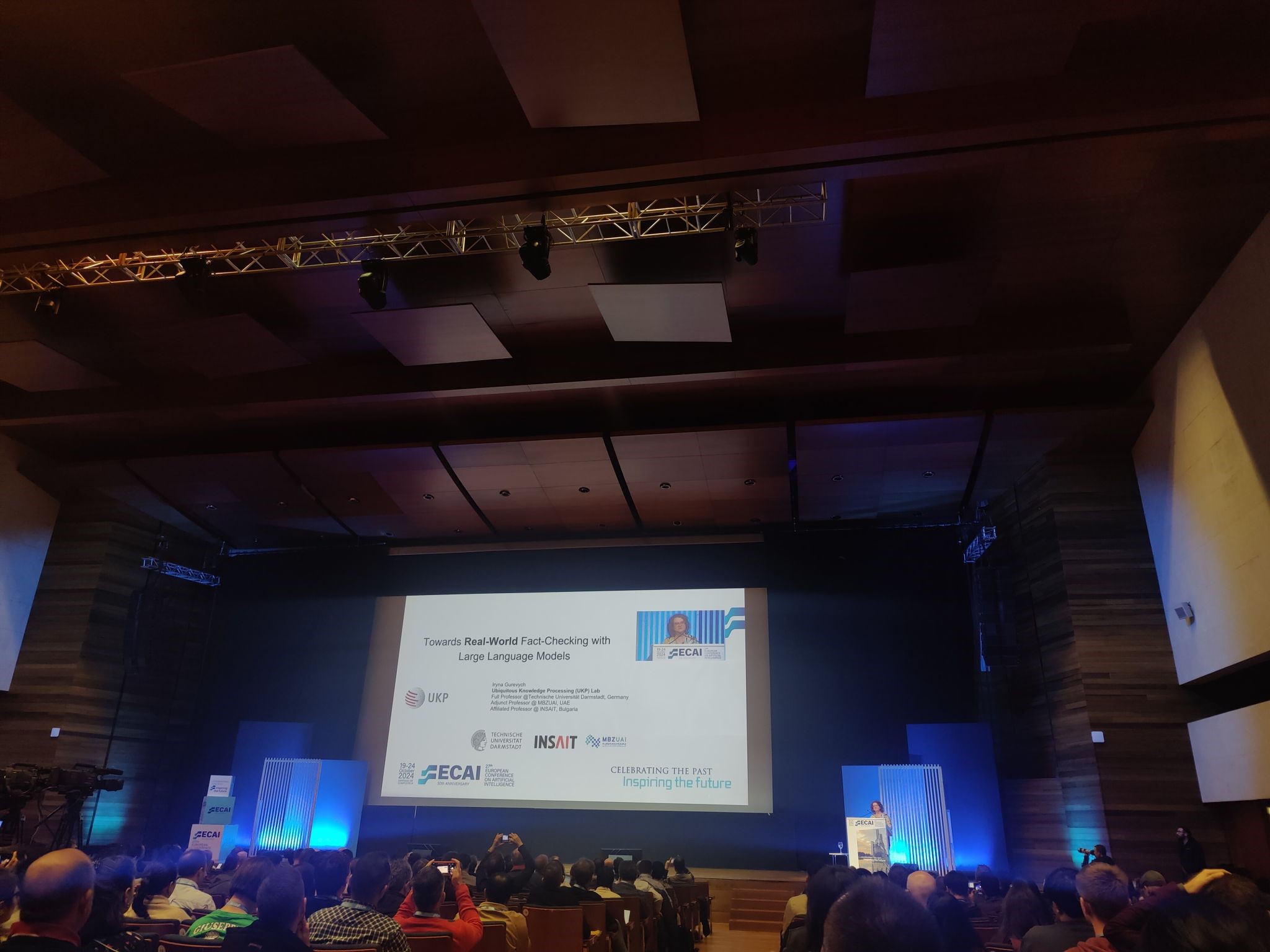
This October was one of the busiest yet most rewarding months of the year for me. Among several work trips, the highlight was attending the 27th European Conference on Artificial Intelligence (ECAI 2024) in Santiago de Compostela, Spain. Celebrating its 50th anniversary, ECAI remains Europe’s premier venue for AI research and innovation, bringing together thought leaders, researchers, and industry professionals from around the world.

This year’s theme, “Celebrating the Past, Inspiring the Future,” captured the spirit of ECAI’s half-century legacy while driving forward-looking discussions on the next era of artificial intelligence. With over 1,500 participants from 59 countries (so not so very European conference anymore, but rather a global event) and a packed schedule of more than 150 events, among which:

  • “Towards Real-World Fact-Checking with Large Language Models” keynote talk by Iryna Gurevych, (Technische Universität Darmstadt), reflecting on advancements in using language models for verifying information in real time;
  • “Robots (Still) Need Humans in the Loop,” keynote talk by Iolanda Leite (KTH Royal Institute of Technology), who underscored the essential role humans play in AI-driven robotics, even as systems grow more autonomous;
  • “Economic Complexity: Using Machine Learning to Understand Economic Development” keynote talk by Cesar A. Hidalgo (Toulouse School of Economics & Corvinus University of Budapest) that examined how machine learning is transforming our understanding of economic trends and predictions.

These were accompanied with a range of panels, with a few sessions that stood out (my personal opinion though):

  • Economic Impact of AI: Threats and Opportunities with Jeremy Rollison (Microsoft Corporation), David Autor (MIT), and Raquel Jorge Ricart (Elcano Royal Institute) on AI’s potential to reshape labor markets and economies around the world;
  • AI Regulation: The European Scenario (Kilian Gross, Dr. Clara Neppel, IEEE, Beatriz Alvargonzalez Largo, European Commission, JosĂ© Miguel Bello Villarino, ARC Centre of Excellence for Automated Decision-Making and Society), addressed regulatory considerations;
  • 50th Anniversary Session on the History of AI in Europe paying tribute to AI’s history in Europe, with Luc Steels, Stefano Cerri, Fredrik Heintz, and Tony Cohn sharing reflections on past achievements and a “follow-up” on it in the Future of AI: The Next 50 Years with Fredrik Heintz, Iryna Gurevych, JosĂ© Hernández-Orallo, Ann Nowe, Toby Walsh;
  • Designing Ethical and Trustworthy AI Research Policies for Horizon Europe centered on ethical standards and trustworthy AI research practices within the EU’s Horizon program, led by Mihalis Kritikos from the European Commission;
  • Funding your Scientific Research with the European Research Council (ERC) with Enrique Alba.

As part of this conference, I had pleasure of presenting a paper co-authored with my former student Jan-Erik Kalmus, based on his Master’s thesis, which I had the privilege of supervising. Our paper, “To Accept or Not to Accept? An IRT-TOE Framework to Understand Educators’ Resistance to Generative AI in Higher Education,” examined what barriers might prevent educators from adopting Generative AI tools in their classrooms? Since the public release of ChatGPT, there has been a lively debate about the potential benefits and challenges of integrating Generative AI in educational contexts. While the technology holds promise, it has also sparked concerns, particularly among educators. In the field of information systems, Technology Adoption models are often used to understand factors that encourage or inhibit the use of new technologies. However, many existing models focus primarily on acceptance drivers, often overlooking the unique barriers that educators face. This study seeks to fill that gap by developing a theoretical model specifically tailored to identify the barriers that may prevent educators—academic staff in particular—from integrating Generative AI into their teaching. Our approach builds on Innovation Resistance Theory, augmented by constructs from the Technology-Organization-Environment (TOE) framework. With the designed mixed-method measurement instrument, combining quantitative data with qualitative insights, to capture educators’ specific concerns around Generative AI adoption in higher education, our model has been applied in real-world settings, specifically focusing on Estonian higher education institutions. We examined whether academic staff at public universities in Estonia – often referred to as a “digital nation” – show reluctance toward Generative AI use in educational settings. Preliminary findings highlight several concerns unique to educators, which may shape how Generative AI is integrated into teaching practices.

A Heartfelt Thanks to ECAI’s Organizers – the European Association for Artificial Intelligence (EurAI), the Spanish Artificial Intelligence Society, CiTIUS (Research Centre on Intelligent Technologies), and, of course, the city of Santiago de Compostela for being such a welcoming place.

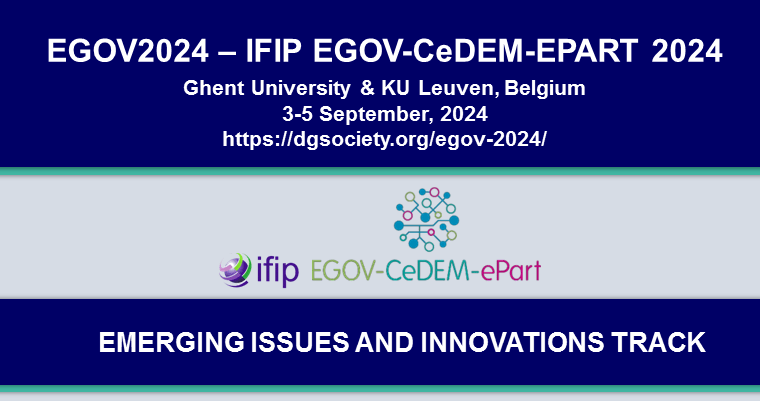
EGOV2024 – IFIP EGOV-CeDEM-EPART 2024 & our Emerging Issues and Innovations Track

Are you focusing on new topics emerging in the field of ICT and public sector, incl. public-private ecosystems? Then it is time to start preparing your submission for EGOV2023 – IFIP EGOV-CeDEM-EPART Emerging Issues and Innovations Track (chairs: Anastasija Nikiforova, Marijn Janssen, Francesco Mureddu).

EGOV2023 – IFIP EGOV-CeDEM-EPART is one of the most recognized conference in e-Government, ICT and public administration and related topics, which this year will be hosted in Belgium, in the heart of Europe, by Ghent University and KU Leuven – both top 100 universities.

 Innovation and application of emerging technologies is now more and more in the thinking of Governments at all levels. While it would be easy to consider the public sector as being less flexible or slow in adoption, presentations at recent EGOV-CeDEM-ePart conferences proved that one should not come to such a conclusion too easily. Upcoming technologies, innovative organizational solutions, or new avenues of involvement in public sector activities seem to be more commonplace – along with the potential issues and challenges that come with such endeavours. Policy-makers and public sector officials are now expected to embrace change, consider digital transformation, or improve governance practices. At the same time, public sector researchers are also influenced by new views, methods, tools and techniques.

🎯The goal of this track is to provide a platform for the discussion of new ideas, issues, problems, and solutions, that keep entering the public sphere. Ideas that are emerging but might not fit other conference tracks are also welcome. Focus may include but is not limited to:

  • đź’ˇ Looking ahead into social innovation
  • đź’ˇFuture studies, the future of government, policy-making and democracy
  • đź’ˇNew trends in public sector research such as Metaverse, Large Language Models (LLMs), generative AI and its implementations such as chatGPT, Claude, ChatSonic, Poe – benefits, risks, adoption and resistance to its adoption by the public sector and citizens;
  • đź’ˇGlobal challenges that go beyond nation states (such as migration, climate change etc.) and which require international collaboration of individual governments;
  • đź’ˇDigital transformation in public sector context;
  • đź’ˇThe future of digital governance;
  • đź’ˇPublic values in transforming the government;
  • đź’ˇThe role of government in smart cities (incl. smart sustainable cities) and sustainable living;
  • đź’ˇThe role of the public sector in Human-Centered Society known as Society 5.0;
  • đź’ˇGovernment in the metaverse;
  • đź’ˇSelf-Service Structures for Inclusion;
  • đź’ˇPublic-private sector collaboration and integration;
  • đź’ˇDecentralized Autonomous Organizations (DAOs), smart contracts and blockchain;
  • đź’ˇPreparing for the policy challenges of future technologies;
  • đź’ˇRegulating misinformation;
  • đź’ˇNew technologies for automated decision-making;
  • đź’ˇThe future public sector use and regulation of latest AI or genAI solutions;
  • đź’ˇPublic use as well as regulations of industry 4.0 and Industry 5.0 and the Internet of Things (IoT);
  • đź’ˇThe relationships of governments and Fintech;
  • đź’ˇUpcoming issues of eVoting / internet voting including application of digital signatures in the public sector;
  • đź’ˇOnline public community building;
  • đź’ˇUtilization of digital billboards;
  • đź’ˇLatest trends in co-creation and service delivery;
  • đź’ˇDiscussion of new research methods that have not been applied in this context;
  • đź’ˇApplication of role theory in the analysis of public sector functions and processes;
  • đź’ˇForward looking insights from case studies – let it be successful or failed experiments.

Track Chairs

  • Anastasija Nikiforova, Tartu University, Estonia
  • Marijn Janssen, Delft University of Technology, the Netherlands
  • Francesco Mureddu, The Lisbon Council, Belgium

This time International Federation for Information Processing (IFIP) EGOV-CeDEM-EPART will be hosted by KU Leuven and Ghent University, September 2024, while the deadline for submitting your paper is set to March, 2024.

Stay tuned, more info to come!

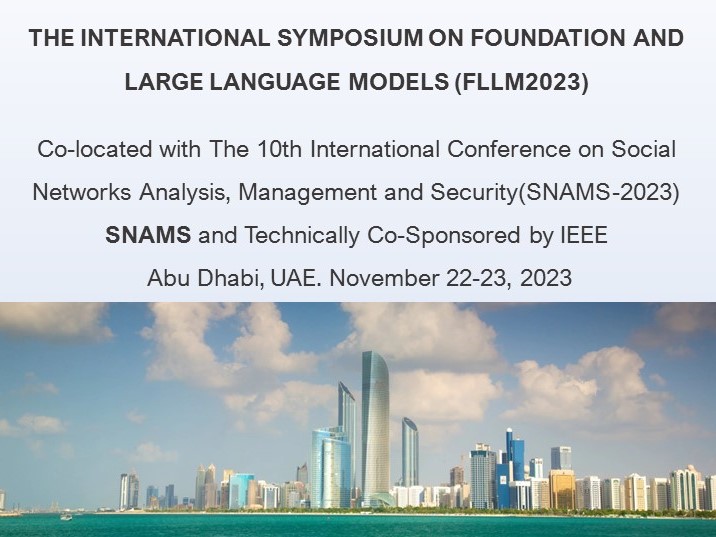
CFP for The International Symposium on Foundation and Large Language Models (FLLM2023)

On behalf of the organizers of the The International Symposium on Foundation and Large Language Models (FLLM2023) co-located with The 10th International Conference on Social Networks Analysis, Management and Security(SNAMS-2023), I am inviting everyone, who is conducting research in this area, to consider submitting the paper to it. Hurry up as the deadline for submitting the paper is October 28! 📢📢📢

Call for Papers:

With the emergence of foundation models (FMs) and and Large Language Models (LLMs) that are trained on large amounts of data at scale and adaptable to a wide range of downstream applications, Artificial intelligence is experiencing a paradigm revolution. BERT, T5, ChatGPT, GPT-4, Falcon 180B, Codex, DALL-E, Whisper, and CLIP are now the foundation for new applications ranging from computer vision to protein sequence study and from speech recognition to coding. Earlier models had a reputation of starting from scratch with each new challenge. The capacity to experiment with, examine, and comprehend the capabilities and potentials of next-generation FMs is critical to undertaking this research and guiding its path. Nevertheless, these models are currently inaccessible as the resources required to train these models are highly concentrated in industry, and even the assets (data, code) required to replicate their training are frequently not released due to their demand in the real-time industry. At the moment, mostly large tech companies such as OpenAI, Google, Facebook, and Baidu can afford to construct FMs and LLMS. Despite the expected widely publicized use of FMs and LLMS, we still lack a comprehensive knowledge of how they operate, why they underperform, and what they are even capable of because of their emerging global qualities. To deal with these problems, we believe that much critical research on FMs and LLMS would necessitate extensive multidisciplinary collaboration, given their essentially social and technical structure.The International Symposium on Foundation and Large Language Models (FLLM) addresses the architectures, applications, challenges, approaches, and future directions. We invite the submission of original papers on all topics related to FLLMs, with special interest in but not limited to:

đź’ˇArchitectures and Systems

  • Transformers and Attention
  • Bidirectional Encoding
  • Autoregressive Models
  • Prompt Engineering
  • Fine-tuning

đź’ˇChallenges

  • Hallucination
  • Cost of Creation and Training
  • Energy and Sustainability Issues
  • integration
  • Safety and Trustworthiness
  • Interpretability
  • Fairness
  • Social Impact

đź’ˇFuture Directions

  • Generative AI
  • Explainability
  • Federated Learning for FLLM
  • Data Augmentation

đź’ˇNatural Language Processing Applications

  • Generation
  • Summarization
  • Rewrite
  • Search
  • Question Answering
  • Language Comprehension and Complex Reasoning
  • Clustering and Classification

đź’ˇApplications

  • Natural Language Processing
  • Communication Systems
  • Security and Privacy
  • Image Processing and Computer Vision
  • Life Sciences
  • Financial Systems

Read more here and join our team in Abu Dhabi, UAE. November 22-23, 2023!

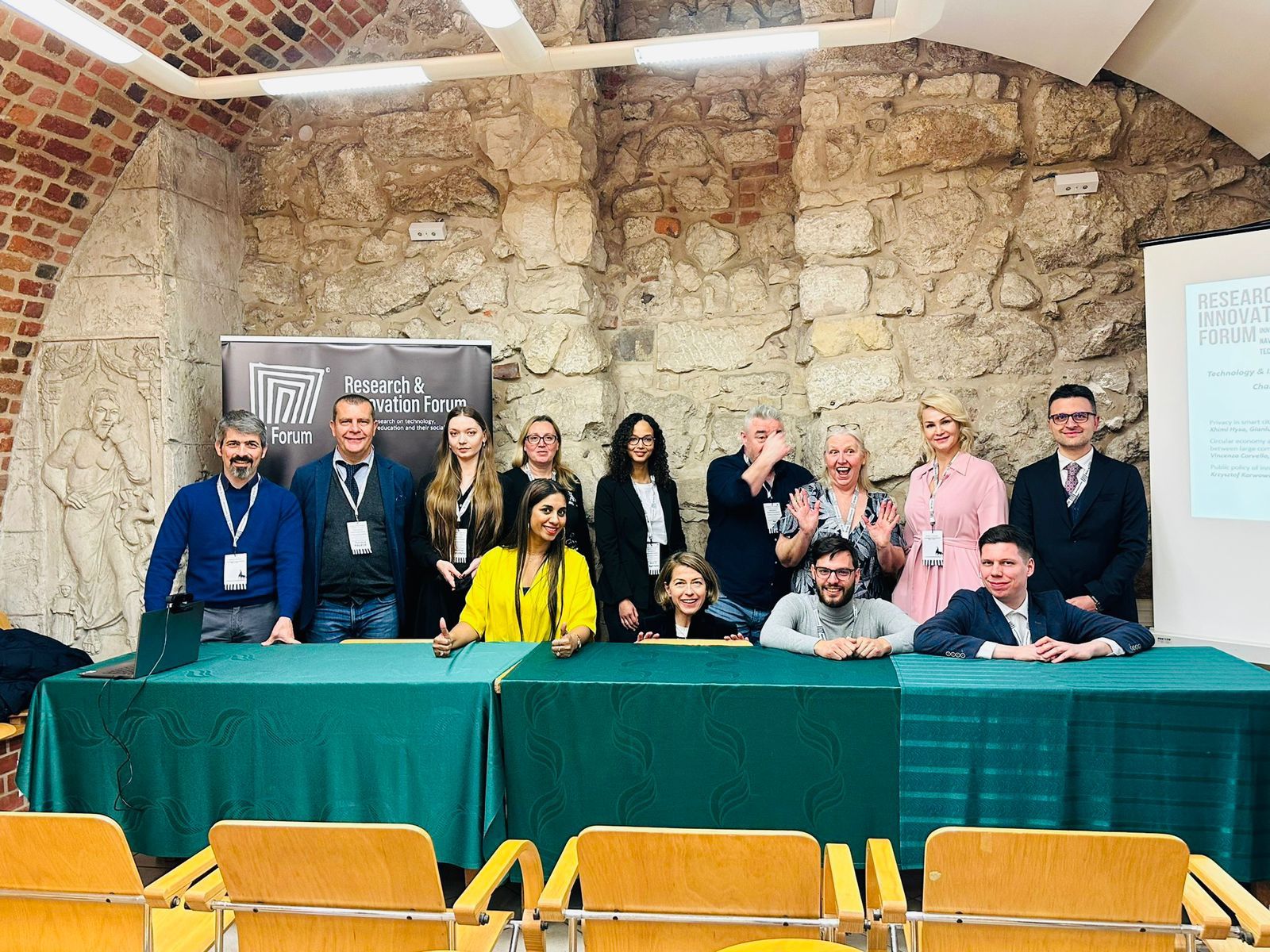
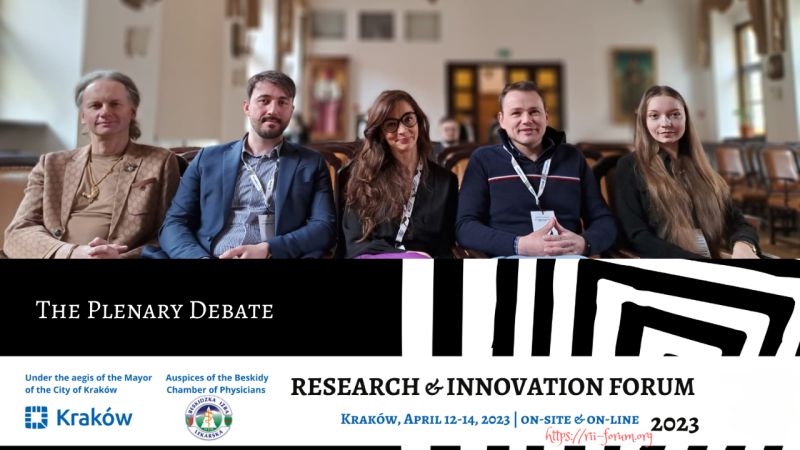
Rii Forum 2023 “Innovation 5.0: Navigating shocks and crises in uncertain times Technology-Business-Society” & a plenary debate “Advances in ICT & the Society”

Last week, I had an unforgettable experience at the Research and Innovation Forum (RiiForum) on which I posted previously in Krakow, Poland, serving as plenary speaker and session chair. It was another great experience to have an absolutely amazing plenary session titled “Advances in ICT & the Society: threading the thin line between progress, development and mental health”, where we – Prof. Dr. Yves Wautelet, Prof. Dr. Marek Krzystanek, Karolina Laurentowska & Prof. Marek Pawlicki – discussed disruptive technologies in our professional lives in the past years, how they affected us and our colleagues, how they affect(ed) society and its specific groups, including their mental health, and general perception of technology, i.e. an enemy of humanity, or rather a friend and support, and how to make sure the second take place. And from this we have developed a discussion around AI, chatGPT, Metaverse, blockchain, even slightly touching on quantum computing. Of course, all this was placed in the context of democracy and freedoms / liberties. All in all, we approached the topic of governance and policy-making, which is too often reactive rather than proactive, which, in turn, leads to many negative consequences, as well as elaborated on the engineering practices. 

To sum up – emerging and disruptive technologies, Blockchain, AI, Metaverse, digital competencies, education, liberty, democracy, openness, engagement, metaverse, inclusivity, Industry 5.0, Society 5.0 – and it is not a list of buzzwords, but a list of topics we have managed to cover both plenary speakers and the audience and continued to talk about them during the whole conference. Rich enough, isn’t it?

And then the day did not end, continuing with several super insightful sessions, where, of course, one I enjoyed most is the one that I chaired. Three qualitative talks with further rich discussion after each thanks to an excellent audience, despite the fact this was the last session of the day (before the dinner), namely:

  • Privacy in smart cities using VOSviewer: a bibliometric analysis by Xhimi Hysa, Gianluca Maria Guazzo, Vilma Cekani, Pierangelo Rosati
  • Public policy of innovation in China by Krzysztof Karwowski, Anna Visvizi
  • How Human-Centric solutions and Artificial Intelligence meet smart cities in Industry 5.0 by Tamai Ramirez, Sandra Amador, Antonio Macia-Lillo, Higinio Mora
     

And the last, but not the least, Krakow surprised me lot (in a positive sense, of course) – it was my first time in Poland, and I am absolutely glad that it was on such a beautiful city as Krakow – the place with the rich history and culture! Thank you dear RiiForum2023 organizers – Anna Visvizi, Vincenzo Corvello, ORLANDO TROISI, Mara Grimaldi, Giovanni Baldi and everyone who was involved – it is always a pleasure to be a part of this community!