
This October, I had the distinct honor of participating in Estonia’s premier event on open data, the Open Data Forum (Avaandmete foorum), organized by the Ministry of Economic Affairs and Communications of Estonia, invited to talk about the role of academia and private sector in the open government data landscape. This annual gathering brings together industry experts, academic researchers, and government leaders to discuss key trends, achievements, and the future of open data in Estonia, along with highlighting the contributions coming from universities awarding the best dissertations developed by Estonian students. The latter made this event very special for me, as one of my students – Kevin Kliimask – was awarded for his outstanding bachelor’s thesis 🏆 🥇 🏅!


In his thesis –“Automated Tagging of Datasets to Improve Data Findability on Open Government Data Portals,” Kevin developed an LLM-powered interface to automate dataset tagging in both English and Estonian, thereby augmenting metadata preparation by data publishers and improving data findability on portals by users – as the practice shows their presence tend to be a challenge. E.g., our analysis conducted on the Estonian Open Data Portal, revealed that 11% datasets have no associated tags, while 26% had only one tag assigned to them, which underscores challenges in data findability and accessibility within the portal, which, according to the recent Open Data Maturity Report, is considered trend-setter. The developed solution was evaluated by users and their feedback was collected to define an agenda for future prototype improvements. The thesis has been already transformed into the scientific paper 👉 “TAGIFY: LLM-powered Tagging Interface for Improved Data Findability on OGD portals“ presented at the IEEE international conference (I posted on this earlier 👉 here).
As for my talk titled “Unlocking the Power of Open Data: The Role of Academia and the Private Sector in Building Inclusive and Sustainable Open Data Ecosystems,” I emphasized the need for a holistic approach to open data that transcends merely opening/publishing data, rather requiring adopting a systemic view that considers an open data initiative as an Open Data Ecosystem (also confirmed by Open Data Charter 👉here), as we deal not only with open data (availability), portal, stakeholders, actors, but also processes surrounding them, emerging technologies & different forms of intelligence, going beyond just Artificial Intelligence, whose role, however, is crucial (see our paper on the eight-fold role of AI in OGD).
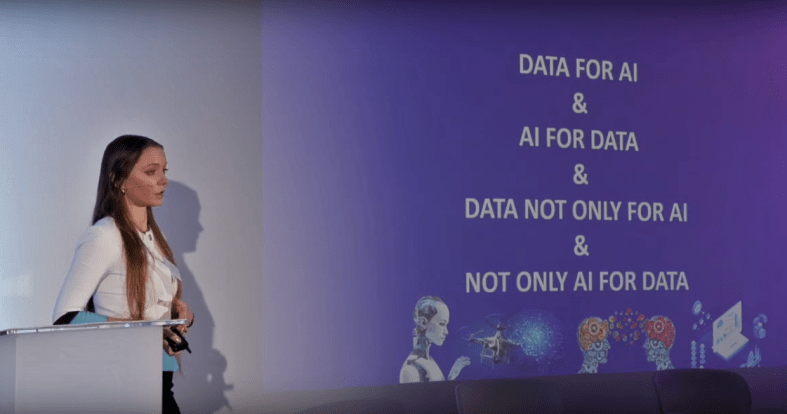
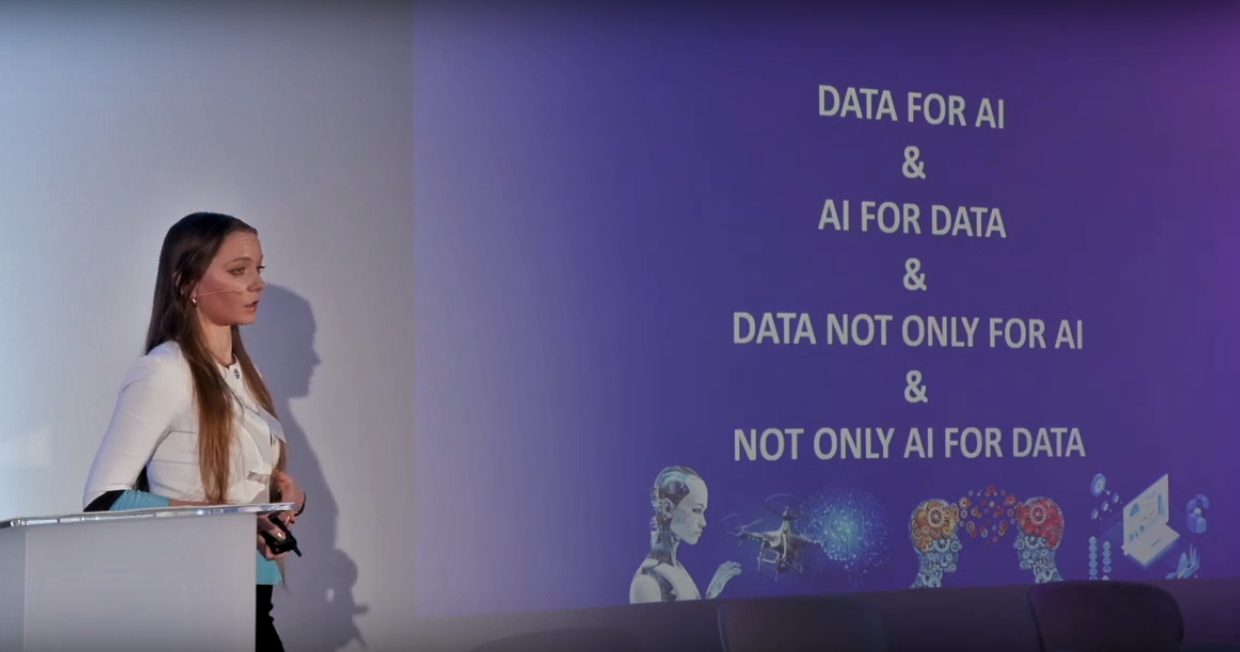
As such, while discussing the main idea of the talk – the role of academia & the private sector in the ODE, which as per me is at least four-fold, namely – data consumers, data providers, contributors to ODE sustainability & myth busters on the global stage (assigning “Made in Estonia” tag to OGD in addition to the one we have for e-government), I also expanded the general mantra of “Data For AI” to “data for AI, AI for data, data not only for AI and not only AI for data”.
A big thank you to the organisers, who gathered so many speakers (Cybernetica, FinEst Centre for Smart Cities, Riigi Infosüsteemi Amet // Estonian Information System Authority (NCSC-EE), University of Tartu and many others) to discuss the highlights of today & tomorrow for Estonian Open Data and High-Value Datasets in particular as it was the main focus of the Forum – was happy to be part of these discussions!
 Anastasija Nikiforova, PhD