Advancing Democracy & AI: Reflections from IJCAI, PRICAI, and ICA 2025 Workshops

Artificial intelligence is rapidly reshaping how societies govern, deliberate, and make collective decisions. Over the past year, our Democracy & AI workshop series—held across IJCAI, PRICAI, and ICA—has become a global forum for examining both the promise and the perils of AI in democratic contexts. From Montréal to Wellington to Wuhan, our community continues to grow, connecting researchers across AI, political science, HCI, law, design, ethics, and public administration.

DemocrAI at IJCAI 2025: AI at the Service of Society

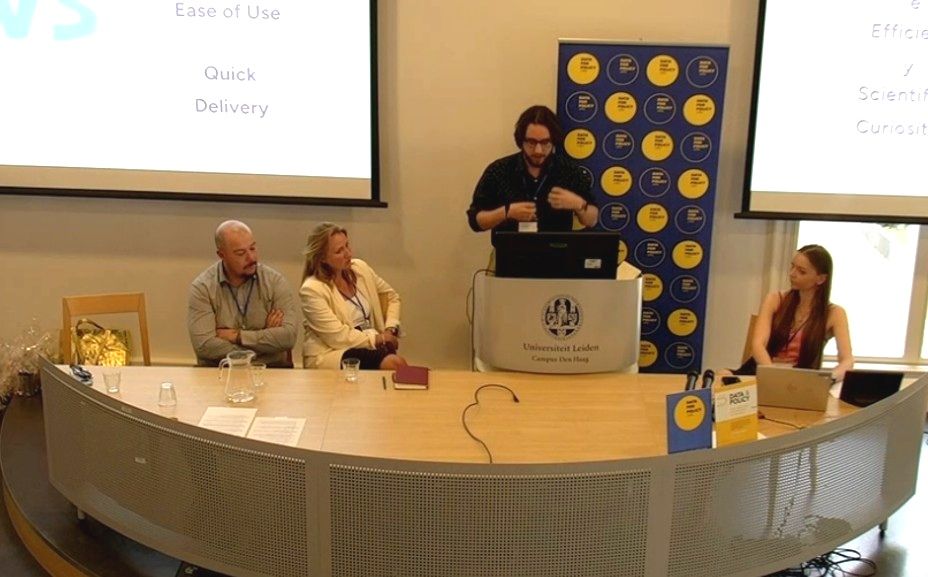
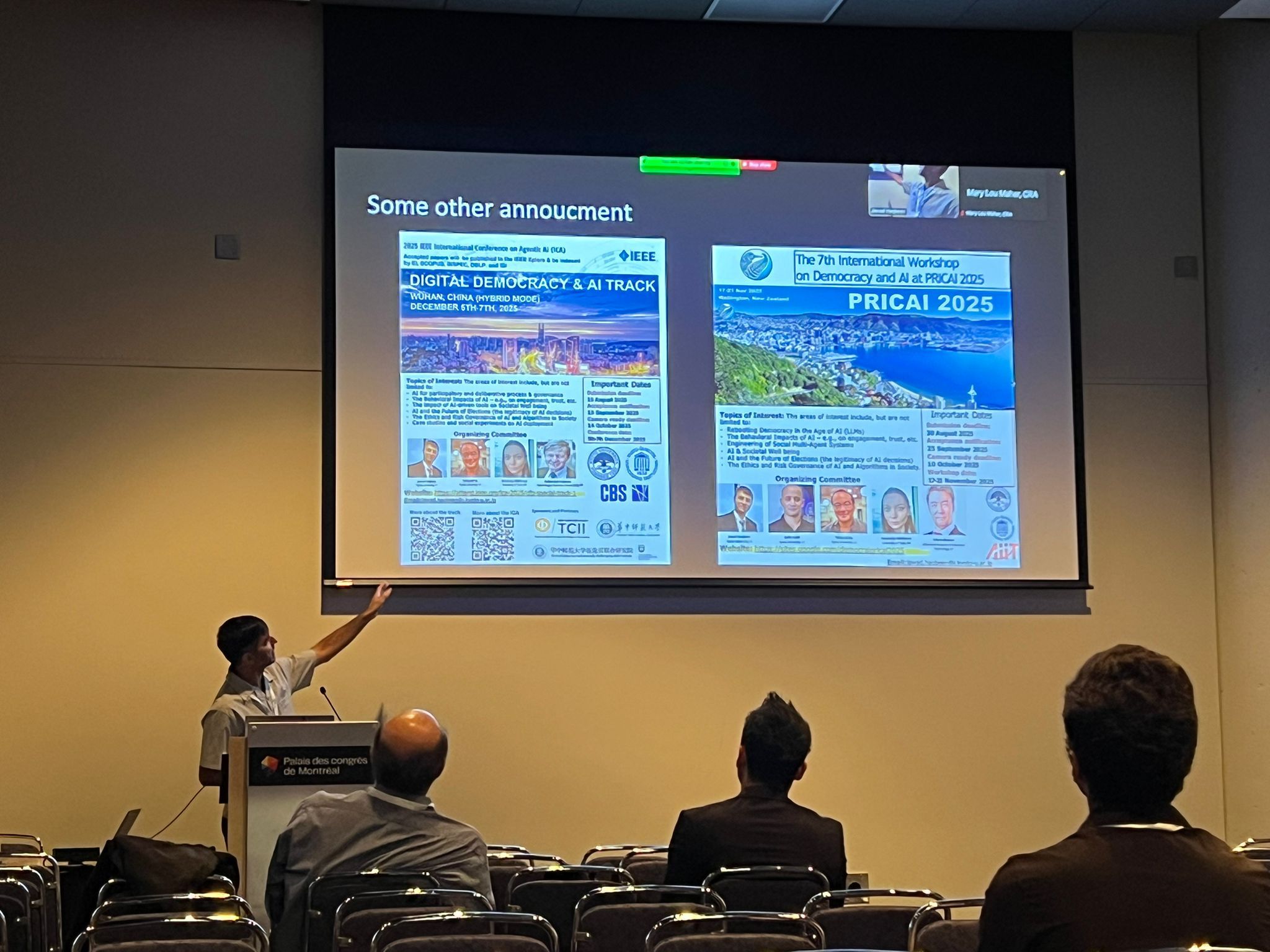
As part of the IJCAI International Joint Conferences on Artificial Intelligence in Montréal, themed “AI at the service of society,” we (Jawad Haqbeen, Takayuki Ito, Rafik Hadfi, and myself) convened the 6th International Workshop on Democracy & AI (DemocrAI25).
Although I could not attend in person, I am deeply grateful to my co-organizers for leading the workshop and for representing our team—as well as for the chance to meet Yoshua Bengio, one of the pioneers of modern deep learning and the one who recently became the very first researcher who while still being active in research achieved the milestone of 1 million citations!

The workshop opened with two outstanding keynote talks:

  • Mary Lou Maher (UNC Charlotte) — “The Imperative for AI Literacy”
  • Michael Inzlicht (University of Toronto) — “In Praise of Empathic AI”

Across 13 diverse presentations, contributors explored: AI’s impact on trust, civic engagement, and deliberation, risks and governance of LLMs in judicial settings and policymaking, collective intelligence and value aggregation for democratic processes, AI applications in education, law, and policy design, governance, fairness, inclusion, and global research equity.

We were delighted to recognize several exceptional contributions:

  • Best Paper Award“LLMs in Court: Risks and Governance of LLMs in Judicial Decision-Making” (Djalel Bouneffouf & Sara Migliorini)
  • Best Student Paper Award“Finding Our Moral Values: Guidelines for Value System Aggregation” (Víctor Abia Alonso, Marc Serramia & Eduardo Alonso Sánchez)
  • Best Extended Abstract Award“Group Discussions Are More Positive with AI Facilitation” (Sofia Sahab, Jawad Haqbeen & Takayuki Ito)
  • Best Presentation Award“Democracy as a Scaled Collective Intelligence Process” (Marc-Antoine Parent)

A key message echoed throughout the day: AI can enhance social cohesion, participation, and equity—but only through responsible design and robust governance frameworks.

DemocrAI at PRICAI 2025: Participation, Values, and Governance

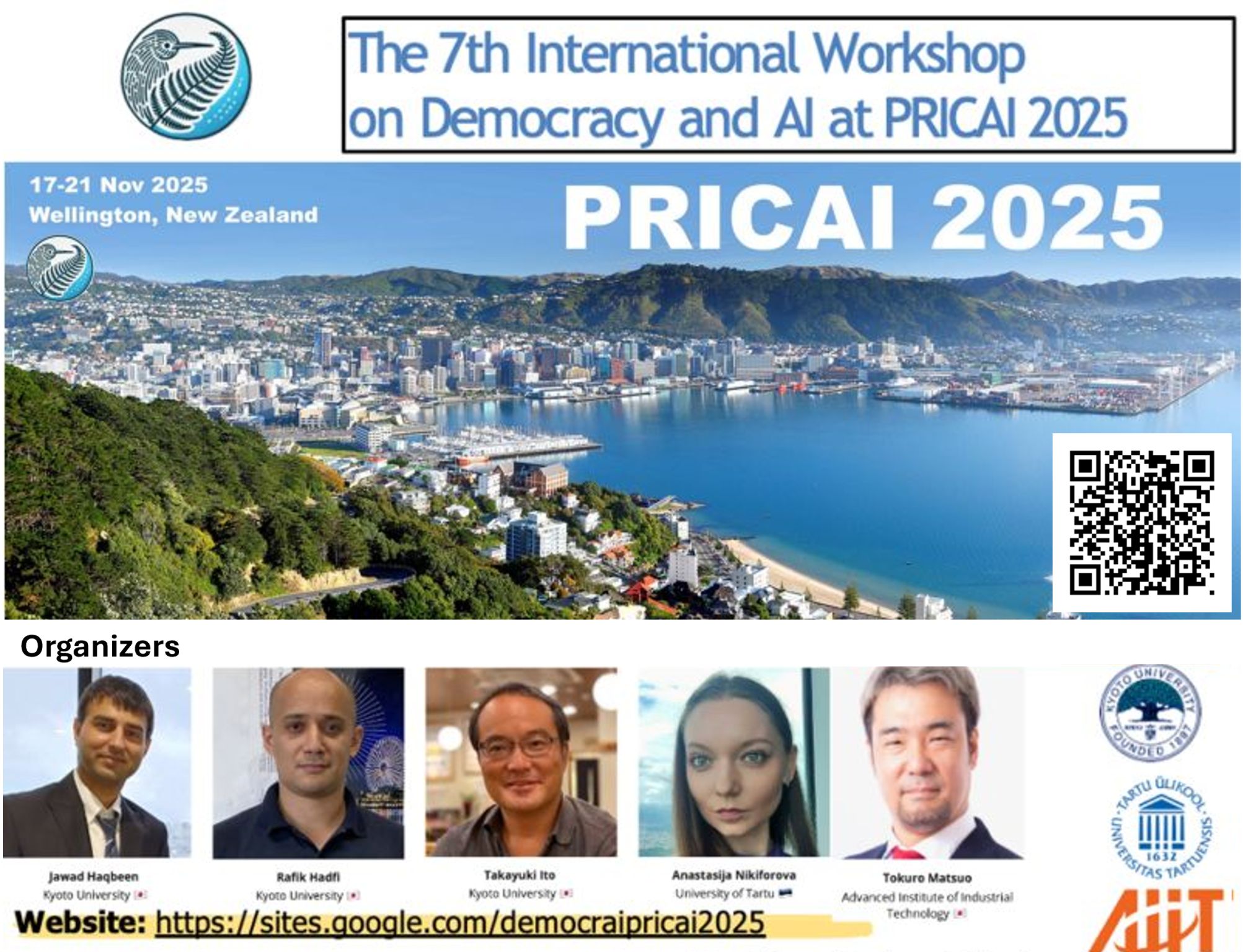
Following IJCAI, I joined the organizing committee for the 7th Democracy & AI Workshop at PRICAI 2025, held in Wellington, New Zealand. Two years ago, I had the privilege of giving a keynote at PRICAI DemocrAI on symbiotic relationship of Artificial Intelligence, Data Intelligence, and Collaborative Intelligence for Innovative Decision-Making and Problem Solving. This year, I am excited to help shape the conversation from the organizing side.

The workshop explored the expanding role of AI in democratic life, including AI-assisted policy design and decision-making, AI in governance, elections, and public administration, citizen participation and deliberative democracy tools, behavioral impacts of AI on trust, engagement, and polarization, transparency, accountability, and legitimacy of algorithmic decisions, ethics, socio-technical risks, and AI’s impact on societal wellbeing, and reimagining democracy in the LLM era.

Special Track at ICA 2025: AI in e-Government & Public Administration

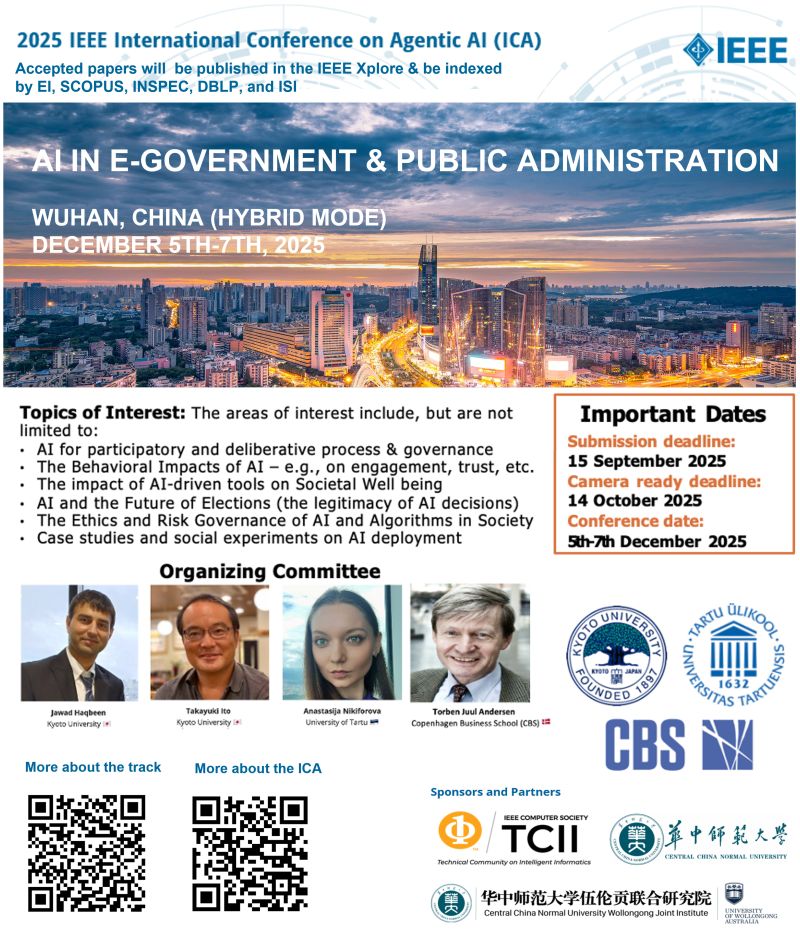
Our workshop series expands further with a dedicated Special Track on AI in e-Government & Public Administration at the IEEE International Conference on Agentic AI (ICA 2025), held in Wuhan, China.

Co-organized with Jawad Haqbeen, Takayuki Ito, and Torben Juul Andersen, this track examines how AI-driven tools are transforming public governance—from policy co-creation and civic engagement to service delivery and institutional decision-making.

Topics include:

  • AI for participatory and deliberative governance
  • AI’s impact on societal wellbeing
  • AI in public service delivery and policy design
  • Ethics and risk governance in public-sector AI
  • Case studies and experiments with deployed systems
  • Transparency, accountability, and responsible administration

Across IJCAI, PRICAI, and ICA, one theme is clear: AI’s role in democracy is neither predetermined nor neutral. It can support inclusion, transparency, and collective intelligence—or undermine trust, equity, and participation. The outcome depends on the choices we make now: the values we embed, the governance we build, and the communities we bring together.

Our Democracy & AI workshop series exists to advance this work—uniting technologists, policymakers, social scientists, designers, and ethicists in a shared mission: to ensure AI serves democracy, rather than the other way around.

Huge thanks to all speakers, awardees, participants, and co-organizers.
Onward to DemocrAI at PRICAI and ICA 2025!

Celebrating Our Contribution to the 50th Anniversary of Government Information Quarterly

Marking a half-century of shaping the field, Government Information Quarterly (GIQ) celebrates 50 years as the leading journal in digital government research—and I am honored that our latest article, “Reflections on the Nature of Digital Government Research: Marking the 50th Anniversary of Government Information Quarterly,” forms part of this milestone issue constituting an editorial.

This collaborative piece brings together a group of scholars—Marijn Janssen, Hong Zhang, Adegboyega Ojo, Anastasija Nikiforova, Euripidis Loukis, Gabriela Viale Pereira, Hans J. Scholl, Helen Liu, Jaromir Durkiewicz, Laurie Hughes, Lei Zheng, Leonidas Anthopoulos, Panos Panagiotopoulos, Tomasz Janowski, and Yogesh K. Dwivedi—each offering a distinct perspective on how digital government research has evolved, diversified, and responded to societal and technological transformation.

A special thanks goes to Marijn Janssen, former Editor-in-Chief of GIQ, whose vision and coordination made this anniversary reflection possible.

Looking Back: Five Decades of Digital Government Research

Over 50 years, GIQ has chronicled—and often anticipated—the evolution of digital governance: from early computational systems to open government, data-driven innovation, smart cities, and the rise of AI.
Throughout these cycles, the journal has remained the field’s intellectual anchor, publishing research that tackles foundational public sector challenges while engaging with emerging technologies such as blockchain, quantum computing, IoT, AR/VR, and the Metaverse.

Several characteristics continue to define GIQ’s identity:

• Methodological and epistemological pluralism
GIQ’s hallmark is its openness to diverse paradigms, methods, and theoretical lenses. Rather than promoting a single theory of digital government, it invites multiple angles—qualitative, quantitative, mixed, conceptual, comparative—to analyze complex governance realities.

• “Blue-sky” thinking without hype
GIQ encourages forward-looking, innovative, and boundary-pushing ideas, while maintaining analytical discipline. This balance keeps the field visionary yet grounded.

• Impact rooted in both theory and practice
The journal has consistently insisted that strong methodology must lead to meaningful insights—advancing academic understanding while speaking directly to policymakers and practitioners.

• Clear communication to a broad audience
GIQ’s readership extends well beyond academia. With government, industry, and civil society looking to the journal for guidance, clarity and accessibility are essential. As Shakespeare famously said, “brevity is the soul of wit.”

What Our Anniversary Article Contributes

Our contribution synthesizes insights from leading experts to illuminate the nature, evolution, and future of digital government research.
Several overarching themes emerge:

  • epistemological pluralism and interdisciplinarity as fundamental characteristics of the field;
  • contextualized, value-driven, and practice-relevant research as the journal’s core strength;
  • digital transformation as a socio-technical phenomenon, where institutions, technology, data, governance models, and citizen expectations co-evolve;
  • the importance of studying both technology and context, avoiding the pitfalls of black-boxing either side of the equation;
  • GIQ’s role as a platform for blue-sky research, innovation, and rigorous theorization that remains relevant across countries and governance systems.

We dedicate this article to the late Professor Soon Ae Chun, former Co-Editor-in-Chief of GIQ.
Her leadership, scholarship, and unwavering commitment to quality and community have left an enduring mark on the field.

The 50-year anniversary of GIQ is more than a celebration. It is a reminder that the future of digital government research depends on openness: in methods, theories, communication, and imagination. As digital governance accelerates, the journal’s role as a bridge—between disciplines, between theory and practice, and between local realities and global insights—has never been more essential.

From Krems to Linz: Reflections from EGOV 2025 and a Research Visit to Austria

September brought a truly inspiring and intense sequence of events: the EGOV 2025 from Doctoral Colloquium to Junior Faculty School, and the main IFIP EGOV 2025 conference in Krems, followed by a research stay at Johannes Kepler University Linz. Five days of discussion, mentoring, presenting, and connecting in Krems with several more in Linz where the intensive research stay was enriched by a memorable dive into the Ars Electronica Festival and its conversations on technology, fear, and democratic futures.

What follows is a reflection on an academically dense but deeply rewarding journey across two Austrian cities.

EGOV2025: Doctoral Colloquium & Junior Faculty School

We began in the breathtaking setting of Göttweig Abbey with the EGOV 2025 Doctoral Colloquium, where 13 PhD students presented their research, shared challenges of the doctoral journey, and engaged in open discussions with mentors.

The following day, the Junior Faculty School expanded these conversations to early career researchers (up to five years post-PhD). Together with a wonderfully engaged group, we explored questions about career trajectories, researcher identity, publishing strategies, gender inequalities in academia, and the importance of being in a workplace that supports—not drains—well-being.

A recurring theme across both days was impact. We examined it from multiple perspectives:

  • during the Colloquium’s mentor panel
  • in Tomasz Janowski’s keynote
  • through the “from research to policy” workshop by Paula Rodriguez Müller, Sven Schade, and Luca Tangi
  • in the panel on publishing in top journals with Panos Panagiotopoulos and Manuel Pedro Rodríguez Bolívar
  • and in roundtable discussions on career development

Sincere thanks to the organizers—Gabriela Viale Pereira, Ida Lindgren, Lieselot Danneels, J. Ramon Gil-Garcia, and Michael Koddebusch—for making these events equally enriching for participants and mentors.

EGOV 2025 conference

With the main conference underway, we launched the Emerging Technologies and Innovations track, which I co-chaired with Francesco Mureddu and Paula Rodriguez Müller. This year, we welcomed Paula (European Commission JRC) to the team and continued pushing the track beyond academic silos, aiming to strengthen the bridge between research, policy, and practice.

We were delighted to see a record number of submissions—double compared to last year. A growing Information Systems community joined us, fulfilling the long-term ambition that Marijn Janssen and I have shared for the track.

Across three sessions, we explored topics that shape the future of governance:

  • the potential of generative AI and LLMs for administrative literacy and public sector transformation
  • trust frameworks and platform governance
  • GovTech incubators and the gap between prototypes and long-term implementation
  • self-assessment tools for climate adaptation
  • digital transformation patterns in smart city strategies

These studies together illustrated how emerging technologies and governance innovation are reshaping public institutions.

A special highlight was the Best Paper Award in the category “Most Innovative Research Contribution or Case Study”, received by Lukas Daßler for “GovTech Incubators: Bridging the Gap Between Prototypes and Long-Term Implementation” (co-authored with Andreas Hein and Helmut Krcmar). Congratulations once again!

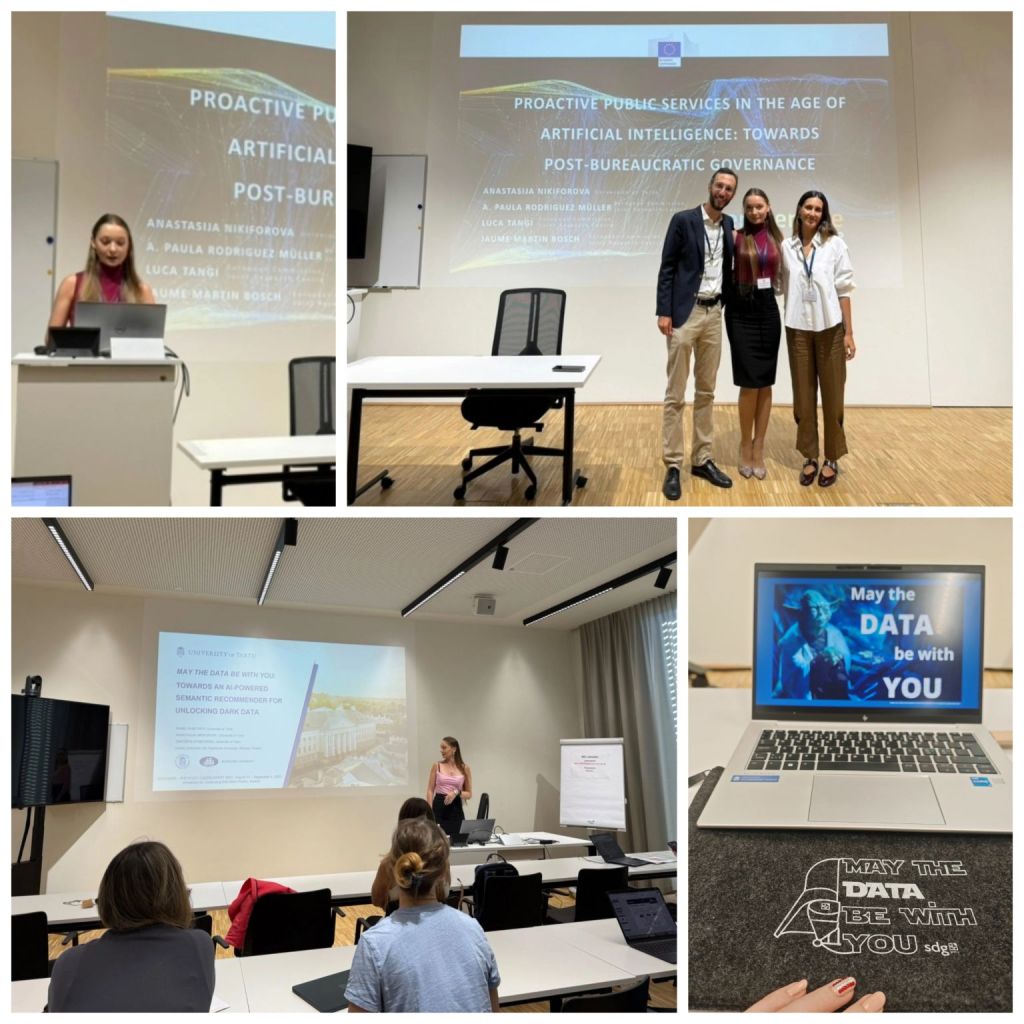
I was happy to present two papers at the conference:

  1. “Proactive Public Services in the Age of Artificial Intelligence: Towards Post-Bureaucratic Governance” with Paula Rodriguez Müller, Luca Tangi, and Jaume Martin Bosch – the first (or “step 0”) output of our ongoing research on AI-enabled proactive service provision.
  2. “May the Data Be with You: Towards an AI-Powered Semantic Recommender for Unlocking Dark Data” based on the master thesis of my former student, now at Microsoft, Ramil Huseynov; co-authored with Dimitris Simeonidis and David Duenas-Cid – a project that combines technical exploration with a generous dose of nerdiness and fun.

Research Visit to Linz

Right after EGOV, I travelled to JKU Linz, hosted by Christoph Schuetz at the Institute of Business Informatics – Data & Knowledge Engineering. During the visit, I delivered an invited talk titled “Responsible Data Ecosystems: From Data Governance to AI Adoption.”
We discussed how to establish trustworthy, effective data practices while responsibly integrating AI, and explored opportunities for future collaboration.

Beyond the academic exchange, Linz offered its own inspiration: diverse, vibrant, and beautifully intertwined with nature and art such as..

Ars Electronica 2025: Panic – Yes/No?

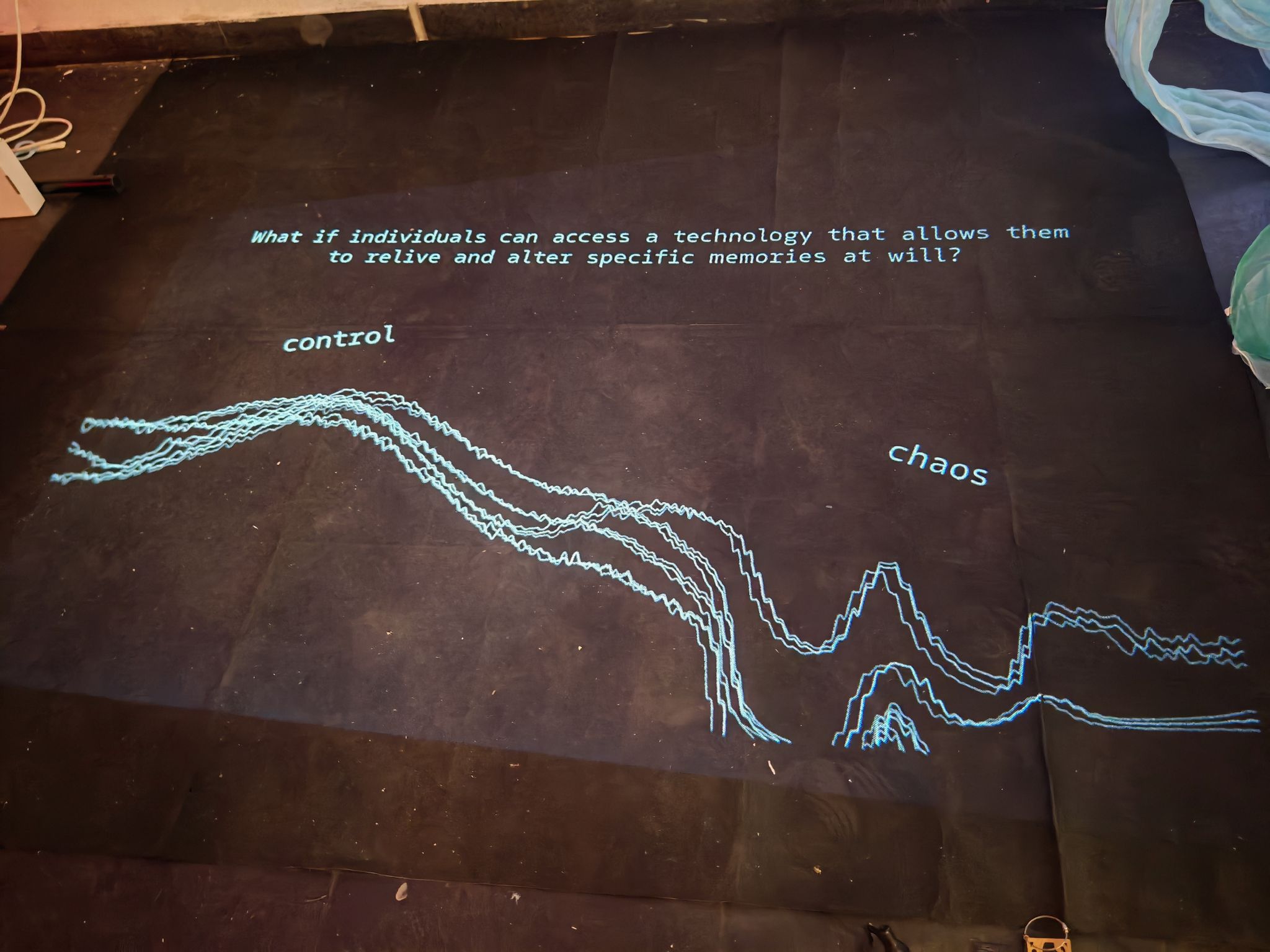
One of the standout experiences was the Ars Electronica Festival, which this year examined the theme “Panic – Yes/No?”. The exhibitions brought together over 1,400 contributors—artists, scientists, developers, entrepreneurs, and activists—questioning our collective sense of alarm and exploring whether “collective panic” is a rational response or a product of sensationalism.

AI and its societal implications stood at the heart of many installations: Who designs these systems? For whom? According to which values? These questions resonate strongly with the core of my own research and offered a refreshing, interdisciplinary lens on technology and democratic futures.

From mentoring early-stage researchers and running a dynamic track, to presenting new work, reconnecting with colleagues, expanding the Information Systems presence within EGOV, and diving into Linz’s research and cultural landscape—it was an intense but profoundly rewarding start of the semester. Weeks like these is a food reminder of why mentoring, connecting, and building research communities matter so much—and why an early Sunday alarm can indeed be worth it.

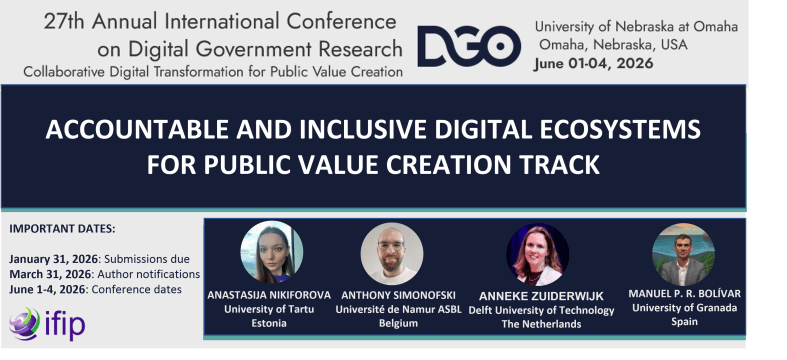
Call for Papers: Accountable and Inclusive Digital Ecosystems for Public Value Creation — dg.o 2026

Call for Papers is now open for our track “Accountable and Inclusive Digital Ecosystems for Public Value Creation” at the 27th Annual International Conference on Digital Government Research (dg.o 2026). The conference will take place June 2–5, 2026, at the University of Nebraska at Omaha, USA.

This track continues and expands the work we initiated in 2024 and 2025 on public and open data ecosystems. Responding to new technological and societal realities, we broaden the focus this year toward AI-enabled, interoperable, sustainable, and human-centered digital ecosystems—their design, governance, and impact on public value creation.

Why this track? Why now?

Digital ecosystems are undergoing profound transformation. Emerging technologies—AI (including generative AI), interoperable data spaces, IoT, cloud–edge infrastructures, and new governance frameworks—now form the backbone of digital public action. These technologies unlock unprecedented opportunities for insight generation, collaboration, transparency, and service co-creation across sectors.

Yet they also introduce new challenges: ethics, accountability, trust, digital literacy, and inclusion. As governments and organizations navigate this shift, we need research that bridges technical innovation, institutional capacity, and societal expectations.

Our track provides a space for this conversation.

What the track explores

We invite contributions that examine the conceptual, technical, institutional, and societal dimensions of digital and data ecosystems, with an emphasis on accountability, sustainability, inclusivity, and public value.

Topics of interest include (but are not limited to):

  • Ethical and accountable AI, data governance, algorithmic transparency, privacy, security
  • Interoperability and trust frameworks, identity infrastructures, standards, reference architectures
  • AI, Generative AI, LLMs, NLP, IoT/cloud/edge integration, green computing, Metaverse applications
  • Human–AI interaction, explainability, accessibility, inclusion in digital public services
  • Stakeholder engagement, empowerment, co-creation, digital literacy, data sovereignty
  • Institutional and organizational mechanisms for ecosystem governance and sustainable management
  • Open, public, and cross-sector data ecosystems, including data spaces and platform ecosystems
  • Social, economic, and environmental sustainability and other public value dimensions
  • Case studies from cities, communities, public-sector organizations, and multi-stakeholder collaborations
  • Impact assessments of digital ecosystems on individuals, organizations, and society

Connection to the dg.o 2026 theme

The conference theme—Collaborative Digital Transformation for Public Value Creation—aligns perfectly with our track’s purpose.
Digital ecosystems represent socio-technical infrastructures where governance, technology, and societal needs intersect. Understanding how to make these ecosystems accountable, inclusive, and sustainable is essential for collaborative digital transformation and for delivering tangible societal outcomes.

Track chairs

  • Anastasija Nikiforova, University of Tartu (Estonia)
  • Anthony Simonofski, Université de Namur (Belgium)
  • Anneke Zuiderwijk – van Eijk, Delft University of Technology (Netherlands)
  • Manuel Pedro Rodríguez Bolívar, Universidad de Granada (Spain)

Together, we bring perspectives from digital government, data governance, public administration, information systems, and socio-technical ecosystem design.

Submission details

Full CFP and submission guidelines are available here:
🔗 https://dgsociety.org/dgo-2026/

We look forward to receiving your submissions and to advancing the conversation on how accountable, inclusive, and sustainable digital ecosystems can drive the next generation of public value creation.

If you have questions about fit or ideas you’d like to discuss, feel free to reach out.

The Evolution of Public Data Ecosystems: Our new GIQ paper

Our new paper, “Theorizing the evolution of public data ecosystems: An empirically grounded multi-generational model and future research agenda”, has been published in Government Information Quarterly. This publication marks the conclusion of a long-running research journey—one so rich that it produced four papers along the way—and brings together years of reflection on how public data systems emerge, evolve, and transform.

Several months ago, in my invited blogpost for Data Studies (“In Open Data We Trust? Busting the Myth, Rethinking Value in the Age of GenAI”), I reflected on the promises and limitations of open data. Despite its early optimism and democratic ideals, open data has produced uneven results in practice. This tension reinforced what I had been observing for years: open data alone is no longer sufficient. Instead, what increasingly matters is the broader, more adaptive configuration of Public Data Ecosystems (PDEs)—dynamic, evolving socio-technical systems shaped by institutions, technologies, infrastructures, actors, risks, and societal needs. That earlier blogpost unexpectedly provided the final spark of motivation to bring this paper across the finish line.

Why Public Data Ecosystems?

PDEs extend far beyond traditional open government data. They include geospatial data infrastructures, IoT-driven ecosystems, domain-specific environments, and federated data spaces with varying access models (see typology of PDEs in figure below and this piece). What binds them is not openness but their co-evolution—the way actors, data types, governance models, and technologies reshape each other over time.

This has become particularly salient with the rise of AI, generative AI, and large language models. These technologies challenge existing assumptions about data availability, quality, reuse, and governance. PDEs are no longer static infrastructures – they are living systems, with the above being now not only mere components but active actors who shape these systems.

In this study, we:

  • theorize PDEs as multi-generational, evolving socio-technical systems, shaped by institutional, technological, and contextual dynamics;
  • refine the Evolutionary Model of PDEs (EMPDE) using empirical evidence from five European countries;
  • introduce new attributes that capture overlooked dynamics and emerging realities;
  • describe the rise of a sixth, forward-looking generation propelled by emerging technologies—including AI, LLMs, and other data-driven innovations;
  • propose a research agenda with 17 directions to guide the development of sustainable, resilient, and intelligent PDEs.

Rather than validating the original EMPDE model that we proposed earlier (see this and this pieces), we treated it as a heuristic tool—an analytical lens—to explore how PDEs actually evolve in practice. This approach allowed us to identify theoretical gaps, generational ambiguities, and emerging patterns that refine the model’s structure. This helped us to reveal several important shifts:

  • PDE evolution is not strictly linear; some countries move fluidly across “generations”;
  • emerging technologies are reshaping governance logics faster than institutions can adapt;
  • new attributes—such as ecosystem intelligence, risk-mediated openness, or cross-domain interoperability—are now essential;
  • the sixth generation represents a paradigm shift, in which AI not only consumes data but co-determines which data becomes valuable, usable, and governable.

Understanding PDEs as evolving systems has implications for:

  • policy makers, who must govern increasingly complex data landscapes;
  • public sector organizations, whose operations increasingly depend on cross-domain data flows;
  • researchers, who need frameworks that capture temporal, socio-technical, and institutional dynamics;
  • technology developers, who must navigate the interplay between AI capabilities and data governance constraints.

The refined EMPDE model and the proposed research agenda aim to support these communities in building sustainable, resilient, and intelligent data ecosystems—ones capable of adapting to rapid technological and societal change.

This paper is the result of a our -now already long enough- collaboration with Martin Lněnička, Mariusz Luterek, Petar Milic, and Manuel Pedro Rodríguez Bolívar. Special thanks to Marijn Janssen, whose editorial guidance and sharp comments significantly improved the paper.

And sincere thanks to Aleksi Aaltonen and Marta Stelmaszak Rosa, whose invitation to write the Data Studies blogpost provided the unexpected inspiration to finalize this study.

Read more

If you’re interested in PDEs, data governance, AI, or socio-technical systems, I’d love to hear your thoughts. This area is evolving quickly—and so are the ecosystems we rely on.